
Deciding when to claim Social Security is one of the most significant financial decisions a person will make in their lifetime. While the program allows individuals to begin receiving retirement benefits as early as age 62, doing so comes with a permanent reduction in monthly income compared to waiting until “Full Retirement Age” (FRA). For many, the allure of early retirement is strong, but understanding the specific financial implications is crucial for long-term fiscal health.
This guide explores the mechanics of Social Security calculations, the impact of early filing, and the strategic considerations necessary to determine if claiming at 62 aligns with your broader financial goals.

Understanding the Math: How Benefits Are Calculated
To understand how much you will receive at 62, you must first understand how the Social Security Administration (SSA) determines your “Primary Insurance Amount” (PIA). This is the base amount you are entitled to if you wait until your Full Retirement Age to file.
The 35-Year Earnings Rule
The SSA looks at your entire work history but focuses specifically on your 35 highest-earning years. These earnings are indexed to account for changes in average wages over time. If you have fewer than 35 years of covered employment, the SSA averages in “zeros” for the remaining years, which can significantly lower your monthly benefit. For those considering retirement at 62, ensuring that you have at least 35 years of substantial earnings is a primary step in maximizing your base check.
The Full Retirement Age (FRA) Benchmark
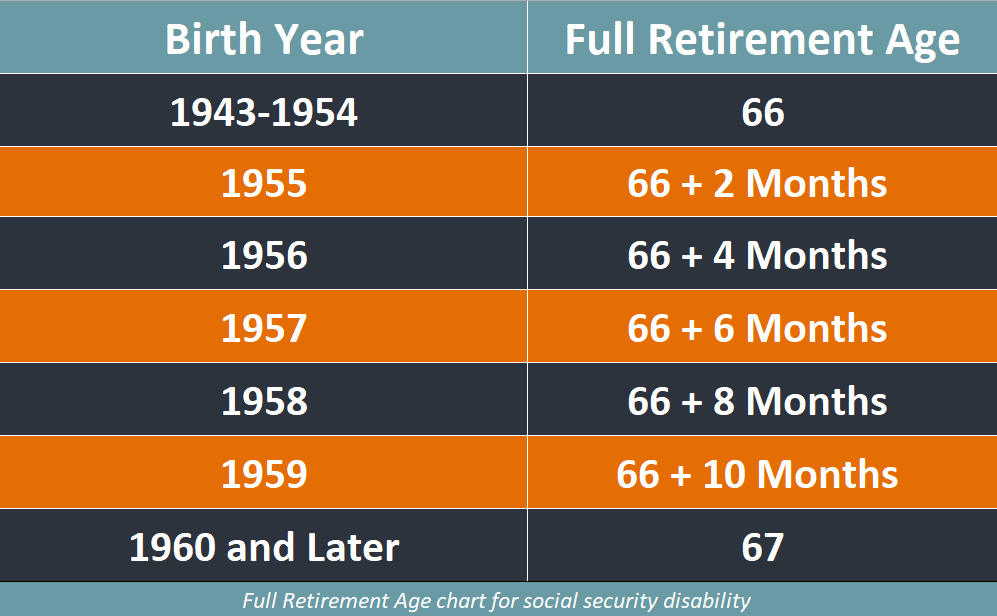
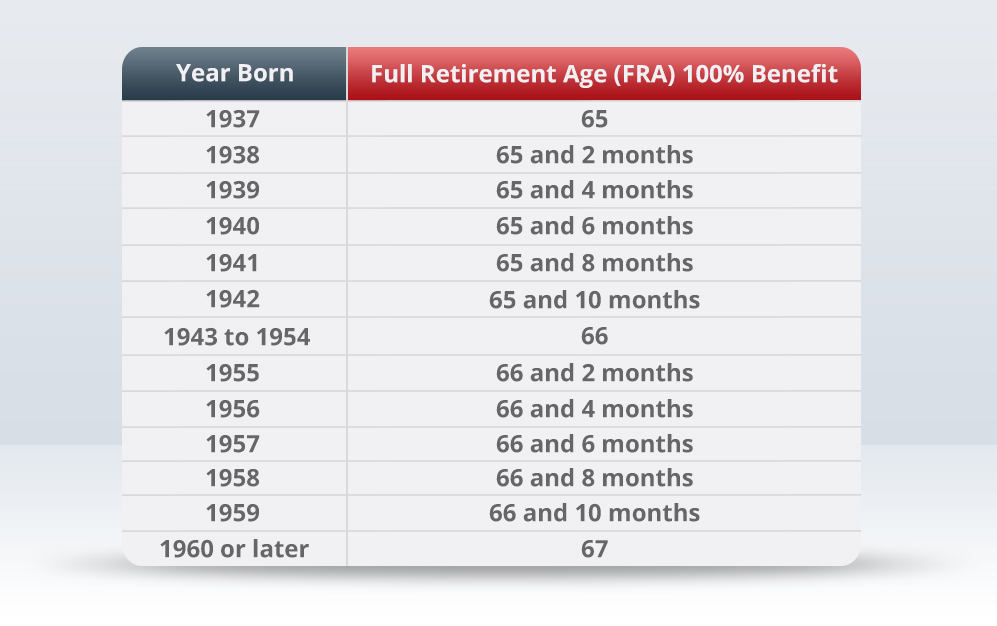
Your Full Retirement Age is the age at which you can claim 100% of your earned benefit. For anyone born in 1960 or later, the FRA is 67. If you were born earlier, your FRA may be 66 and a certain number of months. The “cost” of claiming at 62 is calculated as a percentage reduction from this FRA amount. If your FRA is 67 and you claim at 62, your monthly check will be permanently reduced by 30%.
The Reduction Formula
The reduction is not a flat number but a calculation based on months. For the first 36 months before your FRA, your benefit is reduced by 5/9 of 1% for each month. For every month beyond 36 months, the benefit is further reduced by 5/12 of 1%. When you total these figures over the five years between age 62 and 67, you arrive at that 30% reduction. This means if you were slated to receive $2,000 at age 67, your check at age 62 would only be $1,400.
Factors That Influence Your Monthly Check
While the base calculation provides a starting point, several external and internal factors can alter the actual amount of money that lands in your bank account each month.
Cost-of-Living Adjustments (COLA)
Social Security benefits are not static; they are adjusted annually based on the Consumer Price Index for Urban Wage Earners and Clerical Workers (CPI-W). These COLA increases are designed to protect the purchasing power of your benefits against inflation. Even if you start with a reduced benefit at age 62, your future COLA increases will be applied to that smaller base amount. Over 20 or 30 years, the compounding effect of COLA on a larger benefit (at age 67 or 70) can result in a massive difference in total lifetime income.
The Earnings Test and Withholding
A common misconception is that you can claim Social Security at 62 and continue to work a high-paying job without consequence. If you are under your FRA and earn more than a certain limit (which changes annually; for 2024, it is $22,320), the SSA will withhold $1 in benefits for every $2 you earn above that limit. While these withheld benefits are eventually “returned” to you in the form of a higher monthly check once you reach FRA, the immediate impact is a significantly smaller Social Security check while you are still working.
Taxation of Benefits
Depending on your total “provisional income”—which includes your adjusted gross income, tax-exempt interest, and half of your Social Security benefits—you may owe federal income taxes on your benefits. If you are a single filer with a provisional income between $25,000 and $34,000, you may pay taxes on up to 50% of your benefits. If your income exceeds $34,000, up to 85% of your benefits may be taxable. For high-net-worth individuals, the “net” amount received at 62 may be much lower than the “gross” amount listed on their SSA statement.
The Opportunity Cost: Weighing 62 vs. 67 or 70
Deciding to claim at 62 is not just about the monthly amount; it is about the “break-even point” and the impact on your survivors.
Calculating the Break-Even Point
The break-even point is the age at which the total cumulative benefits of waiting to claim (receiving larger checks for a shorter period) surpass the total cumulative benefits of claiming early (receiving smaller checks for a longer period). Generally, the break-even point between age 62 and age 67 is roughly age 77 or 78. If you believe you will live past your late 70s, it is mathematically advantageous to wait. If you have health concerns or a family history of shorter lifespans, claiming at 62 may be the more rational financial choice.
Impact on Spousal and Survivor Benefits
Your decision to claim early affects more than just your own pocketbook. Survivor benefits are based on the amount the deceased worker was receiving (or was entitled to receive). If a high-earning spouse claims at 62 and subsequently passes away, the surviving spouse may be locked into that lower benefit amount for the rest of their life. Conversely, waiting until age 70 to claim maximizes the survivor benefit, providing a form of life insurance for the lower-earning spouse.
Delayed Retirement Credits
While this article focuses on age 62, it is important to note that for every year you delay past your FRA (up to age 70), your benefit increases by 8% annually. This is a guaranteed, inflation-adjusted return that is virtually impossible to find in the private market. By claiming at 62, you are not only accepting a 30% reduction from your FRA amount, but you are also forfeiting the potential for a 24% increase (if your FRA is 66) or 32% increase (if your FRA is 67) that comes with waiting until age 70.
Strategic Financial Considerations for Early Claimers
Claiming at 62 is sometimes a necessity due to job loss or health issues, but if it is a choice, it should be integrated into a holistic financial plan.
Bridging the Gap with Personal Investments
If you have a robust 401(k), IRA, or brokerage account, you might consider “spending down” these assets between ages 62 and 67 to allow your Social Security benefit to grow. Because Social Security is indexed for inflation and guaranteed for life, it is often the most valuable “asset” in a retirement portfolio. Using private savings to delay claiming Social Security essentially converts a volatile market asset into a guaranteed government-backed annuity.
The Health Status Variable
If you are in poor health and do not expect to reach the break-even age, claiming at 62 is often the most logical financial move. In this scenario, the “time value of money” takes precedence. Receiving five years of “reduced” checks is better than receiving zero checks if you pass away before reaching FRA. However, if you are in excellent health, you must plan for the possibility of a 30-year retirement, where a larger monthly check will be essential for covering rising healthcare costs in your 80s and 90s.
Debt and Cash Flow Requirements
For some, the decision to claim at 62 is driven by a desire to pay off a mortgage or eliminate high-interest debt. While using Social Security to clear debt can improve immediate monthly cash flow, it is important to calculate whether the long-term loss in benefit income outweighs the interest savings on the debt. Often, a more efficient strategy is to continue working a few more years or to use other assets to clear debt, preserving the higher Social Security payout for the “longevity insurance” it provides.
Conclusion: Is 62 the Right Number for You?
There is no universal answer to the question of how much you will get at 62, because the “value” of that check depends on your health, your tax bracket, your marital status, and your other retirement assets. While the raw math shows a significant permanent reduction in benefits, the peace of mind that comes with an early exit from the workforce has a value that isn’t captured on a spreadsheet.
To make the best decision, log in to your “my Social Security” account on the SSA website to see your actual estimated numbers. Compare those figures against your projected monthly expenses and consult with a financial advisor to see how those checks fit into your long-term withdrawal strategy. Whether you choose to claim at 62 or wait until 70, the goal is the same: ensuring a stable, dignified, and sustainable financial future.
aViewFromTheCave is a participant in the Amazon Services LLC Associates Program, an affiliate advertising program designed to provide a means for sites to earn advertising fees by advertising and linking to Amazon.com. Amazon, the Amazon logo, AmazonSupply, and the AmazonSupply logo are trademarks of Amazon.com, Inc. or its affiliates. As an Amazon Associate we earn affiliate commissions from qualifying purchases.