
Social Security remains the cornerstone of retirement planning for millions of Americans. For many, it represents a guaranteed stream of inflation-protected income that lasts a lifetime. However, the question “How much do you get for Social Security?” does not have a single, universal answer. The amount is highly personalized, based on your earnings history, the age at which you choose to claim, and several other regulatory factors. Understanding the mechanics behind these numbers is essential for anyone looking to build a robust financial future.
The Mechanics of the Social Security Calculation
To understand your potential benefit, you must first understand how the Social Security Administration (SSA) views your working life. Unlike private pensions that might look at your “final five” years of salary, Social Security takes a much broader view.
Your Average Indexed Monthly Earnings (AIME)
The first step in the calculation process is determining your Average Indexed Monthly Earnings (AIME). The SSA looks at your entire earnings history and adjusts (indexes) those earnings to account for changes in average wages over time. This ensures that your benefit reflects the standard of living at the time you become eligible for benefits. Once indexed, the SSA identifies your 35 highest-earning years. If you worked fewer than 35 years, zeros are averaged into the calculation, which can significantly lower your monthly check.
The Role of the 35 Highest-Earning Years
Because the formula relies on a 35-year window, the duration of your career is just as important as the size of your paycheck. For those who reached high-income status later in life, working a few extra years can be incredibly beneficial. By staying in the workforce longer, you can replace lower-earning years from your youth with higher-earning years from your peak career phase, effectively boosting your AIME and, consequently, your monthly benefit.
The Benefit Formula and “Bend Points”
After calculating your AIME, the SSA applies a formula to determine your Primary Insurance Amount (PIA). This formula is progressive, meaning it is designed to provide a higher “replacement rate” for lower-income earners than for higher-income earners. The formula uses “bend points”—specific dollar thresholds that change annually. For a portion of your AIME up to the first bend point, you receive a 90% return. Between the first and second bend points, you receive 32%. Beyond the second bend point, you receive only 15%. This structure ensures a safety net for all while still rewarding higher lifetime contributions.
The Impact of Timing on Your Monthly Benefit
While your earnings history sets the foundation, your age when you file for benefits acts as the primary multiplier. The SSA provides a “Full Retirement Age” (FRA), but you have a window—typically from age 62 to 70—to decide when to start receiving checks.
Full Retirement Age (FRA) Explained
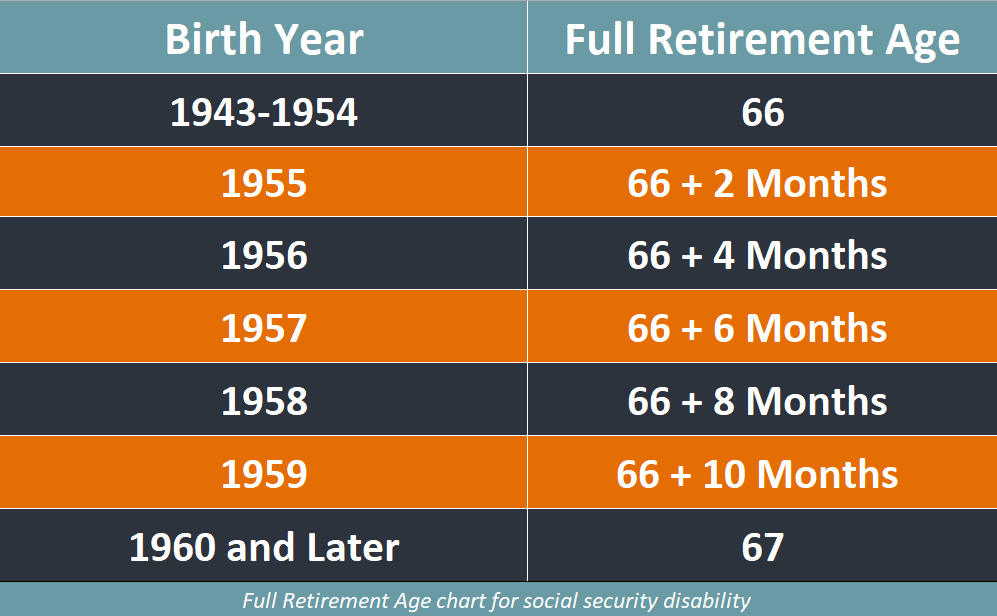
For those born in 1960 or later, the Full Retirement Age is 67. This is the age at which you are entitled to 100% of your calculated PIA. If you were born earlier, your FRA might be 66 or 66 and a few months. Knowing your exact FRA is the “North Star” of your Social Security strategy, as every month you deviate from this date results in a permanent adjustment to your income.
The Penalty for Early Filing (Age 62)
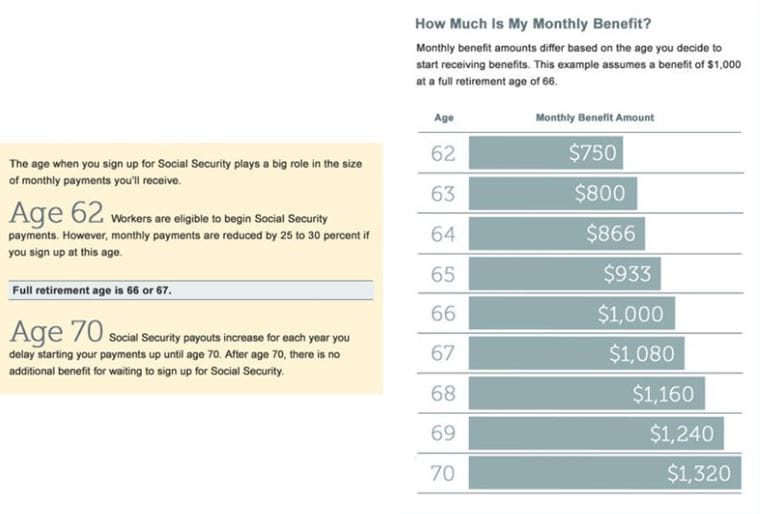
You can choose to take Social Security as early as age 62, but there is a steep price for doing so. Claiming at 62 results in a permanent reduction of up to 30% of your monthly benefit compared to waiting until your FRA. This reduction is actuarially calculated to account for the fact that you will likely receive checks for a longer period. For many, the “break-even point”—the age at which the total value of higher monthly checks surpasses the value of receiving smaller checks earlier—is usually in the late 70s or early 80s.
The Reward for Delayed Retirement (Age 70)
On the opposite end of the spectrum, if you delay claiming benefits past your FRA, you earn “delayed retirement credits.” For every year you wait beyond your FRA, up to age 70, your benefit increases by 8% annually. This is a guaranteed, simple interest return that is virtually unmatched by any low-risk investment product on the market. By waiting until age 70, someone with an FRA of 67 could receive 124% of their PIA for the rest of their life.
Factors That Can Adjust Your Benefit Amount
Your check isn’t just determined by your past; it’s also influenced by current economic conditions and your ongoing financial activity.
Cost-of-Living Adjustments (COLA)
One of the most valuable features of Social Security is the Cost-of-Living Adjustment, or COLA. Each year, the SSA reviews the Consumer Price Index for Urban Wage Earners and Clerical Workers (CPI-W). If inflation has occurred, benefits are increased to help retirees maintain their purchasing power. In years of high inflation, these adjustments can be substantial, providing a critical hedge that most private annuities or savings accounts cannot offer.
Tax Implications on Social Security Income
It is a common misconception that Social Security is tax-free. Depending on your “provisional income”—which includes your adjusted gross income, tax-exempt interest, and half of your Social Security benefits—you may owe federal income taxes on up to 85% of your benefits. For individuals earning between $25,000 and $34,000, 50% of benefits may be taxable. Above $34,000, that figure rises to 85%. Managing your withdrawals from taxable IRAs and 401(k)s is essential to minimize this “tax torpedo.”
The Retirement Earnings Test
If you choose to work while receiving Social Security benefits before you reach your FRA, you may be subject to the Retirement Earnings Test. If your earnings exceed a certain annual limit ($22,320 in 2024), the SSA will temporarily withhold a portion of your benefits ($1 for every $2 earned above the limit). It is important to note that these benefits are not “lost” forever; once you reach your FRA, the SSA recalculates your benefit amount to account for the months they were withheld, effectively giving you a raise.
Spousal and Survivor Benefits
Social Security is designed to protect families, not just individuals. This introduces a layer of complexity for married couples and even divorced individuals.
Claiming as a Spouse
A spouse is generally eligible to receive up to 50% of the other spouse’s PIA, provided they are at least 62 years old and the higher-earning spouse has already filed for their own benefits. If your own work record entitles you to a benefit that is smaller than 50% of your spouse’s, the SSA will “top off” your check to reach that 50% threshold.
Benefits for Divorced Spouses
If you were married for at least 10 years and have been divorced for at least two years, you may be eligible to claim benefits based on your ex-spouse’s earnings record. The best part is that this does not impact the ex-spouse’s benefit, nor does it impact the benefit of their current spouse if they have remarried. This provides a vital financial safety net for those who may have spent years out of the workforce during a marriage.
Understanding Survivor Benefits
Survivor benefits are perhaps the most critical component of the system for long-term financial security. When one spouse passes away, the surviving spouse has the option to switch to the deceased spouse’s benefit amount if it is higher than their own. This is why it is often recommended that the highest earner in a household delays claiming until age 70; it not only maximizes their own check but also maximizes the potential survivor benefit for the remaining spouse.
Strategies to Maximize Your Lifetime Payout
Knowing “how much you get” is the start; knowing how to get the most is the goal. Maximizing Social Security requires a holistic look at your entire financial portfolio.
Coordination Between Spouses
For married couples, the strategy should focus on the “household total” rather than individual checks. Often, the optimal strategy involves the lower-earning spouse claiming early to provide some cash flow, while the higher-earning spouse delays until age 70. This locks in the highest possible base for a survivor benefit and ensures that at least one check is as large as possible to hedge against longevity risk.
The Importance of Accurate Earnings Records
Your benefit is only as accurate as the data the SSA has. It is highly recommended to create a “my Social Security” account online and review your Social Security Statement annually. If an employer failed to report earnings correctly twenty years ago, it could be costing you money every month in retirement. Correcting these errors early is much easier than trying to fix them once you have already retired.
Integrating Social Security into a Total Retirement Plan
Social Security was never intended to be your sole source of income; it was designed to replace roughly 40% of the average worker’s pre-retirement earnings. To thrive in retirement, Social Security must be balanced with personal savings, investments, and perhaps part-time income. By understanding exactly how much you can expect from the government, you can more accurately determine your “savings gap”—the amount you need to withdraw from your own portfolios to maintain your desired lifestyle.
In conclusion, while the question of how much you receive from Social Security depends on a complex web of earnings history, age, and marital status, the system is transparent enough for those who take the time to study it. By making informed decisions about when to file and how to coordinate with other assets, you can transform Social Security from a confusing government program into a powerful engine for financial independence.
aViewFromTheCave is a participant in the Amazon Services LLC Associates Program, an affiliate advertising program designed to provide a means for sites to earn advertising fees by advertising and linking to Amazon.com. Amazon, the Amazon logo, AmazonSupply, and the AmazonSupply logo are trademarks of Amazon.com, Inc. or its affiliates. As an Amazon Associate we earn affiliate commissions from qualifying purchases.