
For many Americans, Social Security represents the bedrock of their retirement strategy. Whether you are decades away from leaving the workforce or are currently finalizing your retirement timeline, the question “How much will I get?” is more than a matter of curiosity—it is a critical calculation for your long-term financial health.
Understanding your projected Social Security benefit requires a deep dive into your earning history, the timing of your claim, and the mathematical formulas used by the Social Security Administration (SSA). In this comprehensive guide, we will break down the mechanics of these payments, the variables that can increase or decrease your check, and the strategic decisions you must make to ensure a stable financial future.
Understanding the Mechanics of Social Security Benefits
The Social Security system is designed to replace a portion of your pre-retirement income based on your lifetime earnings. However, the amount is not a flat rate, nor is it a simple reflection of what you paid in taxes. It is a progressive benefit that weighs lower earnings more heavily than higher earnings.
How Your 35 Highest-Earning Years Impact Your Check
The SSA calculates your benefit based on your “Average Indexed Monthly Earnings” (AIME). To find this number, the SSA looks at your entire work history and selects the 35 years in which you earned the most, adjusted for inflation.
If you have worked fewer than 35 years, the SSA fills in the remaining years with zeros. This can significantly drag down your average and, consequently, your monthly check. For those in the “Money” niche looking to optimize their personal finances, working an extra year or two to replace a “zero” or a low-earning year from your youth can result in a permanent increase in your lifetime benefits.
The Role of the Primary Insurance Amount (PIA)
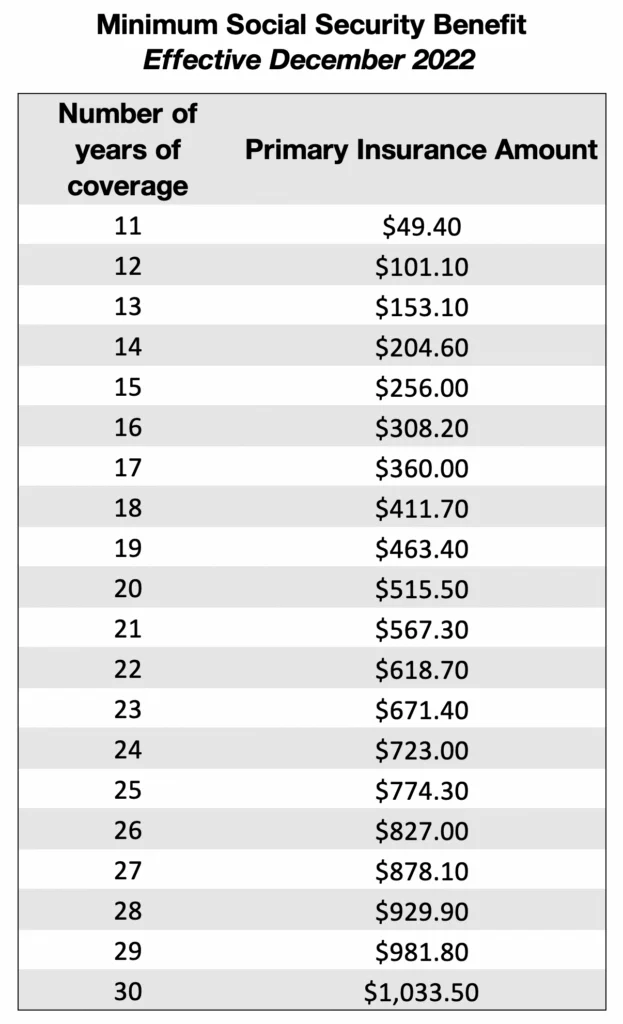
Once your AIME is determined, the SSA applies a formula to calculate your Primary Insurance Amount (PIA). The PIA is the base amount you are entitled to receive if you claim benefits exactly at your Full Retirement Age (FRA).
The formula uses “bend points”—fixed dollar amounts that change annually—to determine how much of your AIME is replaced. For example, the first portion of your earnings is replaced at a 90% rate, the middle portion at 32%, and the highest portion at 15%. This structure ensures that while higher earners receive larger checks in absolute terms, lower earners receive a higher percentage of their previous income as a benefit.
Factors That Determine Your Monthly Payment Amount
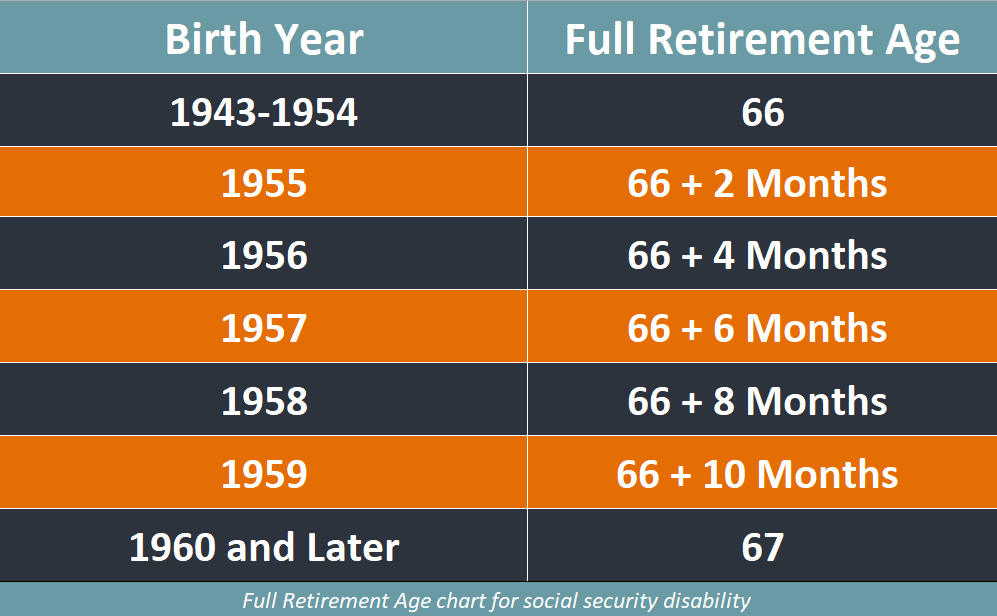
While your earning history sets the foundation, your age at the time of filing is the most significant variable under your control. The Social Security “clock” revolves around your Full Retirement Age, which varies depending on the year you were born.
The Importance of Full Retirement Age (FRA)
For anyone born in 1960 or later, the FRA is 67. If you were born earlier, it may be 66 or a few months thereafter. Reaching your FRA is a milestone because it is the point at which you receive 100% of your calculated PIA.
From a financial planning perspective, knowing your FRA is essential for budgeting. If you claim before this age, your benefits are permanently reduced. If you claim after, they are permanently increased.
The Impact of Claiming Early vs. Delaying Benefits
The windows for claiming Social Security open at age 62 and stay open until age 70. The financial implications of this choice are profound:
- Claiming at 62: You can start receiving checks early, but your monthly benefit will be reduced by up to 30% compared to your FRA amount. This is often a choice made out of necessity or poor health, but for those with sufficient assets, it is usually the least efficient way to collect benefits.
- Delaying until 70: For every year you wait past your FRA to claim, your benefit increases by approximately 8% through “Delayed Retirement Credits.” By waiting from age 67 to 70, you can increase your monthly check by 24%. In the world of investing, a guaranteed, inflation-adjusted 8% annual return is nearly impossible to find elsewhere, making the “wait-and-see” approach a powerful wealth-building tool.
Estimating Your Benefits: Tools and Calculations
You do not have to guess what your future checks will look like. The SSA provides several tools to help you model different scenarios based on your actual tax records.
Using the Social Security Administration’s Online Calculator
The most accurate way to answer “how much do I get” is to create a “my Social Security” account on the official SSA website. This portal provides a personalized “Social Security Statement” that lists your year-by-year earnings and provides estimates for benefits at ages 62, FRA, and 70.
When reviewing this statement, it is vital to verify that your earnings history is correct. If an employer failed to report your income accurately twenty years ago, it could be costing you hundreds of dollars in retirement benefits today. Correcting these errors early is a hallmark of proactive personal finance management.
Factoring in Cost-of-Living Adjustments (COLA)
One of the most valuable features of Social Security is that it is inflation-protected. Each year, the SSA may apply a Cost-of-Living Adjustment (COLA) based on the Consumer Price Index.
While COLA is not a “raise” in purchasing power, it ensures that your benefit maintains its value as the cost of goods and services rises. When estimating your future income, you should account for these adjustments, as they can cause your monthly check to grow significantly over a 20- or 30-year retirement.
Strategic Considerations for Different Financial Profiles
Social Security is not a “one size fits all” program. Depending on your marital status and your total income, your strategy might shift to focus on family benefits or tax mitigation.
Spousal and Survivor Benefits
Married couples have access to unique strategies that can maximize their collective household income. A lower-earning spouse is entitled to a “Spousal Benefit,” which can be up to 50% of the higher-earning spouse’s PIA.
Furthermore, survivor benefits allow a widowed spouse to inherit the higher of the two checks being received by the couple. For the high-earner in a marriage, delaying benefits until age 70 isn’t just about their own check; it is about providing a larger “insurance policy” for the surviving spouse.
Taxation of Social Security Benefits
A common surprise for retirees is that Social Security benefits can be taxable. If your “combined income” (your adjusted gross income + nontaxable interest + half of your Social Security benefits) exceeds certain thresholds, up to 85% of your benefits may be subject to federal income tax.
- Individual Filers: If income is between $25,000 and $34,000, 50% of benefits may be taxed. Above $34,000, up to 85% may be taxed.
- Joint Filers: If income is between $32,000 and $44,000, 50% may be taxed. Above $44,000, up to 85% may be taxed.
Understanding these “tax torpedoes” is essential for managing your retirement withdrawals from 401(k)s and IRAs to keep your tax liability as low as possible.
Maximizing Your Payout: Proactive Steps for Future Retirees
If you are still in your working years, you have the power to influence the “how much” of your future Social Security.
Increasing Your Earnings Record
Since your benefit is based on your 35 highest-earning years, any increase in your current income helps. This includes taking on side hustles, pursuing promotions, or negotiating higher salaries. Because Social Security taxes are capped (the Social Security Wage Base), high earners should aim to reach that cap consistently to ensure they receive the maximum possible PIA.

Coordination with Other Retirement Assets
Social Security should not be viewed in a vacuum. It is one part of a “three-legged stool” that also includes personal savings (IRAs, 401(k)s) and pensions.
A sophisticated financial strategy often involves “spending down” taxable brokerage accounts or traditional IRAs in the years between retirement and age 70. This allows you to delay claiming Social Security, thereby locking in a much higher guaranteed monthly payment for life. This “bridge strategy” uses your liquid assets to “buy” a higher inflation-indexed annuity from the government.
In conclusion, the amount you get from Social Security is a direct result of your lifetime earnings and the timing of your claim. By understanding the 35-year rule, the impact of claiming ages, and the nuances of spousal benefits and taxation, you can transform Social Security from a passive benefit into a powerful, optimized component of your personal financial portfolio. Planning today ensures that when the time comes to stop working, your Social Security check provides the maximum possible support for your lifestyle.
aViewFromTheCave is a participant in the Amazon Services LLC Associates Program, an affiliate advertising program designed to provide a means for sites to earn advertising fees by advertising and linking to Amazon.com. Amazon, the Amazon logo, AmazonSupply, and the AmazonSupply logo are trademarks of Amazon.com, Inc. or its affiliates. As an Amazon Associate we earn affiliate commissions from qualifying purchases.