
For many Americans, Social Security is not just a government program; it is the bedrock of their retirement strategy. As you transition from your earning years to your golden years, the question “How much will I receive?” becomes central to your financial planning. While the Social Security Administration (SSA) provides annual statements, the actual dollar amount you receive is influenced by a complex interplay of your career earnings, the age at which you claim, and even the current economic climate.
Understanding how these benefits are calculated and how you can influence the final number is essential for anyone looking to secure their financial future. In this guide, we will break down the mechanics of Social Security benefits, explore the impact of timing, and discuss strategies to ensure you are getting the most out of the system.
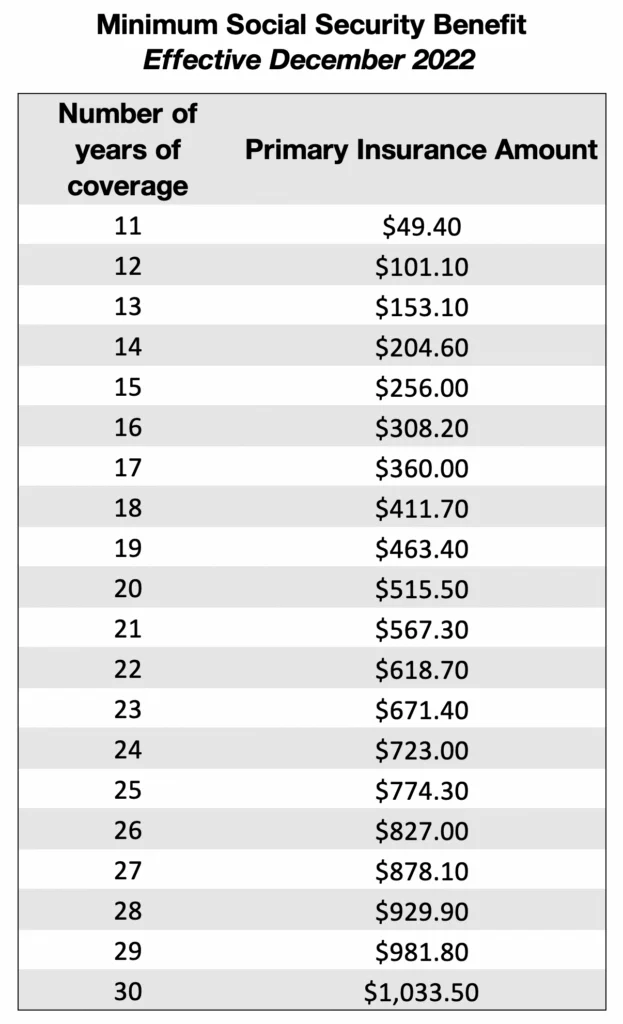
Understanding the Mechanics: How Your Social Security Benefit is Calculated
The formula used by the Social Security Administration is significantly different from a standard pension or a 401(k) withdrawal. It is designed to be progressive, meaning it replaces a higher percentage of income for lower earners than for higher earners, though higher earners still receive a larger total monthly check.
The Role of Your Top 35 Years of Earnings
The calculation begins with your earnings history. The SSA looks at your entire work record and selects the 35 years in which you earned the most, adjusted for inflation. This adjustment, known as “indexing,” ensures that the $20,000 you earned in 1990 is treated with the same relative value as today’s wages.
If you have fewer than 35 years of covered earnings, the SSA fills in the remaining years with zeros. This can significantly drag down your average, which is why financial planners often suggest working at least 35 years—or replacing low-earning early years with high-earning later years—to maximize the benefit amount.
Average Indexed Monthly Earnings (AIME) and Primary Insurance Amount (PIA)
Once your top 35 years are indexed and averaged, the SSA determines your Average Indexed Monthly Earnings (AIME). This figure is then put through a formula to determine your Primary Insurance Amount (PIA). The PIA is the base amount you are entitled to if you file for benefits exactly at your Full Retirement Age (FRA).
The formula uses “bend points,” which are dollar thresholds that change annually. For example, in 2024, the formula might take 90% of the first $1,174 of your AIME, 32% of earnings between $1,174 and $7,078, and 15% of any amount above that. This tiered structure is why your “how much” depends heavily on where your lifetime average falls within these brackets.
The Timing Factor: How Age Influences Your Monthly Check
Knowing your PIA is only the first step. The actual amount that hits your bank account depends heavily on when you choose to start receiving benefits. You can claim as early as age 62 or as late as age 70, but the financial implications of this choice are permanent.
The Impact of Filing Early at Age 62
The earliest you can claim Social Security retirement benefits is age 62. However, doing so comes at a steep price. If you claim at 62, your monthly benefit is permanently reduced by up to 30% compared to what you would have received at your Full Retirement Age.
This reduction is calculated on a monthly basis. For those who need the cash flow immediately or have health concerns that might shorten their life expectancy, filing early may be a logical choice. However, from a strictly financial growth perspective, filing at 62 results in the lowest possible monthly payout.
Reaching Full Retirement Age (FRA)
Your Full Retirement Age is the point at which you are entitled to 100% of your PIA. For anyone born in 1960 or later, the FRA is 67. If you were born earlier, your FRA may be 66 and a certain number of months.
Waiting until your FRA ensures that you do not face “early filing” penalties. Additionally, if you are still working while receiving benefits, reaching your FRA is a major milestone because the “Social Security Earnings Test” no longer applies. Before FRA, if you earn over a certain limit, the SSA temporarily withholds a portion of your benefits. After FRA, you can earn an unlimited amount without any reduction in your monthly check.
The Power of Delayed Retirement Credits up to Age 70
The most effective way to increase your Social Security benefit is to wait beyond your FRA. For every year you delay claiming benefits past your Full Retirement Age, your benefit increases by approximately 8% per year. This increase continues until you reach age 70.
This means that if your FRA is 67 and you wait until 70, you will receive 124% of your PIA. There is no financial incentive to wait past age 70, as the credits stop accumulating. For those in good health with other assets to live on in the meantime, waiting until 70 is often the most powerful way to guarantee a high, inflation-adjusted income stream for the rest of their lives.
Maximum Benefits and Current Averages
To understand where you fit in the financial landscape, it is helpful to look at the current averages and the maximum possible payouts. These numbers change annually based on wage growth and inflation.

What is the Maximum Social Security Payout?
The maximum Social Security benefit is reserved for those who have consistently earned at or above the “taxable maximum” for at least 35 years and who wait until age 70 to claim. In 2024, the maximum monthly benefit for someone retiring at age 70 is $4,873. For someone retiring at age 62 in 2024, the maximum is significantly lower, at $2,710.
While most Americans will not reach the maximum, these figures illustrate the ceiling of the program. For the average retired worker, the monthly benefit in early 2024 is approximately $1,900. Knowing these benchmarks helps you determine how much of your lifestyle Social Security will cover and how much you will need to draw from personal savings.
Understanding the Cost-of-Living Adjustment (COLA)
One of the most valuable features of Social Security is the Cost-of-Living Adjustment, or COLA. Unlike most private annuities or pensions, Social Security benefits are adjusted annually to keep pace with inflation, based on the Consumer Price Index (CPI-W).
In years of high inflation, such as 2023, the COLA can be as high as 8.7%. In years of low inflation, it may be 1% or 2%. This adjustment is vital for maintaining purchasing power over a retirement that could last 30 years or more. When calculating “how much” you will receive, you must factor in that your initial benefit is just the starting point; the nominal dollar amount will likely grow every year.
Beyond the Retiree: Benefits for Spouses and Survivors
Social Security is not just an individual benefit; it is a family-based insurance program. This is a critical aspect of personal finance that many overlook when estimating their total household income.
How Spousal Benefits Work
If you are married, you may be entitled to a spousal benefit that can be up to 50% of your spouse’s PIA. This is particularly beneficial in households where one spouse had significantly higher lifetime earnings than the other.
The SSA will automatically give you whichever is higher: your own retirement benefit based on your work record, or the spousal benefit. It is important to note that you cannot “double dip” and receive both in full, but the spousal option provides a safety net for lower-earning spouses.
Survivor Benefits and Protecting Your Loved Ones
Perhaps the most significant “hidden” value of Social Security is the survivor benefit. If a higher-earning spouse passes away, the surviving spouse is typically eligible to inherit 100% of the deceased spouse’s monthly benefit (assuming the survivor has reached their own FRA).
This makes the decision of when the higher earner claims benefits even more critical. If the high-earning spouse waits until 70 to maximize their check, they are not just increasing their own income; they are potentially increasing the lifelong income of their surviving spouse.
Strategies to Optimize Your Social Security Payout
Maximizing “how much” you get from Social Security requires more than just waiting; it requires a holistic view of your financial picture, including taxes and other investment accounts.
Managing Taxes on Social Security Income
Many retirees are surprised to learn that Social Security benefits can be taxable. If your “provisional income” (which includes half of your Social Security benefits, plus your other adjusted gross income and tax-exempt interest) exceeds certain thresholds, up to 85% of your benefits may be subject to federal income tax.
To optimize your take-home amount, you might consider shifting your withdrawal strategy. For example, drawing more from a Roth IRA (which is tax-free) and less from a traditional 401(k) can keep your provisional income lower, thereby reducing the tax bite on your Social Security checks.
Coordinating with Other Retirement Accounts
Social Security should be viewed as the “bond” portion of your retirement portfolio. Because it is backed by the government and adjusted for inflation, it is a very stable asset.
If you have a well-funded 401(k) or brokerage account, it may make sense to spend down some of those assets between the ages of 62 and 70 to allow your Social Security benefit to grow. By using your private savings to “bridge” the gap to age 70, you are essentially “buying” a larger government-guaranteed, inflation-indexed annuity that you cannot outlive.

Conclusion
The answer to “how much are social security benefits” is rarely a single number. Instead, it is a variable that you can control through your career choices, your filing age, and your tax planning. By understanding the 35-year calculation, the 8% annual growth for delaying benefits, and the protections offered to spouses, you can transform Social Security from a mysterious government check into a powerful engine for financial security.
As you plan your exit from the workforce, treat Social Security as a cornerstone of your wealth management strategy. The difference between an uninformed claim at 62 and a strategic claim at 70 can amount to hundreds of thousands of dollars over the course of your retirement. Planning today ensures that you receive every dollar you have earned through years of hard work.
aViewFromTheCave is a participant in the Amazon Services LLC Associates Program, an affiliate advertising program designed to provide a means for sites to earn advertising fees by advertising and linking to Amazon.com. Amazon, the Amazon logo, AmazonSupply, and the AmazonSupply logo are trademarks of Amazon.com, Inc. or its affiliates. As an Amazon Associate we earn affiliate commissions from qualifying purchases.