
The question “how much does child support cost?” is far more complex than a simple dollar figure. It delves deep into personal finance, legal frameworks, and the profound responsibility of ensuring a child’s well-being post-separation or divorce. For many parents, understanding the financial implications of child support is a critical step in rebuilding their lives and securing their children’s future. This article aims to demystify child support, breaking down the factors that influence its cost, the processes involved, and the broader financial landscape surrounding it, all from a purely financial and personal finance perspective.

Child support is not a punitive measure but rather a legal obligation designed to ensure that both parents contribute financially to the upbringing of their children, regardless of their marital status or living arrangements. Its primary goal is to maintain, as much as possible, the standard of living the child would have experienced had the parents remained together. While the specific calculations vary significantly by jurisdiction, the underlying principles revolve around fairness, proportionality, and the child’s best interests. Navigating this financial obligation requires a clear understanding of income, expenses, and legal guidelines, making it a cornerstone of post-separation financial planning.
The Foundational Principles of Child Support Calculation
At its core, child support aims for an equitable distribution of financial responsibility. Courts and state guidelines use various models to determine the appropriate amount, taking into account a range of financial data from both parents. Understanding these foundational principles is the first step in estimating potential costs.
The “Income Shares” Model
Prevalent in the majority of U.S. states, the Income Shares Model is predicated on the belief that a child should receive the same proportion of parental income they would have received if the parents lived together. Here’s how it generally works:
- Calculate Combined Parental Income: The gross (or sometimes net) income of both parents is determined and added together. This often includes salaries, wages, bonuses, commissions, self-employment income, and even passive income sources like rental income or dividends.
- Determine Basic Support Obligation: A state-specific schedule or formula is then applied to this combined income to ascertain a basic support amount. This amount typically covers food, clothing, housing, and other fundamental needs. The schedule usually increases with income and the number of children.
- Prorate the Obligation: Each parent’s share of this basic obligation is then calculated proportionally to their share of the combined parental income. For example, if Parent A earns 60% of the combined income, they are responsible for 60% of the basic support obligation.
- Adjust for Overnights and Other Expenses: Further adjustments are made based on the number of overnight stays each parent has with the children, as well as specific costs like health insurance premiums and childcare expenses. The parent who is designated as the “payor” will then pay their calculated share to the “recipient” parent.
This model seeks to maintain consistency in the child’s financial well-being by reflecting the household income they would have experienced in an intact family.
The “Percentage of Income” Model
Less common but still utilized in some states, the Percentage of Income Model is simpler in its approach. Under this model, child support is calculated as a percentage of the non-custodial parent’s income. This percentage can be fixed or variable, often increasing with the number of children needing support.
- Identify Non-Custodial Parent’s Income: The model primarily focuses on the income of the parent who will be paying support.
- Apply State-Specific Percentage: A predetermined percentage is applied to this income. For instance, a state might mandate that child support equals 17% of the non-custodial parent’s gross income for one child, 25% for two children, and so on.
- Limited Adjustments: While there may be some provisions for extraordinary expenses or health insurance, this model generally offers fewer direct adjustments based on the custodial parent’s income or parenting time compared to the Income Shares Model.
This model is often praised for its simplicity but can sometimes be criticized for not fully considering the financial circumstances of both parents or the impact of extensive shared parenting time.
Deviating from Guidelines: When and Why
While state guidelines provide a framework, courts retain the discretion to deviate from these calculations under specific circumstances. This flexibility acknowledges that every family’s financial situation is unique. Common reasons for deviation include:
- Extraordinary Needs of the Child: Children with special medical conditions, disabilities, or unique educational requirements may necessitate higher support payments.
- Unusual Income or Expenses: Situations where a parent has exceptionally high income, very low income, or unusual debt obligations might warrant a deviation.
- Other Children in the Household: A parent supporting other children from different relationships might see their support obligation adjusted.
- Assets and Resources: Significant assets or wealth that do not generate typical income might be considered.
- Agreements Between Parents: If both parents agree to a different support amount that serves the child’s best interests, the court may approve it, provided it’s not below the child’s basic needs.
Deviations are not granted lightly and usually require compelling evidence to justify why the standard guidelines would be unjust or inappropriate.
Key Factors Determining Child Support Amounts
Beyond the overarching models, several specific financial and custodial factors heavily influence the final child support amount. These variables are critical for any parent trying to estimate their financial obligations or entitlements.
Parental Income and Earning Capacity
This is arguably the most significant factor. Courts look at both parents’ gross income (before taxes and deductions) and sometimes net income (after taxes and mandatory deductions). Income includes wages, salaries, bonuses, commissions, self-employment profits, disability benefits, unemployment benefits, and even rental income or investment dividends. Courts may also consider “earning capacity” – what a parent could earn – if they believe a parent is voluntarily underemployed or unemployed to avoid support obligations. This assessment ensures a fair contribution based on potential, not just current, earnings.
Number of Children
Naturally, the more children requiring support, the higher the overall financial obligation. Child support schedules are typically tiered, with increasing amounts for each additional child. This acknowledges the multiplied expenses associated with multiple dependents.
Custody Arrangements and Overnight Stays
The amount of time each parent spends with the children (parenting time or overnight stays) plays a crucial role, especially in Income Shares states. When parents share custody more equally (e.g., 50/50 or near 50/50), the basic support obligation may be reduced for the payor parent, as the recipient parent is also bearing direct costs for the child during their time. Many states have specific calculations or adjustments for shared physical custody arrangements, reflecting the direct costs incurred by both parents during their parenting time.
Existing Support Obligations
If a parent is already paying child support for other children from previous relationships or spousal support (alimony), these pre-existing obligations are often deducted from their income before calculating the current child support amount. This prevents undue financial burden and ensures a more realistic assessment of disposable income.
Healthcare Costs and Childcare Expenses

These are often “add-ons” to the basic child support obligation.
- Healthcare: The cost of health insurance premiums for the children is typically factored in, with parents sharing this expense proportionally to their incomes. Unreimbursed medical expenses (deductibles, co-pays, prescriptions not covered by insurance) are also usually shared.
- Childcare: Expenses for daycare, after-school care, or nannies that enable a parent to work or pursue education are frequently included in the support order and shared between parents based on their respective incomes. These are significant costs, especially for younger children, and can substantially increase the total monthly payment.
Beyond Basic Payments: Additional Financial Responsibilities
While the monthly child support payment covers many routine expenses, it often doesn’t encompass every financial need of a growing child. Parents must be aware of additional responsibilities that may arise.
Unreimbursed Medical Expenses
Even with health insurance, children often incur medical costs not fully covered. This includes co-pays, deductibles, prescription costs, dental work, vision care, therapy, and specialist visits. Child support orders typically specify how these unreimbursed expenses will be split, usually proportionally to each parent’s income. It’s crucial for parents to keep meticulous records of these costs for reimbursement.
Educational Expenses
As children grow, educational costs can extend beyond basic school supplies. This might include:
- Private School Tuition: If mutually agreed upon or historically established.
- Tutoring: For academic support.
- Special Education Needs: Costs for specific interventions.
- College Savings: While typically not mandatory, some divorce decrees include provisions for contributing to college savings plans.
- Extracurricular Activities: Sports, music lessons, clubs, and other activities that contribute to a child’s development are often substantial and may be shared.
The inclusion of these expenses in a child support order often depends on the family’s pre-separation lifestyle and specific agreements between parents.
Childcare Costs
As previously mentioned, childcare is a significant expense for working parents. Beyond regular daycare, this can include summer camps, holiday care, or specific childcare arrangements required due to a parent’s work schedule. These costs are almost universally shared, as they are directly linked to a parent’s ability to earn income.
Extraordinary Expenses
These are costs that are unusual, non-recurring, and often substantial. Examples include:
- Special Needs: Expenses related to a child’s disability or chronic illness (e.g., specialized equipment, therapies not covered by insurance).
- Large One-Time Costs: Such as significant orthodontic work, specialized medical procedures, or participation in elite sports programs.
- Travel for Visitation: In some cases, if one parent lives a significant distance away, travel costs for visitation might be shared.
These expenses require clear communication and often prior agreement between parents to avoid disputes.
Navigating the Child Support System: Process and Potential Challenges
Establishing and managing child support involves legal processes that can be daunting. Understanding the typical steps and potential pitfalls is essential for financial preparedness.
Initiating a Child Support Order
The process usually begins when one parent files a petition with the court or a state child support enforcement agency. This triggers a series of steps:
- Paternity Establishment: If the parents were not married, paternity may need to be legally established.
- Financial Disclosure: Both parents are required to provide detailed financial information, including income, assets, and expenses, through documents like income and expense declarations.
- Calculation and Negotiation: Based on the financial disclosures and state guidelines, a preliminary support amount is calculated. Parents may then negotiate an agreement or proceed to a court hearing.
- Court Order: Once an agreement is reached or a judge makes a ruling, a formal child support order is issued, legally binding both parties.
The Role of Legal Counsel
While some parents may attempt to navigate child support on their own, the complexities of financial disclosure, state guidelines, and potential negotiations often make legal counsel invaluable. An attorney can:
- Ensure accurate financial disclosures.
- Argue for appropriate deviations from guidelines when justified.
- Negotiate on your behalf.
- Help you understand your rights and obligations.
- Draft legally sound agreements.
The cost of legal representation is a significant financial consideration, though it can often pay for itself by ensuring a fair and sustainable support order.
Modification of Orders
Life circumstances change, and child support orders can be modified accordingly. Common reasons for modification include:
- Significant Change in Income: A substantial increase or decrease in either parent’s income.
- Change in Custody/Parenting Time: A shift in the number of overnight stays.
- Change in Child’s Needs: New medical or educational requirements.
- Incarceration of a Parent: Which affects earning capacity.
- Job Loss or Disability: Leading to reduced income.
Most states require a “material change in circumstances” to justify a modification. It’s crucial not to unilaterally change payments but to follow legal procedures to amend the order.
Enforcement Mechanisms
When a parent fails to pay child support, various enforcement mechanisms are available:
- Wage Garnishment: Direct deduction from the payor’s wages.
- Tax Refund Intercept: Federal and state tax refunds can be seized.
- Bank Account Levy: Funds can be withdrawn from bank accounts.
- License Suspension: Driving, professional, or recreational licenses can be suspended.
- Credit Reporting: Non-payment can negatively impact credit scores.
- Contempt of Court: In extreme cases, non-paying parents can face fines or even jail time.
These measures underscore the seriousness of child support obligations and the resources available to ensure children receive the financial backing they are entitled to.
Interstate Child Support Cases
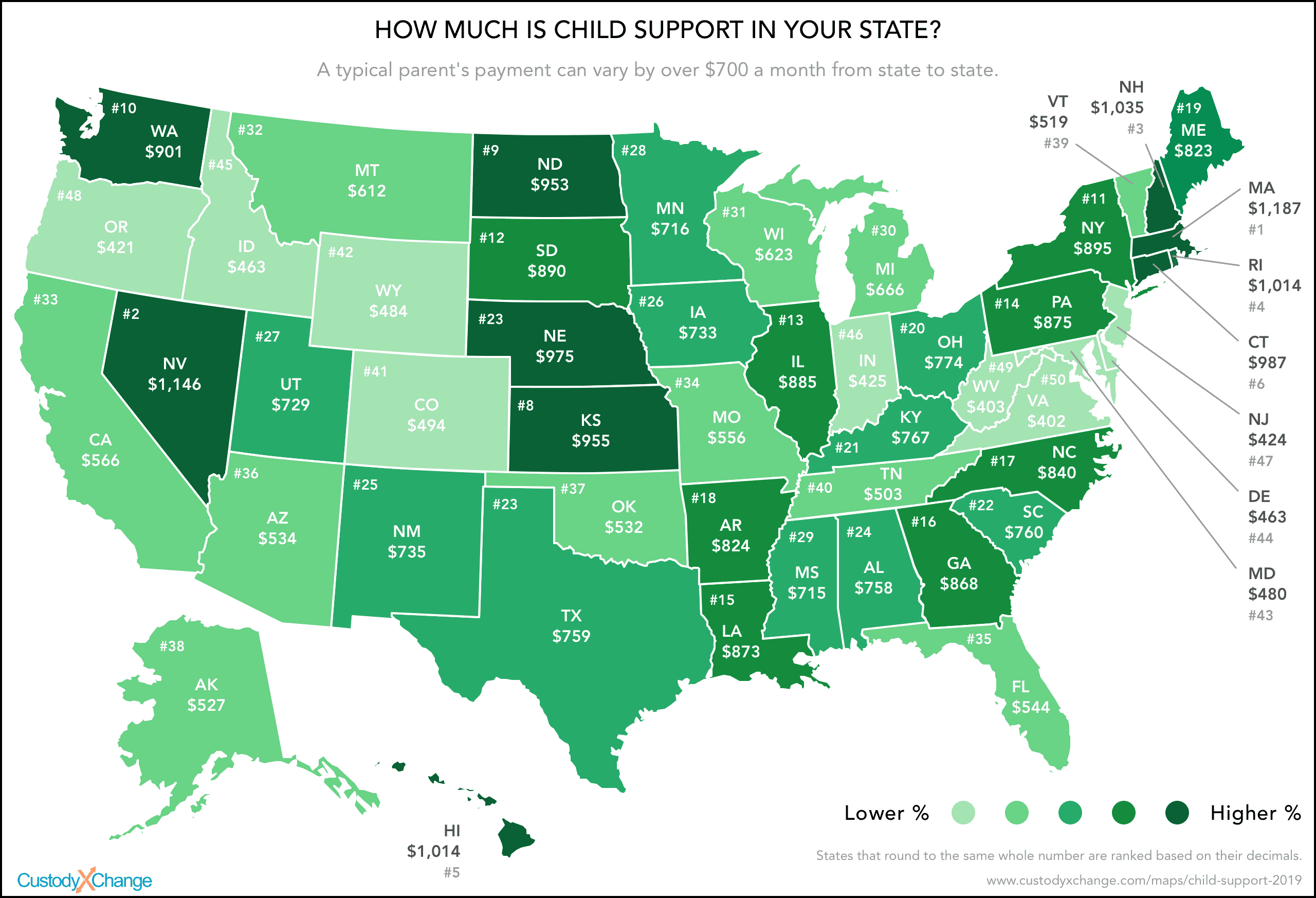
When parents live in different states, child support cases become more complex. The Uniform Interstate Family Support Act (UIFSA) is a federal law that helps states cooperate in establishing, enforcing, and modifying child support orders across state lines. This ensures that a child support order issued in one state is recognized and enforceable in another. These cases often require careful coordination between state child support agencies or experienced legal counsel familiar with interstate laws.
In conclusion, the “cost” of child support is not a fixed number but a dynamic financial responsibility shaped by legal guidelines, individual circumstances, and ongoing needs. It requires meticulous financial planning, diligent record-keeping, and often, legal expertise to navigate effectively. Ultimately, child support is a financial commitment to a child’s future, designed to provide stability and support as they grow, regardless of their parents’ relationship status. Understanding its nuances is paramount for any parent facing this significant financial reality.
aViewFromTheCave is a participant in the Amazon Services LLC Associates Program, an affiliate advertising program designed to provide a means for sites to earn advertising fees by advertising and linking to Amazon.com. Amazon, the Amazon logo, AmazonSupply, and the AmazonSupply logo are trademarks of Amazon.com, Inc. or its affiliates. As an Amazon Associate we earn affiliate commissions from qualifying purchases.