
Navigating the financial complexities of a separation or divorce is a daunting task, particularly when children are involved. In the state of California, child support is not a subjective figure plucked from thin air by a judge; rather, it is the result of a rigorous, mathematically driven process known as the “Statewide Uniform Guideline.” For parents, understanding the financial mechanics behind these calculations is essential for long-term budgeting, tax planning, and ensuring the equitable distribution of resources for the upbringing of their children.
This guide delves into the financial architecture of California child support, exploring the variables that dictate the final dollar amount and the fiscal responsibilities of each party.
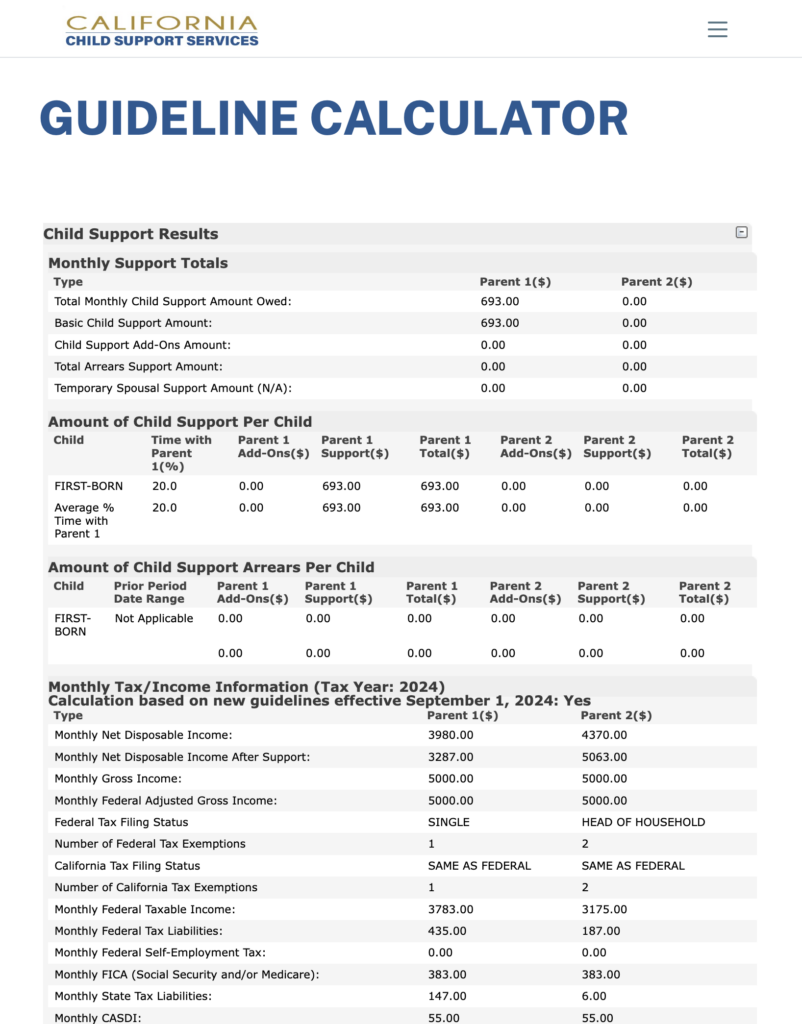
The Mathematical Foundation: Understanding the Statewide Uniform Guideline
California operates on an “Income Shares” model. The philosophy is rooted in the belief that children should receive the same proportion of parental income that they would have received if the parents were still living together in a single household. To ensure consistency across the state—from San Diego to Eureka—California utilizes a specific algebraic formula.
The Logic of the Formula
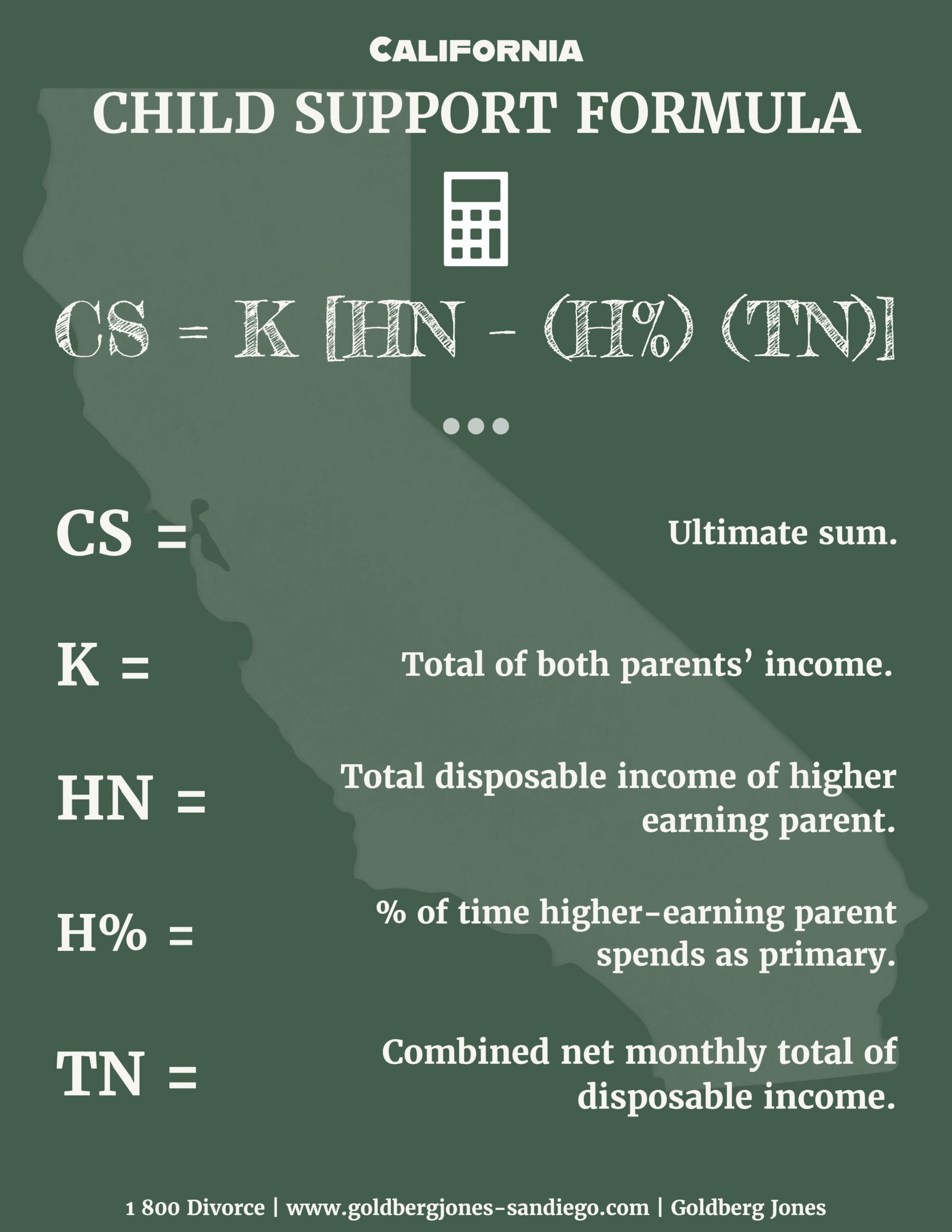
The standard formula used by the courts is expressed as CS = K[HN – (H%)(TN)]. While this looks like something out of a physics textbook, its financial components are straightforward:
- CS is the child support amount.
- K represents the amount of both parents’ income to be allocated for child support.
- HN is the high earner’s net monthly disposable income.
- H% is the approximate percentage of time the high earner has primary physical responsibility for the children.
- TN is the total combined net monthly disposable income of both parties.
The primary goal of this formula is to balance the child’s needs with the parents’ ability to pay, ensuring that the child’s standard of living is maintained as closely as possible to the higher-earning parent’s lifestyle.
The Role of Parenting Time (Timeshare)
From a financial perspective, “timeshare” is one of the most significant variables in the equation. California law recognizes that the parent who spends more time with the child is likely spending more on day-to-day expenses like food, utility increments, and entertainment. Consequently, as a parent’s percentage of physical custody increases, their child support obligation typically decreases (if they are the payer) or their receipt of support increases (if they are the recipient). Accurate record-keeping of the visitation schedule is therefore a vital financial task for both parents.
Income Sources and Financial Deductions
The accuracy of a child support order is entirely dependent on the quality of the financial data entered into the system. In California, “income” is defined broadly, and identifying what counts is the first step in a proper financial assessment.
What Counts as Gross Income?
For the purposes of the guideline, the court looks at “annual gross income” from all sources. This is far more expansive than just a base salary. It includes:
- Wages and Commissions: Standard salary, overtime, bonuses, and tips.
- Business Income: For self-employed individuals or business owners, this includes gross receipts minus the expenditures required to run the business.
- Passive Income: Dividends, interest, rental income, and royalties.
- Benefit Replacements: Workers’ compensation, unemployment insurance, and disability benefits.
- Social Security: Often included, depending on the specific type of benefit.
Notably, California courts can also “impute” income. If a parent is found to be intentionally underemployed or unemployed despite having the ability and opportunity to work, the court may calculate support based on what that parent could be earning rather than what they are earning.
Allowable Deductions to Reach Net Income
The formula calculates support based on net disposable income, not gross income. To arrive at this figure, several financial deductions are permitted:
- State and Federal Taxes: Based on actual filing status and the number of exemptions.
- FICA/Social Security: Mandatory payroll taxes.
- Mandatory Union Dues: If required as a condition of employment.
- Health Insurance Premiums: Costs paid for the parent and any children for whom they are responsible.
- Mandatory Retirement Contributions: Only if they are a required condition of employment (e.g., certain public sector pensions).
- Hardship Deductions: In limited cases, the court may allow deductions for extraordinary medical expenses or uninsured catastrophic losses.
Add-Ons and Special Financial Considerations
The “Guideline” amount covers basic necessities like housing, food, and clothing. However, raising a child involves significant “add-on” expenses that are handled separately from the base monthly payment. These are usually split 50/50 between the parents, though the court has the discretion to divide them differently based on income ratios.
Mandatory Add-Ons
There are two categories of expenses that the court must order to be shared:
- Childcare Costs: Financial responsibility for childcare related to employment or necessary education/training for job skills. In high-cost areas of California, these monthly figures can often rival the base support amount.
- Unreimbursed Medical Expenses: This includes co-pays, deductibles, dental work, vision care, and orthodontic treatments that are not covered by insurance.
Discretionary Add-Ons
The court may also order additional payments for specific circumstances. These often include:
- Educational Expenses: Private school tuition or specialized tutoring if it meets the child’s particular needs or if there is a history of the child attending such institutions.
- Extracurricular Activities: Costs for sports, music lessons, or summer camps.
- Travel for Visitation: If one parent lives a significant distance away, the costs associated with transporting the child for visitation (flights, gas, etc.) can be factored into the financial arrangement.
Financial Impacts of Deviating from the Formula
While the California Guideline is presumed to be correct, the law allows for “rebuttable” deviations. In certain financial scenarios, the formulaic approach might lead to an unjust or inappropriate result.
Low-Income Adjustments
For parents earning very little, a “low-income adjustment” may be applied. If the payer’s net monthly disposable income is below a certain threshold (adjusted annually for inflation), the court can reduce the support amount to ensure the payer can still meet their own basic subsistence needs. This is a critical protection to prevent the accumulation of unmanageable debt.
High-Earner Scenarios and the “Wealthy Parent” Standard
On the opposite end of the spectrum, California has specific rules for “extraordinarily high earners.” If the guideline formula produces an amount that far exceeds the actual needs of the child—even when accounting for the parent’s high standard of living—the court may deviate downward. However, the burden of proof is on the high-earning parent to show that the formulaic amount is “excessive.” In these cases, financial experts are often brought in to testify about the “lifestyle” costs versus the “mathematical” costs.
Long-term Financial Planning and Modifications
Child support is rarely a “set it and forget it” arrangement. As the financial circumstances of the parents change, or the needs of the child evolve, the support amount must be adjusted to reflect current reality.
When to Seek a Modification
A parent can request a modification of child support whenever there is a “significant change in circumstances.” Common financial triggers include:
- Income Fluctuations: A significant raise, a job loss, or a career change.
- Changes in Custody: An adjustment to the timeshare percentage (e.g., a child moving from one parent’s house to the other).
- New Children: If a parent has a new biological or adopted child from a different relationship, this may impact the available income for the current support order.
From a financial planning perspective, it is unwise to wait to file for a modification. In California, child support orders generally cannot be changed retroactively. The new amount typically only applies back to the date of the formal filing of the motion.
The Impact of Taxes on Support Calculations
It is important to note a major shift in the financial landscape regarding taxes: under current federal tax law (post-2018), child support payments are not tax-deductible for the payer and are not considered taxable income for the recipient. This makes the “net” figure in the calculation even more critical, as it represents “real dollars” that do not carry an additional tax burden for the person receiving them.

Conclusion: Navigating the Fiscal Reality
Calculating child support in California is a rigorous financial exercise that requires transparency and precision. By focusing on the core components—gross income, allowable deductions, and timeshare percentages—parents can better predict their financial futures.
Whether you are the one providing support or the one receiving it, the goal remains the same: ensuring that the financial resources are available to provide the child with a stable, healthy, and supportive environment. Because the software used by the courts (often “Dissomaster” or “XSpouse”) is highly complex, parents are encouraged to perform their own due diligence, maintain meticulous financial records, and consult with financial or legal professionals to ensure the guideline calculation accurately reflects their unique economic situation.
aViewFromTheCave is a participant in the Amazon Services LLC Associates Program, an affiliate advertising program designed to provide a means for sites to earn advertising fees by advertising and linking to Amazon.com. Amazon, the Amazon logo, AmazonSupply, and the AmazonSupply logo are trademarks of Amazon.com, Inc. or its affiliates. As an Amazon Associate we earn affiliate commissions from qualifying purchases.