
In the world of finance, numbers are the language of progress. Whether you are tracking the growth of a personal savings account, evaluating the performance of a stock portfolio, or analyzing the annual revenue of a burgeoning business, the ability to quantify change is essential. One of the most fundamental yet powerful tools in a financier’s arsenal is the calculation of percentage increase.
Understanding how to find the percent increase between two numbers allows you to move beyond raw data and see the “big picture.” A $1,000 gain means something very different if your initial investment was $1,000 versus $100,000. By converting these changes into percentages, you gain a standardized metric to compare various assets and financial milestones. This guide will walk you through the essential formulas, practical applications in investing, and the nuances of business finance.
The Fundamental Formula for Financial Analysis
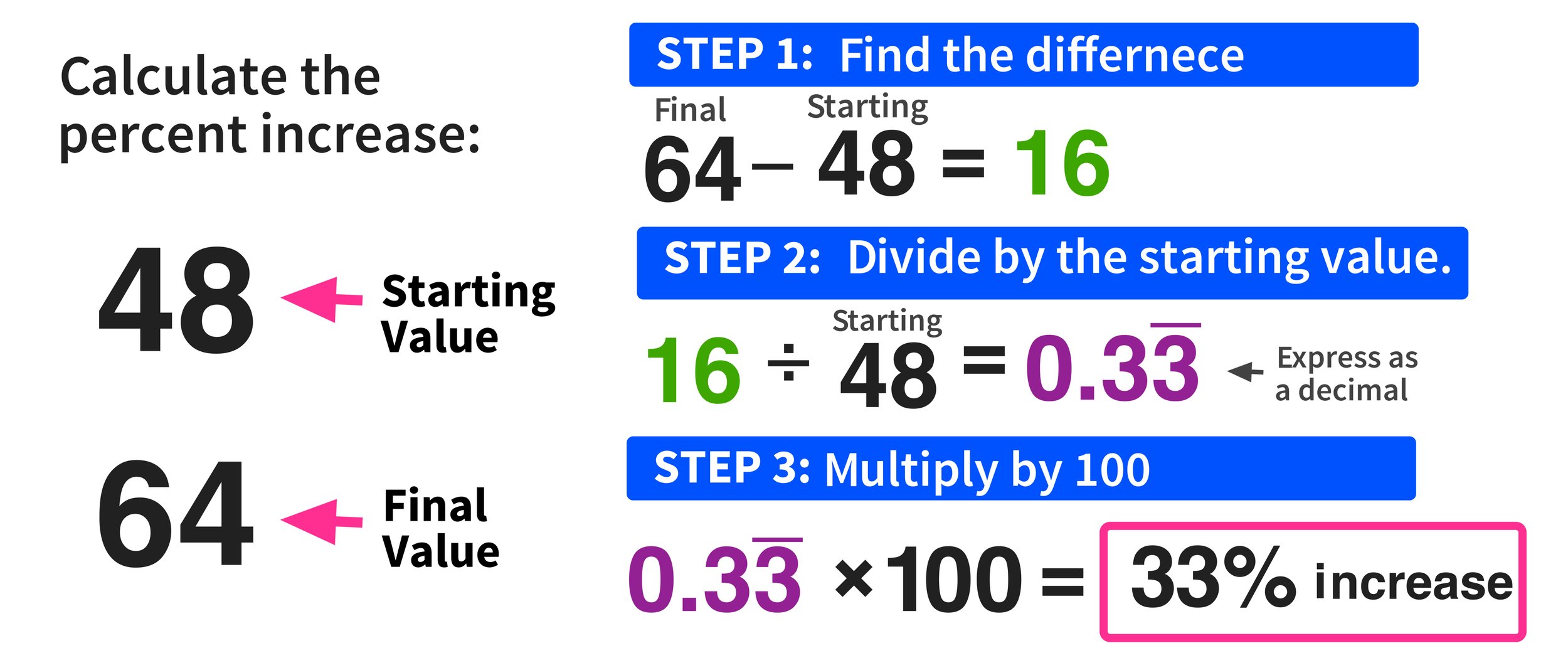
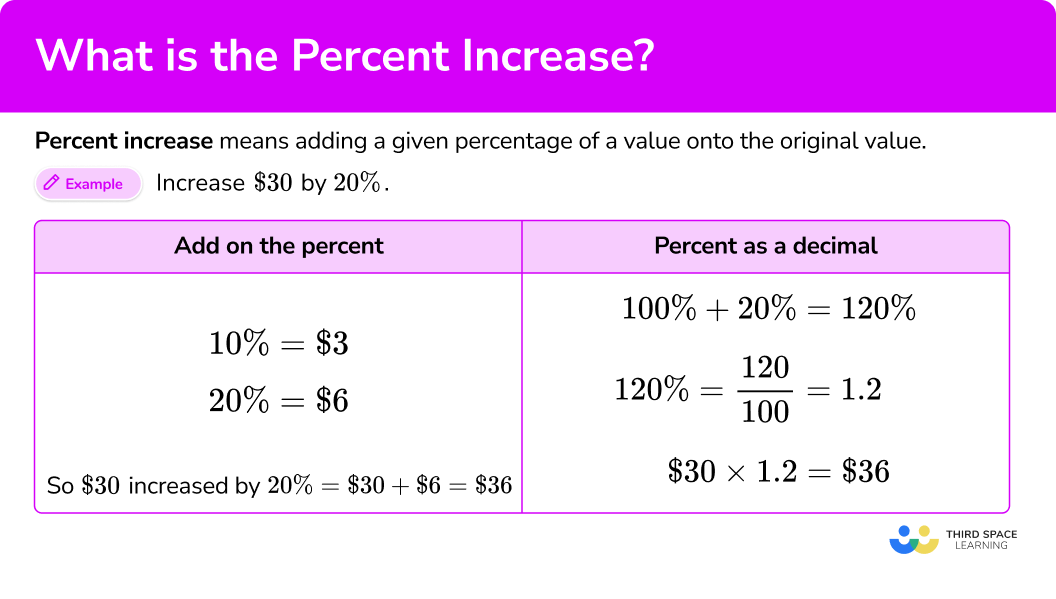
Before diving into complex market analysis, one must master the basic arithmetic of growth. Percent increase represents how much a value has grown in relation to its starting point, expressed as a fraction of 100.
The Basic Step-by-Step Calculation
The formula for calculating percent increase is straightforward:
[(New Value – Original Value) / Original Value] × 100 = Percent Increase
To execute this calculation accurately, follow these three steps:
- Find the Difference: Subtract the original (older) number from the new (current) number. This gives you the absolute increase.
- Divide by the Original: Take that difference and divide it by the original number. This tells you what portion of the original value the growth represents.
- Convert to Percentage: Multiply the resulting decimal by 100 to get the percentage.
For example, if you set a goal to save more money and your monthly contribution increases from $400 to $500, the calculation would look like this:
- $500 – $400 = $100
- $100 / $400 = 0.25
- 0.25 × 100 = 25% increase.
Real-World Applications in Budgeting and Savings
In personal finance, tracking percent increases helps in monitoring your “savings rate”—a key indicator of long-term financial health. If you receive a 5% raise at work but increase your discretionary spending by 10%, your net financial position is actually weakening despite the higher income. By consistently applying the percent increase formula to your net worth and your savings contributions, you can ensure that your lifestyle creep does not outpace your wealth accumulation.
Furthermore, during periods of high interest rates, calculating the percent increase in yield on high-yield savings accounts can help you decide where to park your liquid cash. A shift from a 1% APY to a 4.5% APY represents a staggering 350% increase in interest earnings, highlighting the value of moving funds to more competitive financial institutions.
Measuring Investment Performance and Portfolio Growth
For investors, the percentage increase is synonymous with “return on investment” (ROI). It is the primary metric used to determine whether a strategy is successful or if a portfolio needs rebalancing.
Calculating Stock Market Gains
The stock market is volatile, and prices fluctuate daily. However, long-term investors focus on the percent increase over months or years. If you purchased shares of a technology company at $150 per share and the price rose to $210, your absolute gain is $60. Using the formula:
- ($210 – $150) / $150 = 0.40
- 0.40 × 100 = 40%
This 40% increase is your capital appreciation. However, it is vital to distinguish this from “total return,” which would also include any dividends paid during the holding period. When evaluating investments, always look at the percentage increase in total value to get a true sense of your wealth generation.
Real Estate Appreciation and Property Value
Real estate is often the largest asset in an individual’s portfolio. Calculating the percent increase in property value is crucial for determining equity for home equity lines of credit (HELOCs) or deciding when to sell. If a property bought for $300,000 is now appraised at $450,000, the 50% increase in value represents a significant gain in net worth.
Investors also use percent increase to measure “rental growth.” If a landlord increases rent from $2,000 to $2,150, that 7.5% increase must be weighed against the local inflation rate and the vacancy risk. If the percent increase in expenses (property taxes, maintenance, insurance) exceeds the percent increase in rent, the investment’s profitability is shrinking even though the top-line revenue is rising.
Business Finance: Tracking Revenue and Profitability
In a corporate or entrepreneurial setting, percentage increases are the benchmark for success. Stakeholders rarely look at absolute numbers in isolation; they look at growth rates to determine the trajectory of the company.
Year-Over-Year (YoY) Revenue Growth
Year-Over-Year (YoY) is a method of evaluating two measurable events on an annualized basis. It is perhaps the most common use of the percent increase formula in business. By comparing the revenue of Q3 this year to Q3 last year, a business can account for seasonal fluctuations.
For instance, a retail business making $1 million in December might seem successful, but if they made $1.2 million the previous December, they have actually experienced a 16.6% decrease. Conversely, if a startup grows its revenue from $100,000 to $250,000 in one year, the 150% increase signals to investors that the company has found a “product-market fit” and is ready for further scaling.
Assessing Profit Margin Expansion
While revenue growth is important, the percent increase in profit is what truly determines a business’s sustainability. Profit margin expansion occurs when the percent increase in revenue outpaces the percent increase in costs.
Consider a company that improves its manufacturing efficiency, causing its net profit to rise from $50,000 to $75,000 while revenue remains stable. This 50% increase in profit suggests the company is becoming more efficient. In the world of “Money,” understanding the delta between revenue increase and expense increase is the difference between a thriving enterprise and one that is simply “busy” without being profitable.
Inflation and the Erosion of Purchasing Power
One of the most critical applications of percent increase in macro-finance is understanding inflation. Inflation is essentially the percent increase in the cost of goods and services over time, which conversely represents a percent decrease in the purchasing power of your money.
Understanding the Consumer Price Index (CPI)
The Consumer Price Index (CPI) measures the average change over time in the prices paid by consumers for a market basket of goods. When the news reports that inflation is at 4%, they are saying that, on average, there has been a 4% increase in prices compared to the previous year.
To maintain your standard of living, your income must see a percent increase that at least matches the inflation rate. If you receive a 3% cost-of-living adjustment (COLA) at your job, but inflation is at 5%, your “real” income has actually decreased by 2%. This is why understanding the math behind these numbers is vital for salary negotiations and long-term financial planning.
Adjusting for Inflation in Long-Term Goals
When planning for retirement, you must use percent increase calculations to project future costs. If you currently need $60,000 a year to live comfortably, and you assume an average annual inflation increase of 3% over the next 20 years, your future required income will be significantly higher due to compounding percent increases. This “math of the future” helps investors realize that a static savings goal is often insufficient; one must aim for a portfolio growth percentage that exceeds the inflation percentage to ensure future financial security.
Advanced Tools and Common Pitfalls
While the formula is simple, the context in which it is used can lead to errors. Professional financial analysts use specific tools and remain vigilant against common mathematical traps.
Leveraging Financial Calculators and Spreadsheets
In professional settings, manual calculations are often replaced by software to handle bulk data. In Microsoft Excel or Google Sheets, finding the percent increase is a breeze. If your original value is in cell A1 and your new value is in B1, the formula is:
=(B1-A1)/A1
Then, you simply format the cell as a percentage. This allows for the rapid analysis of hundreds of data points, such as tracking the daily percent changes of an entire index of stocks.
Avoiding the “Percentage Point” vs. “Percent” Confusion
A frequent mistake in financial reporting is confusing “percent” with “percentage points.” This distinction is crucial. If an interest rate moves from 10% to 12%, it has increased by 2 percentage points. However, using our formula, the percent increase is actually 20% (Since (12-10)/10 = 0.20).
Misunderstanding this can lead to massive errors in financial projections and debt management. Always clarify whether a change is being described in absolute points or relative percentage to ensure your financial decisions are based on accurate data.
In conclusion, mastering the calculation of percent increase is more than just a math exercise; it is a fundamental skill for anyone looking to master their money. By applying this simple formula to your savings, investments, business metrics, and the broader economy, you can move from being a passive observer of your finances to an active, informed strategist. Whether the numbers are small or large, the percentage tells the real story of your growth.
aViewFromTheCave is a participant in the Amazon Services LLC Associates Program, an affiliate advertising program designed to provide a means for sites to earn advertising fees by advertising and linking to Amazon.com. Amazon, the Amazon logo, AmazonSupply, and the AmazonSupply logo are trademarks of Amazon.com, Inc. or its affiliates. As an Amazon Associate we earn affiliate commissions from qualifying purchases.