
Compound interest is often cited as the “eighth wonder of the world,” a term famously attributed to Albert Einstein. For those who understand it, it is a powerful engine for wealth creation; for those who do not, it often becomes a mounting burden in the form of debt. At its core, compound interest is the process where the interest you earn on your money is reinvested, allowing you to earn interest on the original principal as well as on the accumulated interest from previous periods.
Unlike simple interest, which only calculates a percentage of the principal balance, compound interest creates a snowball effect. Over short periods, the difference might seem negligible. However, over decades, it can transform modest savings into a significant fortune. This guide explores the mechanics of compound interest, the investment vehicles that facilitate it, and the strategic habits necessary to maximize its potential within your personal finance journey.
The Mechanics of Compound Interest: Understanding the “How”
To master compound interest, one must first understand the mathematical framework that governs it. While you don’t need to be a mathematician to benefit from compounding, understanding the variables involved allows you to make more informed decisions regarding where to place your capital and how often to contribute.
The Basic Formula and Its Variables
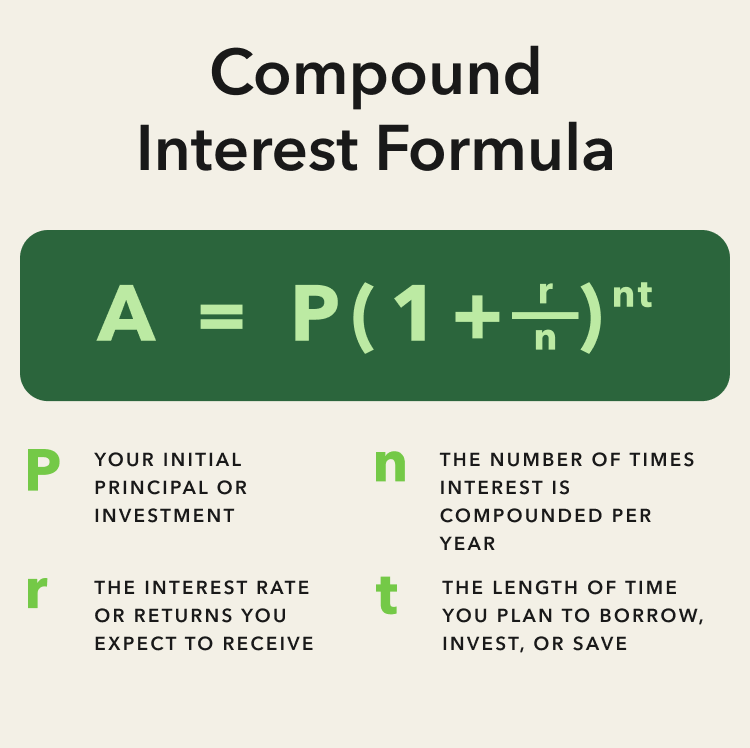
The standard formula for compound interest is: A = P(1 + r/n)^{nt}.
- A represents the final amount of money that will be accumulated after n years, including interest.
- P is the principal amount—the initial sum of money you invest or deposit.
- r is the annual interest rate (decimal).
- n is the number of times that interest is compounded per year.
- t is the number of years the money is invested or borrowed for.
When you analyze this formula, you see that the variables of time (t) and frequency (n) are exponential and multiplicative. This means that increasing the time your money stays invested or increasing the frequency of compounding has a disproportionately large impact on the final total compared to simply increasing the principal.
The Significance of Compounding Frequency
Compounding frequency refers to how often the interest is calculated and added back to the principal. Common intervals include annually, semi-annually, quarterly, monthly, or even daily. The more frequently interest compounds, the faster your wealth grows.
For example, if you invest $10,000 at a 5% interest rate compounded annually, you will have $10,500 after one year. However, if that same $10,000 is compounded monthly, you end the year with slightly more because each month’s interest is calculated on a slightly larger balance than the previous month. While the difference is small in year one, over thirty years, the gap between annual and daily compounding can represent thousands of dollars in “found” money.
Simple Interest vs. Compound Interest
The distinction between simple and compound interest is the difference between linear growth and exponential growth. Simple interest is calculated only on the principal. If you have $1,000 at 10% simple interest, you earn $100 every year, forever. After 10 years, you have $2,000.
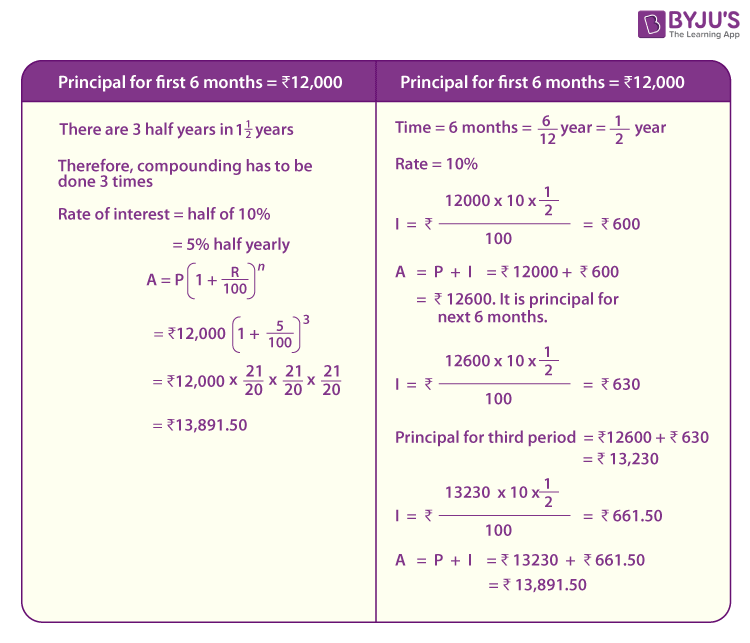
With compound interest, you earn $100 in the first year. In the second year, you earn 10% of $1,100 ($110). In the third year, you earn 10% of $1,210 ($121). By the tenth year, your annual interest earned has grown significantly, and your total balance is $2,593.74. The “extra” $593.74 is the result of your money working for you, rather than you working for your money.
Strategic Investment Vehicles for Compounding
Knowing how compound interest works is only half the battle; the other half is choosing the right financial instruments to host your capital. Not all accounts are created equal, and the “yield” or interest rate you receive will determine the velocity of your wealth accumulation.
Dividend Growth Investing and DRIPs
One of the most effective ways to “do” compound interest in the stock market is through dividend-paying stocks. When a company earns a profit, it may distribute a portion of that profit to shareholders as a dividend.
To maximize compounding, investors use a Dividend Reinvestment Plan (DRIP). Instead of taking the dividend as cash, the investor automatically uses those funds to buy more shares (or fractional shares) of the company. This increases the total number of shares owned, which in turn increases the next dividend payment, creating a self-sustaining cycle of growth. Over decades, a portfolio of high-quality dividend growth stocks can provide both capital appreciation and an ever-increasing stream of passive income.
Index Funds and Exchange-Traded Funds (ETFs)
For many, the most reliable way to harness compounding is through broad-market index funds, such as those that track the S&P 500. Historically, the stock market has returned an average of about 10% annually before inflation.
By investing in an index fund, you are essentially betting on the growth of the economy as a whole. As the companies within the index grow and reinvest their own profits, the value of your shares increases. When you leave your gains in the market, they compound. Because index funds often have very low management fees (expense ratios), less of your money is siphoned away, allowing more of it to stay invested and compound over time.

Tax-Advantaged Retirement Accounts (401k and Roth IRAs)
The “drag” of taxes is one of the biggest enemies of compound interest. When you pay taxes on your investment gains every year, you have less principal remaining to compound in the following year.
- 401(k) and Traditional IRAs: These allow you to invest pre-tax money. Your investments grow tax-deferred, meaning you only pay taxes when you withdraw the money in retirement. This allows the portion of the money that would have gone to the IRS to remain in your account, compounding for decades.
- Roth IRAs: These are funded with after-tax dollars, but the growth and withdrawals are completely tax-free. This is incredibly powerful for young investors; if you invest $5,000 at age 20 and it grows to $100,000 by age 65, you pay zero taxes on that $95,000 gain.
Maximizing the Power of Time: The Long-Game Strategy
The most critical ingredient in the recipe for compound interest is time. You can compensate for a lower interest rate by having more time, but it is nearly impossible to compensate for a lack of time even with a high interest rate or large principal.
The Cost of Delaying
To illustrate the power of time, consider two investors: Susan and Bill. Susan starts investing $500 a month at age 25. She stops contributing at age 35 and simply lets the money sit until she is 65. Bill starts at age 35 and invests $500 a month every single month until he is 65.
Even though Bill invested for 30 years and Susan only invested for 10, Susan will likely end up with more money at retirement. Why? Because her initial investments had an extra decade to compound. This “head start” is an asset that money cannot buy back. The lesson is simple: the best time to start was yesterday; the second-best time is today.
Utilizing the Rule of 72
The “Rule of 72” is a quick mental shortcut used to estimate how long it will take for an investment to double at a fixed annual rate of interest. You simply divide 72 by the annual rate of return.
- At a 6% return, your money doubles in 12 years (72 / 6 = 12).
- At a 9% return, your money doubles in 8 years (72 / 9 = 8).
- At a 12% return, your money doubles in 6 years (72 / 12 = 6).
This rule helps investors visualize the impact of interest rates and helps in setting realistic financial goals. It reinforces why seeking even a 1% or 2% higher return (through lower fees or better asset allocation) can result in doubling your wealth multiple years sooner.
Automating Contributions and Consistency
The psychological barrier to “doing” compound interest is the lack of immediate gratification. In the early years, the growth is slow. To combat the temptation to spend rather than save, successful investors automate their finances.
Setting up a recurring transfer from your checking account to your brokerage or savings account ensures that you are “paying yourself first.” Consistency is the fuel for the compounding engine. By staying invested during market downturns—a strategy known as dollar-cost averaging—you buy more shares when prices are low, which positions you for explosive compounding when the market eventually recovers.
Practical Tools and Monitoring Your Financial Growth
In the modern era, you do not need to manually calculate your returns on a legal pad. A variety of tools and practices can help you stay on track and visualize your progress.
Utilizing Financial Calculators
The most important tool for any investor is a compound interest calculator. Many financial websites offer these for free. By inputting your current age, your goal retirement age, your monthly contribution, and an estimated rate of return, you can see a year-by-year breakdown of your projected wealth. Seeing the “Interest Earned” column eventually overtake the “Total Contributions” column is a powerful motivator to keep saving.
The Role of High-Yield Savings Accounts (HYSA)
While the stock market is the primary vehicle for high growth, your emergency fund should also be working for you. Traditional savings accounts often offer abysmal interest rates (sometimes as low as 0.01%). Moving your cash reserves to a High-Yield Savings Account (HYSA) or a Money Market Account can increase your rate to 4% or 5% (depending on the economic environment). While this won’t make you a millionaire overnight, it ensures that your liquid cash is at least compounding enough to keep pace with or exceed inflation.
Rebalancing and Portfolio Maintenance
As your investments compound, your “asset allocation” (the mix of stocks, bonds, and cash) will naturally shift. Some assets will grow faster than others, potentially exposing you to more risk than you intended.
“Doing” compound interest effectively requires periodic rebalancing—selling a bit of what has grown too large and buying what is undervalued. This disciplined approach ensures that you are “selling high and buying low,” which further optimizes the compounding process. Additionally, keeping an eye on management fees is crucial; a 1% fee might seem small, but over 40 years, it can eat up nearly a third of your final portfolio value due to the “negative compounding” of costs.
In conclusion, compound interest is not a get-rich-quick scheme; it is a get-rich-certainly strategy. By understanding the math, choosing the right tax-advantaged accounts, and, most importantly, giving your investments the gift of time, you can build a financial foundation that provides security and freedom for the future. The math is patient—you should be too.
aViewFromTheCave is a participant in the Amazon Services LLC Associates Program, an affiliate advertising program designed to provide a means for sites to earn advertising fees by advertising and linking to Amazon.com. Amazon, the Amazon logo, AmazonSupply, and the AmazonSupply logo are trademarks of Amazon.com, Inc. or its affiliates. As an Amazon Associate we earn affiliate commissions from qualifying purchases.