
In the world of finance, numbers are more than just digits on a screen; they represent growth, risk, and the trajectory of your personal wealth. Whether you are tracking the performance of a stock portfolio, calculating a year-end bonus, or evaluating the rising cost of consumer goods, understanding how to work out an increase in percentage is a fundamental skill. Percentage increase allows us to normalize data, making it easier to compare the growth of a small-cap investment to a large-cap asset or to measure how far your purchasing power has shifted over a fiscal year.
To master your money, you must move beyond simple addition and subtraction. This guide explores the mechanics of percentage increases through the lens of personal and business finance, providing you with the tools to analyze your financial health with precision.
Understanding the Fundamentals of Percentage Increase in Finance
At its core, a percentage increase measures the relative change between an initial value and a final value. In financial terms, this is often the difference between what you started with (the principal or original cost) and what you have now (the current market value or revenue).
The Essential Formula Explained
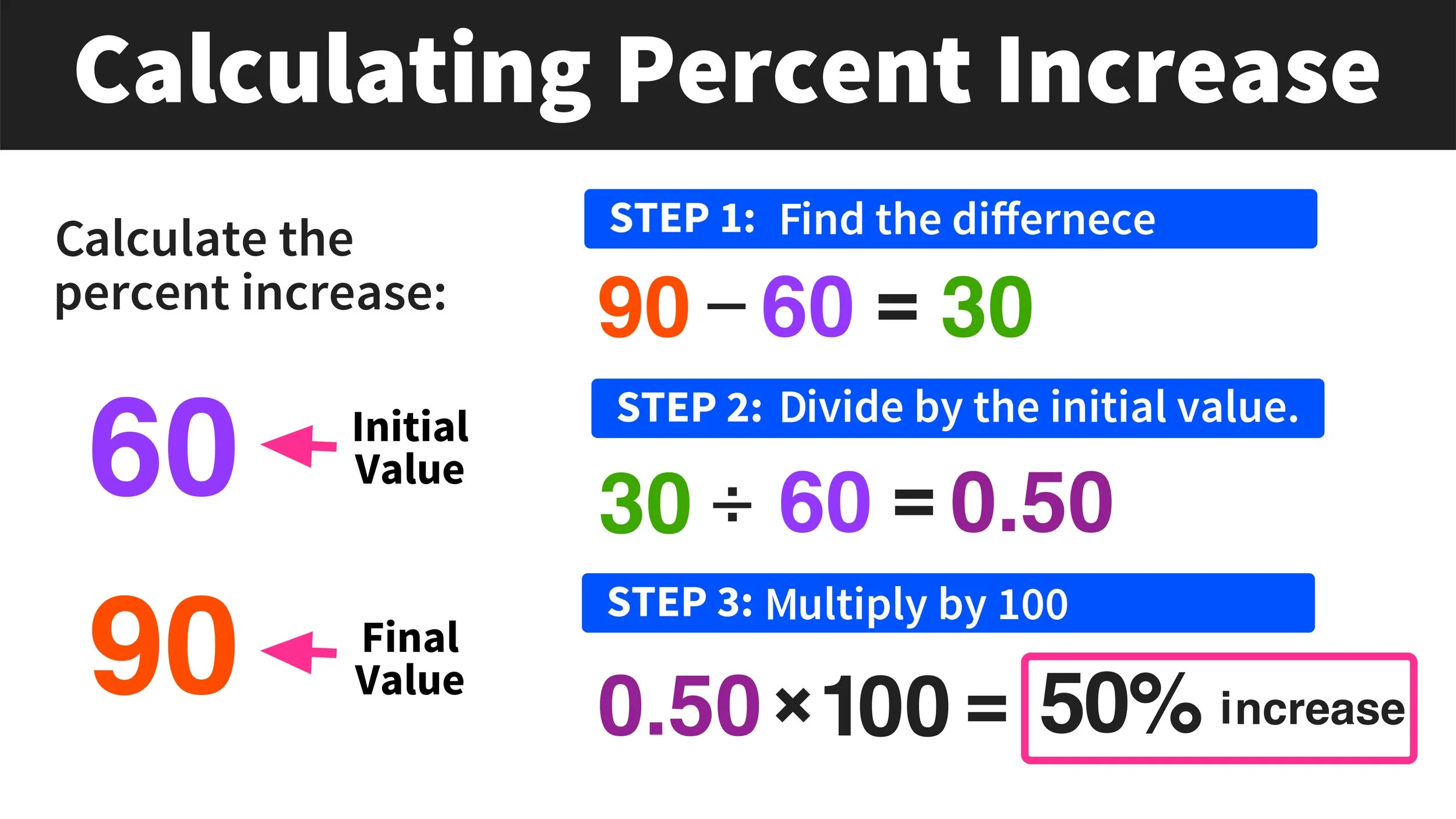
To calculate the percentage increase, you follow a straightforward three-step process:
- Subtract the original value from the new value to find the “increase.”
- Divide that increase by the original value.
- Multiply the result by 100 to convert the decimal into a percentage.
Mathematically, it looks like this:
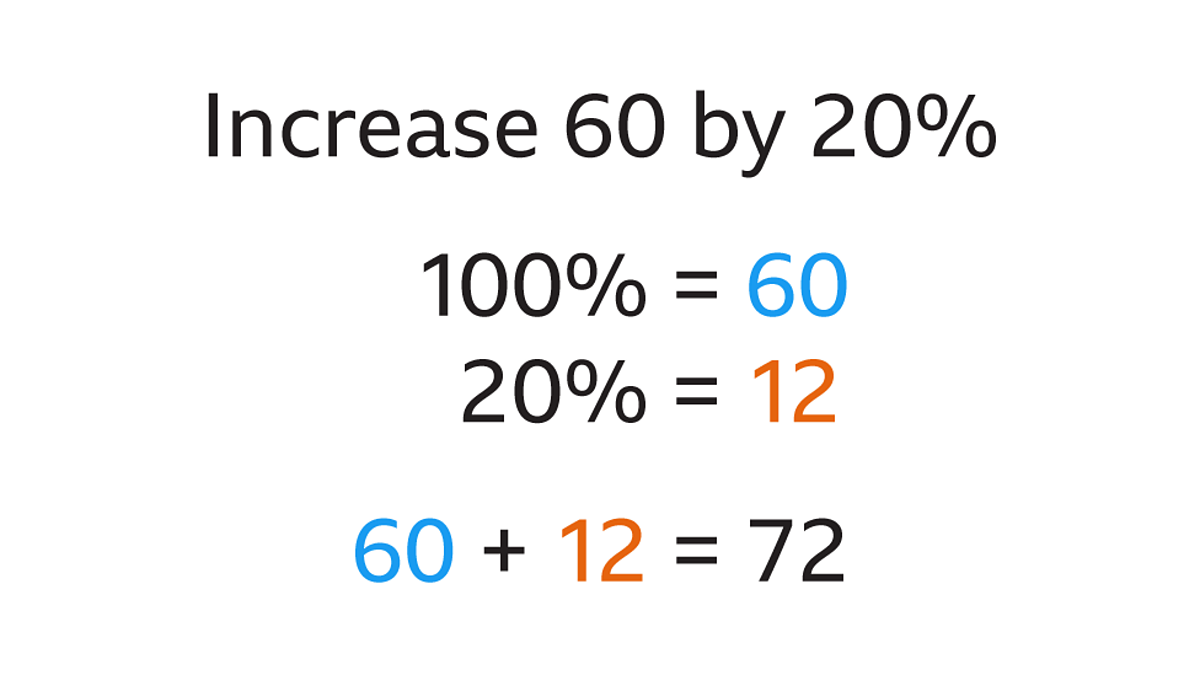
[(New Value – Original Value) / Original Value] × 100 = Percentage Increase
For example, if you invested $5,000 in a high-yield savings account and it grew to $5,400 over a year, the calculation would be: ($5,400 – $5,000) / $5,000 = 0.08. Multiplying by 100 gives you an 8% increase.
Why the Base Value Matters
In money management, the most common mistake is dividing by the “new” value instead of the “original” value. The original value is your “base.” If you use the wrong denominator, your financial reporting will be skewed. Understanding the base value is critical when assessing “return on investment” (ROI). The percentage increase tells you how hard your original capital worked for you. If you don’t keep the original value as the anchor of your calculation, you cannot accurately compare the efficiency of different financial vehicles.
Analyzing Investment Returns and Portfolio Growth
For the modern investor, percentage increase is the primary metric for success. Looking at dollar amounts can be deceptive; a $1,000 gain is impressive on a $2,000 investment (50%), but negligible on a $1,000,000 portfolio (0.1%).
Calculating Capital Gains and Asset Appreciation
Capital gains are the classic example of percentage increase in action. Suppose you purchased shares of an Index Fund at $120 per share, and the price rose to $150. By applying our formula—($150 – $120) / $120—we find a 0.25, or 25% increase.
This calculation becomes even more vital when comparing different asset classes. If your real estate holdings increased by 10% while the S&P 500 increased by 15%, the percentage increase tells you that your liquid equities outperformed your physical property for that period, despite the possibility that the dollar amount gained in real estate was higher due to a larger initial investment.
The Nuance of Dividends and Total Return
When working out a percentage increase in an investment context, one must distinguish between price appreciation and “Total Return.” If a stock increases from $100 to $105, that is a 5% increase. However, if that stock also paid a $2 dividend during that period, your “new value” for the purpose of the calculation should be $107.
Total Return Percentage Increase = [($107 – $100) / $100] × 100 = 7%.
For long-term wealth building, calculating the percentage increase based on total return provides a much more accurate picture of your wealth accumulation than looking at price action alone.
Business Finance: Measuring Revenue and Profitability Gains
For entrepreneurs and business owners, percentage increases are the pulse of the company. These metrics are used to attract investors, secure loans, and determine the scalability of a business model.
Year-over-Year (YoY) Growth Metrics
One of the most scrutinized figures in business finance is Year-over-Year (YoY) growth. This compares a financial metric (like revenue) for one period against the same period in the previous year. This accounts for seasonality—for instance, a retail business will naturally have higher sales in December than in January.
If your business earned $200,000 in Q1 of 2023 and $250,000 in Q1 of 2024, the percentage increase is 25%. This “25% YoY increase” is a standardized language that lenders and partners use to evaluate the health and momentum of your enterprise.
Profit Margin Expansion
While revenue growth is important, savvy financial managers focus on the percentage increase in profit margins. If your revenue increases by 10% but your expenses increase by 15%, your business is actually becoming less efficient.
To work out the increase in profit margin, you compare the net profit percentage of two periods. If your profit margin was 10% last year and is 12% this year, you have seen a 2-percentage-point increase, which represents a 20% relative increase in profitability [(12-10)/10]. Mastering these distinctions prevents “growth at all costs” from destroying a company’s bottom line.
The Impact of Inflation and Cost of Living Adjustments
Percentage increases aren’t always positive indicators; they also represent the rising costs of living. In personal finance, understanding the percentage increase in your expenses is just as important as understanding the increase in your income.
Real vs. Nominal Percentage Increases
When you receive a 5% raise at work, that is your “nominal” increase. However, to understand your “real” financial progress, you must factor in inflation. If the Consumer Price Index (CPI) indicates that the cost of goods has increased by 6% over the same period, your real percentage increase is actually -1%.
By working out the percentage increase of your monthly expenses—rent, groceries, utilities—you can determine if your lifestyle is becoming more expensive faster than your income is growing. This calculation is the foundation of a “burn rate” analysis in a personal budget.
Negotiating Salary Increases and Raises
When entering a salary negotiation, providing a percentage-based argument is often more professional and persuasive than asking for a flat dollar amount. If you can demonstrate that your responsibilities have increased by 30% or that you have generated a 15% increase in departmental savings, you have a data-backed justification for a corresponding percentage increase in your compensation. It shifts the conversation from “I need more money” to “I am providing more value, and here is the percentage to prove it.”
Practical Tools and Strategies for Accuracy
While the manual formula is vital for understanding the logic, managing a complex financial life requires more efficient tools. Accuracy is paramount; a small error in a percentage calculation can lead to a massive miscalculation in retirement planning or tax liability.
Using Financial Spreadsheets and Calculators
In programs like Microsoft Excel or Google Sheets, working out a percentage increase is automated. If your original value is in cell A1 and your new value is in B1, the formula is =(B1-A1)/A1. By formatting the cell as a “Percentage,” the software handles the “multiply by 100” step for you.
For those managing side hustles or portfolios, setting up a dashboard that automatically calculates these increases daily or monthly allows for “passive monitoring.” You can spot trends—such as a 5% monthly increase in a specific expense category—before they become financial crises.
Avoiding Common Mathematical Pitfalls
One of the most dangerous traps in finance is the “Asymmetry of Percentage.” This refers to the fact that a percentage decrease requires a larger percentage increase to get back to the break-even point.
If your investment portfolio drops by 50%, you don’t need a 50% increase to recover; you need a 100% increase.
- Original: $100
- 50% Decrease: $50
- 50% Increase of $50: $75 (You are still down 25% from the start!)
Understanding this mathematical reality changes how you perceive risk. It highlights why protecting your downside is often more important than chasing the highest percentage increase.

Conclusion: Percentage Increase as a Financial Compass
Mastering how to work out an increase in percentage is more than a math exercise; it is the acquisition of a financial compass. In a world of fluctuating markets and changing economic tides, these percentages provide a fixed point of reference. They allow you to strip away the noise of large numbers and see the underlying reality of your financial progress.
By consistently applying these calculations to your investments, your business ventures, and your personal budget, you gain the clarity needed to make informed, strategic decisions. Whether you are aiming for a 7% annual return in the stock market or a 10% reduction in annual expenses, the math remains the same. Use it to quantify your goals, measure your successes, and navigate your path to long-term financial freedom.
aViewFromTheCave is a participant in the Amazon Services LLC Associates Program, an affiliate advertising program designed to provide a means for sites to earn advertising fees by advertising and linking to Amazon.com. Amazon, the Amazon logo, AmazonSupply, and the AmazonSupply logo are trademarks of Amazon.com, Inc. or its affiliates. As an Amazon Associate we earn affiliate commissions from qualifying purchases.