
In the realm of personal and business finance, percentages are more than just numbers on a page; they are the fundamental language of value, growth, and cost. Whether you are determining the discount on a new purchase, calculating the interest on a high-yield savings account, or analyzing the return on a stock market investment, understanding how to manipulate percentages is a critical skill. Mastering these calculations empowers you to make informed decisions, optimize your budget, and ultimately build a more secure financial future.
Calculating percentages of money might seem like a simple middle-school math exercise, but its applications in the adult financial world are nuanced and diverse. From the “50/30/20 rule” of budgeting to the complex compounding of interest, the ability to quickly and accurately calculate these figures is what separates the financially literate from those who struggle to manage their cash flow.
The Fundamentals: Understanding Percentage Formulas in Finance
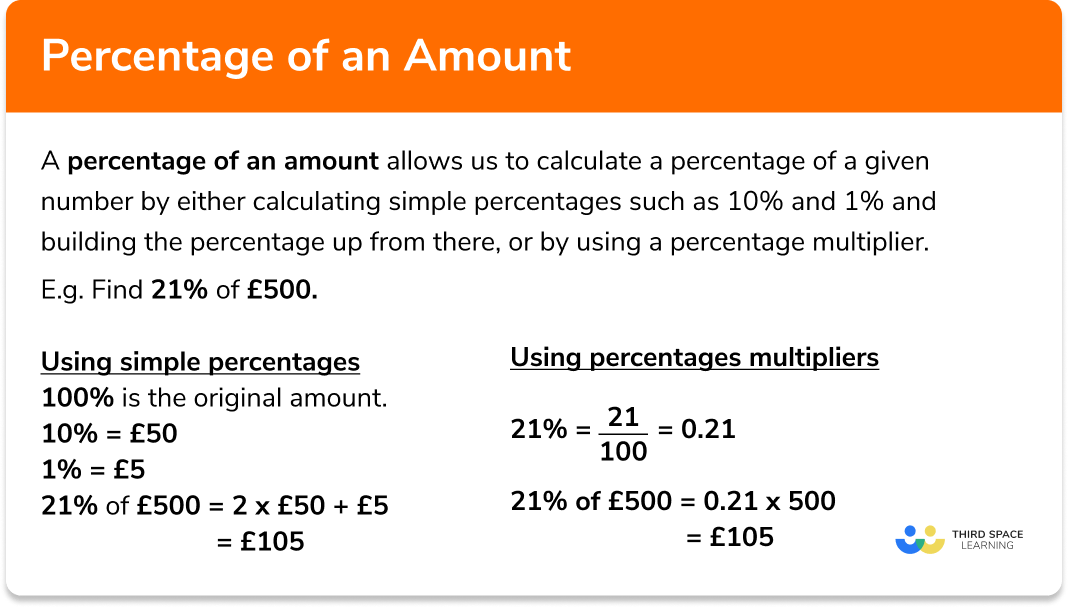
Before diving into complex investment strategies, one must master the basic mechanics of percentage calculations. At its core, the word “percent” means “per hundred.” When we talk about a percentage of money, we are essentially looking at a fraction of a total amount, scaled to a base of 100.
The Basic Equation: Part Over Whole
The most fundamental formula for finding a percentage of a sum of money is:
(Percentage / 100) × Total Amount = Result
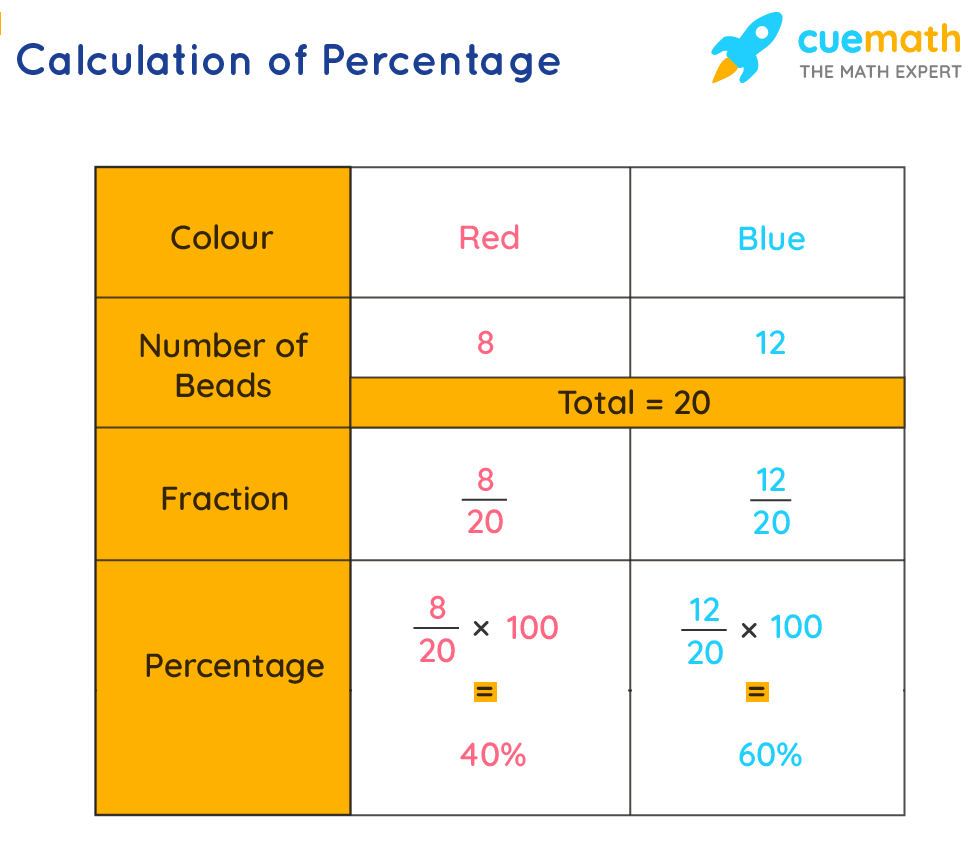
For example, if you want to find 15% of $200, you would divide 15 by 100 (0.15) and multiply it by 200, resulting in $30. Conversely, if you need to find what percentage one number is of another—such as determining what percentage a $500 monthly car payment is of a $4,000 monthly income—the formula is:
(Part / Whole) × 100 = Percentage
In this case, (500 / 4,000) = 0.125, which multiplied by 100 equals 12.5%.
Moving the Decimal: The Mental Math Shortcut
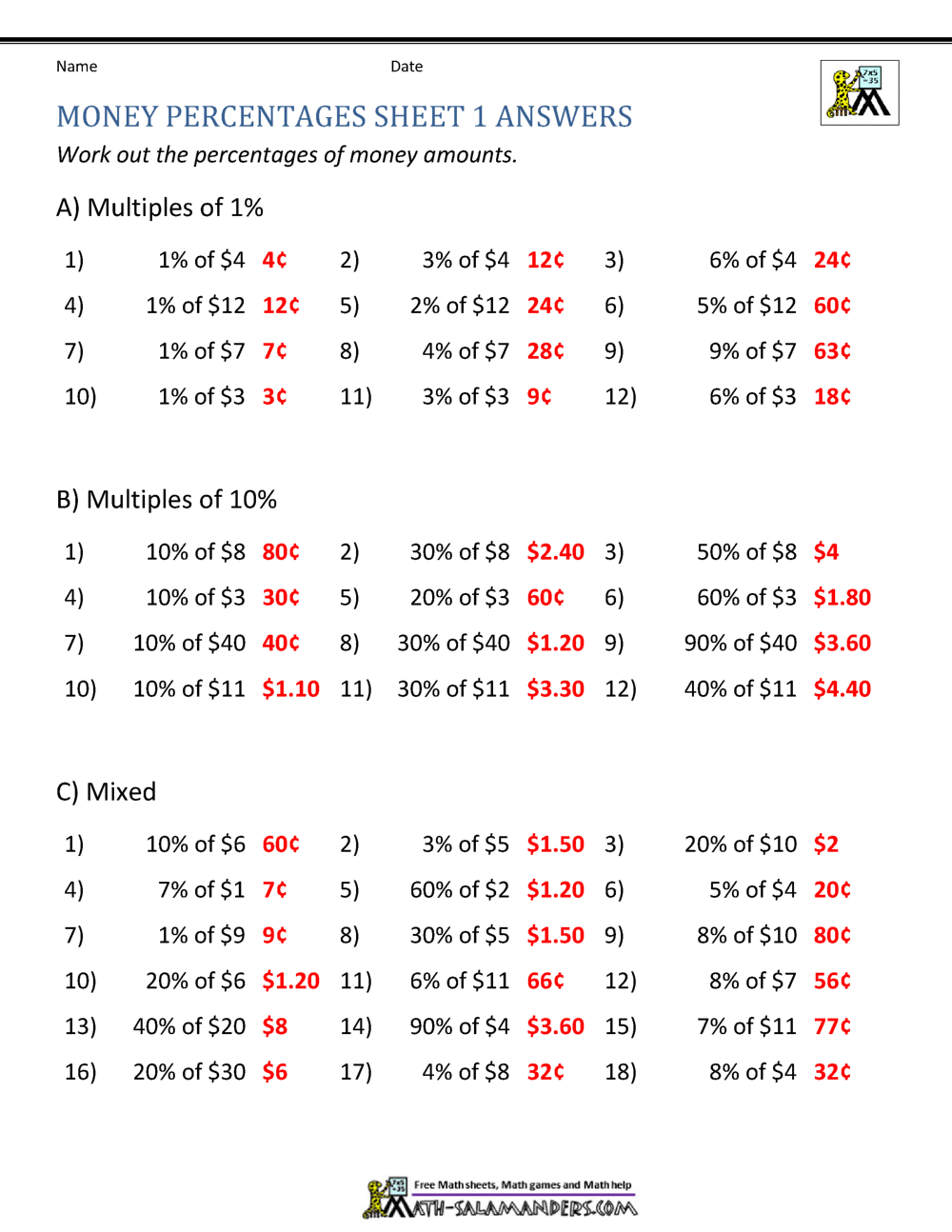
In daily financial life, you won’t always have a calculator handy. Learning the “10% rule” is the most effective way to perform mental math. To find 10% of any amount, simply move the decimal point one place to the left. If a restaurant bill is $84.00, 10% is $8.40. From there, you can easily calculate other common percentages. To find 5%, take half of the 10% figure ($4.20). To find 20%, double the 10% figure ($16.80). This shortcut is invaluable for quick decision-making during shopping or dining.
Real-World Applications: Discounts, Tips, and Sales Tax
We encounter percentage-based money decisions every day, often in the form of consumer transactions. Understanding how these are calculated prevents “sticker shock” at the register and ensures you are actually getting the deal you think you are.
Calculating Discounts and Savings
Retailers often lure customers with “percentage off” signs. To calculate the final price of a discounted item, you can either calculate the discount amount and subtract it from the original price, or calculate the remaining percentage.
If a $120 jacket is 30% off, you can calculate 30% ($36) and subtract it from $120 to get $84. Alternatively, you can recognize that if 30% is taken off, you are paying 70% of the original price. Multiplying $120 by 0.70 yields the same $84 more efficiently.
Gratuity and Service Charges
In many cultures, tipping is a standard percentage of the pre-tax bill. While 15% was once the standard, 18% to 22% has become common in many service industries. To calculate a 20% tip on a $65.00 bill, you can find 10% ($6.50) and double it ($13.00). Accuracy here is a matter of professional etiquette and financial planning, ensuring you account for the full cost of service when dining out or traveling.
Sales Tax and Total Purchase Price
Sales tax is an additional percentage added to the cost of goods and services. Because it is added on top of the list price, it is calculated by multiplying the price by the tax rate and adding it to the original. If you live in a jurisdiction with an 8% sales tax and buy a $1,000 laptop, the tax is $80, making the total $1,080. For business owners, understanding how to “back out” sales tax from a total receipt is equally important: divide the total by (1 + tax rate) to find the original price.
Percentages in Banking and Investing
When we move from spending to growing money, percentages become the primary metric for success. Interest rates and investment returns are almost exclusively expressed as percentages, and small variations in these figures can result in massive differences in wealth over time.
Simple vs. Compound Interest
Simple interest is calculated only on the principal amount. However, most modern financial vehicles use compound interest, where the percentage is applied to the principal plus any previously earned interest.
The formula for compound interest—A = P(1 + r/n)^(nt)—is the most powerful tool in finance. Even a “small” 7% annual return on an investment will cause the money to double approximately every 10 years (the Rule of 72). Understanding the percentage rate of your debt (like credit cards) versus your assets (like a 401k) is essential for net worth growth.
Calculating Return on Investment (ROI)
ROI is the ultimate percentage for any investor. It measures the efficiency of an investment. The formula is:
[(Current Value – Original Cost) / Original Cost] × 100 = ROI
If you bought a stock for $1,000 and sold it for $1,250, your gain is $250. Dividing $250 by the original $1,000 gives you a 0.25, or a 25% ROI. This percentage allows you to compare the performance of different asset classes, such as real estate versus stocks, on an even playing field.
Dividend Yields and Portfolio Allocation
For income-focused investors, the “dividend yield” is a vital percentage. It represents the annual dividend payment divided by the stock’s current price. If a stock costs $100 and pays $4 in annual dividends, the yield is 4%.
Furthermore, portfolio management relies on “asset allocation percentages.” A common strategy might be 60% stocks and 40% bonds. As the market fluctuates, these percentages change, necessitating “rebalancing”—selling some of what has grown and buying what has dipped to return to your target percentages.
Business Finance: Margins, Markup, and Budgeting
In a business context, percentages are used to measure health, profitability, and sustainability. A company with high revenue but low-percentage margins is often more precarious than a smaller company with high-percentage margins.
Profit Margins and Markup: The Crucial Difference
One of the most common mistakes in business finance is confusing markup with margin.
- Markup is the percentage added to the cost to reach the selling price. If an item costs $100 and you sell it for $150, the markup is 50%.
- Gross Profit Margin is the percentage of the selling price that is profit. In the same example, the $50 profit divided by the $150 selling price is 33.3%.
Understanding this distinction is vital for pricing products correctly to ensure all overhead costs are covered.
The 50/30/20 Budgeting Rule
For personal finance, percentages provide a framework for stability. The 50/30/20 rule suggests:
- 50% of income for Needs (rent, utilities, groceries).
- 30% of income for Wants (dining out, hobbies).
- 20% of income for Savings and Debt Repayment.
By viewing a paycheck through the lens of percentages rather than raw dollar amounts, you create a scalable lifestyle. As your income grows, your savings grow proportionally because the 20% remains constant.
Leveraging Financial Tools for Percentage Accuracy
While manual calculation builds a strong conceptual foundation, the modern financial landscape offers tools that handle the heavy lifting, reducing the risk of human error in critical calculations.
Spreadsheet Formulas (Excel and Google Sheets)
Spreadsheets are the gold standard for financial tracking. To calculate a percentage in Excel, you don’t even need to multiply by 100 if you use the “Percentage” cell format. Simply typing =B2/A2 and clicking the percent icon will display the result correctly. For more complex needs, like calculating the “Percentage Change” between last month’s expenses and this month’s, use the formula: =(New Value - Old Value) / Old Value.
Financial Calculators and APY Apps
When dealing with loans or mortgages, simple percentage calculations fall short because they don’t easily account for monthly compounding or amortization. Using dedicated financial calculators (or online equivalents) allows you to see the Annual Percentage Yield (APY) versus the Annual Percentage Rate (APR). The APY includes the effect of compounding, giving you a more accurate picture of what you are actually paying or earning.
Mastering the calculation of percentages of money is perhaps the most practical mathematical skill an individual can possess. It transforms the way you view a paycheck, a store sale, or a retirement account. By shifting from thinking in flat dollar amounts to thinking in percentages, you gain the ability to compare opportunities, identify hidden costs, and project your financial growth with professional-grade precision. Whether you are managing a household or a corporation, the percentage remains the most potent tool in your financial arsenal.
aViewFromTheCave is a participant in the Amazon Services LLC Associates Program, an affiliate advertising program designed to provide a means for sites to earn advertising fees by advertising and linking to Amazon.com. Amazon, the Amazon logo, AmazonSupply, and the AmazonSupply logo are trademarks of Amazon.com, Inc. or its affiliates. As an Amazon Associate we earn affiliate commissions from qualifying purchases.