
In the realm of finance, percentages are far more than just mathematical abstractions; they are the fundamental language of value, growth, and risk. Whether you are a retail investor tracking portfolio performance, a small business owner calculating profit margins, or an individual trying to master a monthly budget, understanding how to calculate percentages is an indispensable skill. In money management, a percentage represents a proportion of a whole, allowing us to compare disparate figures on a level playing field. This guide explores the essential methods of calculating percentages within the “Money” niche, providing you with the tools to navigate complex financial landscapes with precision.
The Fundamentals of Percentages in Personal Finance
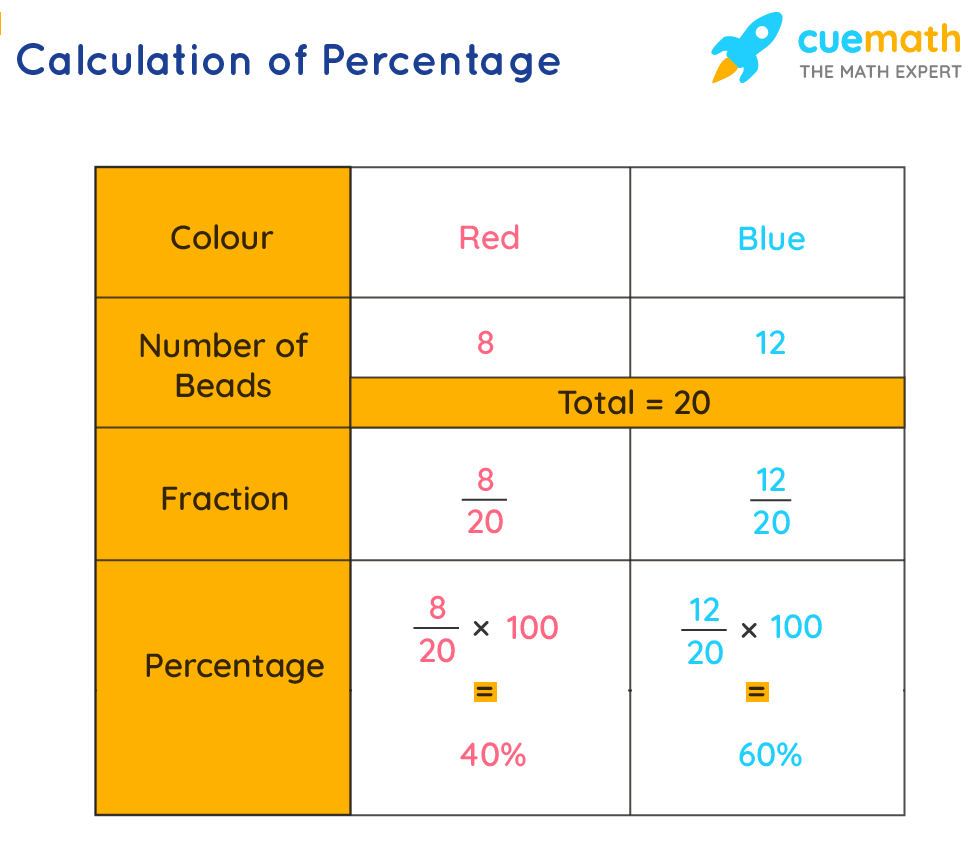
At its core, the question “how do you calculate percent” is answered by a simple ratio: the part divided by the whole, multiplied by one hundred. While the math is elementary, its application in personal finance is profound. Without a firm grasp of these calculations, it is nearly impossible to gauge the health of your financial life or make informed decisions about debt and savings.
Understanding the Basic Formula for Financial Growth
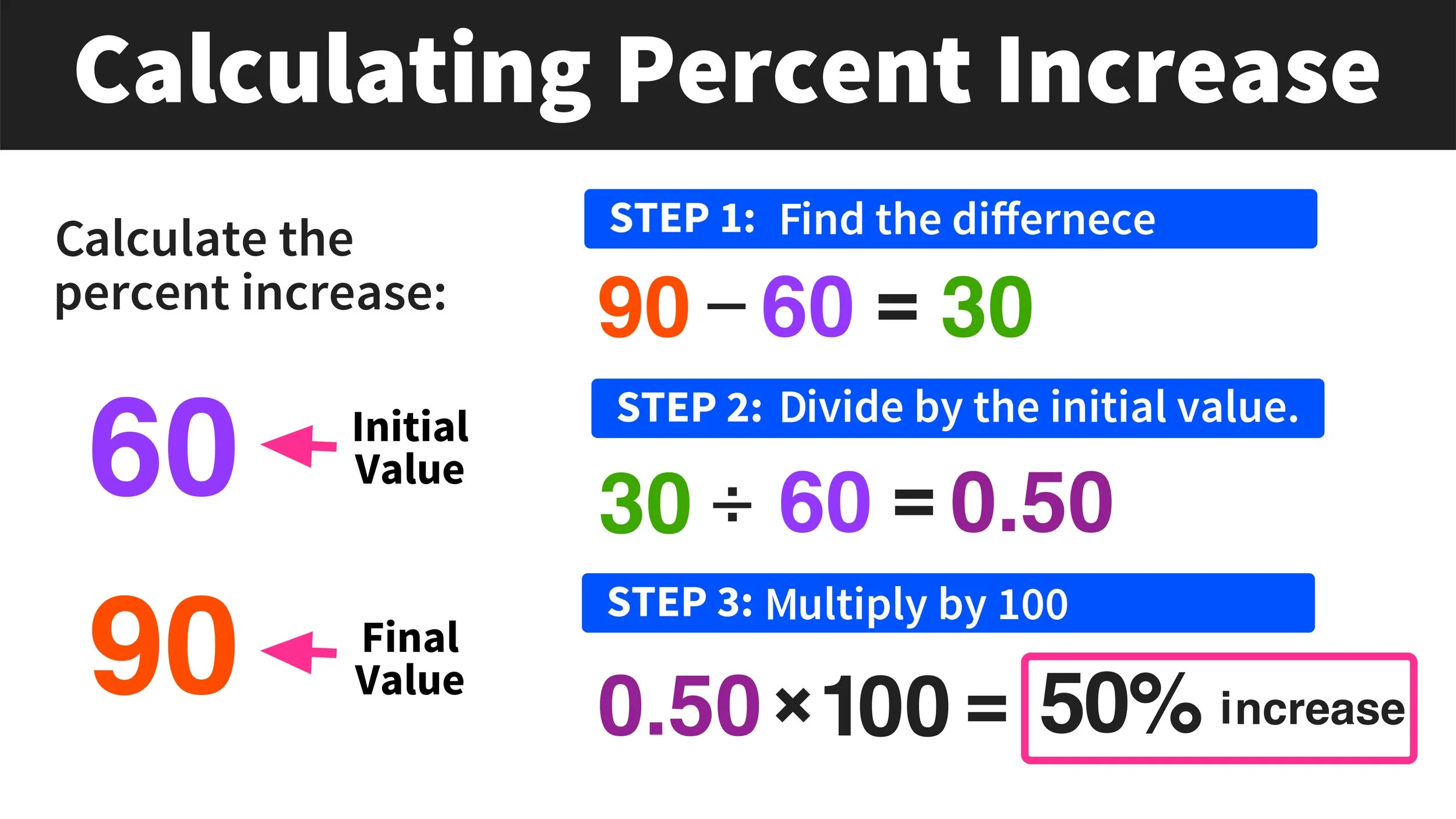
To find the percentage of a specific amount, you use the formula: (Part / Whole) × 100 = Percentage. In a financial context, suppose you want to know what percentage of your $5,000 monthly income is being spent on housing ($1,500). By dividing 1,500 by 5,000, you get 0.3. Multiplying by 100 gives you 30%. This simple calculation is the bedrock of “Percentage Change,” which is used to track how much your savings or expenses have grown or shrunk over time. The formula for percentage increase or decrease is: ((New Value - Old Value) / Old Value) × 100. This is vital for tracking annual salary raises against the cost of living.
The 50/30/20 Rule: Budgeting by Percentages
One of the most effective ways to apply percentage calculations to your daily life is through the 50/30/20 budgeting framework. This strategy dictates that 50% of your after-tax income should go toward “Needs” (rent, utilities, groceries), 30% toward “Wants” (dining out, hobbies), and 20% toward “Financial Goals” (debt repayment, emergency funds, investments). By calculating these percentages monthly, you transform a list of expenses into a strategic roadmap. If your “Needs” are currently 65% of your income, the percentage calculation highlights exactly where you need to optimize—perhaps by refinancing a high-interest loan or downsizing lifestyle costs—to reach the ideal 50% threshold.
Calculating Debt-to-Income (DTI) Ratios
For anyone looking to secure a mortgage or a personal loan, the Debt-to-Income (DTI) ratio is a critical percentage. Lenders use this to determine your creditworthiness. To calculate your DTI, you sum your monthly debt payments and divide them by your gross monthly income. For example, if your total debt payments are $2,000 and your gross income is $6,000, your DTI is 33.3%. Most lenders look for a DTI below 36% to 43%. Understanding this percentage allows you to “pre-qualify” yourself and take steps to pay down balances before applying for new credit.
Evaluating Investment Performance and ROI
In the world of investing, percentages are the ultimate metric of success. Raw numbers, such as “I made $1,000,” are meaningless without context. Making $1,000 on a $10,000 investment is a stellar 10% return; making $1,000 on a $100,000 investment is a modest 1% return. Mastery of percentage-based metrics allows investors to compare different asset classes, from stocks and bonds to real estate.
Simple Interest vs. Compound Interest
When calculating the growth of your money, it is vital to distinguish between simple and compound interest. Simple interest is calculated only on the principal amount: Principal × Rate × Time. However, most wealth-building tools utilize compound interest, where the percentage is applied to the principal plus the accumulated interest from previous periods. The formula for compound interest is more complex: A = P(1 + r/n)^(nt). Understanding how a 7% annual return compounds over 30 years—turning a modest sum into a fortune—is the “magic” of finance that relies entirely on the consistent application of percentages.
Calculating Capital Gains and Portfolio Allocation
When you sell an asset for more than you paid, you realize a capital gain. To calculate the percentage gain, you take the profit and divide it by the original purchase price. This is essential for tax planning, as capital gains are often taxed at different percentage rates depending on how long you held the asset. Furthermore, percentages are used for “Asset Allocation.” If your goal is to have 60% of your portfolio in stocks and 40% in bonds, and a market surge pushes your stocks to 70%, you must use percentage calculations to “rebalance”—selling high-performing assets to return to your target percentage risk profile.

The Rule of 72: Estimating Investment Growth
A favorite mental shortcut for financial professionals is the “Rule of 72.” This allows you to estimate how long it will take for your money to double at a fixed annual percentage rate of return. You simply divide 72 by the annual interest rate. For instance, if your investment returns 6% per year, your money will double in approximately 12 years (72 / 6 = 12). This quick percentage-based calculation helps investors set realistic long-term expectations and understand the power of even a 1% or 2% difference in annual fees or returns.
Business Finance and Profitability Metrics
For entrepreneurs and business leaders, percentage calculations are the pulse of the company. They indicate whether a business is scaling efficiently or bleeding capital. In this context, calculating percentages moves beyond simple budgeting and into the territory of strategic survival.
Gross vs. Net Profit Margins
Profitability is rarely measured in total dollars; it is measured in “Margins.” The Gross Profit Margin is calculated by subtracting the Cost of Goods Sold (COGS) from Total Revenue, then dividing by Revenue: ((Revenue - COGS) / Revenue) × 100. This tells you how efficiently your business produces its core products. However, the Net Profit Margin is even more telling, as it accounts for all expenses, including taxes and interest. A business might have a 50% gross margin but only a 5% net margin. Understanding the percentage gap between these two figures helps owners identify where overhead costs are eating into their bottom line.
Markup vs. Margin: Avoiding Common Pitfalls
One of the most frequent financial errors in business is confusing “markup” with “margin.” If you buy an item for $80 and want a 20% profit, you might mistakenly add 20% to the cost ($16) to sell it for $96. This is a 20% markup. However, your margin would only be 16.6% ($16 profit / $96 sale price). To achieve a 20% margin, you must divide the cost by 0.80, resulting in a sale price of $100. Calculating these percentages correctly is the difference between a thriving business and one that slowly runs out of cash due to mispriced services.
Tax Obligations and Percentage-Based Withholding
For the self-employed or business owners, taxes are not automatically deducted. You must calculate your estimated tax percentages quarterly. Depending on your jurisdiction and income bracket, you may need to set aside 20%, 30%, or even 40% of every dollar earned. Failure to calculate these percentages accurately throughout the year can lead to massive liquidity crises when the tax bill arrives. Successful business finance relies on the discipline of calculating these percentages in real-time to ensure that “available cash” isn’t actually “tax money.”
Strategic Decision Making through Percentage Analysis
The final layer of mastering financial percentages involves using them as a diagnostic tool for broader economic trends. When you look at the “big picture,” percentages help you understand the purchasing power of your money and the relative health of the economy.
Comparative Analysis of Financial Trends
In financial reporting, “Year-over-Year” (YoY) and “Month-over-Month” (MoM) growth are expressed as percentages. If a company’s revenue grew by $1 million, that sounds impressive. But if that $1 million represents only a 2% YoY growth while competitors are growing at 15%, the company is actually losing market share. By converting raw numbers into percentages, investors and managers can perform a “Horizontal Analysis,” comparing financial statements over several periods to identify downward or upward trajectories that would otherwise be hidden in a sea of digits.
Assessing Inflation’s Impact on Purchasing Power
Perhaps the most critical percentage for any person dealing with money is the Inflation Rate. Inflation is the percentage at which the general level of prices for goods and services rises, subsequently eroding purchasing power. If you receive a 3% salary increase, but the annual inflation rate is 5%, you have effectively received a 2% pay cut in terms of “real” dollars. Calculating the “Real Rate of Return” (Nominal Return % – Inflation %) is essential for any long-term financial plan. It ensures that your savings aren’t just growing in number, but are actually maintaining or increasing their ability to buy goods and services in the future.
In conclusion, knowing how to calculate percent is the cornerstone of financial literacy. From the micro-decisions of daily budgeting to the macro-decisions of corporate strategy and global investing, percentages provide the clarity needed to manage money effectively. By moving beyond the basic formula and applying these calculations to ROI, profit margins, and inflation, you empower yourself to make data-driven decisions that secure your financial future. Money is a game of numbers, and percentages are the most important numbers on the scoreboard.
aViewFromTheCave is a participant in the Amazon Services LLC Associates Program, an affiliate advertising program designed to provide a means for sites to earn advertising fees by advertising and linking to Amazon.com. Amazon, the Amazon logo, AmazonSupply, and the AmazonSupply logo are trademarks of Amazon.com, Inc. or its affiliates. As an Amazon Associate we earn affiliate commissions from qualifying purchases.