
In the realm of finance, the ability to calculate a percentage is more than just a vestigial skill from eighth-grade mathematics; it is a fundamental pillar of financial literacy. Whether you are calculating the interest on a high-yield savings account, determining the impact of inflation on your purchasing power, or analyzing the profit margins of a burgeoning side hustle, percentages are the language of money. Understanding how to find a percentage of a number allows you to move beyond surface-level figures and gain a deeper insight into the health of your financial life.

This guide explores the mechanics of percentage calculations through the lens of money management, providing you with the tools to navigate personal finance, investments, and business metrics with precision and confidence.
The Fundamentals of Financial Mathematics
Before diving into complex investment portfolios or corporate balance sheets, one must master the basic mechanics of the percentage. In financial terms, a percentage represents a portion of a total sum, expressed as a fraction of 100. This standardization allows us to compare disparate financial products—such as two different loans or two different stocks—on an equal playing field.
Defining the Percentage in a Financial Context
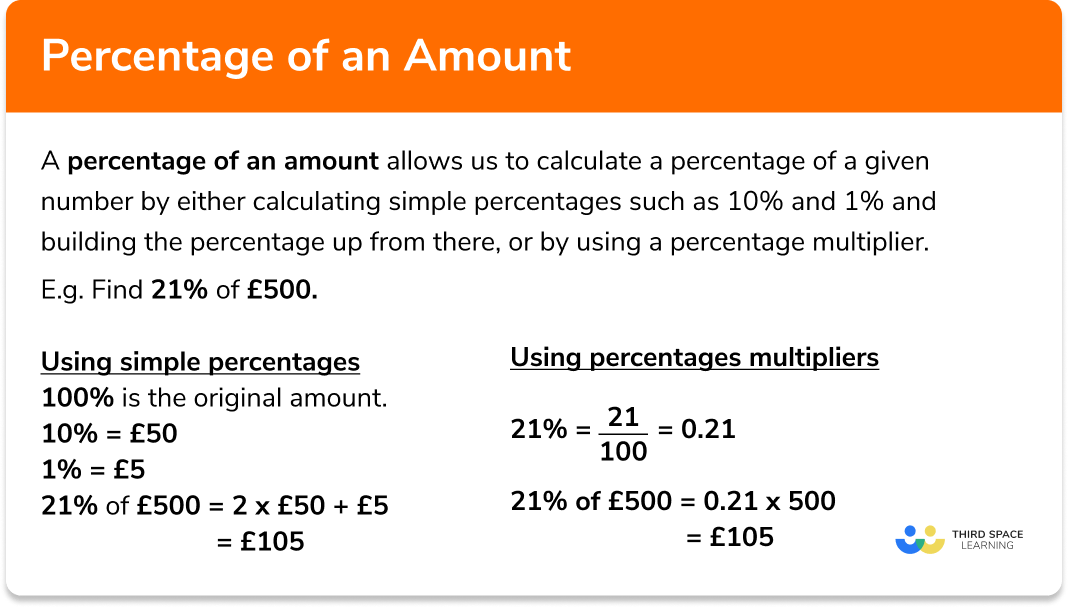
At its core, a percentage is a way of expressing a ratio. When a bank offers a 5% interest rate, they are stating that for every $100 you entrust to them, they will pay you $5 over a specified period. To find the percentage of a number, you essentially convert the percentage into a decimal or a fraction and multiply it by the total value.
The mathematical expression is simple:
Value = (Percentage / 100) × Total Amount
For example, if you want to find 15% of a $1,200 bonus to set aside for taxes, you divide 15 by 100 (0.15) and multiply by 1,200, resulting in $180.
The Core Formula: Part over Whole
In finance, you often need to work backward. If you earned $50 in dividends from a $2,000 investment, what was your percentage return? This requires the “Part over Whole” formula:
(Part / Whole) × 100 = Percentage
Using the example above, $50 divided by $2,000 equals 0.025. Multiplying by 100 gives you a 2.5% yield. Mastering these two directions of calculation—finding the value and finding the rate—is the first step toward sophisticated financial planning.
Percentages in Personal Finance: Budgeting and Savings
For the individual investor or household manager, percentages are the primary tool used to enforce discipline. Raw numbers can be deceiving; a $500 monthly grocery bill might be reasonable for someone earning $10,000 a month, but it is potentially catastrophic for someone earning $2,000. Percentages provide the context necessary for sustainable budgeting.
The 50/30/20 Rule: Allocating Your Income
One of the most popular financial frameworks is the 50/30/20 rule. This strategy suggests allocating your after-tax income into three percentage-based categories:
- 50% for Needs: Housing, utilities, and groceries.
- 30% for Wants: Entertainment, dining out, and hobbies.
- 20% for Savings and Debt Repayment: Building an emergency fund or paying down principal.
By calculating these percentages of your monthly take-home pay, you create a scalable blueprint for wealth. If your income increases, your “Wants” budget grows in absolute dollars, but your “Savings” contribution remains a steady, impactful percentage of your total wealth-building engine.
Understanding Compound Interest and Growth
Compound interest is often called the eighth wonder of the world, and it is entirely predicated on percentage-based growth. When your savings account earns a 4% Annual Percentage Yield (APY), that 4% is applied not just to your initial principal but also to the interest earned in previous periods.
Understanding how to calculate this percentage allows you to project your future net worth. For instance, knowing that a 7% average annual return on a retirement account will double your money approximately every 10 years (based on the “Rule of 72”) is a vital piece of financial foresight that helps in long-term goal setting.
Evaluating Discounts and Sales Tax
On a day-to-day level, finding the percentage of a number helps in savvy consumerism. When a retailer offers “30% off” an item priced at $85, being able to quickly calculate the savings ($25.50) and the final price ($59.50) ensures you are making informed purchasing decisions. Similarly, understanding that a 9% sales tax is added at the register allows for more accurate “out-the-door” price estimations, preventing budget leaks.
Percentages in Investment and Wealth Building
In the world of investing, percentages are the ultimate metric of performance. Investors rarely talk about making “$100 on a trade”; they talk about a “10% gain.” This is because a $100 gain on a $1,000 investment is excellent, while a $100 gain on a $100,000 investment is negligible.
Calculating Return on Investment (ROI)
The Return on Investment (ROI) is the most critical percentage for any investor to understand. It measures the efficiency of an investment or compares the efficiencies of several different investments.
The formula is:
ROI = [(Current Value – Original Cost) / Original Cost] × 100
If you purchase a stock for $50 and sell it for $65, your profit is $15. Your ROI is (15 / 50) × 100, which is a 30% return. This percentage allows you to compare the stock’s performance against other benchmarks, like the S&P 500 or the interest rate of a treasury bond.
Portfolio Allocation and Diversification Percentages
Risk management is an exercise in percentage allocation. A balanced portfolio might consist of 60% stocks, 30% bonds, and 10% cash or alternative assets. As the market fluctuates, these percentages will shift. If stocks perform exceptionally well, they might grow to represent 70% of your portfolio, increasing your risk exposure. “Rebalancing” is the process of selling a portion of those stocks to bring your asset classes back to their target percentages, ensuring your financial strategy remains aligned with your risk tolerance.
Navigating Dividend Yields
For income-focused investors, the “Dividend Yield” is a key percentage. It represents the annual dividend payment divided by the stock’s current price. If a company pays $2.00 in annual dividends and the stock is trading at $40.00, the yield is 5%. This percentage helps investors determine the cash-flow efficiency of their capital compared to other income-generating assets like real estate or high-yield bonds.
Business Finance: Profit Margins and Growth Metrics
For entrepreneurs and business owners, finding the percentage of a number is a daily necessity. Business health is measured by the relationship between revenue, costs, and growth—all of which are best understood through percentages.
Gross vs. Net Profit Margins
A business might generate $1 million in revenue, but if its expenses are $990,000, it is not a healthy enterprise. Profit margins reveal the truth behind the revenue numbers.
- Gross Profit Margin: This is calculated as (Revenue – Cost of Goods Sold) / Revenue. It shows the percentage of revenue remaining after direct production costs.
- Net Profit Margin: This is calculated as (Net Income / Revenue) × 100. It is the “bottom line” percentage that shows how much of every dollar earned actually becomes profit after all expenses, taxes, and interest.
A high net profit margin indicates a highly efficient business with strong pricing power.
Analyzing Year-over-Year (YoY) Growth
Stagnation is a risk for any business. To track progress, owners look at Year-over-Year (YoY) growth percentages. By comparing this year’s Q3 revenue to last year’s Q3 revenue, you can identify trends. If revenue grew from $200,000 to $250,000, that represents a 25% growth rate. Understanding this percentage helps in forecasting future hiring needs, inventory purchases, and expansion plans.
Customer Acquisition Cost (CAC) Ratios
In modern marketing, businesses must know the percentage of their budget that successfully converts into a customer. If you spend $1,000 on ads and gain 10 customers, your CAC is $100 per customer. Comparing this to the Lifetime Value (LTV) of a customer—often expressed as a ratio or percentage—tells you if your business model is sustainable. If your CAC is 50% of your LTV, your business has a healthy margin for error; if it is 95%, you are operating on a razor’s edge.
Tools and Strategies for Accuracy
While the math behind finding a percentage is straightforward, the complexity of modern finance often requires more than mental arithmetic. Accuracy is paramount when your capital is on the line.
Utilizing Financial Calculators and Spreadsheets
For complex calculations like mortgage amortization or multi-year investment projections, digital tools are indispensable. Software like Microsoft Excel or Google Sheets uses simple syntax to find percentages. The formula =A1*0.05 will instantly find 5% of whatever value is in cell A1. Furthermore, specialized financial calculators can handle “Time Value of Money” calculations, which incorporate percentage-based interest rates over long durations to help you plan for retirement or debt payoff.

Mental Math for Fast Financial Decision-Making
Despite the availability of digital tools, the ability to perform “back-of-the-envelope” percentage calculations is a hallmark of financial literacy. A quick way to find 10% of any number is to move the decimal point one place to the left ($450.00 becomes $45.00). To find 5%, simply halve that 10% figure ($22.50). To find 20%, double it ($90.00).
These mental shortcuts are invaluable during business negotiations, while shopping, or when evaluating a potential investment opportunity on the fly. By mastering the ability to find a percentage of a number, you equip yourself with a universal tool for wealth management, ensuring that every financial decision you make is grounded in mathematical reality rather than guesswork.
aViewFromTheCave is a participant in the Amazon Services LLC Associates Program, an affiliate advertising program designed to provide a means for sites to earn advertising fees by advertising and linking to Amazon.com. Amazon, the Amazon logo, AmazonSupply, and the AmazonSupply logo are trademarks of Amazon.com, Inc. or its affiliates. As an Amazon Associate we earn affiliate commissions from qualifying purchases.