
In the world of finance, percentages are the primary language of growth, risk, and allocation. Whether you are calculating the dividend payout ratio of a Fortune 500 company, rebalancing a retirement portfolio, or determining equity splits in a new startup, understanding how to divide percentages is a foundational skill. While the basic arithmetic might seem elementary, the application of percentage division within a financial context requires a nuanced understanding of how these figures represent real-world value.
To divide percentages effectively in a financial setting, one must look beyond the symbols and understand the underlying ratios. This guide explores the mathematical mechanics and the strategic implications of dividing percentages across personal finance, investment management, and corporate structures.
The Fundamentals of Dividing Percentages in Personal Finance
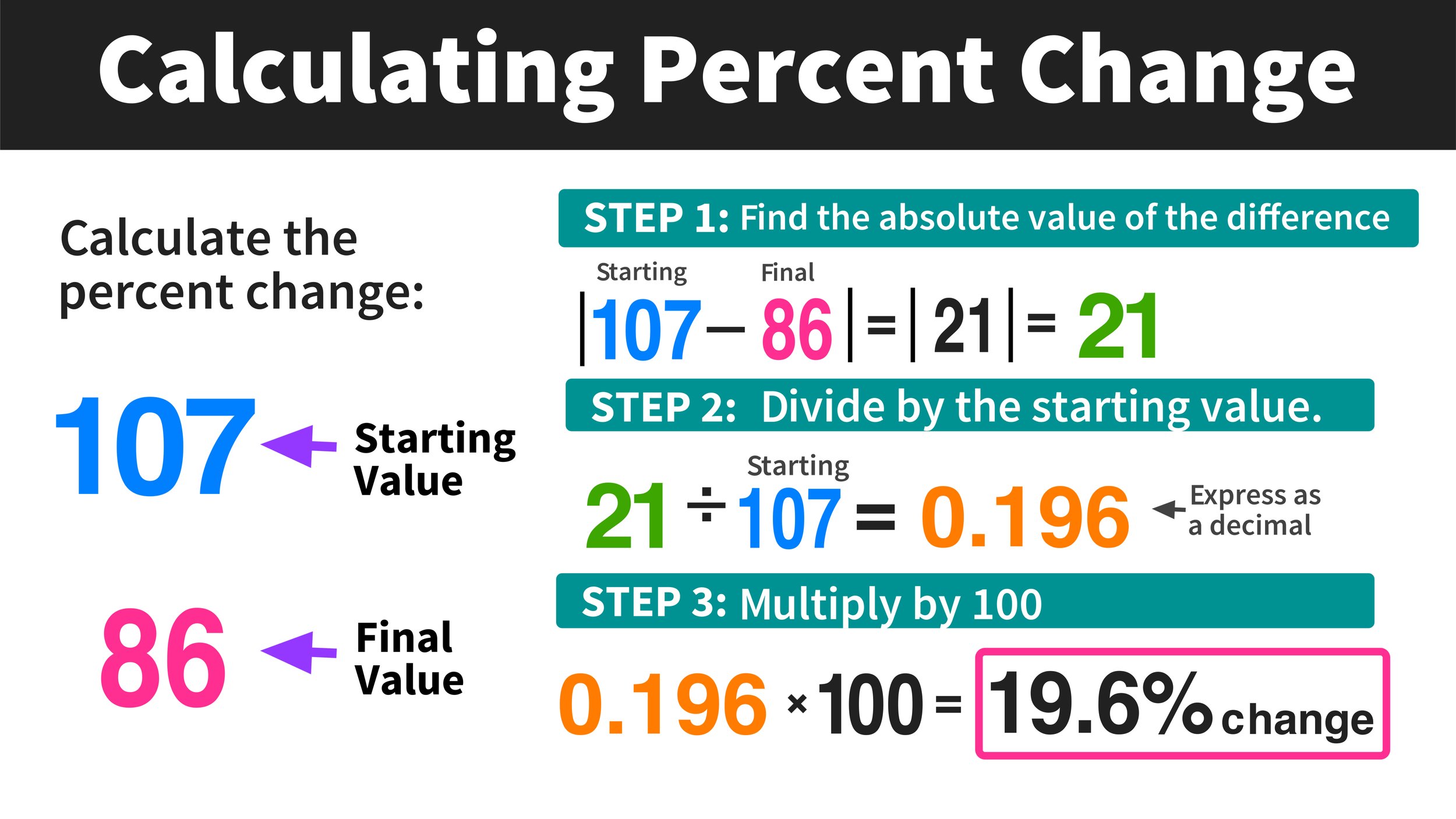
At its core, dividing one percentage by another is a process of determining a ratio between two relative values. In personal finance, this is most commonly used when comparing a specific expense or asset class against a broader category. To perform the calculation, the easiest method is to convert the percentages into decimals, perform the division, and then convert the result back into a percentage if necessary.
Understanding the Relationship Between Decimals and Percentages
Before applying these numbers to a budget or an investment account, it is vital to master the conversion. A percentage is simply a fraction of 100. Therefore, 50% is 0.50, and 5% is 0.05. When a financial advisor asks you to divide your 15% savings rate by your 30% tax bracket to understand “tax-drag” impact, you are essentially dividing 0.15 by 0.30, which equals 0.5 or 50%.
This distinction is crucial because failing to move the decimal point correctly can result in catastrophic errors in financial planning. In professional wealth management, accuracy to the fourth decimal point (often referred to as “basis points”) is the standard for ensuring that long-term projections remain viable.
Applying Division to Budgeting Frameworks
One of the most popular financial structures is the 50/30/20 rule—allocating 50% of income to needs, 30% to wants, and 20% to savings. However, sophisticated earners often need to “divide” these percentages further. For instance, if you decide that your “Needs” category (50% of your total income) should be divided so that housing takes up no more than 60% of that specific bucket, you are performing a percentage-of-a-percentage calculation.
By dividing the sub-allocation by the total allocation, you gain a clearer picture of your “effective” spending. In this case, 60% of 50% means housing is 30% of your total take-home pay. Mastering this allows for granular control over cash flow, ensuring that no single lifestyle expense outweighs your ability to generate long-term wealth.
Portfolio Rebalancing: Dividing Percentages for Risk Management
For the serious investor, dividing percentages is an exercise in risk mitigation. Investment portfolios are typically built on target asset allocations—for example, a “Moderate” portfolio might aim for 60% equities and 40% fixed income. Over time, market fluctuations will shift these percentages. If equities perform well, they might grow to represent 70% of the portfolio.
Calculating Asset Allocation Shifts
When a portfolio drifts, an investor must calculate how to divide the “excess” percentage back into the underperforming asset class. This is known as rebalancing. To determine the necessary shift, you divide the current percentage by the target percentage to find the “drift ratio.”
If your goal for a specific tech stock was 10% of your portfolio, but it has grown to 15%, dividing 15 by 10 gives you a ratio of 1.5. This tells you that the position is 50% larger than your risk tolerance allows. By dividing these percentages, you can systematically remove emotion from the selling process, selling high to buy low in other sectors.
Dividends and Yield Ratios: Dividing Growth from Income
Dividend investors use percentage division to calculate the “Dividend Payout Ratio.” This is calculated by dividing the dividends per share by the earnings per share (both often expressed as percentages of the stock price).
For example, if a company has a dividend yield of 4% and a total earnings yield of 8%, dividing the 4% by 8% reveals a 50% payout ratio. This figure is critical:
- A ratio that is too high (e.g., dividing 9% by 10% for a 90% payout) suggests the company is returning almost all its profits to shareholders and may not have enough capital left to reinvest in growth.
- A lower ratio suggests the company is retaining capital for future expansion.
Through the simple act of dividing percentages, an investor can judge the sustainability of a company’s business model.

Business Finance and Equity: Dividing Percentages Among Stakeholders
In the corporate world, dividing percentages is the primary method for determining ownership, profit distribution, and market dominance. For entrepreneurs and CFOs, these calculations dictate the trajectory of the company’s capitalization table (Cap Table).
Distributing Profits and Loss Ratios
In a partnership, profits are rarely divided equally; they are divided based on the percentage of ownership or capital contribution. If a business generates a 25% net profit margin and has three partners with ownership stakes of 50%, 30%, and 20%, the finance department must divide the total profit percentage accordingly.
However, complexity arises when dividing “Preferred” vs. “Common” equity. If a preferred shareholder is entitled to a 5% dividend before other profits are distributed, that 5% must be “divided” out of the total profit pool first. Understanding the order of operations in percentage division ensures that legal obligations to investors are met before the remaining percentages are distributed to the founders.
Calculating Market Share and Growth Volatility
Business strategy often involves dividing your company’s growth percentage by the industry’s average growth percentage. This is known as the “Relative Growth Rate.”
- If your startup grew by 40% last year, but the industry grew by 20%, dividing 40% by 20% gives you a factor of 2.0. This indicates you are outperforming the market by 100%.
- Conversely, if you grew by 10% while the market grew by 20%, your relative growth is 0.5.
This specific type of division helps executives understand whether their success is due to their own strategy or simply a “rising tide lifting all boats.” Without dividing these percentages, a business might mistake market-wide inflation for genuine internal growth.
Advanced Tools and Techniques for Financial Percentage Division
As financial data becomes more complex, manual calculation often gives way to sophisticated digital tools. However, the logic remains the same: the division of percentages provides a ratio that informs a decision.
Leveraging Financial Software and Spreadsheets
In software like Microsoft Excel or Google Sheets, dividing percentages requires a specific syntax to avoid errors. Since Excel treats percentages as decimals, the formula =A1/B1 where A1 is 10% and B1 is 5% will yield the number 2 (or 200%).
Financial analysts often use the QUOTIENT or DIVIDE functions to handle large datasets of percentages, such as comparing the Year-over-Year (YoY) growth percentages of hundreds of stocks simultaneously. This automation allows for “screening,” where an investor might ask the software to “divide the debt-to-equity percentage by the industry average” and flag any result higher than 1.2.
Common Pitfalls to Avoid in Financial Math
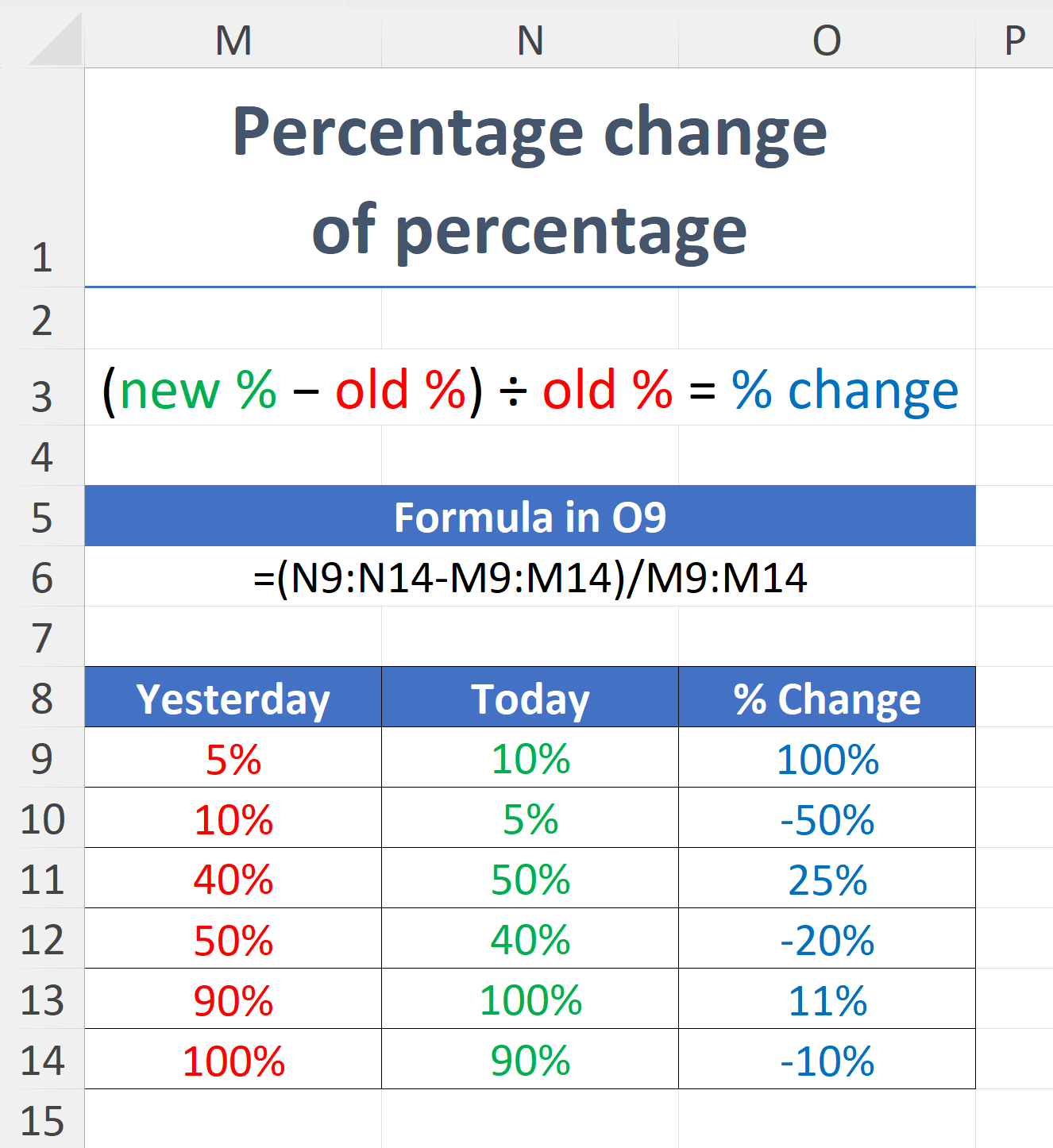
The most common mistake when dividing percentages is “Percentage Point Confusion.” There is a significant difference between a “5% increase” and an “increase of 5 percentage points.”
For example, if an interest rate moves from 10% to 15%, that is a 5 percentage point increase. However, if you divide the new rate by the old rate (15/10), you find it is actually a 50% increase in the cost of borrowing. In the world of high-interest debt or corporate bonds, failing to recognize this distinction during division can lead to a gross underestimation of interest expenses. Always clarify whether you are looking for the quotient of the raw numbers or the relative change between the two percentages.
Conclusion: The Strategic Value of Mathematical Precision
Dividing percentages is more than a simple arithmetic exercise; it is a vital tool for financial literacy and professional management. By converting percentages to decimals, understanding the context of the ratios, and applying them to budgeting, investing, and business operations, individuals can make more informed decisions.
In personal finance, it clarifies where your money goes. In investing, it helps manage risk and identify sustainable yields. In business, it defines ownership and competitive standing. By mastering the art of dividing percentages, you gain a sharper lens through which to view the financial world, ensuring that your wealth is not just earned, but strategically managed for the long term.
aViewFromTheCave is a participant in the Amazon Services LLC Associates Program, an affiliate advertising program designed to provide a means for sites to earn advertising fees by advertising and linking to Amazon.com. Amazon, the Amazon logo, AmazonSupply, and the AmazonSupply logo are trademarks of Amazon.com, Inc. or its affiliates. As an Amazon Associate we earn affiliate commissions from qualifying purchases.