
For the modern investor, the stock market is often perceived as a living, breathing entity that never truly sleeps. However, while digital platforms allow us to glimpse ticker symbols at any hour, the actual execution of trades is governed by a strict set of operating hours. Understanding when the stock market opens and closes is not merely a matter of administrative curiosity; it is a fundamental component of strategic personal finance and professional investing. Timing influences liquidity, volatility, and the pricing of assets, making it a critical variable in any successful financial plan.
Understanding Standard Trading Hours in the United States
The epicenter of global equity trading resides in New York City, home to the New York Stock Exchange (NYSE) and the NASDAQ. For the vast majority of retail investors, these exchanges define the rhythm of the financial day.
The Core Trading Session
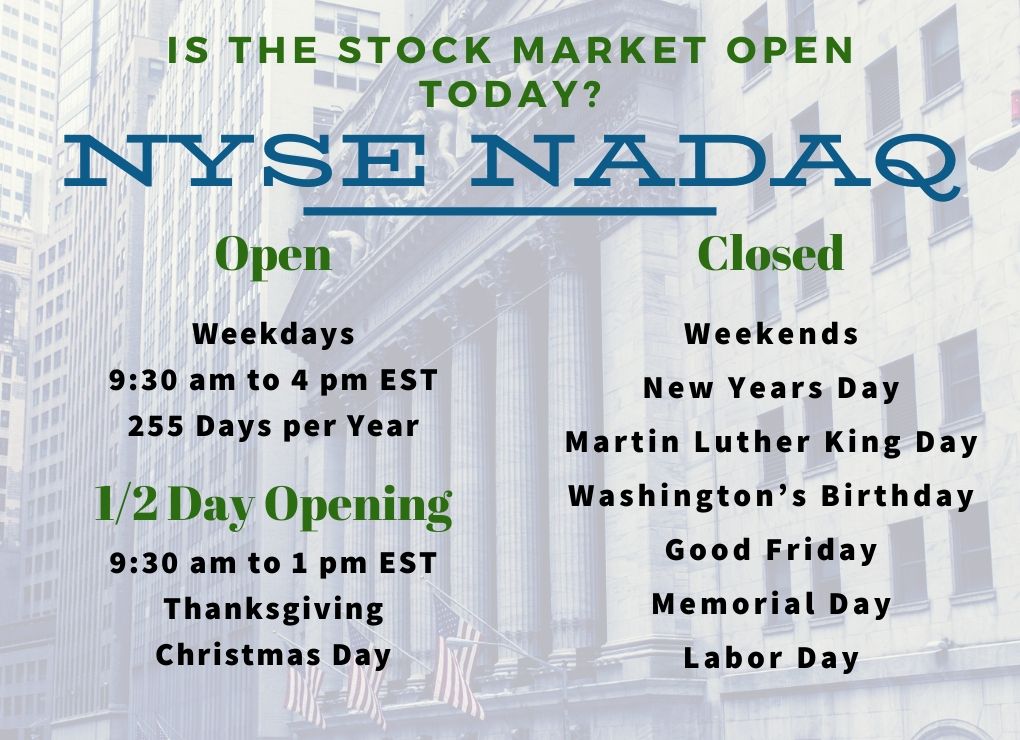
The standard trading hours for the NYSE and NASDAQ are Monday through Friday, from 9:30 AM to 4:00 PM Eastern Time (ET). This 6.5-hour window is known as the “core” or “regular” trading session. During this period, liquidity is at its peak, meaning there are enough buyers and sellers to ensure that trades are executed quickly and at prices close to the quoted market value. For long-term investors and those managing personal retirement accounts (IRAs or 401ks), this is the safest and most efficient time to execute orders.
Pre-Market and After-Hours Trading
While the “bells” ring at 9:30 AM and 4:00 PM, the digital nature of modern finance allows for extended-hours trading. Pre-market trading typically occurs from 4:00 AM to 9:30 AM ET, while after-hours trading runs from 4:00 PM to 8:00 PM ET. These sessions are conducted through Electronic Communication Networks (ECNs) that match buyers and sellers directly.
However, investors should exercise caution. Extended hours are characterized by significantly lower volume and wider “bid-ask spreads,” which can lead to price slippage. Professional traders often use these windows to react to breaking news, such as quarterly earnings reports or geopolitical shifts, but for the average side-hustler or casual investor, the risks of volatile price swings often outweigh the benefits.
Stock Market Holidays and Early Closures
The U.S. stock market does not operate on weekends and observes several federal holidays. Notable closures include New Year’s Day, Martin Luther King Jr. Day, Presidents’ Day, Good Friday, Memorial Day, Juneteenth, Independence Day, Labor Day, Thanksgiving, and Christmas. Additionally, the market often observes “early close” days—typically the day after Thanksgiving and Christmas Eve—where trading ends at 1:00 PM ET. Keeping a financial calendar is essential for managing cash flow and ensuring that limit orders don’t expire unexpectedly during a holiday hiatus.
Global Market Schedules: Trading Around the Clock
In an interconnected global economy, the movement of the U.S. market is often a reaction to what happened overnight in Europe and Asia. For those looking to diversify their portfolios internationally, understanding global time zones is a prerequisite.
The European Markets (LSE, Euronext)
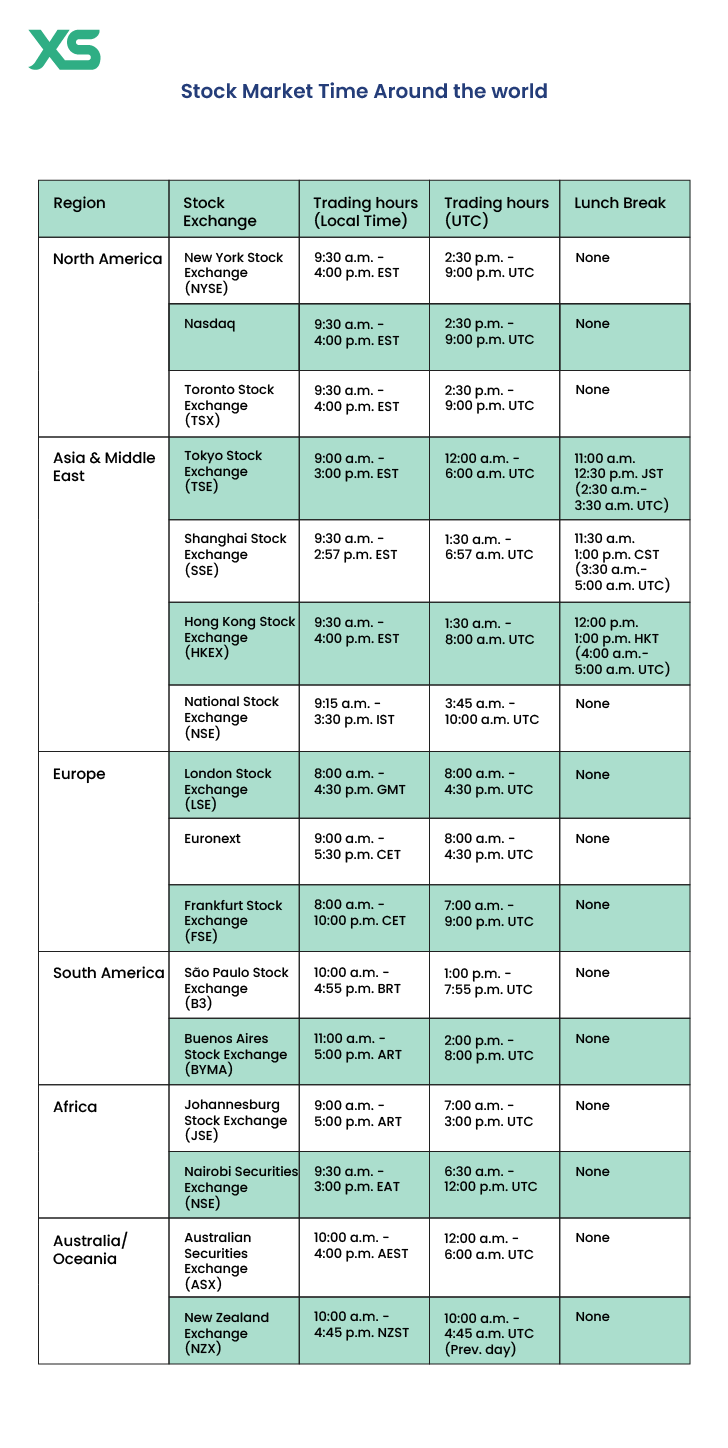
The London Stock Exchange (LSE) is one of the most influential markets in the world. It typically opens at 8:00 AM and closes at 4:30 PM local time (GMT). For an investor based in New York, this means the London market opens at 3:00 AM ET. Other major European hubs, such as the Euronext Paris or the Frankfurt Stock Exchange (DAX), operate on similar schedules. There is a crucial overlap between the European close and the U.S. open, usually between 9:30 AM and 11:30 AM ET. This period often sees the highest global trading volume of the day as participants in both hemispheres are active simultaneously.
The Asian Markets (TSE, HKEX, SSE)
The Asian trading day begins while the Western world is asleep. The Tokyo Stock Exchange (TSE) generally operates from 9:00 AM to 3:00 PM local time, with a scheduled lunch break from 11:30 AM to 12:30 PM—a practice rare in Western markets. Similarly, the Hong Kong Stock Exchange (HKEX) and the Shanghai Stock Exchange (SSE) have morning and afternoon sessions divided by a midday break. For U.S. investors, these markets provide a “forward look” at global sentiment, especially regarding manufacturing, technology, and consumer electronics sectors.
Time Zone Arbitrage and Overlapping Sessions
The concept of “the sun never setting on finance” is real. As the U.S. markets close, the “baton” is passed to the Australian Securities Exchange (ASX), then to Tokyo, Hong Kong, London, and eventually back to New York. Institutional investors often use these overlapping windows to engage in arbitrage—capitalizing on price discrepancies of the same asset across different exchanges. While difficult for individual investors to master, being aware of these transitions helps in understanding why a stock might “gap up” or “gap down” at the 9:30 AM New York open based on international developments.
Why Market Timing Matters for Your Investment Strategy
In the world of money and investing, when you trade can be just as important as what you trade. The opening and closing periods of the market exhibit unique behaviors that can either erode your capital or provide strategic entry points.
Volatility at the Open and Close
The first and last 30 minutes of the trading day are often referred to as “the amateur hour” and “the professional hour,” respectively. At 9:30 AM, the market is processing a backlog of orders and news that accumulated overnight. This results in high volatility and rapid price swings. Conversely, the “Power Hour” (3:00 PM to 4:00 PM ET) is when institutional investors—pension funds, mutual funds, and hedge funds—rebalance their positions. Understanding these patterns is vital for personal finance management; if you are looking for stability, it is often better to wait until the “mid-day lull” (11:00 AM to 2:00 PM) when price action stabilizes.
Liquidity Considerations for Retail Investors
Liquidity refers to how easily an asset can be converted into cash without affecting its price. During peak hours, liquidity is high, and the difference between the buying price and the selling price (the spread) is narrow. For a retail investor operating a side hustle in stock flipping or swing trading, trading during low-liquidity hours (like pre-market) can be expensive. You might buy a stock at a premium or be forced to sell at a discount simply because there are fewer participants in the market to take the other side of your trade.
Managing Risk During Extended Hours
Risk management is the cornerstone of wealth preservation. Many brokerage platforms allow extended-hours trading, but they require users to sign disclosures acknowledging the risks. Because there are no “circuit breakers” (regulatory halts that pause trading during extreme crashes) in the pre-market or after-hours sessions, prices can collapse or skyrocket without intervention. For someone focused on long-term business finance and steady growth, it is generally advisable to stick to the core session to avoid the “Wild West” environment of the off-hours.
Tools and Platforms for Monitoring Real-Time Market Data
To navigate the complexities of market hours, investors need robust financial tools. The digital age has democratized access to data that was once reserved for Wall Street elites.
Brokerage Apps and Execution Speed
Choosing the right financial tool is paramount. Modern brokerages like Fidelity, Charles Schwab, and Vanguard, as well as fintech apps like Robinhood or Webull, provide real-time clocks and countdowns to market open/close. When selecting a platform, consider the execution speed and whether they offer “fractional shares,” which allow you to invest in high-priced stocks regardless of the time of day. High-quality apps also provide notifications for “Economic Indicators” (like CPI reports) that are released at 8:30 AM ET, an hour before the market opens, allowing you to prepare your strategy.
Financial Calendars and News Aggregators
Successful investing requires staying ahead of the curve. Tools like Bloomberg, Reuters, or Yahoo Finance offer comprehensive economic calendars. These calendars track not only market holidays but also “Earnings Season”—the weeks following each quarter when companies report their financial health. Since most companies report either before the open or after the close, having a tool that tracks these specific timestamps is essential for managing a high-performing portfolio.

Algorithmic Trading and Automation
For those looking to turn investing into a more passive stream of income, automation tools are a game-changer. Many platforms allow you to set “Limit Orders” or “Stop-Loss Orders” that stay active “Good ‘Til Canceled” (GTC). These tools work even when you are not watching the clock. For instance, you can set a rule to sell a stock if it hits a certain price during the core session, ensuring that you lock in profits or minimize losses without needing to be physically present at the 4:00 PM closing bell.
In conclusion, the stock market’s opening and closing hours represent the boundaries of the global financial playground. Whether you are a seasoned professional managing corporate identity through savvy business finance or an individual building a side hustle in the markets, mastering these timings is essential. By aligning your trades with peak liquidity, understanding the global relay race of exchanges, and utilizing the right digital tools, you can navigate the complexities of the financial world with confidence and precision. Wealth is not just built on what you know, but on knowing exactly when to act.
aViewFromTheCave is a participant in the Amazon Services LLC Associates Program, an affiliate advertising program designed to provide a means for sites to earn advertising fees by advertising and linking to Amazon.com. Amazon, the Amazon logo, AmazonSupply, and the AmazonSupply logo are trademarks of Amazon.com, Inc. or its affiliates. As an Amazon Associate we earn affiliate commissions from qualifying purchases.