
Navigating the world of high-stakes finance requires more than just a keen eye for undervalued stocks or a mastery of technical analysis. For the modern investor, understanding the rhythm of the market is fundamental to success. The Nasdaq Stock Market, a global electronic marketplace for buying and selling securities, operates on a strictly regulated schedule. Knowing exactly when the Nasdaq opens—and how to navigate the volatile hours surrounding that opening bell—can be the difference between a calculated profit and an impulsive loss.
As the home of tech giants, biotechnology pioneers, and green energy innovators, the Nasdaq is often seen as a barometer for the growth economy. Unlike traditional floor-based exchanges, the Nasdaq is entirely digital, but it still adheres to specific trading sessions that dictate liquidity, volatility, and price discovery.
The Standard Trading Session: Core Hours and the Opening Cross
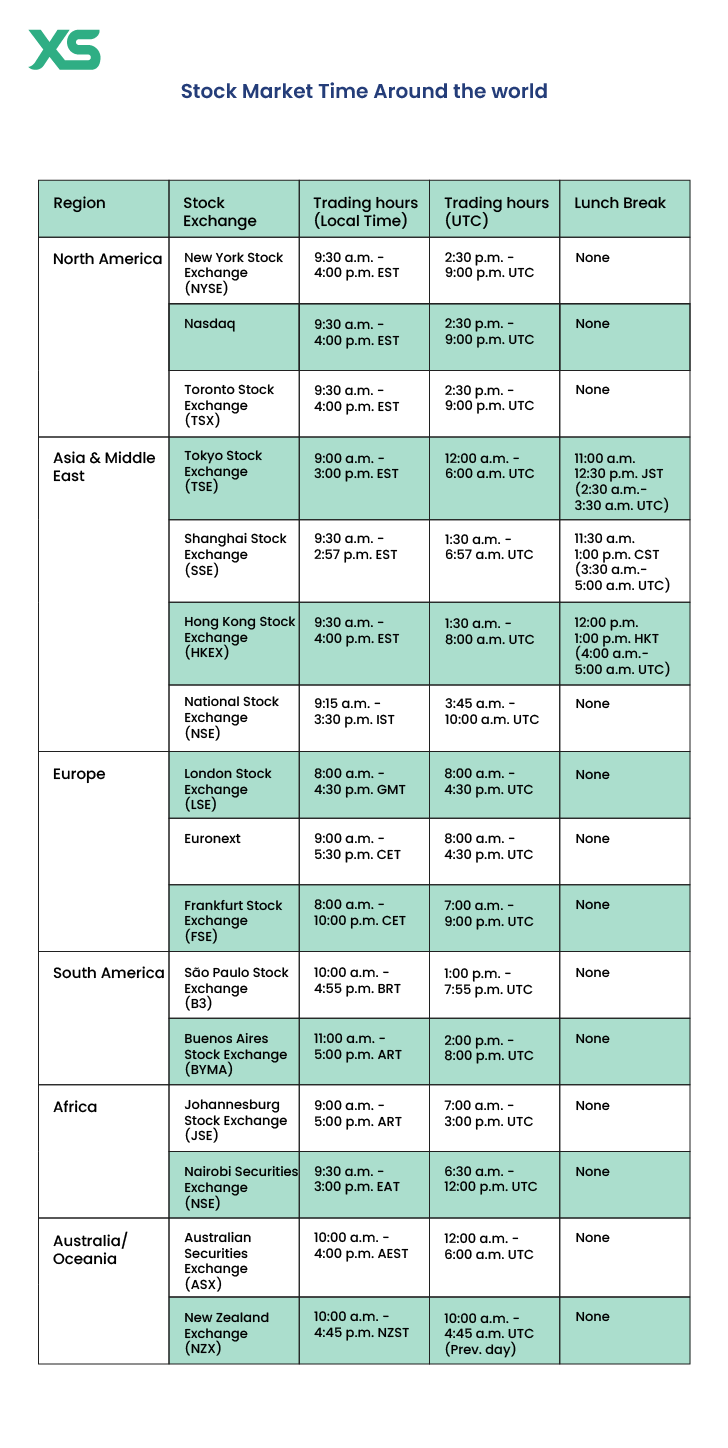
For the vast majority of retail investors and institutional players, the Nasdaq’s regular trading hours are the primary window of activity. The exchange officially opens its doors for standard trading at 9:30 AM Eastern Time (ET) and closes at 4:00 PM ET, Monday through Friday.
The Significance of the 9:30 AM Opening Bell
The moment the clock strikes 9:30 AM in New York, a massive influx of orders hits the tape. This is the culmination of overnight news, international market movements, and early morning economic reports. For the Nasdaq, the opening is not just a start time; it is a complex mathematical process known as the “Nasdaq Opening Cross.”
Understanding the Nasdaq Opening Cross
To ensure a fair and transparent price for every security, the Nasdaq uses a centralized auction process called the Opening Cross. In the minutes leading up to 9:30 AM, the system aggregates all buy and sell orders to determine a single price that clears the most volume. This process minimizes “gapping”—the price jumps that occur when there is an imbalance—and provides a stable foundation for the day’s trading.
Why Liquidity Peaks at the Open
Liquidity refers to the ease with which an investor can buy or sell a stock without significantly affecting its price. At 9:30 AM, liquidity is typically at its highest because institutional investors, algorithmic bots, and retail traders are all active simultaneously. For those looking to enter or exit large positions, the first 30 minutes of the market open provide the necessary depth to execute trades efficiently.
Beyond the Regular Session: Extended-Hours Trading
While the core hours are 9:30 AM to 4:00 PM, the digital nature of the Nasdaq allows for trading long before the sun rises in Manhattan and long after the official close. This is known as extended-hours trading, divided into the pre-market and the after-hours sessions.
The Pre-Market Session (4:00 AM – 9:30 AM ET)
The Nasdaq is unique in that its pre-market session begins as early as 4:00 AM ET. During this time, trading is conducted through Electronic Communication Networks (ECNs). While the volume is significantly lower than during regular hours, this session is vital for reacting to “pre-bell” catalysts.
Most major economic indicators, such as the Consumer Price Index (CPI) or Department of Labor jobs reports, are released at 8:30 AM ET. Investors use the pre-market session to price in this data before the general public begins trading at 9:30 AM.
The After-Hours Session (4:00 PM – 8:00 PM ET)
Once the regular session ends at 4:00 PM ET, the after-hours session begins, running until 8:00 PM ET. This period is often the most volatile for Nasdaq-listed companies, as many corporations release their quarterly earnings reports shortly after the closing bell. If a tech giant beats earnings expectations, its stock price can skyrocket in the after-hours, though these moves are often exaggerated due to thinner volume.
Risks of Extended-Hours Trading
Trading outside of the standard 9:30 AM to 4:00 PM window carries substantial risk. The primary concern is the “bid-ask spread.” Because fewer people are trading, the gap between what a buyer wants to pay and what a seller wants to receive widens. This can lead to “slippage,” where an investor ends up paying significantly more (or receiving significantly less) than they intended. Furthermore, many brokerages only allow “limit orders” during these sessions to protect investors from sudden, irrational price swings.
Market Holidays and Early Closures: The Investor’s Calendar
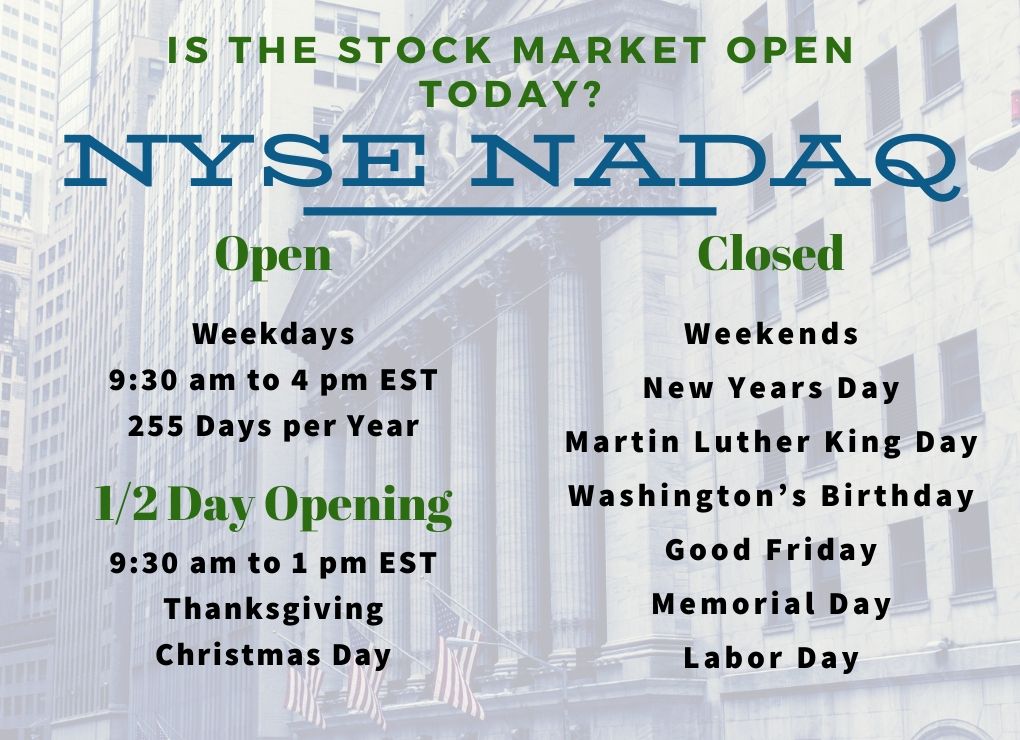
To manage a portfolio effectively, an investor must be aware of when the Nasdaq is not open. The exchange observes several federal holidays in the United States, and during these times, all trading—including extended hours—is suspended.
Official Nasdaq Holiday Schedule
Typically, the Nasdaq is closed for the following holidays:
- New Year’s Day
- Martin Luther King, Jr. Day
- Presidents’ Day
- Good Friday
- Memorial Day
- Juneteenth National Independence Day
- Independence Day (July 4th)
- Labor Day
- Thanksgiving Day
- Christmas Day
Early Closures and “Half Days”
In addition to full-day closures, the Nasdaq often implements early closures, usually at 1:00 PM ET. This typically occurs on the day after Thanksgiving (Black Friday) and sometimes on Christmas Eve or July 3rd, depending on how those dates fall in the week.
The Importance of the Economic Calendar
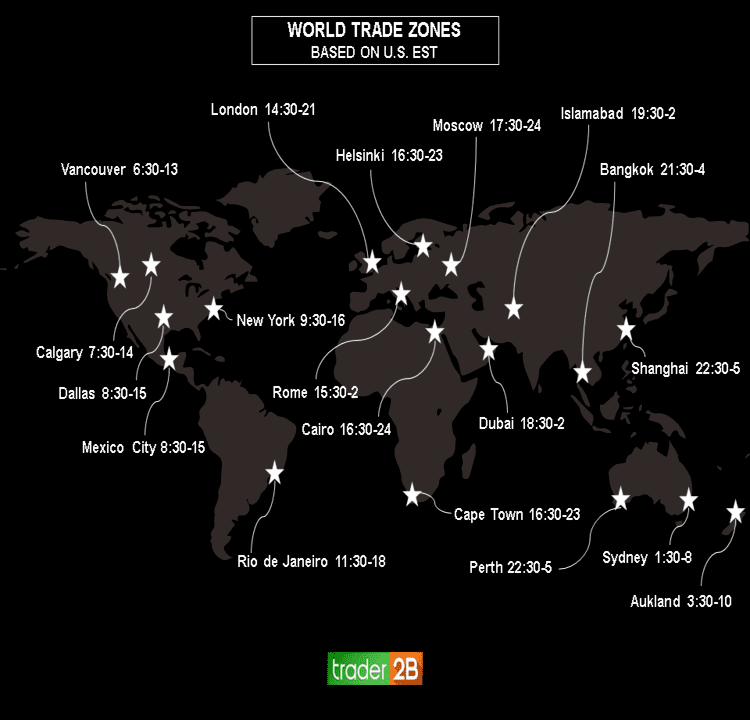
For the sophisticated investor, the “opening” of the Nasdaq is often preceded by the opening of European markets (like the LSE or DAX) and the closing of Asian markets (like the Nikkei or Hang Seng). Monitoring these global time zones is crucial, as a sell-off in Tokyo overnight can lead to a gap-down when the Nasdaq opens at 9:30 AM in New York. Wealth management requires a 24-hour perspective, even if the primary exchange is only active for 6.5 hours.
Strategic Timing: When Should You Actually Trade?
Knowing when the Nasdaq opens is the first step, but knowing when to execute a trade within those hours is a matter of strategic finance. The trading day is generally broken down into three phases: the Morning Rush, the Mid-day Lull, and the Power Hour.
The Morning Rush (9:30 AM – 10:30 AM)
This is the most volatile hour of the day. It is characterized by high volume and rapid price movements as the market digests overnight news. Professional traders often warn novices to “avoid the first 15 minutes,” as price discovery can be chaotic. However, for those looking for high-momentum plays or day trading opportunities, this is the most profitable—and dangerous—time to be active.
The Mid-day Lull (11:30 AM – 2:00 PM)
As institutional traders take lunch breaks and the initial morning excitement fades, volume tends to drop. During this period, prices often “drift” or consolidate. This is generally considered a poor time for day trading because the lack of volume makes it harder to predict clear trends. For long-term investors, however, this can be a stable time to enter a position without the interference of extreme volatility.
The Power Hour (3:00 PM – 4:00 PM)
The final hour of trading, often called the “Power Hour,” sees a resurgence in volume. Institutional investors often rebalance their portfolios during this time, and “market-on-close” (MOC) orders begin to accumulate. Much like the opening, the Nasdaq Closing Cross occurs at 4:00 PM, providing a final, authoritative price for the day. This hour is often a harbinger of how the market will open the following morning.
Tools and Platforms for Monitoring Nasdaq Hours
In the digital age, being tethered to a desktop to monitor the market open is no longer necessary. A variety of financial tools and platforms ensure that investors stay informed of market status in real-time.
Financial News Aggregators
Platforms like Bloomberg, CNBC, and Reuters provide countdowns to the market open and real-time coverage of pre-market activity. For a Nasdaq investor, keeping a pulse on the “Nasdaq 100 Futures” is a primary way to predict whether the market will open “green” (up) or “red” (down).
Brokerage Alerts and Mobile Apps
Modern fintech apps—such as Charles Schwab, Fidelity, or Robinhood—allow users to set alerts for market opens and closes. More importantly, they provide “Extended Hours” toggles that allow retail investors to participate in the 4:00 AM or after-hours sessions, provided the user understands the associated risks.
Portfolio Management Software
For those managing business finance or a diverse personal portfolio, tools like Morningstar or Yahoo Finance Plus offer integrated calendars. These calendars automatically account for holidays and early closures, ensuring that your automated trading scripts or manual strategies don’t fail due to an unexpected exchange holiday.
Conclusion: Mastering the Clock for Financial Success
“When does Nasdaq open?” is a question with a simple answer—9:30 AM ET—but with profound implications for your financial strategy. The opening bell is more than a start time; it is the beginning of a daily cycle of liquidity, emotion, and economic transition.
By understanding the mechanics of the Opening Cross, the risks and rewards of extended-hours trading, and the strategic importance of the “Power Hour,” you move beyond being a passive participant in the market. You become an informed investor who respects the clock as much as the chart. In the world of finance, time is not just money—timing is everything. Whether you are a long-term investor building a retirement fund or a swing trader looking for the next growth spurt in tech, mastering the hours of the Nasdaq is a foundational step toward achieving your financial goals.
aViewFromTheCave is a participant in the Amazon Services LLC Associates Program, an affiliate advertising program designed to provide a means for sites to earn advertising fees by advertising and linking to Amazon.com. Amazon, the Amazon logo, AmazonSupply, and the AmazonSupply logo are trademarks of Amazon.com, Inc. or its affiliates. As an Amazon Associate we earn affiliate commissions from qualifying purchases.