
For any investor, whether a seasoned professional or a newcomer exploring personal finance, the question “When do the stock markets open?” is more than a simple inquiry about the clock. It is the fundamental starting point for understanding market liquidity, volatility, and the global flow of capital. Timing is a critical component of a successful investment strategy. Knowing when the opening bell rings in New York, London, or Tokyo allows an investor to anticipate price movements and execute trades when the market is at its most efficient.
In the modern era of digital finance, the lines between “open” and “closed” have blurred due to the rise of electronic trading. However, the official operating hours of the world’s major exchanges still dictate the vast majority of trading volume. This guide provides a deep dive into the schedules of the global financial markets, the mechanics of extended-hours trading, and the strategic implications of timing for your portfolio.
Understanding Standard Trading Hours in the United States
The United States houses the two largest stock exchanges in the world: the New York Stock Exchange (NYSE) and the NASDAQ. For most retail investors, these are the primary venues for buying and selling equities. The standardized operating hours for these exchanges are designed to concentrate liquidity, ensuring that there are enough buyers and sellers to facilitate fair pricing.
The New York Stock Exchange (NYSE) and NASDAQ
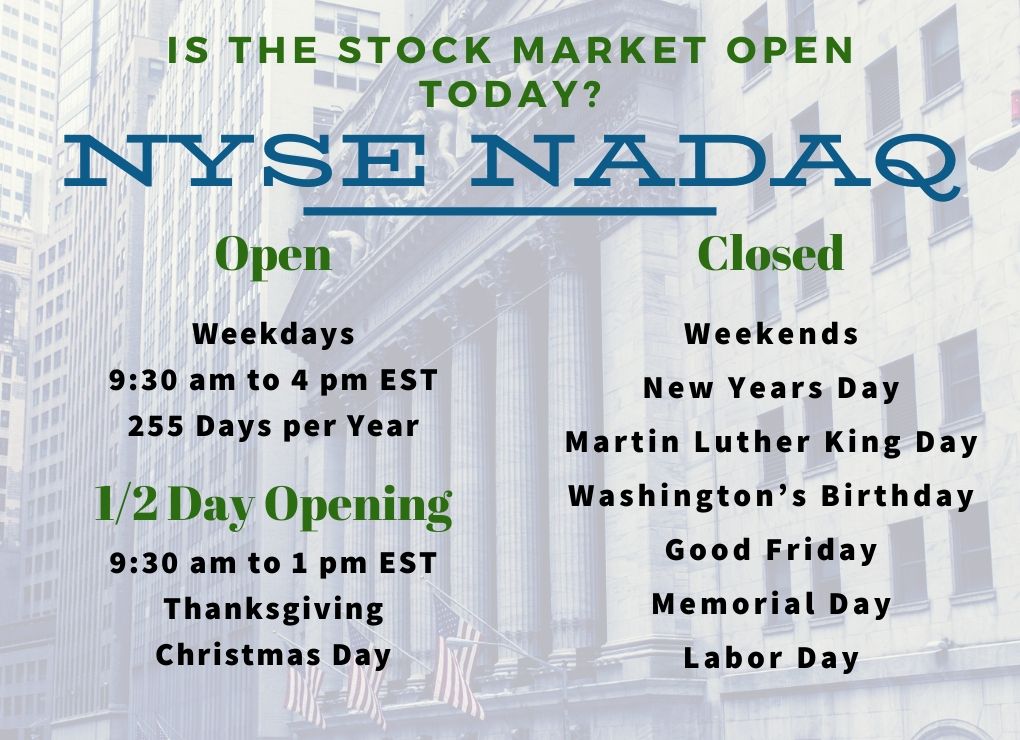
Both the NYSE and the NASDAQ operate on a standard schedule from Monday through Friday. They open at 9:30 AM Eastern Time (ET) and close at 4:00 PM ET. Unlike some international markets, U.S. exchanges do not take a break for lunch; trading continues uninterrupted for six and a half hours. This window is often referred to as “core trading hours.” During this time, the market experiences its highest volume, and the “bid-ask spread”—the difference between the price a buyer is willing to pay and a seller is willing to accept—is typically at its narrowest.
The Significance of the Opening and Closing Bells
The “Opening Bell” at 9:30 AM is more than a tradition; it marks a period of intense price discovery. When the market opens, it must digest all the news, earnings reports, and geopolitical events that occurred overnight. This often leads to high volatility in the first 30 to 60 minutes of the session.
Similarly, the “Closing Bell” at 4:00 PM represents the final opportunity for institutional investors to balance their books for the day. Many mutual funds and ETFs calculate their Net Asset Value (NAV) based on the closing prices of the stocks they hold. Consequently, the final minutes of the trading day, often called the “closing auction,” see a massive surge in volume as orders are finalized.
The World of Extended Hours: Pre-Market and After-Hours Trading
While the core hours are 9:30 AM to 4:00 PM, the digital nature of modern finance allows for trading outside these bounds. This is known as extended-hours trading, facilitated by Electronic Communication Networks (ECNs). While it offers flexibility, it also carries unique risks that every investor must understand.
How Extended Trading Works
In the U.S., pre-market trading can begin as early as 4:00 AM ET, though the bulk of the activity starts around 8:00 AM ET. After-hours trading begins immediately after the closing bell at 4:00 PM and can continue until 8:00 PM ET.
Extended-hours trading allows investors to react immediately to news that breaks outside of standard hours, such as a company’s quarterly earnings announcement or a sudden change in government policy. Most major brokerages now offer access to these sessions, though they often require users to agree to specific disclosures regarding the risks involved.
Risks and Opportunities for Retail Investors
The primary appeal of extended trading is the ability to get a “head start” on a trend. However, the Money niche cautions against reckless participation in these sessions. Because there are fewer participants, liquidity is significantly lower than during standard hours. This lack of liquidity can lead to “slippage,” where a trade is executed at a much worse price than expected. Furthermore, price swings can be extreme and may not reflect where the stock will actually trade once the core market opens and institutional volume returns. For many disciplined investors, extended hours are better used for observation rather than active execution.
Navigating International Markets and Time Zones
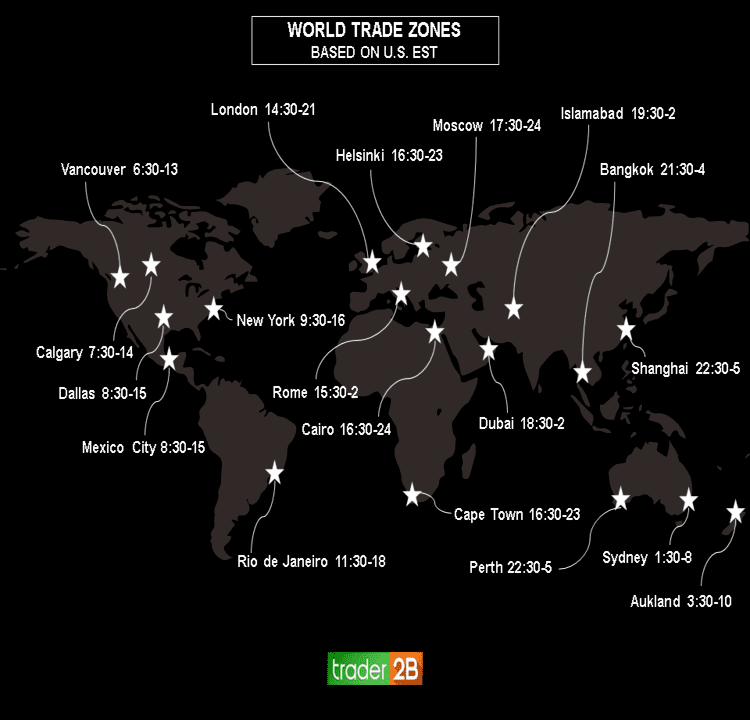
As an investor’s portfolio grows, the need for global diversification often leads to international equities. The sun never truly sets on the global financial system, as markets in Asia, Europe, and the Americas open and close in a sequential relay.
Major European and Asian Exchanges
Understanding the global clock is essential for those trading international stocks or ADRs (American Depositary Receipts).
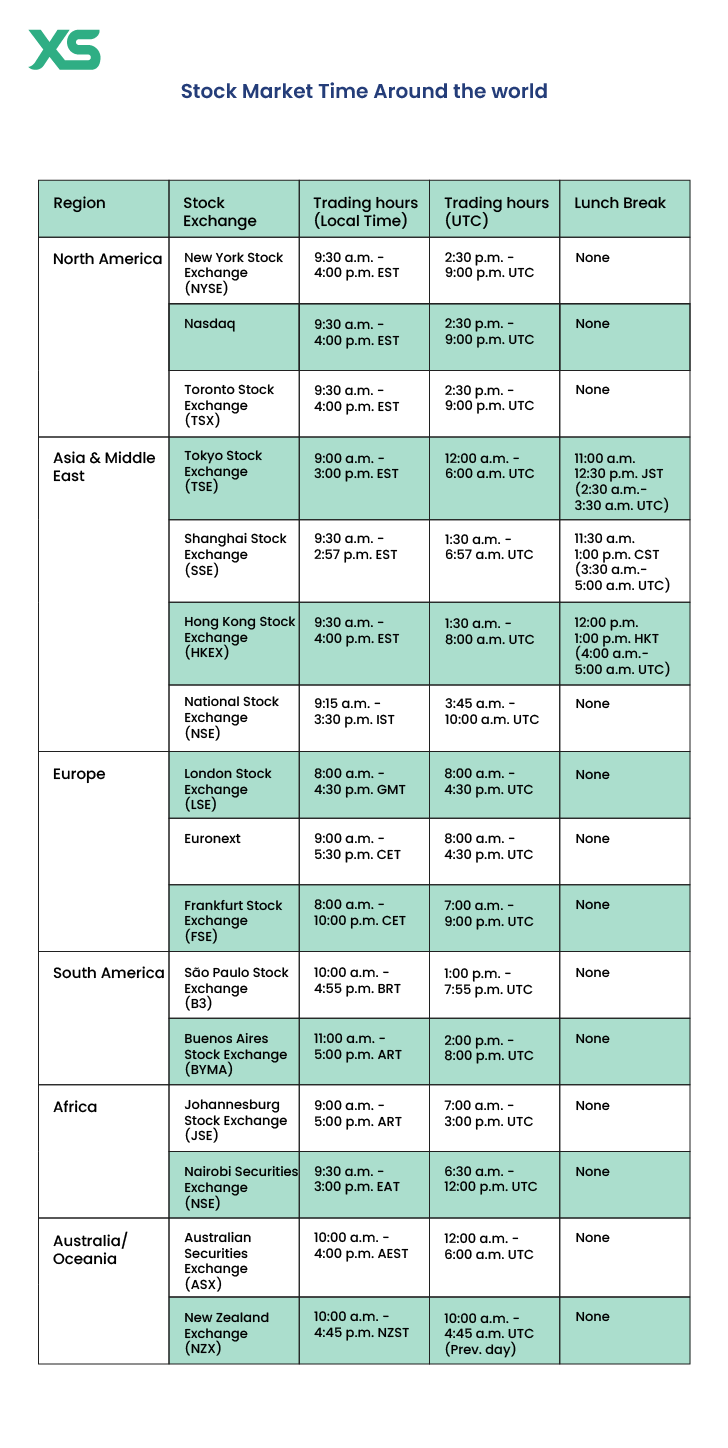
- London Stock Exchange (LSE): The LSE is the hub of European finance. It operates from 8:00 AM to 4:30 PM Greenwich Mean Time (GMT). For an investor in New York, the LSE opens at 3:00 AM ET, meaning European markets are already well into their day by the time the U.S. wakes up.
- Tokyo Stock Exchange (TSE): The TSE operates from 9:00 AM to 3:00 PM local time (JST), but it includes a scheduled lunch break from 11:30 AM to 12:30 PM. For U.S. investors, the Tokyo market opens on Sunday evening or late at night during the week.
- Hong Kong Stock Exchange (HKEX): Similar to Tokyo, the HKEX operates with a midday break, opening at 9:30 AM and closing at 4:00 PM local time, with a break between 12:00 PM and 1:00 PM.
The Impact of Time Zone Conversions on Global Portfolios
The overlap between markets is where some of the most interesting price action occurs. For example, the “transatlantic overlap” happens between 9:30 AM and 11:30 AM ET, when both New York and London are open. This period typically sees the highest global liquidity for currency pairs (Forex) and large-cap multinational stocks. Investors should be mindful of “Daylight Savings Time” shifts, as not all countries change their clocks on the same date, which can temporarily shift the opening times of international markets relative to your local time.
Market Holidays and Early Closures
Just as a business has operating hours, it also has scheduled closures. Stock markets do not operate on weekends, and they observe specific national holidays. Forgetting a market holiday can lead to missed opportunities or the inability to exit a position during a period of external volatility.
Key Dates for the U.S. Financial Calendar
The NYSE and NASDAQ observe several federal holidays where the markets are closed entirely. These include:
- New Year’s Day
- Martin Luther King, Jr. Day
- Presidents’ Day
- Good Friday (though not a federal holiday, the markets traditionally close)
- Memorial Day
- Juneteenth National Independence Day
- Independence Day (July 4th)
- Labor Day
- Thanksgiving Day
- Christmas Day
In addition to full closures, the U.S. markets often observe “early closures,” usually at 1:00 PM ET, on the day before or after certain holidays, such as the day after Thanksgiving (Black Friday) and Christmas Eve.
International Holiday Disruptions
When investing globally, one must account for regional holidays that do not align with the U.S. calendar. For instance, the “Golden Week” in China can shut down the Shanghai and Shenzhen markets for an entire week, significantly impacting the trading volume of Asian-focused funds. Similarly, “Bank Holidays” in the United Kingdom or “Bastille Day” in France will halt trading on their respective exchanges. Keeping a global economic calendar is a vital tool for any serious personal finance strategist.
Strategic Trading: Why Timing Your Entry and Exit Matters
The question of “when the market opens” eventually leads to a more complex strategic question: “When is the best time to trade?” Financial history shows that market behavior is not uniform throughout the day.
Market Volatility During the First and Last Hour
Many professional traders refer to the first hour (9:30 AM – 10:30 AM ET) and the last hour (3:00 PM – 4:00 PM ET) as the “Power Hours.” The morning session is characterized by high volatility as the market reacts to overnight news. For long-term investors, it is often wise to wait until this initial “noise” settles before entering a position.
The final hour of trading is often driven by institutional “smart money” and index fund rebalancing. High-volume moves during this time can set the tone for the following day’s open. Understanding these patterns helps investors avoid buying at a temporary morning peak or selling during a mid-day lull.
Using Financial Tools to Track Global Sessions
In the age of fintech, there is no reason to be caught off guard by a market opening or closing. Numerous financial tools and apps provide real-time countdowns to market opens across the globe. Portfolio management software can also send alerts for “Market On Open” (MOO) or “Market On Close” (MOC) orders.
By integrating an understanding of market hours into your broader financial plan, you move from being a reactive participant to a proactive strategist. Whether you are managing a simple retirement account or an active trading portfolio, knowing exactly when the doors to the world’s exchanges open provides the structure necessary to navigate the complex world of global finance with confidence.
aViewFromTheCave is a participant in the Amazon Services LLC Associates Program, an affiliate advertising program designed to provide a means for sites to earn advertising fees by advertising and linking to Amazon.com. Amazon, the Amazon logo, AmazonSupply, and the AmazonSupply logo are trademarks of Amazon.com, Inc. or its affiliates. As an Amazon Associate we earn affiliate commissions from qualifying purchases.