
For the modern investor, the question “when do markets open today” is more than a simple inquiry about a clock on a wall. In an era of high-frequency trading, globalized capital flows, and 24/7 financial news cycles, understanding the temporal boundaries of the financial world is a fundamental pillar of successful personal finance and portfolio management. Timing is not merely about being present when the bell rings; it is about understanding liquidity, volatility, and the strategic windows that offer the best risk-adjusted returns.
This guide explores the intricate schedule of the world’s major financial markets, the mechanics of extended trading sessions, and the strategic implications of market timing for your investment journey.
1. Understanding the Standard Operating Hours of Major Global Exchanges
The heartbeat of the global economy is synchronized across various time zones, creating a “follow-the-sun” cycle of liquidity. While most retail investors focus on their domestic market, professional money management requires an awareness of when capital shifts from one continent to another.
The North American Powerhouses: NYSE and NASDAQ
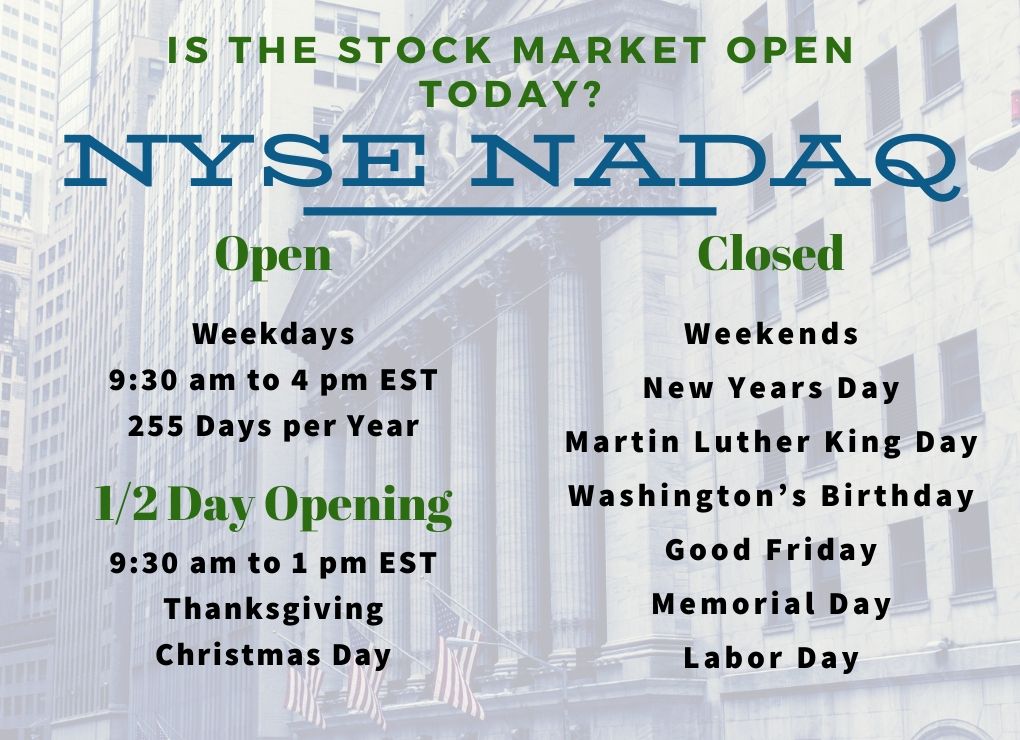
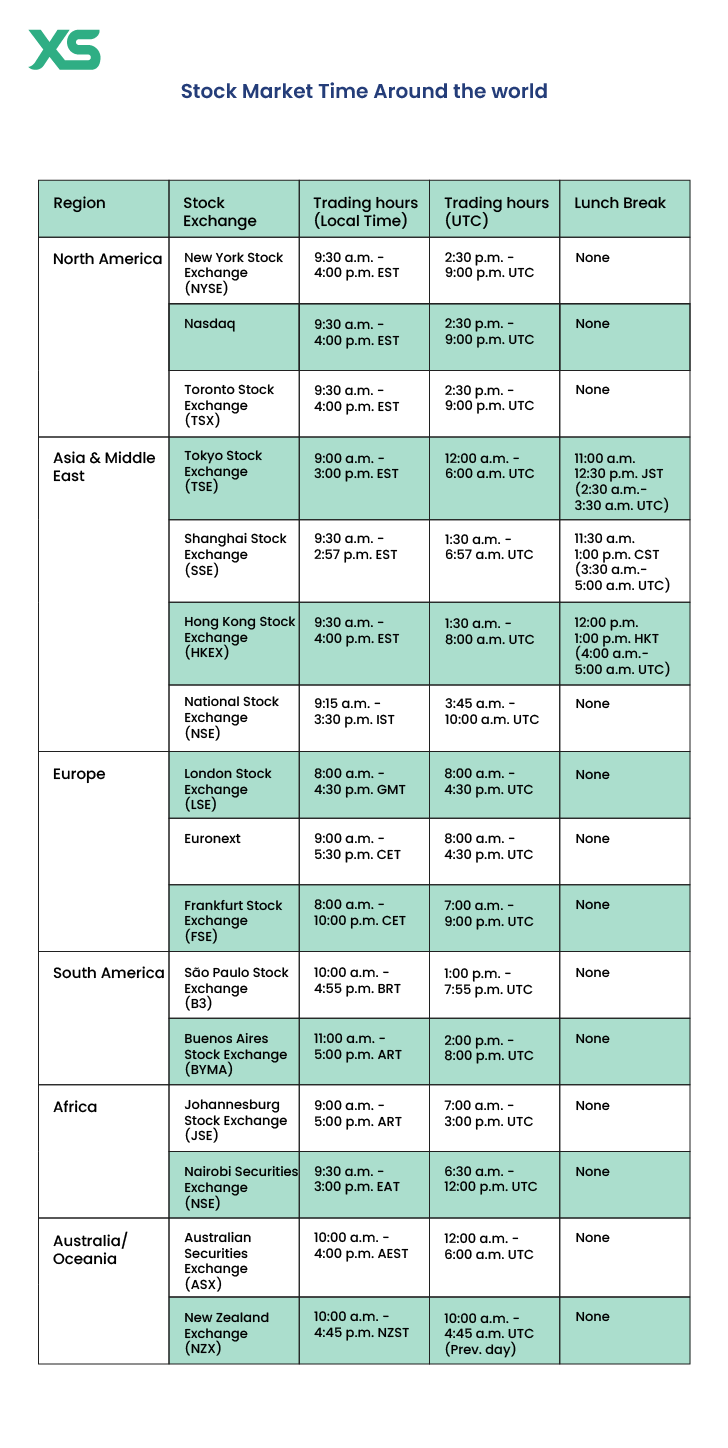
In the United States, the two primary exchanges—the New York Stock Exchange (NYSE) and the NASDAQ—operate on a standardized schedule. For the vast majority of trading days, the markets open at 9:30 AM Eastern Time (ET) and close at 4:00 PM ET. This 6.5-hour window is where the bulk of price discovery occurs for the world’s largest companies. Unlike some international counterparts, U.S. markets typically do not take a “lunch break,” remaining open continuously throughout the session.
European Market Dynamics
European markets generally offer longer trading sessions than those in the U.S. The London Stock Exchange (LSE), a critical hub for global finance, typically opens at 8:00 AM GMT and closes at 4:30 PM GMT. Other major continental exchanges, such as the Euronext Paris or the Frankfurt Stock Exchange (DAX), operate on similar schedules within Central European Time. For an American investor, this means the European markets are already deep into their trading day before the opening bell rings in New York, often setting the sentiment for the U.S. open.
The Asian-Pacific Circuit
The trading day technically begins in Asia. The Tokyo Stock Exchange (TSE) opens at 9:00 AM JST, but unlike Western markets, it includes a scheduled mid-day break (typically from 11:30 AM to 12:30 PM). Similarly, the Hong Kong Stock Exchange and the Shanghai Stock Exchange operate with morning and afternoon sessions separated by a lunch recess. Monitoring these markets is essential for investors with exposure to international tech or manufacturing sectors.
2. Beyond the Opening Bell: Pre-Market and After-Hours Trading
While the “official” hours are 9:30 AM to 4:00 PM ET in the U.S., the reality of modern finance is that digital platforms allow for trading almost around the clock. These extended sessions are categorized as Pre-Market and After-Hours trading.
How Extended Hours Work
Pre-market trading in the U.S. can begin as early as 4:00 AM ET, though the majority of activity picks up around 8:00 AM ET. After-hours trading begins immediately following the closing bell at 4:00 PM ET and can run until 8:00 PM ET. These sessions are facilitated by Electronic Communication Networks (ECNs), which match buyers and sellers digitally without a centralized exchange floor.
The Risks and Rewards of Extended Trading
The primary allure of extended-hours trading is the ability to react immediately to news. If a company releases an earnings report at 4:15 PM or a geopolitical event occurs at 7:00 AM, extended hours allow investors to adjust their positions before the general public can access the market at 9:30 AM.
However, there are significant risks:
- Lower Liquidity: Fewer participants mean it may be harder to buy or sell large blocks of stock.
- Wider Spreads: The gap between the “bid” (buy) and “ask” (sell) price often widens, increasing the cost of the trade.
- High Volatility: With fewer shares being traded, a single large order can cause disproportionate price swings.
Institutional vs. Retail Participation
Historically, extended hours were the playground of institutional investors and hedge funds. Today, most major online brokerages offer retail investors access to these sessions. However, professional financial advisors often caution individual investors to use limit orders during these times to avoid being caught in “flash” price movements that don’t reflect the stock’s true value once the regular session opens.
3. Market Holidays and the Impact of the Financial Calendar
Knowing when the market is open also requires knowing when it is closed. The financial calendar is punctuated by federal holidays and early closures that can disrupt regular trading patterns and liquidity.
U.S. Market Holidays
The NYSE and NASDAQ observe several federal holidays where the markets are closed entirely. These include:
- New Year’s Day
- Martin Luther King, Jr. Day
- Presidents’ Day
- Good Friday
- Memorial Day
- Juneteenth National Independence Day
- Independence Day (July 4th)
- Labor Day
- Thanksgiving Day
- Christmas Day
When these holidays fall on a weekend, the market usually closes on the preceding Friday or the following Monday.
The Phenomenon of Early Closures
On certain days, typically those preceding or following major holidays (like the day after Thanksgiving—Black Friday—or Christmas Eve), the U.S. markets may observe an early close at 1:00 PM ET. For investors, these days are often characterized by “thin” trading volume. In the world of money management, low volume can lead to unpredictable price action, as there aren’t enough participants to absorb large sell-offs or buying sprees.
Synchronization and Global Divergence
A challenge for global investors is that holidays are rarely synchronized. For example, while U.S. markets are closed for Thanksgiving, European and Asian markets remain fully operational. This can create “gaps” in pricing where a stock traded on multiple exchanges might see significant movement abroad while the domestic exchange is dormant. Tracking a global financial calendar is a prerequisite for anyone managing a diversified international portfolio.
4. Strategic Timing: When is the Best Time to Trade?
If you are looking to maximize the efficiency of your trades, simply knowing when the market is open isn’t enough. You must understand the “character” of different times during the trading day.
The Opening Range: The First Hour (9:30 AM – 10:30 AM ET)
The first hour of the trading day is often the most volatile. This is the period when the market “prices in” all the news, earnings, and global events that occurred overnight. For day traders, this is a period of high opportunity; for long-term “buy and hold” investors, it is often the most dangerous time to execute a trade due to rapid price fluctuations. This period is critical for “price discovery,” where the market finds its equilibrium for the day.
The Mid-Day Lull (12:00 PM – 2:00 PM ET)
Often referred to as the “lunch hour,” this period typically sees a significant drop in trading volume. Large institutional traders often step back, and the market can drift sideways. For personal finance enthusiasts looking to execute trades with minimal slippage and lower volatility, the mid-day period can offer a calmer environment, though the lack of volume can sometimes lead to stagnation.
The Closing Rush: The Final Hour (3:00 PM – 4:00 PM ET)
The final hour, often called “the power hour,” sees a massive surge in volume. This is when institutional managers rebalance their portfolios and “market-on-close” orders are processed. The volatility in the final 10 minutes can be intense. Many investors look to the closing price as the most “honest” price of the day, as it represents the consensus value after all information has been processed.
5. The Role of Technology in Monitoring Market Hours
In the modern era, you no longer need to hover over a ticker tape to know if the markets are active. Technology has democratized access to market timing information, but it also requires a disciplined approach to avoid the “over-trading” trap.
Real-Time Alerts and Financial Tools
Most financial apps and brokerage platforms provide real-time countdowns to the opening and closing bells. Tools like Bloomberg, Reuters, or even basic stock iOS/Android apps offer notifications for market opens, closes, and mid-day movements. For those managing business finance or corporate treasuries, sophisticated software integrations can automate trades to execute precisely at the market open to capture the “opening cross” price.
The Impact of Algorithmic Trading
It is important to remember that today, the majority of trades are executed by algorithms. These “bots” are programmed to react within milliseconds of the opening bell. As a retail investor, trying to out-speed an algorithm during the market open is a losing battle. Instead, use technology to set limit orders and alerts, allowing you to participate in the market on your terms rather than being reactive to the opening bell’s noise.

Summary: Mastering the Market Clock
“When do markets open today” is the starting point of a disciplined investment strategy. By understanding the standard hours, the nuances of pre- and post-market sessions, the impact of holidays, and the intraday patterns of volatility, you transition from a passive participant to a strategic investor.
Whether you are managing a side hustle’s earnings, building a retirement nest egg, or navigating corporate finance, the clock is just as important as the capital. Successful money management requires the patience to wait for the right window and the knowledge to act when the doors are open. Stay informed of the calendar, respect the volatility of the opening and closing bells, and always align your trading activity with your long-term financial goals.
aViewFromTheCave is a participant in the Amazon Services LLC Associates Program, an affiliate advertising program designed to provide a means for sites to earn advertising fees by advertising and linking to Amazon.com. Amazon, the Amazon logo, AmazonSupply, and the AmazonSupply logo are trademarks of Amazon.com, Inc. or its affiliates. As an Amazon Associate we earn affiliate commissions from qualifying purchases.