
The term “market” is ubiquitous in our daily lexicon, yet its true breadth and depth are often oversimplified. We speak of the “stock market,” the “housing market,” or even the “job market,” but what exactly does this overarching concept signify? Far from being merely a physical location, the market is a complex, dynamic ecosystem that underpins virtually all economic activity. It is the invisible hand that orchestrates the allocation of resources, the determination of prices, and the facilitation of transactions that shape our financial lives, from the price of bread to the value of global corporations.

Understanding “the market” is not just an academic exercise for economists or financiers; it is a fundamental prerequisite for anyone navigating the modern world. For individuals, it empowers informed decisions about saving, investing, and career choices. For businesses, it dictates strategy, competitive positioning, and growth potential. For governments, it guides policy formulation aimed at fostering stability and prosperity. In essence, the market is the engine of economic exchange, a ceaseless interplay of supply, demand, and human behavior that dictates value and drives progress.
Deconstructing the “Market”: More Than Just a Place
At its core, a market is any arena where buyers and sellers converge to exchange goods, services, or assets. This interaction, whether physical or virtual, is driven by the fundamental principles of supply and demand, with price serving as the critical mechanism that balances these opposing forces. To truly grasp the essence of the market, we must move beyond the simplistic notion of a bazaar or a stock exchange and delve into its fundamental definitions, diverse structures, and the crucial role of information.
The Fundamental Definition: Buyers, Sellers, and Transactions
The most basic definition of a market involves two primary participants: buyers, who possess demand for a product or service, and sellers, who offer that product or service. The transaction occurs when a buyer and seller agree on a price, at which point ownership or access is transferred. This seemingly simple exchange is governed by the laws of supply and demand: as demand for an item increases and supply remains constant, its price tends to rise. Conversely, if supply outstrips demand, prices typically fall. The equilibrium price is where the quantity demanded equals the quantity supplied, representing the most efficient allocation of resources given current conditions. This constant dance between buyers and sellers, facilitated by the price mechanism, is the heartbeat of any market.
Diverse Market Structures: From Perfect Competition to Monopolies
The landscape of markets is anything but uniform, varying significantly in their structure, which in turn influences pricing, competition, and consumer choice. At one end of the spectrum lies perfect competition, a theoretical ideal characterized by numerous small firms selling identical products, free entry and exit, and perfect information. In such a market, no single seller can influence the price. Moving away from this ideal, we encounter monopolistic competition, where many firms sell differentiated but similar products, allowing for some price-setting power (e.g., restaurants, clothing brands). Oligopolies feature a few dominant firms that exert significant control over the market, often leading to strategic interdependence and potential collusion (e.g., telecommunications, airlines). Finally, a monopoly exists when a single firm controls an entire market, giving it substantial power to set prices and limit output, often leading to regulatory oversight. Understanding these structures helps us analyze market behavior and predict outcomes for businesses and consumers alike.
The Role of Information and Efficiency
In any market, information is power. The efficiency of a market largely depends on the transparency and accessibility of information. An efficient market is one where all relevant information is readily available to all participants, and prices fully reflect this information. This concept is most famously embodied in the “Efficient Market Hypothesis” in finance, suggesting that it’s difficult to consistently “beat the market” because all public information is already priced into assets. When information is asymmetrical (one party has more or better information than another), it can lead to market inefficiencies, unfair advantages, and suboptimal outcomes. Regulators often step in to ensure greater transparency, protect consumers, and foster a level playing field, recognizing that fair and accurate information is crucial for robust and equitable market operations.
Types of Markets: A Broad Spectrum of Exchange
The economic world is segmented into numerous specialized markets, each with its unique characteristics, participants, and regulatory frameworks. While the underlying principles of supply and demand remain constant, the specific dynamics vary significantly across these different arenas of exchange. From the intricate world of finance to the everyday transactions of consumer goods and the emerging digital landscape, markets are diverse and interconnected.
Financial Markets: The Engine of Capital Allocation
Financial markets are perhaps the most complex and globally integrated of all. They are essential for channeling savings into investments, facilitating economic growth, and managing risk. Key components include:
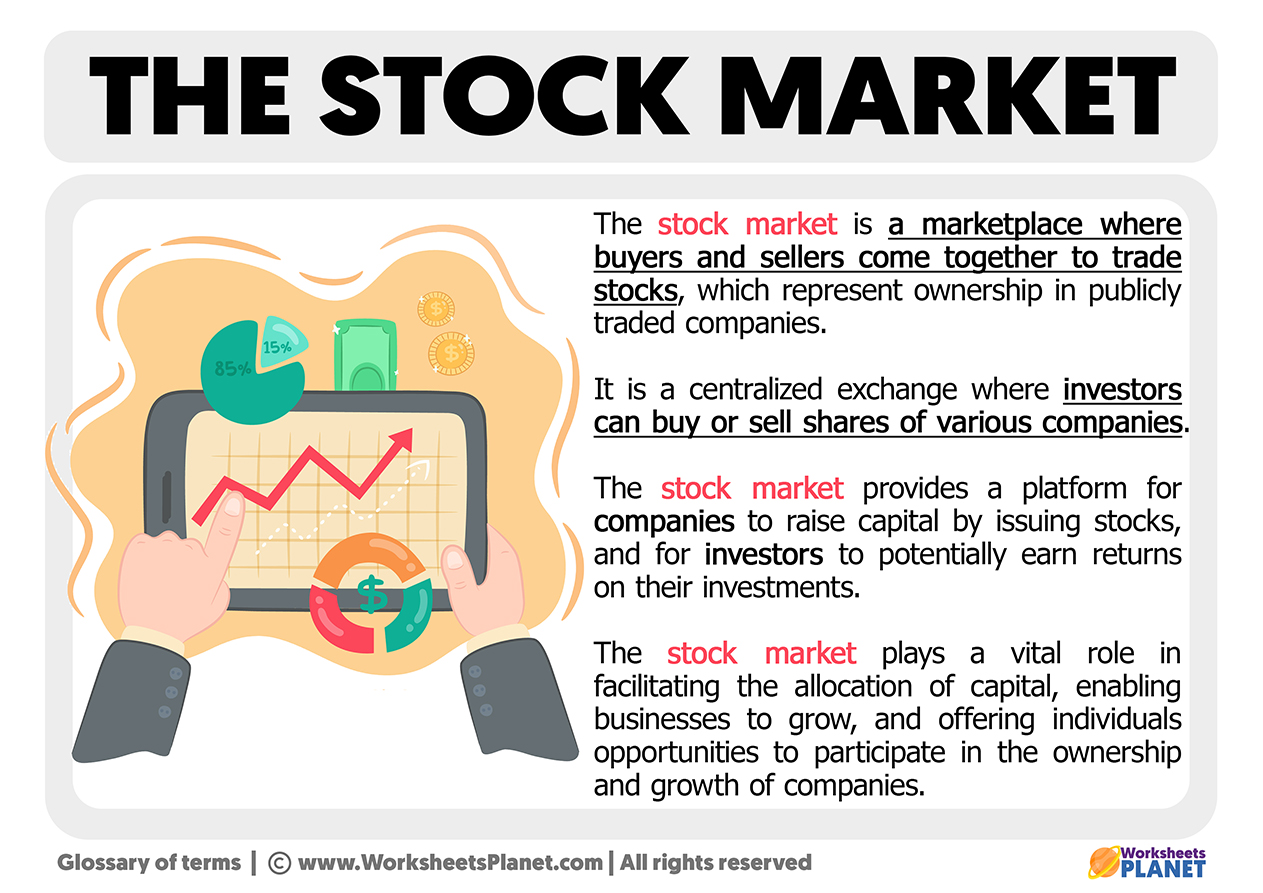
- Stock Market: Where ownership shares (equities) of public companies are bought and sold. This includes primary markets (initial public offerings, IPOs) and secondary markets (trading of existing shares).
- Bond Market: Where debt instruments (bonds) are issued and traded, allowing governments and corporations to borrow money from investors.
- Foreign Exchange Market (Forex): The largest and most liquid market globally, where currencies are traded, facilitating international trade and investment.
- Commodities Market: Deals in raw materials like oil, gold, agricultural products, and metals, often used for hedging against price fluctuations.
- Derivatives Market: Trading of financial contracts (like futures and options) whose value is derived from an underlying asset, used for speculation or risk management.
These markets are crucial for capital formation, providing liquidity, and offering avenues for wealth creation and management.
Product & Service Markets: Fulfilling Consumer Needs
These are the markets most directly experienced by the average individual, where goods and services are exchanged to meet everyday needs and desires.
- Consumer Goods Market: This encompasses everything from groceries and apparel to electronics and automobiles. It’s driven by consumer demand and shaped by branding, advertising, and retail distribution channels.
- Industrial Market: Also known as the Business-to-Business (B2B) market, this involves transactions between businesses for raw materials, machinery, components, and services necessary for their operations.
- Services Market: This vast category includes everything intangible, such as healthcare, education, legal advice, entertainment, transportation, and tourism. It’s often characterized by the direct interaction between provider and consumer.
- Labor Market: This unique market deals with the exchange of labor for wages. Individuals offer their skills and time, while employers demand specific talents to produce goods and services. Supply and demand here are influenced by demographics, education, technology, and economic conditions.
Digital Markets: The New Frontier
The digital revolution has spawned entirely new market categories, fundamentally altering how transactions occur and how value is created and exchanged.
- E-commerce Platforms: Online marketplaces like Amazon, eBay, and Alibaba have revolutionized retail, allowing consumers to access a vast array of products globally with unprecedented convenience.
- Digital Services and Subscriptions: This includes streaming services (Netflix), software-as-a-service (SaaS) products, cloud computing, and online gaming, all delivered digitally and often based on subscription models.
- Gig Economy Platforms: Companies like Uber, Airbnb, and Fiverr connect individuals seeking services with those offering them on a flexible, often freelance basis, blurring the lines of traditional employment.
- Cryptocurrencies and Decentralized Finance (DeFi) Markets: Emerging digital asset markets, powered by blockchain technology, offer new forms of value exchange, investment, and financial services that operate outside traditional banking systems, representing a radical shift in financial architecture.
Key Players and Dynamics within The Market
The market is a bustling arena where various entities interact, each playing a distinct role in shaping economic outcomes. Understanding these key players and the fundamental forces that govern their interactions is crucial for comprehending market behavior and predicting its future direction.
The Participants: Who Drives Market Activity?
The dynamic interplay within markets is fueled by a diverse set of participants, each with their own motivations and impacts:
- Consumers/Households: As the ultimate source of demand, consumers drive production and innovation through their spending decisions, seeking to maximize their utility from goods and services.
- Businesses/Firms: These entities supply goods and services, innovate, create jobs, and strive to maximize profits by responding to consumer demand and competitive pressures.
- Governments/Regulators: Governments play a multi-faceted role, acting as buyers (e.g., defense spending), sellers (e.g., state-owned enterprises), and crucial regulators. Through fiscal policy (taxation, spending) and monetary policy (interest rates, money supply), central banks and treasuries influence market conditions, stabilize economies, and enforce rules to ensure fairness and prevent abuses.
- Financial Institutions: Banks, investment funds, insurance companies, and other intermediaries facilitate capital flows, manage risk, and provide essential services that enable market transactions.
- International Actors: Global trade, foreign direct investment, and international capital flows mean that markets are increasingly interconnected, with multinational corporations, international organizations, and foreign investors significantly influencing domestic market dynamics.
Supply and Demand: The Core Mechanics
The eternal dance between supply and demand remains the most fundamental dynamic in any market. Demand refers to the quantity of a good or service that consumers are willing and able to purchase at various prices, driven by factors such as income, tastes, expectations, and the prices of substitutes and complements. Supply represents the quantity that producers are willing and able to offer at different prices, influenced by production costs, technology, and government policies. When demand exceeds supply, prices tend to rise, signaling producers to increase output. When supply outstrips demand, prices fall, prompting producers to reduce output or innovate. The concept of elasticity further refines this understanding, measuring the responsiveness of quantity demanded or supplied to changes in price or other factors, giving insights into how markets react to shocks.
Market Forces and Economic Indicators
Markets are constantly influenced by a confluence of macroeconomic forces, which are often tracked through various economic indicators:
- Inflation/Deflation: Inflation (a sustained increase in general price levels) erodes purchasing power and impacts investment returns, while deflation (a sustained decrease) can signal economic contraction.
- Interest Rates: Set by central banks or determined by market forces, interest rates affect the cost of borrowing for businesses and consumers, influencing investment, spending, and savings decisions.
- *Gross Domestic Product (GDP): A measure of the total value of goods and services produced in an economy, GDP provides a snapshot of overall economic health and growth.*
- Employment Data: Unemployment rates and job creation figures indicate the strength of the labor market and consumer confidence, which in turn affect spending.
- Consumer Confidence: Surveys that gauge consumers’ optimism about the economy and their financial prospects can be a strong predictor of future spending and investment.
Monitoring these indicators allows participants to anticipate market shifts, adjust strategies, and make more informed financial decisions.
Why Understanding The Market Matters for You
The market is not a distant, abstract concept; it is an omnipresent force that directly influences personal finances, business success, and the very fabric of society. A robust understanding of its mechanisms, players, and dynamics is an indispensable tool for navigating the complexities of modern economic life.
For Personal Finance and Investing
For individuals, comprehending the market is the cornerstone of sound personal finance and successful investing. It enables:
- Informed Investment Decisions: Whether you’re considering stocks, bonds, real estate, or even opening a savings account, understanding how financial markets operate helps you evaluate risk, identify opportunities, and build a diversified portfolio aligned with your goals.
- Understanding Savings and Loan Costs: Knowledge of interest rates, inflation, and credit markets allows you to make smarter choices about mortgages, car loans, and where to stash your savings to grow your wealth effectively.
- Retirement and Financial Planning: Planning for long-term goals requires an awareness of market cycles, investment vehicles, and economic trends to project future wealth and mitigate risks, ensuring a secure financial future.
For Businesses and Entrepreneurs
For businesses, a deep market understanding is not just advantageous; it is existential. It is critical for:
- Identifying Opportunities and Competitive Landscapes: Recognizing unmet needs, emerging trends, and the strategies of competitors allows businesses to innovate, develop new products, and carve out sustainable niches.
- Pricing Strategies and Market Positioning: Knowing how supply and demand, competitor pricing, and consumer perceptions interact enables businesses to set optimal prices, differentiate their offerings, and effectively position their brands.
- Resource Allocation and Strategic Planning: Understanding market demand, input costs, and future economic outlook helps businesses make crucial decisions about where to invest capital, expand operations, and allocate human resources for maximum efficiency and growth.
For Economic Literacy and Public Policy
Beyond personal and business advantages, market literacy is vital for informed citizenship and effective governance:
- Understanding News and Policy Debates: A grasp of market principles allows individuals to critically analyze economic news, understand the implications of government policies (e.g., tax changes, trade agreements), and discern the impact of global events.
- Participating in an Informed Citizenry: An economically literate populace can hold leaders accountable, advocate for policies that promote broader prosperity, and contribute constructively to public discourse on crucial economic issues.
- Recognizing the Impact of Global Events: In an interconnected world, understanding how international markets influence domestic economies helps in comprehending the ripple effects of geopolitical events, natural disasters, or global financial crises.
Conclusion
“The market” is not a singular entity but rather an intricate, multifaceted web of interactions, mechanisms, and participants that collectively form the lifeblood of our financial world. From the simple exchange of goods to the complex algorithms driving global financial systems, its principles—buyers, sellers, supply, demand, and price—remain constant. Yet, its manifestations are ever-evolving, adapting to technological advancements, societal shifts, and human ingenuity.
To truly understand the market is to gain insight into the fundamental forces that shape economies, drive innovation, and determine individual prosperity. It is to recognize that every transaction, every investment, and every economic policy decision contributes to this grand, continuous experiment. In a world increasingly defined by economic interconnectedness and rapid change, cultivating a deep understanding of what the market is, how it functions, and why it matters is not merely an asset—it is an empowerment, enabling individuals and institutions alike to navigate, influence, and thrive within the dynamic currents of economic exchange.
aViewFromTheCave is a participant in the Amazon Services LLC Associates Program, an affiliate advertising program designed to provide a means for sites to earn advertising fees by advertising and linking to Amazon.com. Amazon, the Amazon logo, AmazonSupply, and the AmazonSupply logo are trademarks of Amazon.com, Inc. or its affiliates. As an Amazon Associate we earn affiliate commissions from qualifying purchases.