
Market volatility is an inherent characteristic of the financial landscape, yet when the “sea of red” appears on trading dashboards, it often triggers a sense of urgency and concern among seasoned and novice investors alike. Understanding why stocks are falling today requires a multifaceted analysis of macroeconomic indicators, geopolitical shifts, and the psychological underpinnings of the global trading community. While individual stocks may drop due to company-specific news, a broad market downturn is usually the result of complex, interlocking factors that influence liquidity and risk appetite.
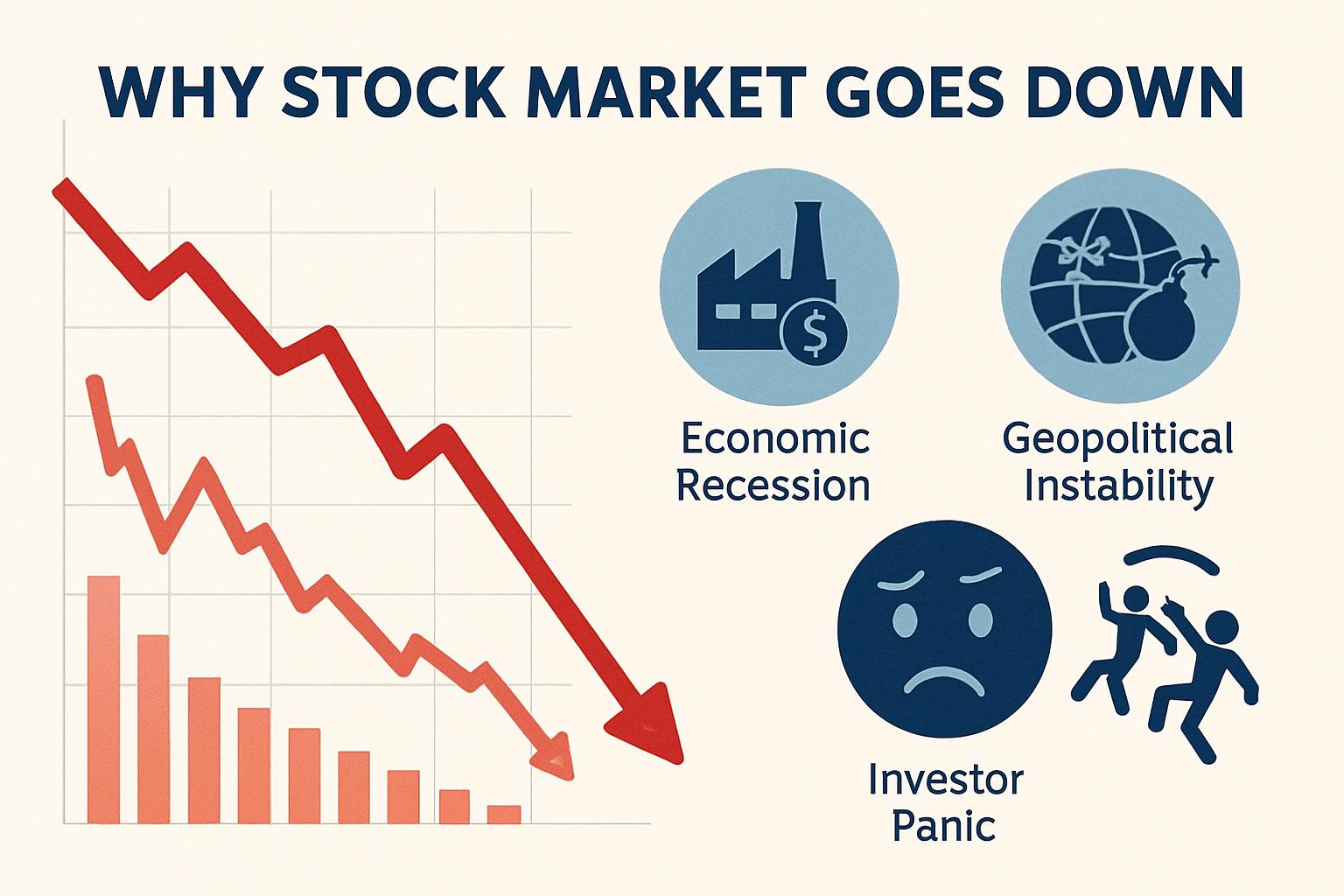
In this deep dive, we explore the primary catalysts behind current market declines, ranging from central bank policies to the technical mechanics of the modern stock exchange.
The Weight of Macroeconomic Headwinds and Central Bank Policy
The most significant driver of stock market performance is the cost of capital. When investors ask why stocks are falling, the answer frequently begins at the doors of the Federal Reserve or other major central banks.
The Impact of Interest Rate Hikes and the “Risk-Free Rate”
Central banks utilize interest rates as a primary tool to control economic growth and inflation. When interest rates rise, borrowing becomes more expensive for both consumers and corporations. For a business, higher interest rates mean that the cost of financing expansion, R&D, and daily operations increases, which directly eats into profit margins.
Furthermore, from an investment valuation perspective, higher rates change the “discounted cash flow” (DCF) models used to value companies. Since future earnings are worth less when discounted at a higher rate, stock prices—particularly those of high-growth tech companies—often see significant downward revisions. Additionally, as interest rates on “risk-free” assets like U.S. Treasuries increase, the relative attractiveness of “risky” assets like stocks diminishes. Investors often rotate out of equities and into bonds to secure guaranteed yields, leading to a sell-off in the stock market.
Persistent Inflationary Pressures and Consumer Spending
Inflation is a double-edged sword for the stock market. While a moderate amount of inflation can indicate a healthy, growing economy, runaway inflation erodes purchasing power. When the cost of living—fuel, food, and housing—spikes, consumers have less discretionary income to spend on the products and services offered by publicly traded companies.
Investors watch the Consumer Price Index (CPI) and Personal Consumption Expenditures (PCE) closely. If these reports show that inflation is stickier than expected, the market anticipates that the central bank will keep rates “higher for longer.” This expectation of prolonged restrictive policy creates a bearish sentiment, as it suggests a higher probability of an economic slowdown or a potential recession.
Geopolitical Tensions and Global Supply Chain Disruptions
The global economy is more interconnected than ever before. Consequently, events occurring thousands of miles away can have an immediate and visceral impact on domestic stock indices.
The Energy Crisis and Commodity Price Volatility
Energy is the lifeblood of global industry. When geopolitical conflicts arise in oil-producing regions or along critical trade routes, the price of crude oil and natural gas tends to skyrocket. Higher energy costs act as a “tax” on both businesses and households. For an airline, it means higher fuel surcharges; for a manufacturer, it means higher production costs; for a logistics firm, it means more expensive shipping.
When energy prices are volatile, it creates uncertainty in corporate earnings forecasts. Markets hate uncertainty. If analysts cannot accurately predict a company’s input costs, they often lower their price targets, contributing to a broader decline in stock valuations.
International Trade Alliances and Stability
Geopolitical instability often leads to shifts in trade policy, including tariffs, sanctions, and “friend-shoring” initiatives. While these moves may be strategic for national security, they often disrupt established supply chains that have been optimized for decades for efficiency and low cost.
When a major manufacturing hub faces lockdowns, political unrest, or trade restrictions, it creates a ripple effect. A shortage of a single semiconductor or a specific raw material can stall production for multi-billion dollar industries, from automotive to consumer electronics. As investors digest the potential for reduced output and missed delivery targets, they often sell off shares in the affected sectors, dragging down the overall market.
Corporate Earnings and Technical Market Factors
Beyond the “big picture” of the economy, the internal mechanics of the market and the specific performance of major corporations play a vital role in daily price action.
Missed Estimates and Conservative Future Guidance
Stock prices are essentially a reflection of future expectations. During earnings season, companies report their financial health for the previous quarter. However, the market’s reaction is often driven less by what happened in the past and more by what the company predicts for the future—known as “guidance.”
Even if a company reports record profits, its stock may fall if its CEO issues a cautious outlook for the coming months. Because large-cap stocks (like those in the “Magnificent Seven”) carry so much weight in indices like the S&P 500 and the Nasdaq 100, a negative reaction to just one or two major earnings reports can pull the entire index into the red. This “contagion effect” is a common reason why the broader market falls even if your specific portfolio holdings seem fundamentally sound.
Algorithmic Trading and Market Corrections
In the modern era, a significant portion of trading volume is executed by algorithms and high-frequency trading (HFT) systems. These programs are often set to trigger sell orders once certain “technical levels” are breached. For example, if the S&P 500 falls below its 200-day moving average, it may trigger a cascade of automated selling.
This can lead to a “feedback loop” where a small decline triggers a technical sell-off, which causes prices to drop further, triggering even more sell orders. Furthermore, we must consider the concept of a “market correction”—a natural decline of 10% or more from recent highs. Corrections are often healthy for the long-term sustainability of a bull market, as they wash out “excessive exuberance” and bring valuations back in line with historical norms.
Navigating Volatility: Strategies for Long-Term Investors
While seeing a portfolio decline is never pleasant, understanding the mechanics of why stocks are falling can help investors avoid emotional decision-making. Professional wealth management often focuses on “time in the market” rather than “timing the market.”
The Power of Dollar-Cost Averaging (DCA)
One of the most effective ways to handle a falling market is through Dollar-Cost Averaging. By investing a fixed amount of money at regular intervals, regardless of the share price, you naturally buy more shares when prices are low and fewer shares when prices are high. This strategy mitigates the risk of putting a large sum of money into the market right before a downturn and lowers the average cost basis of your investments over time.
In a falling market, DCA transforms a “loss” into a “buying opportunity.” It shifts the investor’s mindset from fearing price drops to seeing them as a way to accumulate assets at a discount.
Asset Allocation and Diversification
A falling market is a rigorous stress test for an investor’s asset allocation. If a portfolio is too heavily weighted in a single sector—such as technology or biotech—it will be disproportionately affected by sector-specific downturns.
Diversification across different asset classes (stocks, bonds, real estate, and cash) and different sectors (defensive stocks like utilities and healthcare versus cyclical stocks like industrials) can cushion the blow. Defensive stocks often hold their value better during economic uncertainty because their products are necessities. By maintaining a balanced portfolio, investors can reduce their overall volatility and stay the course during the periods when the stock market feels like a roller coaster.
Conclusion
Stocks falling today is rarely the result of a single event; rather, it is the culmination of interest rate expectations, geopolitical anxiety, corporate performance, and technical trading patterns. For the disciplined investor, these periods of decline are not signals to exit the market, but rather moments to re-evaluate risk tolerance and look for long-term value. History has shown that markets are resilient, and while the “why” of today’s fall is important for context, the “how” of your response will ultimately determine your financial success.
aViewFromTheCave is a participant in the Amazon Services LLC Associates Program, an affiliate advertising program designed to provide a means for sites to earn advertising fees by advertising and linking to Amazon.com. Amazon, the Amazon logo, AmazonSupply, and the AmazonSupply logo are trademarks of Amazon.com, Inc. or its affiliates. As an Amazon Associate we earn affiliate commissions from qualifying purchases.