
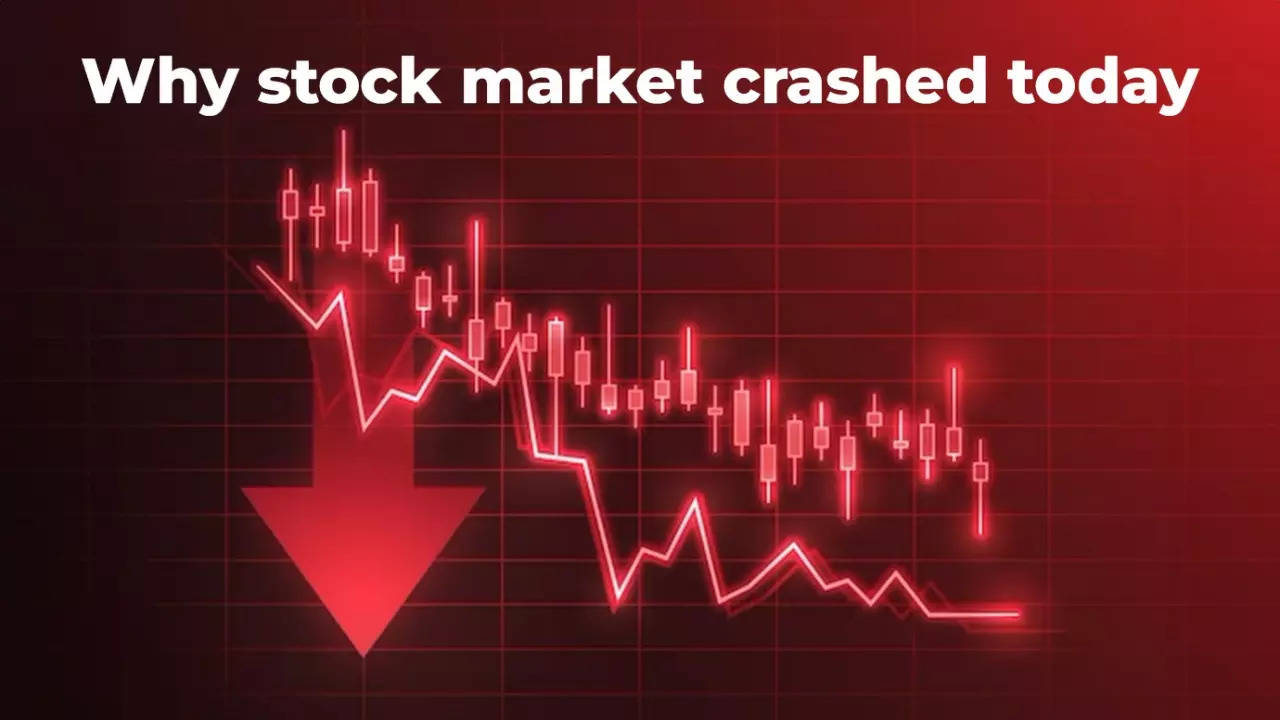
The sight of a crimson-red dashboard on a brokerage app is enough to induce anxiety in even the most seasoned investors. When the indices—be it the S&P 500, the Nasdaq, or the Dow Jones Industrial Average—take a sudden and sharp dive, the immediate question on everyone’s mind is: “Why is the market crashing today?”
In the world of finance, market downturns are rarely the result of a single, isolated event. Instead, they are usually the culmination of various macroeconomic pressures, technical triggers, and the unpredictable nature of human psychology. Understanding these forces is the first step toward transforming fear into a strategic advantage. This article explores the core drivers behind market crashes, the technical mechanisms that accelerate sell-offs, and how investors can navigate these turbulent waters.

The Macroeconomic Catalyst: Interest Rates and Inflation
At the heart of almost every major market contraction lies the “cost of money.” The global economy operates on credit, and when the price of that credit changes, the entire financial structure shifts.
The Federal Reserve and Monetary Policy
The primary driver of market sentiment in recent years has been the action of central banks, most notably the Federal Reserve in the United States. When inflation rises above the target 2% threshold, central banks respond by raising interest rates. This is a double-edged sword for the stock market. Higher rates mean that it becomes more expensive for corporations to borrow money for expansion. Simultaneously, higher interest rates make fixed-income assets, like bonds, more attractive compared to “risky” assets like stocks. When the market perceives that the Fed will remain “higher for longer,” investors often pull money out of equities, causing a rapid decline in prices.
Global Geopolitical Instability
Markets loathe uncertainty. Geopolitical tensions—whether they involve trade wars, regional conflicts, or shifts in energy policy—create a vacuum of predictability. For instance, a sudden escalation in a conflict within a resource-rich region can send oil and gas prices skyrocketing. Because energy is a fundamental input for almost every industry, a spike in energy costs acts as a “hidden tax” on both corporations and consumers. This leads to fears of a recession, prompting institutional investors to reduce their exposure to the stock market until the geopolitical outlook stabilizes.
Supply Chain Fragility and The “Bullwhip Effect”
While the world has largely moved past the lockdowns of the early 2020s, the global supply chain remains sensitive. Any disruption in the flow of semiconductors, raw materials, or consumer goods can lead to “earnings misses.” When a major company reports that it cannot meet demand because it cannot source parts, its stock price suffers. If this happens across an entire sector, it can trigger a broader market sell-off as analysts downwardly revise their growth projections for the entire economy.
Technical Factors and Market Psychology
While macroeconomic data provides the “why,” technical factors and human psychology often provide the “how” and “how fast.” In the digital age, market crashes move at the speed of fiber-optic cables.
The Role of Algorithmic Trading and Liquidity
A significant portion of daily trading volume is not conducted by humans, but by high-frequency trading (HFT) algorithms. These programs are designed to execute trades based on specific triggers, such as a stock falling below a certain moving average or a “stop-loss” order being hit. When the market begins to dip, these algorithms can trigger a “cascading sell-off.” As prices fall, more automated sell orders are activated, which further drives down prices, creating a feedback loop. During these moments, “liquidity”—the ability to buy or sell an asset without significantly affecting its price—can dry up, making the price drops appear even more dramatic than the underlying fundamentals suggest.
The “Fear Index” and Investor Sentiment
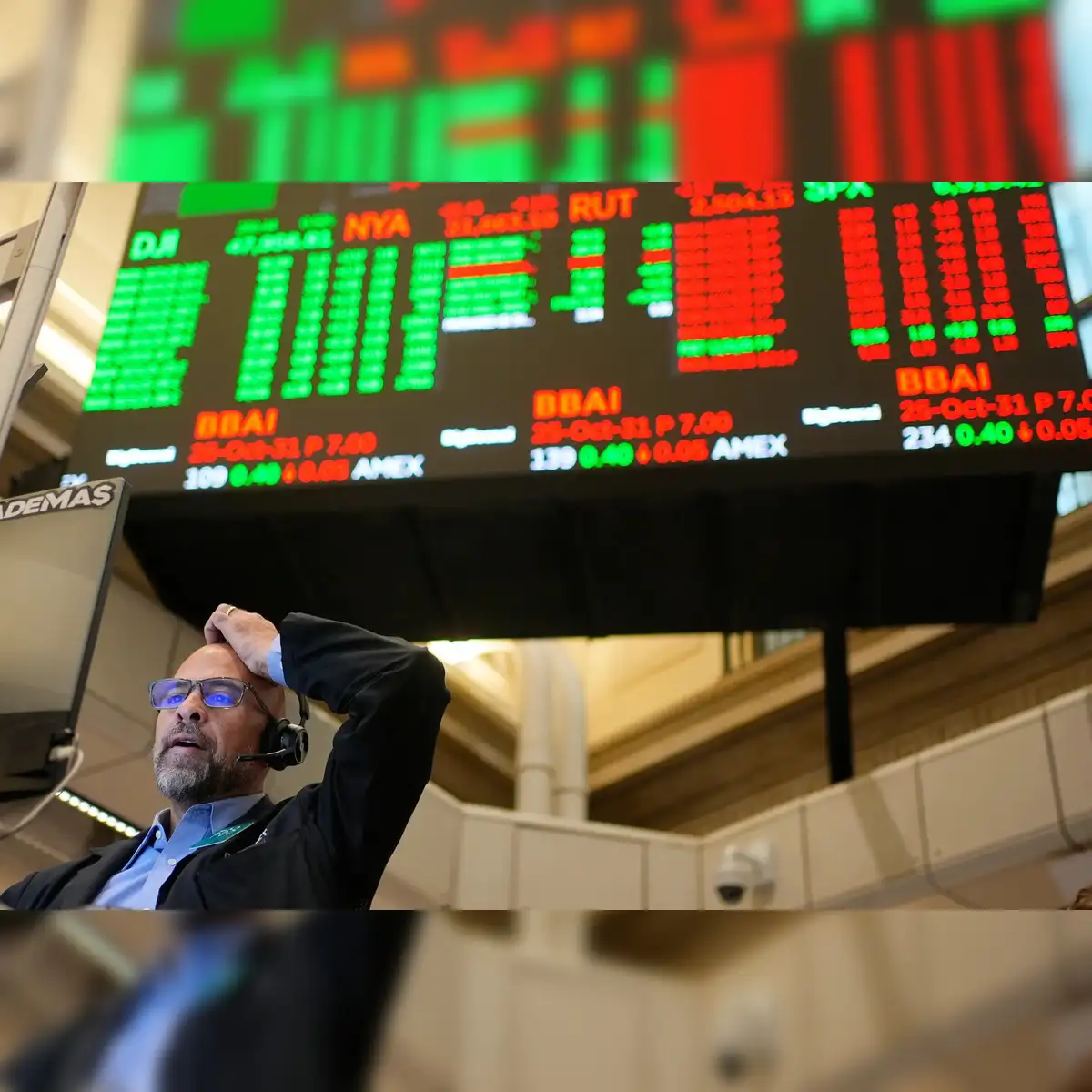
Market psychology is often measured by the VIX, also known as the “Fear Index.” When the market is calm, the VIX is low; when panic sets in, the VIX spikes. Human beings are biologically hardwired to prioritize the avoidance of pain over the pursuit of gain. This manifests in the “herding effect.” When investors see their neighbors or major news outlets sounding the alarm, the impulse to sell becomes contagious. This “panic selling” often ignores the intrinsic value of a company, leading to a situation where even high-quality stocks are sold off simply because they are part of a broader, falling index.
Margin Calls and Forced Liquidations
Many institutional and retail investors trade on “margin,” which means they are using borrowed money from their brokers to buy more shares. When the value of those shares drops significantly, the broker issues a “margin call,” requiring the investor to either deposit more cash or sell their positions immediately to cover the loan. Forced liquidations are a hallmark of a market crash. These sellers aren’t selling because they want to; they are selling because they have to. This adds immense downward pressure on the market, often leading to the “capitulation” phase where the selling finally exhausts itself.
Sector-Specific Weakness and Valuation Resets
Not all market crashes are equal. Sometimes, the pain is concentrated in specific areas of the market that have become “overextended” or “bubbly.”
The Bursting of Overvaluation Bubbles
For years, a market might be driven by a specific narrative—such as the growth of Big Tech, the promise of Artificial Intelligence, or the rise of green energy. When the excitement outpaces the actual revenue generated by these companies, Price-to-Earnings (P/E) ratios reach unsustainable levels. A “market crash” is often just a violent “valuation reset.” When investors collectively realize that they have paid too much for future growth that may not materialize for a decade, they rush for the exits. This is frequently seen in the tech-heavy Nasdaq, which can experience deeper drawdowns than the more diversified Dow Jones during a correction.
Corporate Earnings and Forward Guidance
Stock prices are, ultimately, a reflection of a company’s future discounted cash flows. Four times a year, during earnings season, companies open their books. If a “bellwether” company (a company seen as a leader in its industry) reports slowing growth or provides “weak guidance” for the next quarter, it serves as a canary in the coal mine. If a giant like Apple or Walmart suggests that consumers are tightening their belts, the market interprets this as a sign of broader economic cooling. The resulting sell-off is a preemptive strike by investors looking to move into “defensive” sectors like utilities or healthcare.
Strategic Resilience: Navigating the Downturn
While a market crash is painful in the short term, it is a natural and necessary part of the economic cycle. For the disciplined investor, these periods offer opportunities that are unavailable during “bull” markets.
The Importance of Portfolio Diversification
The oldest rule in investing remains the most important: do not put all your eggs in one basket. A market crash often hits certain asset classes harder than others. While growth stocks might plummet, commodities like gold or “defensive” dividend-paying stocks may hold their value or even rise. Diversification across sectors, market caps, and even geographies ensures that a crash in one area of the market does not result in the total destruction of an individual’s wealth.
Embracing the Long-Term Perspective
History shows that every single market crash in the history of the modern financial system has eventually been followed by a recovery and new all-time highs. For those with a long-term time horizon—such as those saving for retirement decades away—a crash is essentially a “sale.” Through a strategy known as Dollar-Cost Averaging (DCA), investors continue to buy shares at regular intervals regardless of the price. When the market crashes, their fixed dollar investment buys more shares, lowering their average cost basis and positioning them for massive gains when the market eventually rebounds.
Maintaining Cash Reserves
A common mistake investors make is being “fully invested” at all times. Maintaining a “dry powder” fund (cash or cash equivalents) allows an investor to remain calm during a crash. Instead of worrying about their falling portfolio, they can look for undervalued gems that have been unfairly beaten down by the panic. Having the liquidity to buy when others are fearful is the hallmark of some of the world’s most successful investors, such as Warren Buffett.
Conclusion
A market crash is a complex event fueled by a mixture of rising interest rates, geopolitical tension, technical algorithmic triggers, and raw human emotion. While the “why” can change—ranging from a pandemic to an inflation spike—the “how” remains remarkably consistent. Markets move in cycles of expansion and contraction.
Understanding that “today’s crash” is a byproduct of these intersecting forces allows an investor to move away from emotional reactivity. By focusing on fundamental value, maintaining a diversified portfolio, and keeping a long-term perspective, one can view market volatility not as a disaster, but as a repositioning of the financial landscape. In the world of money, the greatest fortunes are often built during the times when the screens are most red.
aViewFromTheCave is a participant in the Amazon Services LLC Associates Program, an affiliate advertising program designed to provide a means for sites to earn advertising fees by advertising and linking to Amazon.com. Amazon, the Amazon logo, AmazonSupply, and the AmazonSupply logo are trademarks of Amazon.com, Inc. or its affiliates. As an Amazon Associate we earn affiliate commissions from qualifying purchases.