
In the world of finance, the question “What’s the price?” is rarely as simple as looking at a digital tag or a brokerage statement. While we are conditioned to view price as a fixed numerical value, the reality of wealth management and personal finance suggests that price is merely the starting point of a much deeper conversation. In a landscape defined by shifting inflation, volatile markets, and the burgeoning “hustle culture,” understanding the true cost of our financial decisions is the difference between building lasting wealth and merely treading water.

To truly answer the question of “What’s the price,” we must look beyond the surface. We must explore the psychological weight of our purchases, the corrosive impact of hidden investment fees, and the ultimate price tag attached to the concept of financial independence.
1. The Psychology of Price and Value
The most common mistake in personal finance is conflating price with value. Price is what you pay; value is what you get. This distinction is the cornerstone of intelligent wealth building. When we ask “What’s the price?” we often ignore the long-term utility or the hidden maintenance costs associated with a financial choice.
Price vs. Value: Understanding the Fundamental Difference
In a consumer-driven society, we are often seduced by low prices. However, a “low price” can be an optical illusion. For instance, in the realm of financial tools, a free trading app might seem like a bargain compared to a traditional brokerage. Yet, if that app executes trades at a slight disadvantageous spread or sells your order flow, the “price” you are paying is hidden in the inefficiency of your transactions. Value, conversely, is measured by the return on investment (ROI)—be it financial, temporal, or emotional. An expensive financial advisor who helps you avoid a 20% market panic-sell is infinitely more valuable than a “free” DIY platform that leaves you vulnerable to your own behavioral biases.
The Hidden Costs of Cheap Alternatives
The “frugality trap” is a real phenomenon where individuals seek the lowest price point for every service, only to pay more in the long run. This is frequently seen in business finance and side hustles. Choosing the cheapest accounting software might save $200 a year, but if it lacks the robust reporting needed for tax optimization, it could cost thousands in missed deductions. In the context of personal finance, buying lower-quality assets or choosing “discount” insurance policies often results in higher out-of-pocket expenses when a crisis occurs. Understanding the “total cost of ownership” is essential for anyone looking to optimize their net worth.
2. The Price of Investing: Beyond the Entry Fee
When people enter the world of investing, they usually focus on the price of a share of stock or the minimum buy-in for a mutual fund. However, the real price of investing is found in the “leakage”—the small percentages that drain your portfolio over decades.
Managing Management Fees and Expense Ratios
One of the most significant “prices” an investor pays is the expense ratio of their funds. A 1% management fee might sound negligible, but over a 30-year investment horizon, that 1% can consume nearly a third of your total potential wealth due to the lost power of compounding. For example, if you invest $100,000 with a 7% return, after 30 years you would have approximately $761,000. If you pay a 1.5% fee, that total drops to around $498,000. The “price” of that fee was over $260,000. Identifying these costs is the first step toward efficient wealth accumulation.
The Opportunity Cost of Staying in Cash
Perhaps the most invisible price in the financial world is the opportunity cost. Many individuals, fearful of market volatility, choose to keep their “dry powder” in high-yield savings accounts or under the metaphorical mattress. While they aren’t “paying” a price in the traditional sense, they are paying the price of missed growth. During bull markets, the price of being “safe” is the wealth you didn’t generate. Learning to price risk appropriately—and understanding that “no risk” is often the riskiest move of all—is a hallmark of sophisticated financial planning.
3. The Economic Price Tag: Inflation and Purchasing Power
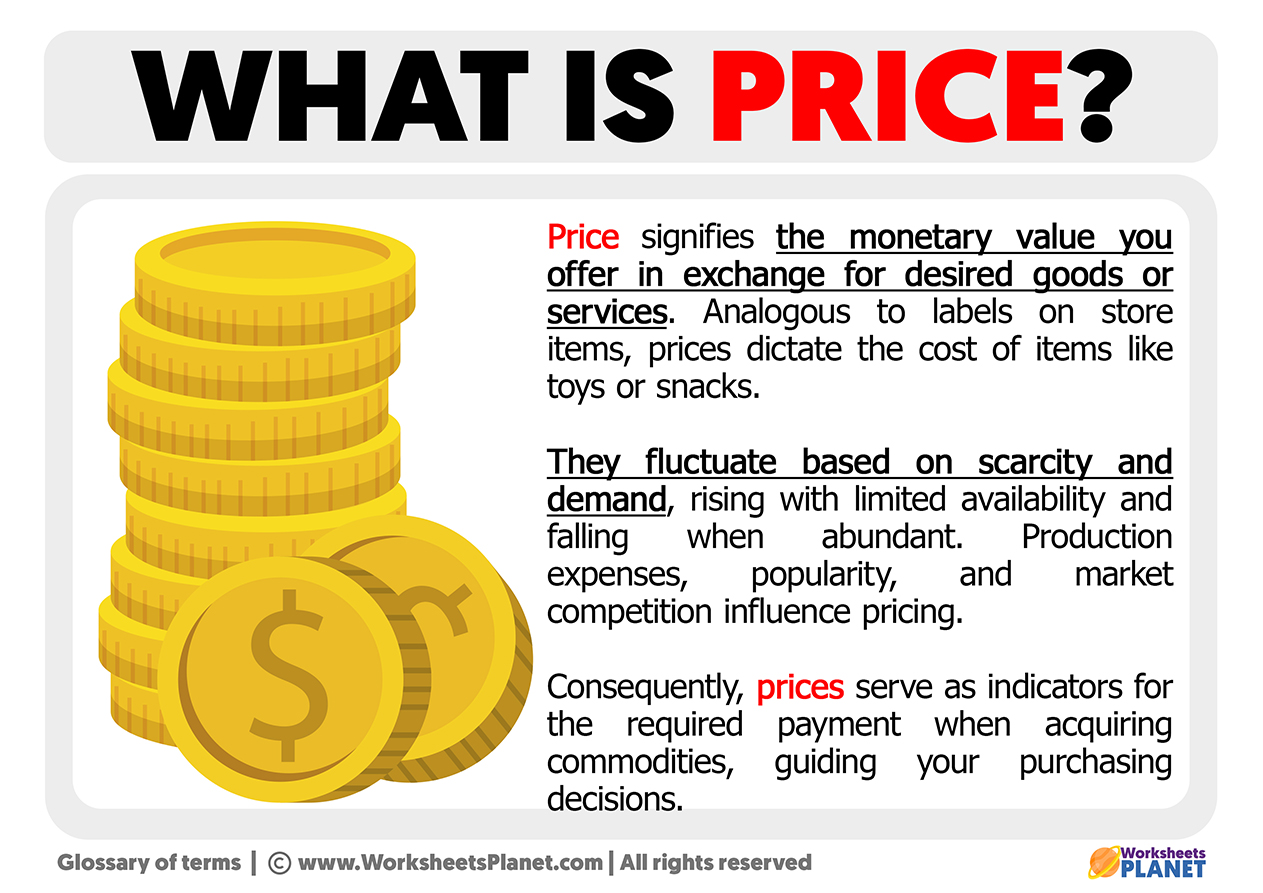
No discussion of price is complete without addressing the silent thief: inflation. In the current economic climate, the nominal price of goods and services is rising, which means the “price” of maintaining your current lifestyle is constantly moving upward.
How Inflation Erodes Long-Term Savings
Inflation is the rate at which the general level of prices for goods and services rises, and subsequently, purchasing power falls. When we ask “What’s the price?” today, we must also ask “What will the price be in twenty years?” If inflation averages 3%, the price of your lifestyle will double roughly every 24 years. This means that a retirement fund that looks substantial today may only cover half of your expenses by the time you actually need it. Investors must look for “real” returns—the return on investment after subtracting the rate of inflation—to ensure they are actually growing their wealth.
Strategies to Protect Your Purchasing Power
To combat the rising price of living, investors must pivot toward assets that have historically outpaced inflation. This includes equities, real estate, and certain commodities. In a corporate finance context, this means businesses must have “pricing power”—the ability to raise prices without losing customers. As an individual, your personal “pricing power” is your skill set and your ability to command a higher salary or fee in a competitive market. Protecting your purchasing power is not just about saving; it’s about strategically deploying capital into assets that benefit from, or at least hedge against, a devaluing currency.
4. The Price of Passive Income and Side Hustles
In the age of the “gig economy,” many are looking to side hustles to supplement their primary income. However, there is a distinct price to be paid for “passive” income that is often omitted from the marketing brochures of online gurus.
The Time Investment vs. Financial Return
Every side hustle has a price measured in hours. If you are earning an extra $500 a month but it requires 20 hours of work a week, your “price” is your free time, your health, and perhaps your performance at your primary career. For a side hustle to be truly effective, the hourly rate must eventually exceed your primary income rate, or it must be scalable to the point where the time requirement diminishes. Many find that the “price” of a side business—stress, administrative overhead, and tax complexity—outweighs the modest financial gain.
Scaling and Sustainability: When Cheap Becomes Expensive
In the early stages of a business or side hustle, founders often try to do everything themselves to keep “prices” low. They act as the marketer, the accountant, and the technician. However, the price of this self-reliance is a lack of scalability. To grow, one must be willing to “buy back” their time by hiring experts or investing in automation tools. This represents a shift in mindset: moving from asking “How can I do this for the lowest price?” to “What is the most efficient way to scale this value?”
5. The Ultimate Price: Calculating Your Way to Financial Independence
The “ultimate price” in personal finance is the “FIRE” number—the amount of money required to live off your investments indefinitely. This is the price of your freedom.
The 4% Rule and Target Nest Eggs
The most common benchmark for the price of retirement is the 4% Rule. This suggests that you can safely withdraw 4% of your total investment portfolio in the first year of retirement (and adjust for inflation thereafter) with a high probability of your money lasting 30 years. Therefore, the “price” of financial independence is roughly 25 times your annual expenses. If you need $60,000 a year to live, your “price” is $1.5 million. Seeing your freedom as a purchase price can be a powerful motivator, turning the abstract concept of “saving” into a tangible goal.
Why Your “Number” is Moving and How to Pivot
The challenge today is that the “price” of freedom is a moving target. Changes in tax laws, healthcare costs, and lifestyle creep can cause your target number to inflate. Furthermore, as life expectancy increases, the 30-year window assumed by the 4% rule may be insufficient. Modern financial planning requires a dynamic approach—adjusting your “buy-in” price for retirement by diversifying across tax-advantaged accounts (like 401ks and IRAs) and taxable brokerage accounts. The price of security is constant vigilance and the willingness to pivot your strategy as the economic landscape evolves.
In conclusion, “What’s the price?” is a question that demands a multi-dimensional answer. It is a calculation of currency, time, risk, and opportunity. By looking beyond the sticker price and understanding the deeper financial mechanics at play, you can move from being a mere consumer of financial products to a master of your own economic destiny. Wealth is not just about what you spend; it is about understanding the true cost of everything you keep.
aViewFromTheCave is a participant in the Amazon Services LLC Associates Program, an affiliate advertising program designed to provide a means for sites to earn advertising fees by advertising and linking to Amazon.com. Amazon, the Amazon logo, AmazonSupply, and the AmazonSupply logo are trademarks of Amazon.com, Inc. or its affiliates. As an Amazon Associate we earn affiliate commissions from qualifying purchases.