
In the fast-paced world of finance, timing is not just a secondary consideration—it is the heartbeat of the global economy. For the casual observer, the question “What time is the market closing today?” might seem like a simple logistical inquiry. However, for the seasoned investor, the answer to that question dictates liquidity, volatility, and the strategic execution of trades. Understanding the closing times of various financial markets is essential for anyone looking to navigate the complexities of personal finance and institutional investing.
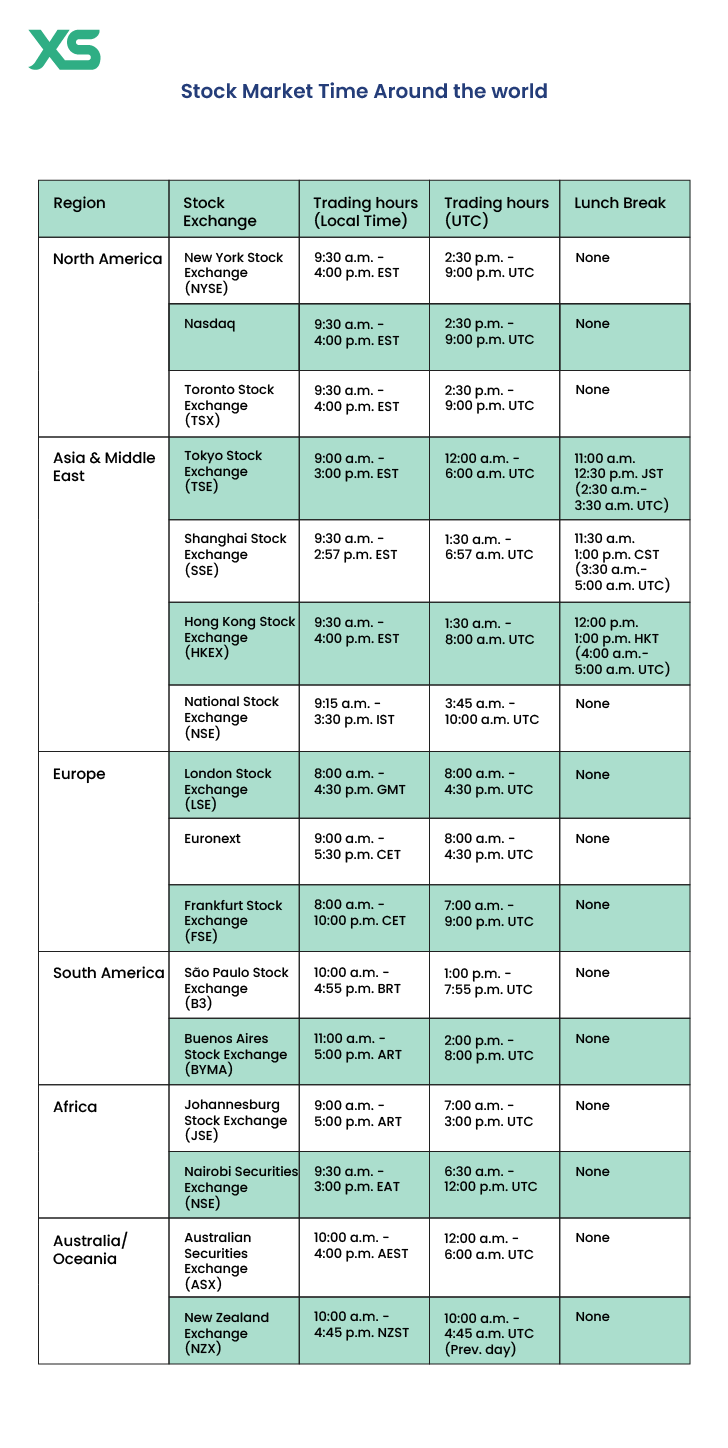
In the United States, the traditional equity markets—specifically the New York Stock Exchange (NYSE) and the NASDAQ—operate on a standard schedule from 9:30 AM to 4:00 PM Eastern Time (ET). While these hours define the “core” trading session, the modern financial landscape is far more nuanced, encompassing pre-market sessions, after-hours trading, and global overlaps that ensure the “market” never truly sleeps.
Understanding Standard Market Hours and the Mechanics of the Closing Bell
The 4:00 PM ET closing bell is one of the most iconic sounds in the financial world. It signals the end of regular trading and the point at which the “closing price” for thousands of publicly traded companies is established. But why does this specific window exist, and what happens in those final moments?
The New York Stock Exchange (NYSE) and NASDAQ Schedules
The NYSE and NASDAQ are the two largest stock exchanges in the world. Their standard operating hours (9:30 AM to 4:00 PM ET, Monday through Friday) are designed to concentrate liquidity. By forcing the majority of trading into a six-and-a-half-hour window, the exchanges ensure that there are enough buyers and sellers present to facilitate fair and orderly pricing.
When you ask what time the market closes, you are usually referring to the end of this “Continuous Trading” session. During this time, buy and sell orders are matched instantly by automated systems. As the clock approaches 4:00 PM, the “Power Hour” begins—a period of intense activity where institutional investors rebalance portfolios and day traders close out their positions.
The Significance of the Closing Auction and the “Closing Cross”
The final seconds of the trading day are not handled like the rest of the day. To determine the official closing price, the NASDAQ utilizes a “Closing Cross,” while the NYSE uses a “Closing Auction.” This is a specialized process that gathers all the limit and market orders submitted specifically for the close and executes them at a single price that maximizes the volume of shares traded.
The closing price is arguably the most important data point of the day. It is used by mutual funds to calculate their Net Asset Value (NAV), by technical analysts to plot charts, and by derivative markets to settle contracts. Therefore, the “closing time” is less of a hard stop and more of a grand finale where the day’s true value is discovered.
Beyond the 4:00 PM Window: The Rise of Extended-Hours Trading
While the regular session ends at 4:00 PM ET, the digital nature of modern finance allows for trading to continue long after the physical floor (in the case of the NYSE) has cleared. Extended-hours trading has become an essential tool for investors who need to react to news that breaks outside of standard hours.
After-Hours Trading: Risks and Rewards
After-hours trading typically occurs from 4:00 PM to 8:00 PM ET. This session is particularly critical during “Earnings Season.” Most major corporations release their quarterly financial results immediately after the 4:00 PM close to avoid causing massive price swings during the regular session.
For an investor, the after-hours market provides an opportunity to trade on this new information instantly. However, it comes with significant risks. Liquidity is much lower than during the day, meaning there are fewer participants. This leads to wider “bid-ask spreads” (the difference between what a buyer will pay and a seller will accept), which can result in more expensive trades and extreme price volatility.
Pre-Market Sessions and Morning Price Discovery
Similarly, the pre-market session begins as early as 4:00 AM ET, although most significant activity occurs between 8:00 AM and 9:30 AM ET. Pre-market trading allows investors to react to overnight news, such as international economic data or geopolitical events. Often, the price movement seen in the pre-market session sets the “gap” for the 9:30 AM opening bell. If a company receives a positive analyst upgrade at 7:00 AM, the stock may “gap up,” meaning its first trade at 9:30 AM is significantly higher than its previous day’s close.
Global Market Cycles: When Does the World Stop Trading?
The question of when the market closes is complicated by the fact that the financial market is a global, interconnected web. As the sun sets on Wall Street, markets in Asia and Europe are either preparing to open or are in the middle of their sessions.
The European and Asian Market Windows
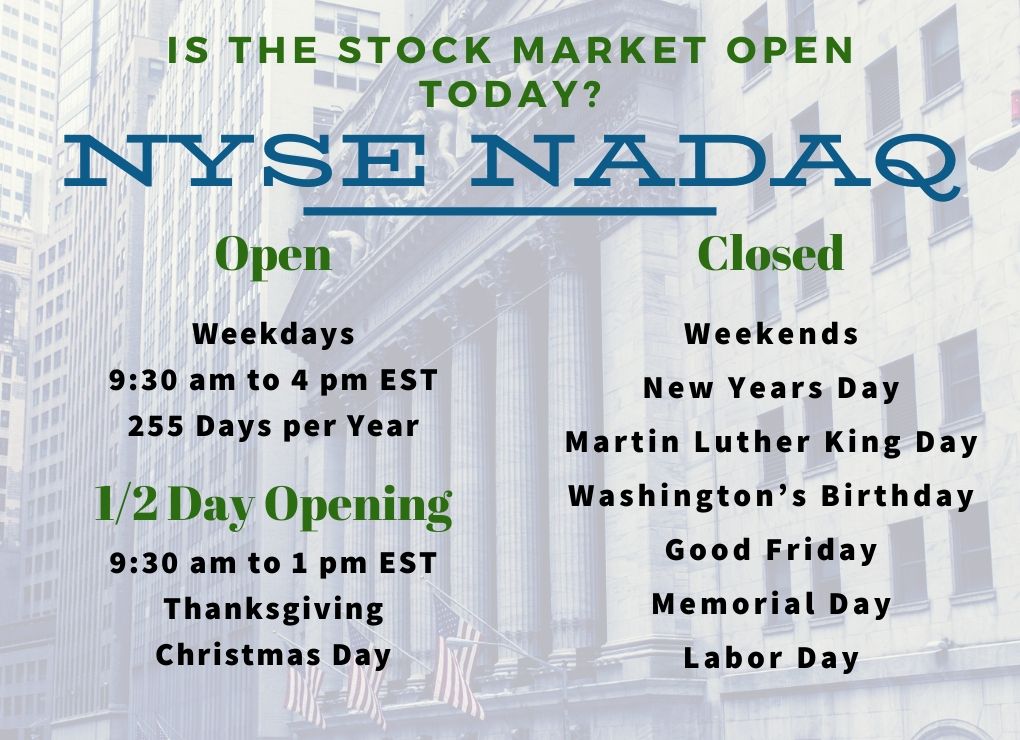
For a diversified investor, the closing time of the London Stock Exchange (LSE) or the Tokyo Stock Exchange (TSE) is just as relevant as the NYSE.
- London: The LSE typically closes at 4:30 PM local time (11:30 AM ET). This creates a significant “overlap” with the US morning session, often leading to the highest liquidity of the day for global currency and equity markets.
- Tokyo and Hong Kong: These markets operate while the US is asleep. The Tokyo Stock Exchange closes at 3:00 PM local time (2:00 AM ET).
Understanding these cycles is vital for “Global Macro” investing. If a major policy shift occurs in China, the impact will hit the Hong Kong market first, providing a roadmap for how European and US markets might react when they eventually open.
How Time Zone Overlaps Drive Volatility
The most volatile and liquid times in the financial world occur when two major markets are open simultaneously. The “Transatlantic Overlap” (between 9:30 AM and 11:30 AM ET) is when both New York and London are trading. This is frequently the time when the largest institutional trades are executed and when economic data releases have the most profound impact on the market.
Holiday Schedules and Early Closures: Planning Your Strategy
The market does not operate 365 days a year. To effectively manage a portfolio, one must be aware of the federal holidays and “early close” days that interrupt the standard schedule.
Common Market Holidays to Watch
In the United States, the market is closed on major holidays including New Year’s Day, Martin Luther King Jr. Day, Presidents’ Day, Good Friday, Memorial Day, Juneteenth, Independence Day, Labor Day, Thanksgiving, and Christmas.
While these closures are predictable, they can lead to “low volume” environments in the days leading up to the holiday. When trading volume is low, price movements can be exaggerated because it takes fewer trades to move the needle. Professional investors often refer to this as “thin” trading.
The Impact of Half-Day Trading Sessions
On certain occasions, such as the day after Thanksgiving (Black Friday) or Christmas Eve (if it falls on a business day), the market observes an early close, typically at 1:00 PM ET. These sessions are unique because they often see very little institutional activity. Many traders use these days to lock in profits or “window dress” their portfolios—a practice where fund managers buy high-performing stocks at the end of a period to make their holdings look better to clients.
Strategic Considerations for the Market Close
Knowing what time the market closes is the first step; knowing how to trade that closure is the second. The final 30 minutes of the trading day are often referred to as the “Closing Range,” and they require a specific set of strategies.
Market-on-Close (MOC) and Limit-on-Close (LOC) Orders
For investors who want to ensure their trades are executed at the official closing price, exchanges offer specific order types. A Market-on-Close (MOC) order is an instruction to execute the trade as close to the closing price as possible. These are popular among index funds that need to mirror the closing value of an index accurately.
A Limit-on-Close (LOC) order is similar but adds a price protection layer; the trade only executes if the closing price is at or better than a specified limit. Utilizing these tools allows retail investors to participate in the institutional liquidity of the closing auction.
Managing Risk and “Weekend Risk”
The Friday closing bell (4:00 PM ET) is perhaps the most significant “close” of the week. This marks the beginning of “weekend risk”—the danger that news will break on Saturday or Sunday when the markets are closed and you cannot exit a position.
Professional traders often reduce their “leverage” (borrowed money) before the Friday close to mitigate this risk. If you are holding a volatile stock and a negative geopolitical event occurs on a Sunday, you may find that the stock “gaps down” significantly on Monday morning, bypassing any stop-loss orders you had in place.
Conclusion: The Closing Bell is Only the Beginning
In the modern era of “Money” and investing, the question “What time is the market closing today?” serves as a reminder that financial success is predicated on discipline and awareness. While the 4:00 PM ET bell signals the end of the regular session for US equities, the global financial engine continues to churn through after-hours sessions, international overlaps, and pre-market price discovery.
For the personal investor, mastering the market clock means more than just knowing when to stop trading. It means understanding that the closing price is a benchmark of value, that extended hours offer both opportunity and peril, and that the global nature of finance requires a 24-hour perspective. By aligning your trading strategy with the structural realities of the market’s schedule, you can better navigate volatility, capitalize on liquidity, and ensure that your financial decisions are made with the precision that the modern market demands.
aViewFromTheCave is a participant in the Amazon Services LLC Associates Program, an affiliate advertising program designed to provide a means for sites to earn advertising fees by advertising and linking to Amazon.com. Amazon, the Amazon logo, AmazonSupply, and the AmazonSupply logo are trademarks of Amazon.com, Inc. or its affiliates. As an Amazon Associate we earn affiliate commissions from qualifying purchases.