
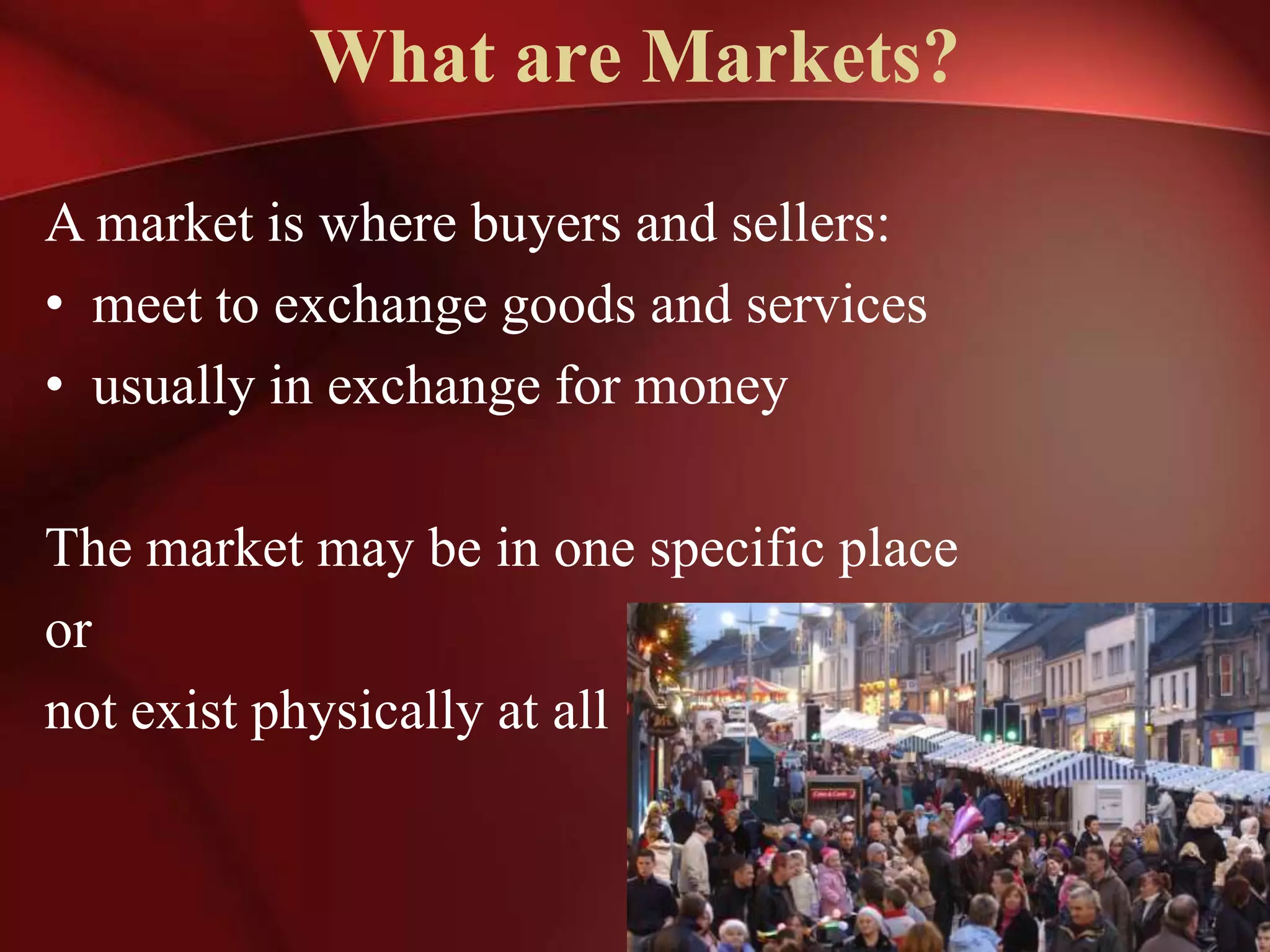
Markets are the fundamental arenas where economic activity unfolds, serving as the nexus for the exchange of goods, services, and financial assets. Far from being merely physical locations, markets represent a complex web of interactions between buyers and sellers, facilitated by a set of rules, conventions, and information flows. They are the invisible hand that allocates resources, discovers prices, and ultimately drives economic growth and individual prosperity. Understanding “what are markets” is not just an academic exercise; it’s a critical step towards comprehending how economies function, how wealth is created and managed, and how individuals and businesses can effectively navigate the financial landscape. From the simple act of buying groceries to the intricate dealings of global stock exchanges, markets are the indispensable engines that power our modern world.

The Core Functions and Diverse Types of Markets
At their heart, all markets share a common purpose: to facilitate transactions. However, their scope, structure, and the nature of what is exchanged can vary dramatically. Recognizing these foundational elements is crucial for anyone looking to understand the broader economic system.
Facilitating Exchange and Price Discovery
The most primary function of any market is to bring together individuals or entities with differing needs and desires, enabling them to exchange something of value. For a market to truly flourish, it must also provide a mechanism for price discovery. This is the process by which the interaction of supply (what sellers are willing to offer) and demand (what buyers are willing to purchase) determines the equilibrium price and quantity of a good, service, or asset. In efficient markets, prices reflect all available information, guiding resources to their most valued uses and signaling to producers what to create and to consumers what to buy. Without this dynamic process, economies would struggle with significant inefficiencies, misallocating resources and hindering innovation.
Economic Markets vs. Financial Markets
While the term “market” often conjures images of bustling trading floors, it encompasses a much broader spectrum. We can generally distinguish between two main categories:
- Economic Markets (or Goods and Services Markets): These are where tangible goods (like cars, food, clothing, raw materials) and intangible services (like healthcare, education, legal advice) are bought and sold. Examples include local farmers’ markets, online retail platforms, the housing market, or the global oil market. The labor market, where individuals offer their skills and time in exchange for wages, is another crucial economic market.
- Financial Markets: These are specialized markets where financial assets are traded. Instead of physical goods, participants exchange claims on future income or assets. This includes stocks, bonds, currencies, and derivatives. Financial markets play a vital role in channeling savings into investment, allowing businesses and governments to raise capital, and enabling individuals to grow their wealth.
Key Characteristics of Effective Markets
For any market to function optimally and benefit its participants, certain characteristics are highly desirable:
- Transparency: Access to timely and accurate information is paramount. Buyers and sellers need to know prices, quantities, and relevant details about the goods or assets being traded to make informed decisions. Lack of transparency can lead to information asymmetry and market inefficiencies.
- Liquidity: This refers to the ease with which an asset can be converted into cash without significantly affecting its price. Highly liquid markets allow participants to enter and exit positions quickly and cheaply, reducing risk and encouraging participation.
- Regulation: While markets thrive on competition, a degree of oversight is often necessary to ensure fairness, prevent fraud, protect investors, and maintain systemic stability. Regulatory bodies establish rules that govern trading practices, disclosure requirements, and market conduct.
- Competition: A healthy market typically features multiple buyers and sellers, preventing any single entity from exerting undue influence over prices. Competition fosters innovation, efficiency, and better outcomes for consumers.
Exploring the Landscape of Financial Markets
Within the vast realm of “Money,” financial markets are particularly significant. They are the sophisticated mechanisms through which capital flows, allowing individuals, businesses, and governments to manage their finances, raise funds, and generate returns on investment.
Stock Markets: Investing in Corporate Growth
The stock market is perhaps the most well-known financial market, where shares of publicly traded companies are bought and sold. When you buy a stock, you’re purchasing a small ownership stake in a company. Companies issue stocks in the primary market (e.g., through an Initial Public Offering or IPO) to raise capital for expansion, research, or debt repayment. Once issued, these stocks are then traded among investors in the secondary market (like the New York Stock Exchange or NASDAQ). The stock market offers investors the potential for capital appreciation (the stock price increasing) and dividend income (a share of company profits), making it a cornerstone of long-term wealth building. It also provides a public valuation of companies, reflecting investor confidence and future growth prospects.
Bond Markets: The Realm of Debt and Income
Unlike stocks, which represent ownership, bonds represent debt. When you buy a bond, you are essentially lending money to a government, municipality, or corporation for a specified period, in exchange for regular interest payments (coupon payments) and the return of your principal at maturity. Bond markets are crucial for governments to finance public projects and for corporations to fund operations and expansion without diluting ownership. They are generally considered less volatile than stocks and are often favored by investors seeking stable income streams and capital preservation. The yield on a bond (its effective return) is a key indicator of interest rates and economic health.
Commodity Markets: Trading Raw Materials
Commodity markets deal in primary products, such as agricultural goods (wheat, corn, coffee), energy resources (crude oil, natural gas), and precious metals (gold, silver). These markets are vital for producers and consumers of these raw materials, allowing them to hedge against price fluctuations. For investors, commodities offer a way to diversify portfolios, act as an inflation hedge (especially gold), or speculate on global supply and demand dynamics. Trading often occurs through futures contracts, which are agreements to buy or sell a commodity at a predetermined price on a future date.
Foreign Exchange (Forex) Markets: Global Currency Exchange
The foreign exchange market, or Forex, is the largest and most liquid financial market in the world, facilitating the exchange of currencies. It operates 24 hours a day, five days a week, and is essential for international trade, investment, and tourism. Businesses use Forex to convert payments for goods and services across borders, while investors and speculators aim to profit from fluctuations in exchange rates. Currency values are influenced by a myriad of factors, including interest rates, economic growth, geopolitical events, and government policies.
Derivatives Markets: Managing Risk and Speculation

Derivatives are financial contracts whose value is derived from an underlying asset, index, or rate. Common types include futures, options, and swaps. These instruments are primarily used for hedging (managing risk, for example, a farmer hedging against a future drop in crop prices) or for speculation (betting on the future price movements of an underlying asset). While powerful tools for risk management and enhancing returns, derivatives are also complex and carry significant risks, making them suitable for sophisticated investors.
The Mechanics of Market Operation and Influence
Beyond the specific types, understanding the underlying mechanics and influential factors that dictate how markets behave is critical for any participant.
Supply and Demand: The Fundamental Drivers
The most powerful and pervasive forces governing all markets are supply and demand. Supply represents the quantity of a good, service, or asset that producers are willing to offer at various prices, while demand represents the quantity that consumers are willing to purchase at various prices. The intersection of these two curves determines the market’s equilibrium price and quantity. Any shift in either supply (e.g., new technology increasing production, a natural disaster reducing crops) or demand (e.g., a change in consumer preferences, an economic boom) will inevitably lead to a change in market prices and volumes. Mastery of these basic economic principles is the first step to understanding market movements.
Market Efficiency and Rationality
The concept of market efficiency posits that market prices fully reflect all available information, making it impossible to consistently achieve returns in excess of the average by using that information. This idea is central to the Efficient Market Hypothesis (EMH). However, real-world markets are also influenced by human psychology and irrational behavior, a field explored by behavioral economics. Factors like fear, greed, herd mentality, and cognitive biases can lead to market bubbles, crashes, and temporary inefficiencies, challenging the notion of perfectly rational market participants.
The Role of Information and Technology
In today’s globalized economy, information is currency, and technology is the conduit. Real-time data feeds, sophisticated trading platforms, and algorithmic trading systems have revolutionized how markets operate. They have dramatically increased market speed, liquidity, and accessibility, enabling instant transactions across continents. This technological advancement means that news, economic reports, and even social media sentiment can influence market prices almost instantaneously, underscoring the importance of staying informed and understanding data flows.
Regulation and Oversight
Given the immense capital involved and the potential for systemic risk, most financial markets are subject to stringent regulation. Government bodies like the Securities and Exchange Commission (SEC) in the U.S., the Financial Conduct Authority (FCA) in the UK, or central banks globally, establish rules designed to ensure fairness, protect investors from fraud and manipulation, promote transparency, and maintain financial stability. These regulations cover everything from company disclosure requirements and trading practices to capital adequacy for financial institutions. While sometimes criticized for stifling innovation, regulation is crucial for fostering trust and ensuring the long-term health of markets.
Markets and Your Financial Journey
The profound impact of markets extends far beyond abstract economic theory; they are directly intertwined with personal financial well-being and business success.
Personal Investing and Wealth Building
For individuals, financial markets offer powerful avenues for building wealth and achieving long-term financial goals such as retirement, purchasing a home, or funding education. By investing in stocks, bonds, mutual funds, or exchange-traded funds (ETFs), individuals can participate in the growth of the global economy. Key strategies include diversification (spreading investments across different asset classes and sectors to mitigate risk) and long-term investing (allowing compound interest and market growth to work over many years). Understanding market volatility and having a disciplined approach are crucial for navigating the inevitable ups and downs.
Business Finance and Capital Acquisition
For businesses, markets are essential for acquiring the capital needed to start, operate, and expand. Private companies can raise funds from venture capitalists or angel investors in private markets. Publicly traded companies rely on stock markets for Initial Public Offerings (IPOs) to raise large sums of equity capital and bond markets to issue debt. Efficient access to capital markets allows businesses to innovate, create jobs, and contribute to economic prosperity. The cost of capital obtained from markets directly impacts a company’s profitability and growth potential.
Understanding Market Cycles and Volatility
Markets rarely move in a straight line. They are characterized by cycles of expansion (bull markets) and contraction (bear markets), periods of high volatility, and stretches of relative calm. These cycles are often influenced by economic indicators (GDP growth, inflation, unemployment), interest rate changes by central banks, technological advancements, and geopolitical events. For investors and businesses, recognizing these cycles and understanding how to respond to market volatility – perhaps by rebalancing portfolios or adjusting investment strategies – is a critical skill for mitigating risk and capitalizing on opportunities.
The Interconnectedness of Global Markets
In an increasingly globalized world, markets are inextricably linked. Economic or political events in one country or region can have ripple effects across the globe. A downturn in a major economy, a geopolitical conflict, or a shift in commodity prices can impact stock markets, currency exchange rates, and business confidence worldwide. This interconnectedness highlights the need for a global perspective when analyzing market trends and making financial decisions, as local events can quickly become global phenomena.
In conclusion, markets are far more than just places where transactions occur; they are intricate, dynamic systems that underpin modern economies. They serve as essential mechanisms for price discovery, resource allocation, and capital formation, profoundly influencing both global economic health and individual financial journeys. From the transparent trading floors of stock exchanges to the everyday exchanges for goods and services, understanding “what are markets” is fundamental to grasping how wealth is generated, how risks are managed, and how individuals and institutions can effectively participate in the ongoing evolution of commerce and finance. Continuous learning and an informed approach are key to successfully navigating these ever-evolving engines of prosperity.
aViewFromTheCave is a participant in the Amazon Services LLC Associates Program, an affiliate advertising program designed to provide a means for sites to earn advertising fees by advertising and linking to Amazon.com. Amazon, the Amazon logo, AmazonSupply, and the AmazonSupply logo are trademarks of Amazon.com, Inc. or its affiliates. As an Amazon Associate we earn affiliate commissions from qualifying purchases.