
In the modern financial landscape, the difference between financial stability and true financial freedom often lies in how one manages their surplus capital. While saving money is a foundational habit, simply keeping cash in a traditional savings account is frequently insufficient to keep pace with inflation. To truly grow your net worth and generate passive income, you must transition from being a saver to being an investor. Investing is the process of putting your money to work in vehicles that have the potential to appreciate in value or generate a recurring yield.

This comprehensive guide explores the strategic frameworks, asset classes, and psychological disciplines required to invest money effectively and earn sustainable returns over time.
1. The Strategic Foundations of Successful Investing
Before deploying capital into the markets, an investor must establish a structural foundation. Investing without a plan is akin to sailing without a compass; you might move, but you are unlikely to reach your desired destination.
Understanding Risk Tolerance and Time Horizons
Every investment carries a degree of risk, and your ability to weather that risk is dictated by two factors: your psychological temperament and your chronological timeline. Risk tolerance is your emotional capacity to handle market volatility without panicking. Risk capacity, conversely, is your financial ability to sustain a loss.
Your time horizon is perhaps the most critical variable. If you are investing for a goal thirty years away, such as retirement, you can afford to invest in volatile assets like aggressive growth stocks because you have the time to recover from market downturns. If you need the money in two years for a down payment on a house, your strategy must shift toward capital preservation and liquidity.
The Power of Compound Interest
Albert Einstein famously referred to compound interest as the “eighth wonder of the world.” In the context of investing and earning, compounding occurs when the earnings on your investment are reinvested to generate their own earnings.
Over short periods, the effects of compounding are negligible. However, over decades, the curve becomes exponential. For example, an initial investment of $10,000 growing at an annual rate of 8% will be worth approximately $21,500 after ten years. After thirty years, that same investment grows to over $100,000. The key to “earning” through investment is not necessarily finding the highest-risk “moonshot” stock, but rather giving your capital enough time to let compounding perform its mathematical magic.
2. Core Investment Vehicles for Generating Returns
Once the foundation is set, the next step is selecting the appropriate vehicles. The “Money” niche offers a variety of asset classes, each with distinct risk-reward profiles.
The Stock Market: Equities and Index Funds
Stocks represent ownership in a corporation. When you buy a stock, you are betting on the future profitability and growth of that business. Investors earn from stocks in two ways: capital appreciation (the stock price goes up) and dividends (a portion of the company’s profit paid out to shareholders).
For many investors, the most efficient way to earn is through low-cost index funds or Exchange-Traded Funds (ETFs). Rather than trying to pick a single winning company, an index fund allows you to own a “slice” of the entire market, such as the S&P 500. This provides instant diversification and historically consistent returns that outperform the majority of actively managed funds over the long term.
Bonds and Fixed-Income Securities
Bonds are essentially loans made by an investor to a borrower (typically a corporation or a government). In exchange for the loan, the borrower agrees to pay a set interest rate over a specific period and return the principal at the end of the term.
Bonds are generally considered lower risk than stocks and serve as a “cushion” in a portfolio. While the “earnings” or yields from bonds are typically lower than the potential gains from the stock market, they provide a predictable stream of income and reduce the overall volatility of your investment portfolio.
Real Estate: Physical Property and REITs
Real estate has long been a cornerstone of wealth creation. It offers the potential for both rental income (cash flow) and property appreciation. However, physical real estate requires significant capital and management effort.
For those who want to invest in real estate without the burden of being a landlord, Real Estate Investment Trusts (REITs) are an excellent alternative. REITs are companies that own, operate, or finance income-producing real estate. They are traded on major exchanges like stocks and are required by law to distribute at least 90% of their taxable income to shareholders as dividends, making them a powerful tool for those looking to earn a steady income.
3. Diversification and Modern Portfolio Theory
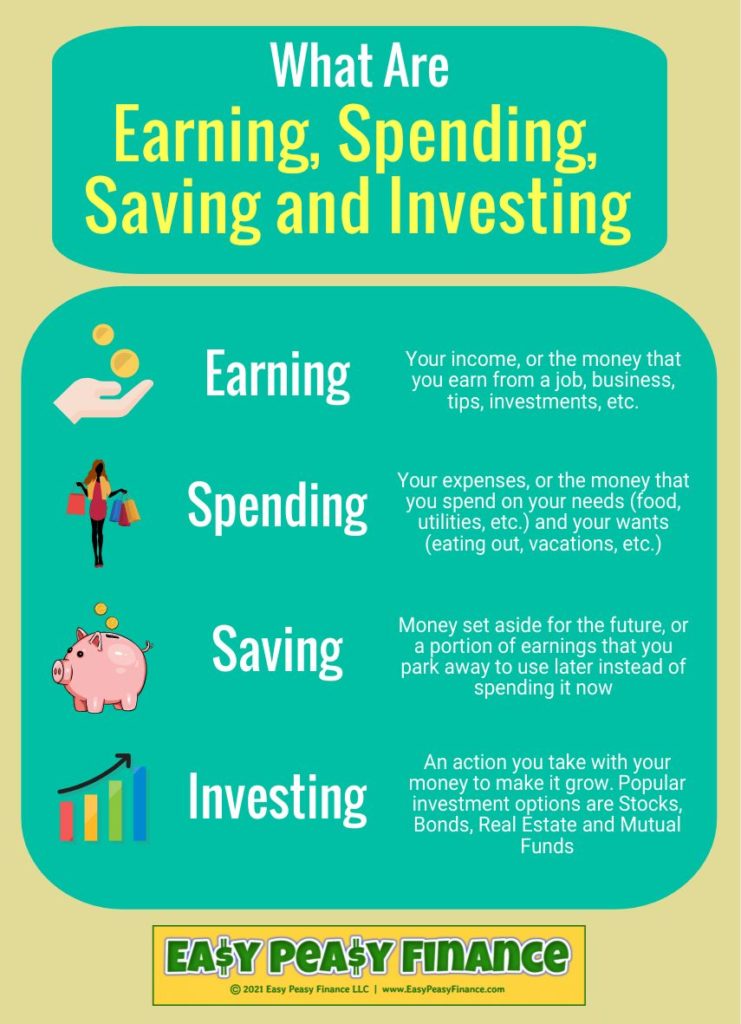
The secret to long-term investment success is not picking the single best investment, but rather building a combination of investments that work together to maximize returns while minimizing risk.
Asset Allocation Strategies
Asset allocation is the process of deciding how to divide your investment portfolio among different asset categories, such as stocks, bonds, and cash. This is widely considered the most important decision an investor can make.
A “growth-oriented” portfolio might consist of 80% stocks and 20% bonds, whereas a “conservative” portfolio might be 40% stocks and 60% bonds. The goal of allocation is to ensure that when one sector of the economy is underperforming, another may be thriving, thereby smoothing out the “ride” of your investment journey.
The Role of Alternative Investments
In addition to the standard “Big Three” (stocks, bonds, and real estate), sophisticated investors often look toward alternative investments to further diversify. This can include commodities like gold and oil, private equity, or venture capital.
Gold, for instance, is often used as a hedge against inflation and currency devaluation. While alternatives can be more complex and less liquid, they provide a layer of protection against systemic market crashes that might affect traditional stocks and bonds simultaneously.
4. Practical Steps to Start Earning Today
Theory is vital, but execution is where the actual earning begins. Transitioning from learning to doing requires a few practical steps.
Choosing the Right Brokerage or Platform
In the digital age, the barrier to entry for investing has never been lower. Investors can choose between traditional full-service brokerages, discount online brokers, or “Robo-advisors.”
Robo-advisors use algorithms to automatically manage your portfolio based on your risk tolerance and goals. They are an excellent starting point for beginners who want a “set it and forget it” approach. For those who want more control, online brokerages offer the tools to trade individual stocks and specialized ETFs with zero or very low commissions.
Dollar-Cost Averaging vs. Lump Sum Investing
A common dilemma for new investors is whether to invest all their money at once (lump sum) or spread it out over time. Dollar-cost averaging (DCA) is the practice of investing a fixed amount of money at regular intervals (e.g., $500 every month), regardless of the asset’s price.
DCA is an effective psychological and financial tool because it removes the temptation to “time the market.” When prices are high, your fixed dollar amount buys fewer shares; when prices are low, it buys more. Over time, this often results in a lower average cost per share and ensures that you are consistently building your position regardless of market sentiment.
5. Psychological Resilience and Portfolio Maintenance
The final component of investing to earn is the ability to stay the course. The greatest threat to an investor’s returns is often not the market itself, but the investor’s own behavior.
Avoiding Emotional Decision Making
Market cycles are inevitable. There will be periods of “bull markets” where everything rises, and “bear markets” where values plummet. During market crashes, the human brain’s “fight or flight” response often triggers an urge to sell and “protect” what is left.
History shows that the most successful investors are those who remain disciplined during downturns. Selling during a crash “locks in” losses and prevents you from participating in the eventual recovery. To earn consistently, one must treat investing as a logical business process rather than an emotional reaction to news headlines.

Portfolio Rebalancing and Tax-Loss Harvesting
Investing is not a static activity. Over time, because different assets grow at different rates, your original asset allocation will drift. For example, if your stocks perform exceptionally well, they might grow to represent 90% of your portfolio when you originally intended for 70%.
Rebalancing is the process of selling a portion of your winners and buying more of the underperformers to return to your target allocation. This forces you to “buy low and sell high.” Additionally, investors should be mindful of “tax-loss harvesting”—selling losing investments to offset capital gains taxes on your winners. These technical adjustments are essential for optimizing your net earnings and ensuring your portfolio remains aligned with your long-term risk profile.
By understanding these principles—from the basics of compounding to the nuances of asset allocation—anyone can begin the journey of investing money to earn a more prosperous future. The path to wealth is rarely found in a single “lucky” trade; it is built through the disciplined application of sound financial principles over time.
aViewFromTheCave is a participant in the Amazon Services LLC Associates Program, an affiliate advertising program designed to provide a means for sites to earn advertising fees by advertising and linking to Amazon.com. Amazon, the Amazon logo, AmazonSupply, and the AmazonSupply logo are trademarks of Amazon.com, Inc. or its affiliates. As an Amazon Associate we earn affiliate commissions from qualifying purchases.