
In the modern landscape of the “streaming wars,” content is the primary currency. For Paramount Global, the crown jewel of its linear television empire is undoubtedly Yellowstone. The neo-western drama has defied the era of fragmented viewership, pulling in linear ratings reminiscent of the pre-internet age. However, a paradoxical situation has left millions of consumers and investors baffled: the show titled after the network’s namesake—Paramount—is notably absent from its flagship streaming service, Paramount+.
To the casual observer, this looks like a technical glitch or a branding oversight. To the financial analyst, however, the absence of Yellowstone from Paramount+ is a complex case study in licensing economics, contractual obligations, and the high-stakes financial maneuvers that define the entertainment industry. This situation serves as a cautionary tale of how short-term revenue goals can conflict with long-term asset valuation.

The Financial Architecture of the Streaming Wars
The streaming industry is built on a foundation of intellectual property (IP) and the monetization of that IP through various distribution windows. To understand why Paramount+ is missing its biggest hit, one must look at the financial architecture of the deal struck years before the platform was even a primary focus for the corporation.
Licensing as a Revenue Stream vs. Asset Retention
In the late 2010s, the corporate strategy for many legacy media companies was centered on “content arms dealing.” Companies like Viacom (now part of Paramount Global) viewed their production studios as profit centers designed to sell content to the highest bidder. At that time, the priority was immediate cash flow and high-margin licensing fees rather than building a proprietary ecosystem.
Licensing Yellowstone to a third party was, at the time, a sound financial decision from a quarterly earnings perspective. It secured guaranteed revenue without the overhead costs of managing a direct-to-consumer infrastructure. However, as the industry shifted toward the “walled garden” model—where companies keep their best content to drive subscriptions—this licensing strategy transformed from a revenue generator into a strategic liability.
The NBCUniversal Deal: A Pre-Streaming Pivot
The specific financial hurdle began in 2020. Just months before ViacomCBS (now Paramount Global) announced the rebrand of CBS All Access to Paramount+, the company’s licensing division inked a deal with NBCUniversal. This agreement granted NBC’s streaming service, Peacock, the exclusive domestic streaming rights to Yellowstone.
At the time, the financial terms were lucrative, but the timing was catastrophic. Paramount Global was essentially selling the ammunition it would need for its own upcoming war. The contract, which remains in effect today, dictates that as long as new episodes are being produced, Peacock maintains the streaming rights for the library. This contractual lock-in represents a significant “missed opportunity cost,” as Paramount+ is forced to market spin-offs like 1883 and 1923 while the flagship show drives traffic to a direct competitor.
Opportunity Cost and the Valuation of Exclusive Content
In corporate finance, the value of an asset is often measured by its ability to generate future cash flows. For a streaming service, those cash flows come in the form of Monthly Recurring Revenue (MRR) driven by subscriber acquisition and retention. The absence of Yellowstone on Paramount+ has created a massive gap in the platform’s financial potential.
Quantifying the Loss of Subscriber Acquisition
High-demand content like Yellowstone acts as a “top-of-funnel” driver. It is the primary reason a customer enters a credit card number. Data from various streaming analytics firms suggest that Yellowstone is consistently among the most-watched shows in the United States. By not having this title, Paramount+ loses out on millions of potential subscribers who instead direct their capital toward Peacock.
The financial loss isn’t just the monthly subscription fee; it’s the Lifetime Value (LTV) of the customer. A user who joins for Yellowstone might stay for the Champions League or Star Trek. By losing the initial “hook,” Paramount Global faces a higher Customer Acquisition Cost (CAC), as they must spend more on marketing other titles to compensate for the missing flagship.
The Impact on Paramount Global’s Market Capitalization
The “Yellowstone gap” has also been a talking point for Wall Street analysts evaluating Paramount Global’s stock. In a market that increasingly rewards “vertical integration”—where a company owns the production, the network, and the streaming platform—the fragmented rights of Yellowstone are seen as a sign of historical strategic weakness.
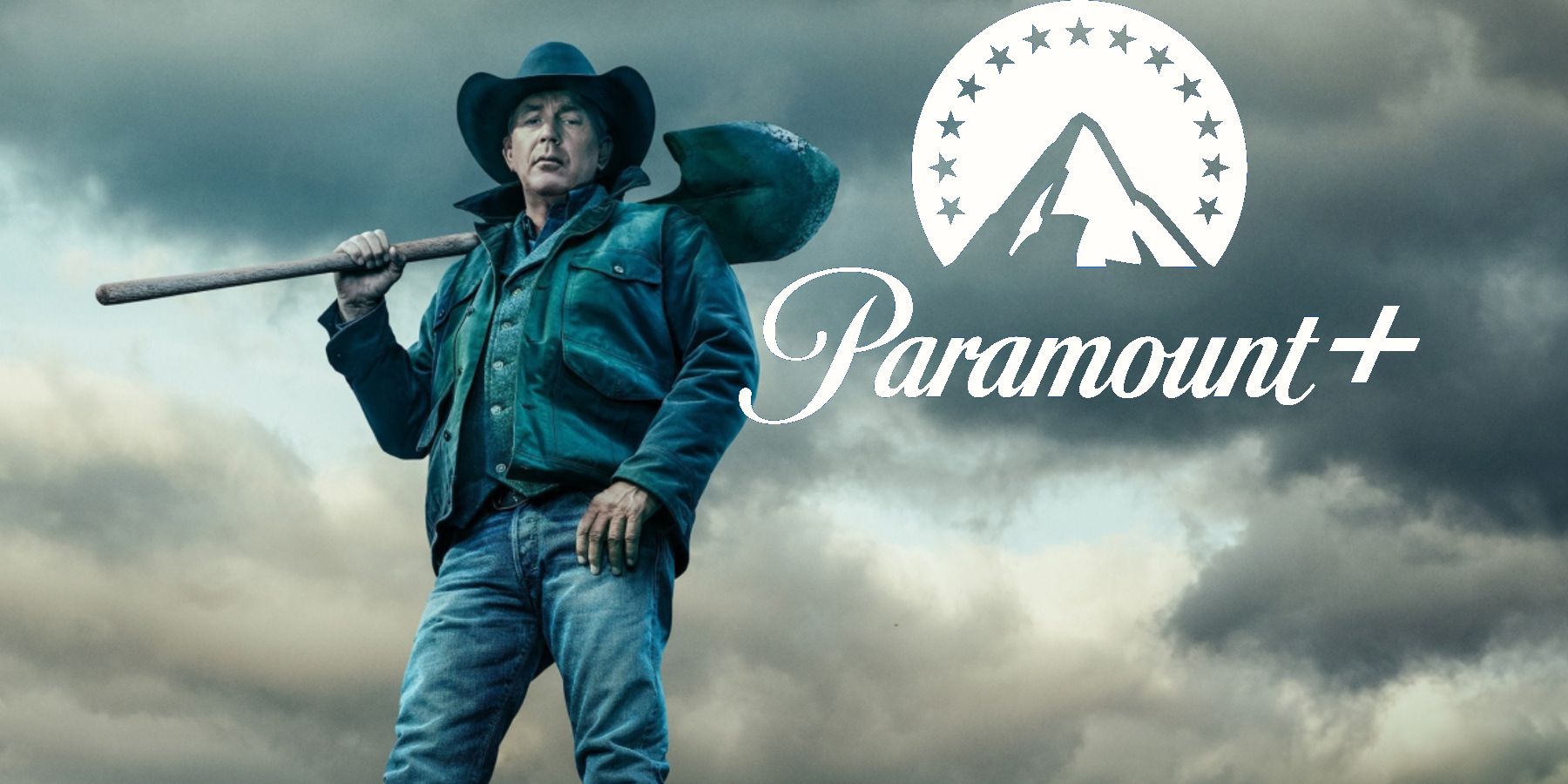
When investors look at the valuation of a media company, they look at the “stickiness” of the platform. The fact that Paramount’s most valuable asset benefits NBCUniversal’s balance sheet rather than its own creates a “valuation discount.” It signals to the market that the company’s historical management failed to align its content strategy with its technological evolution, leading to a diluted brand and split revenue streams.
Strategic Financial Decisions in a Fragmented Market
Faced with this financial dilemma, Paramount Global has had to make aggressive capital allocation decisions to course-correct. Since they cannot simply take Yellowstone back without a massive (and likely impossible) buyout of the NBCUniversal contract, they have turned to “The Taylor Sheridan Universe” as a financial workaround.
Capital Allocation and the Cost of Buying Back Rights
There have been numerous industry rumors regarding Paramount attempting to “buy back” the streaming rights to Yellowstone. However, the financial cost of such a move would be astronomical. NBCUniversal, recognizing the immense value the show brings to Peacock’s subscriber growth, has little incentive to sell unless offered a premium that would likely be dilutive to Paramount’s earnings.
Instead of overpaying to fix a past mistake, Paramount has chosen to invest hundreds of millions of dollars into Taylor Sheridan, the creator of Yellowstone. By signing Sheridan to an expansive (and expensive) development deal, Paramount ensured that every subsequent show he created—1883, 1923, Tulsa King, and Mayor of Kingstown—would be exclusive to Paramount+. This is a classic “pivot strategy” in business finance: investing in new assets to offset the underperformance or unavailability of a legacy asset.
The Taylor Sheridan Universe as a Financial Engine
The financial scale of the Sheridan deal is estimated to be over $200 million. While this seems like a high price tag, from a Business Finance perspective, it is a defensive play to protect the Paramount+ ecosystem. These spin-offs serve as a “bridge” for fans of the original show.
Paramount is effectively using the linear broadcast of Yellowstone on the Paramount Network as a giant advertisement to drive viewers toward the paid streaming service for the prequels. This “funneling” strategy is an attempt to claw back the ROI that is being lost to Peacock. It’s a complex dance of using an asset you own (the linear rights) to promote assets you control (the spin-offs) because you’ve lost control of the original’s digital rights.
Lessons in Intellectual Property Management and Corporate Finance
The Yellowstone situation offers several vital lessons for business leaders and investors regarding the management of intellectual property in the digital age. It highlights the tension between immediate liquidity and long-term strategic positioning.
Future-Proofing Contracts in the Digital Age
The primary takeaway from a business finance perspective is the necessity of “future-proofing” licensing agreements. In 2020, the shift to streaming was already well underway, but the decision to license Yellowstone suggests a failure in “Scenario Analysis”—a financial technique used to model various future outcomes.
Modern media contracts now include rigorous “carve-outs” for internal streaming services. The Yellowstone error has changed how corporate lawyers and CFOs at major studios approach syndication. We are seeing a move away from the “highest bidder” model toward a “strategic alignment” model, where the long-term value of platform exclusivity is weighed against the immediate gratification of a licensing check.
The Shift Toward Full Vertical Integration
Finally, this saga underscores why the industry is moving toward full vertical integration. When a single entity controls the production (Studio), the distribution (Network), and the end-user interface (Streaming App), it eliminates the “leakage” of revenue to third parties.
Paramount Global’s current financial strategy is centered on reclaiming this control. While they may have to wait for the Yellowstone contract to eventually expire or for the show to conclude its run, every new financial decision is made with the goal of ensuring that no future “Yellowstone-sized” asset ever leaves the building.
In conclusion, Yellowstone is not on Paramount+ because of a short-term financial decision that failed to account for a long-term shift in consumer behavior. It is a multi-billion dollar lesson in the importance of asset control. While Paramount Global continues to thrive on the back of the “Sheridan-verse,” the ghost of the Yellowstone deal remains a permanent fixture on the balance sheet—a reminder that in the world of big business, a single contract can define the trajectory of a multi-billion dollar corporation for a decade.
aViewFromTheCave is a participant in the Amazon Services LLC Associates Program, an affiliate advertising program designed to provide a means for sites to earn advertising fees by advertising and linking to Amazon.com. Amazon, the Amazon logo, AmazonSupply, and the AmazonSupply logo are trademarks of Amazon.com, Inc. or its affiliates. As an Amazon Associate we earn affiliate commissions from qualifying purchases.