
The transition from internal combustion engines to sustainable electric transport required more than just a breakthrough in battery chemistry; it required a complete reimagining of the manufacturing process. Tesla, Inc. has redefined the automotive assembly line by treating the factory itself as a product—a concept Elon Musk refers to as “the machine that builds the machine.” To understand where Tesla cars are manufactured is to understand a global network of “Gigafactories,” each serving as a laboratory for advanced robotics, vertical integration, and structural engineering.
Today, Tesla’s production footprint spans three continents, utilizing some of the most advanced industrial automation in existence. By examining the technical specifications and unique roles of each facility, we gain insight into how software-driven manufacturing is disrupting a century-old industry.
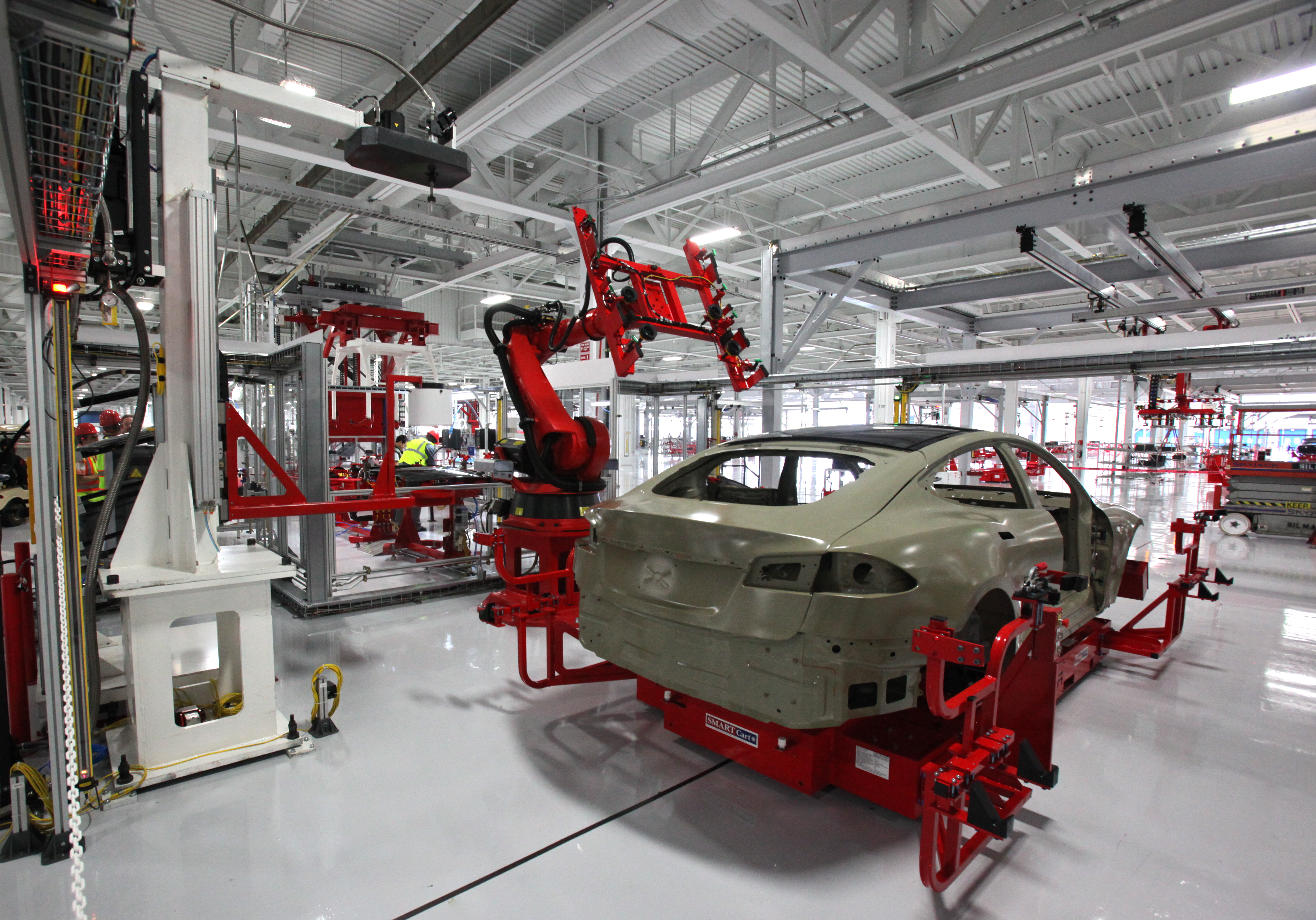
Engineering the “Machine that Builds the Machine”: The Gigafactory Philosophy
The term “Gigafactory” was coined to represent a scale of production that goes beyond traditional automotive plants. The philosophy hinges on the idea that the factory layout should be optimized with the same rigor as a computer circuit board. In a Tesla factory, the goal is to minimize the “travel distance” of parts, maximize energy density, and automate every process that does not strictly require human dexterity.
Vertical Integration and First-Principles Engineering
Unlike traditional legacy automakers that rely on a vast web of third-party tier-one suppliers for components like seats, dashboards, and electronics, Tesla manufactures a significant portion of its components in-house. This vertical integration occurs directly within the Gigafactory walls. For example, at several locations, the raw aluminum enters one side of the building, is melted down, and is then cast into structural components by massive “Giga Presses.” This tech-centric approach reduces logistics complexity and allows Tesla to iterate on hardware designs in real-time. If a firmware update requires a slight change in a sensor’s position, the engineering team can implement that change on the factory floor within days, rather than months.
The “Unboxed” Assembly Process
Tesla’s most recent technical evolution in manufacturing is the “Unboxed” process. Traditional car manufacturing involves moving a skeletal car body along a mile-long line where workers “stuff” components into it. This is spatially inefficient. Tesla’s new approach involves working on separate sections of the vehicle (the sides, the floor, the front, the rear) in parallel in dedicated sub-assembly areas. These finished “blocks” are only brought together at the very end of the process. This tech-heavy strategy reduces the factory footprint by up to 40% and allows for more robots to work on a single vehicle simultaneously without crowding.
The North American Powerhouses: Fremont and Giga Texas
Tesla’s manufacturing journey began in California, but its technological future is increasingly being forged in the “Silicon Hills” of Austin, Texas. These two sites represent the evolution of Tesla’s manufacturing stack from repurposed legacy infrastructure to purpose-built architectural marvels.
The Fremont Factory: The Legacy Laboratory
Located in Fremont, California, this was Tesla’s first major assembly plant. Originally a joint venture between GM and Toyota (known as NUMMI), Tesla has spent the last decade retrofitting this facility with high-tech upgrades. Fremont is unique because it produces all four current Tesla models: S, 3, X, and Y.
From a technical perspective, Fremont serves as the testing ground for new software deployments in the assembly line. Because of its proximity to Tesla’s engineering headquarters in Palo Alto, the Fremont line is often the first to receive hardware revisions. However, because it was not designed by Tesla from the ground up, it lacks the “linear flow” seen in newer Gigafactories, often requiring creative use of outdoor “tents” for additional assembly lines—a move that famously saved the Model 3 production ramp through the use of extreme automation and rapid-response engineering.
Giga Texas: The Apex of Structural Engineering
Giga Texas is the current pinnacle of Tesla’s manufacturing tech. Spanning over 10 million square feet of floor space, it is one of the largest buildings in the world. This facility is the primary home of the Model Y and the revolutionary Cybertruck.
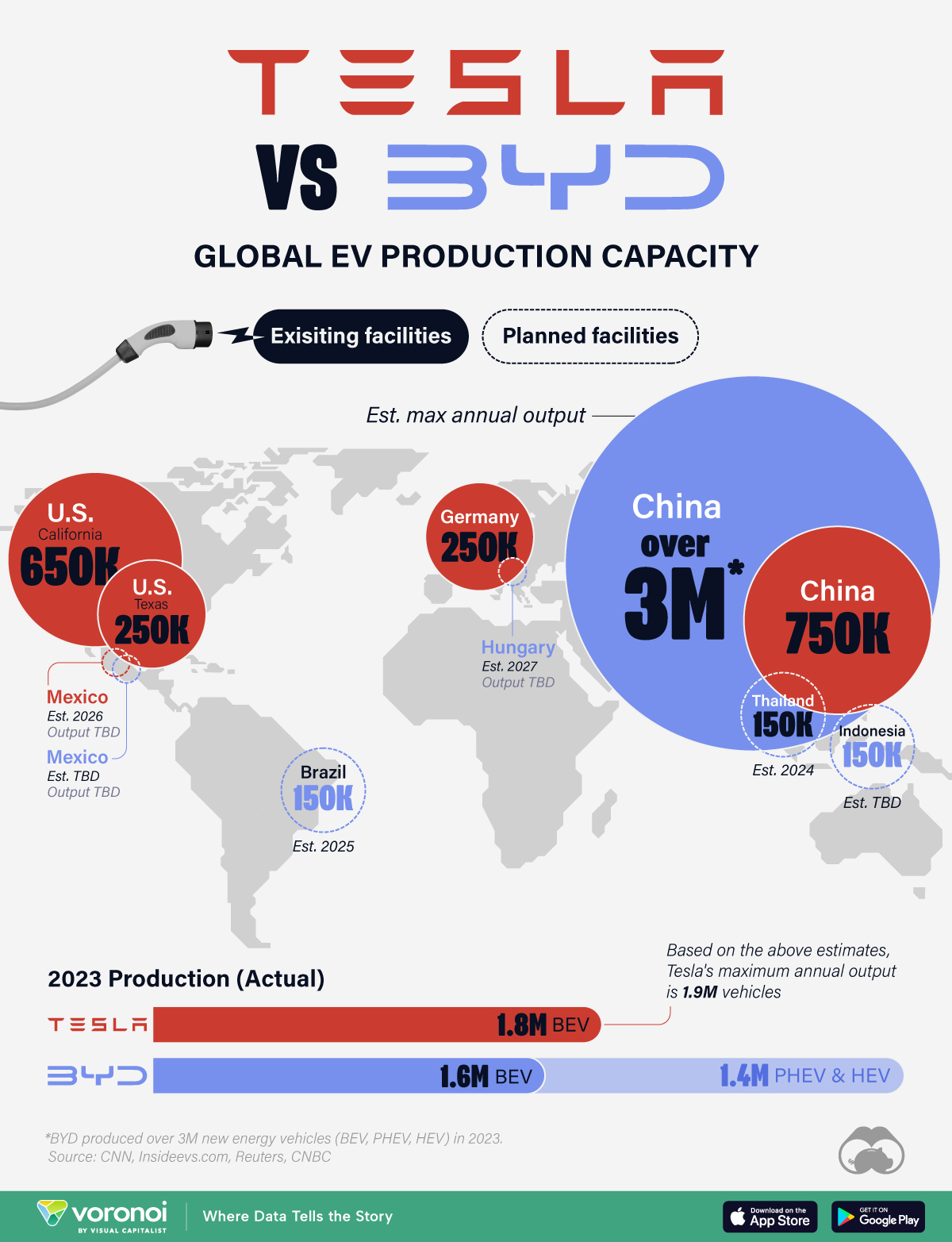
The most significant technical breakthrough at Giga Texas is the implementation of the structural battery pack. In most EVs, the battery is a separate component bolted into the frame. At Giga Texas, the 4680 battery cells are integrated into a pack that serves as the actual floor of the car. This reduces mass, improves the center of gravity, and simplifies the assembly of the vehicle’s interior. Furthermore, Giga Texas houses the world’s most powerful die-casting machines, which turn the rear and front underbodies of the car into single pieces of aluminum, eliminating over 170 separate parts and hundreds of robots previously needed for welding.
International Expansion: Giga Shanghai and Giga Berlin
To achieve global scale, Tesla localized production in the world’s two other major automotive markets: China and Europe. These factories were built using lessons learned from Fremont, resulting in significantly higher efficiency and more advanced environmental controls.
Giga Shanghai: The World’s Export and Efficiency Hub
Giga Shanghai was constructed in record time—roughly ten months from breaking ground to the first car rolling off the line. It serves as the primary export hub for Tesla, supplying vehicles to Europe and parts of Asia. The technical triumph of Shanghai lies in its supply chain density. Over 95% of the components used in Giga Shanghai are sourced within China, many from suppliers located just miles from the plant.
Shanghai’s manufacturing line is a masterclass in high-speed automation. It utilizes a sophisticated “Vision System” for quality control, where AI-powered cameras scan every millimeter of a car’s frame to detect panel gaps or paint imperfections faster and more accurately than any human inspector. This data is fed back into the manufacturing software to calibrate the robots in real-time.
Giga Berlin-Brandenburg: Revolutionizing Paint and Castings
Giga Berlin is Tesla’s first manufacturing foray into the heart of the European automotive industry. While it follows the Gigafactory blueprint, it introduced several technological “firsts” for the company.
The most notable is the Advanced Paint Shop. Because European environmental regulations and consumer tastes are stringent, Tesla engineered a paint system capable of applying up to 13 layers of paint to achieve a depth and “color-shift” effect previously only possible in low-volume boutique shops. Technically, this involves highly precise robotic arms and a unique airflow system that prevents contaminants while minimizing energy consumption. Additionally, Giga Berlin was the first to fully commit to the “front and rear” single-piece castings for the Model Y, proving that large-scale industrial casting could meet the rigorous safety and performance standards of the German Autobahn.
The Technological Core: Robotics, AI, and Power Electronics
While the physical locations are impressive, the “where” of Tesla manufacturing is ultimately defined by the digital infrastructure that governs these sites. Tesla factories function more like massive, distributed computers than traditional workshops.
Proprietary Robotics and the “Dojo” Connection
While Tesla uses industrial robots from companies like Kuka and Fanuc, the software that controls them is often written in-house. This allows Tesla to synchronize the movement of hundreds of robots with millisecond precision. Looking forward, the company is integrating its work in Artificial Intelligence—specifically the tech developed for its Full Self-Driving (FSD) computer—into the factory floor. The goal is to move from “pre-programmed” robotics to “perceptive” robotics, where machines can adapt to slight variations in part placement using computer vision.
In-House Battery Cell Production
A critical component of “where” Tesla cars are made involves the production of the cells themselves. While Tesla partners with Panasonic, LG, and CATL, it has brought a significant portion of battery manufacturing in-house at Giga Nevada and Giga Texas. The “Dry Battery Electrode” (DBE) technology is the current technological frontier. By eliminating the massive, energy-intensive drying ovens used in traditional battery making, Tesla is shrinking the footprint of the battery factory itself while increasing production speed.
Real-Time Telemetry and Digital Twins
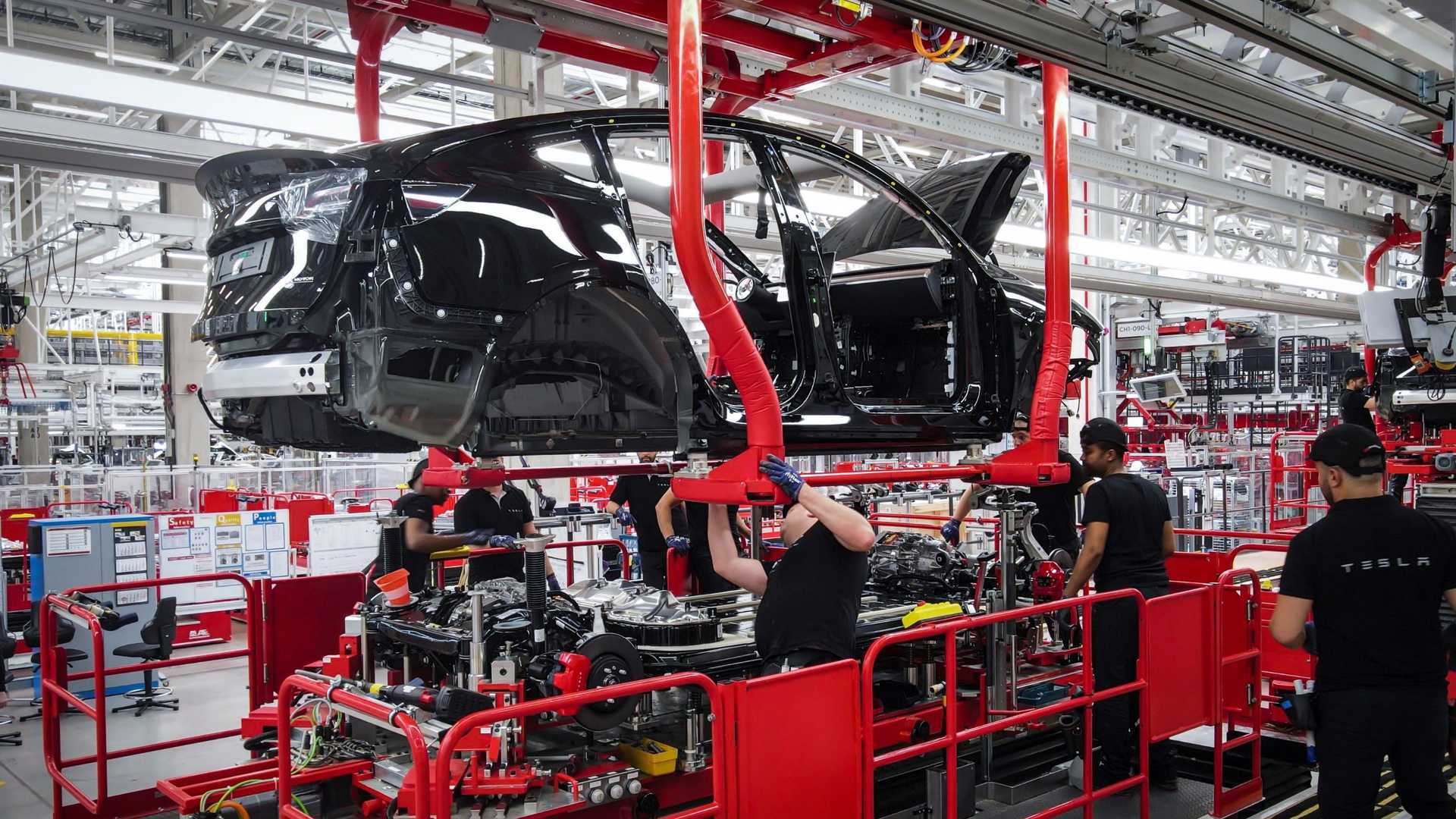
Every Tesla factory operates a “Digital Twin”—a virtual simulation of the entire production line. Sensors on every motor, press, and robotic arm feed data back to a central server. If a robot in Shanghai experiences a slight increase in torque resistance, the engineering team in California can see it, analyze the potential for failure, and push a software patch or schedule maintenance before the line ever stops. This level of technical oversight is what allows Tesla to maintain a high “First Time Through” (FTT) rate, ensuring that vehicles are built correctly the first time they move through the station.
By distributing its manufacturing across these high-tech hubs, Tesla has moved beyond the constraints of traditional logistics. Each Gigafactory is not merely a place where cars are bolted together; it is a software-defined engine of innovation that continues to evolve with every vehicle produced. From the casting presses of Texas to the paint booths of Berlin, the “where” of Tesla is a map of the future of industrial technology.
aViewFromTheCave is a participant in the Amazon Services LLC Associates Program, an affiliate advertising program designed to provide a means for sites to earn advertising fees by advertising and linking to Amazon.com. Amazon, the Amazon logo, AmazonSupply, and the AmazonSupply logo are trademarks of Amazon.com, Inc. or its affiliates. As an Amazon Associate we earn affiliate commissions from qualifying purchases.