
When enthusiasts and historians ask, “What year did Tesla come out?” the answer depends entirely on whether you are referring to the company’s legal incorporation, its first prototype, or the moment it fundamentally disrupted the global automotive industry with mass production. To understand Tesla’s timeline is to understand the evolution of the modern electric vehicle (EV) as a “computer on wheels.”
From its quiet inception in 2003 to the release of its first production car in 2008, Tesla’s journey is a roadmap of technological milestones. This article explores the specific years Tesla “came out” through its hardware iterations, software breakthroughs, and the engineering philosophy that redefined transportation for the 21st century.

The Genesis of Modern EV Tech: 2003–2008
While many associate Tesla exclusively with Elon Musk, the company was actually incorporated in July 2003 by Martin Eberhard and Marc Tarpenning. However, the world would not see a tangible product—the moment Tesla truly “came out” to the public—until several years later. This period was defined by the struggle to prove that lithium-ion batteries, previously reserved for laptops and cell phones, could power a high-performance vehicle.
The 2003 Founding and the AC Propulsion Heritage
In 2003, Tesla Motors was founded with a singular technological goal: to commercialize the electric drivetrain. The founders were inspired by the GM EV1, but it was the technology from a small company called AC Propulsion that served as the catalyst. By leveraging the tzero concept car’s lead-acid battery tech and converting it to lithium-ion, the early Tesla team realized they could achieve range and performance figures that were previously unthinkable. This was the technological “Big Bang” for the company, setting the stage for everything that followed.
The 2008 Roadster: Proving Lithium-Ion Viability
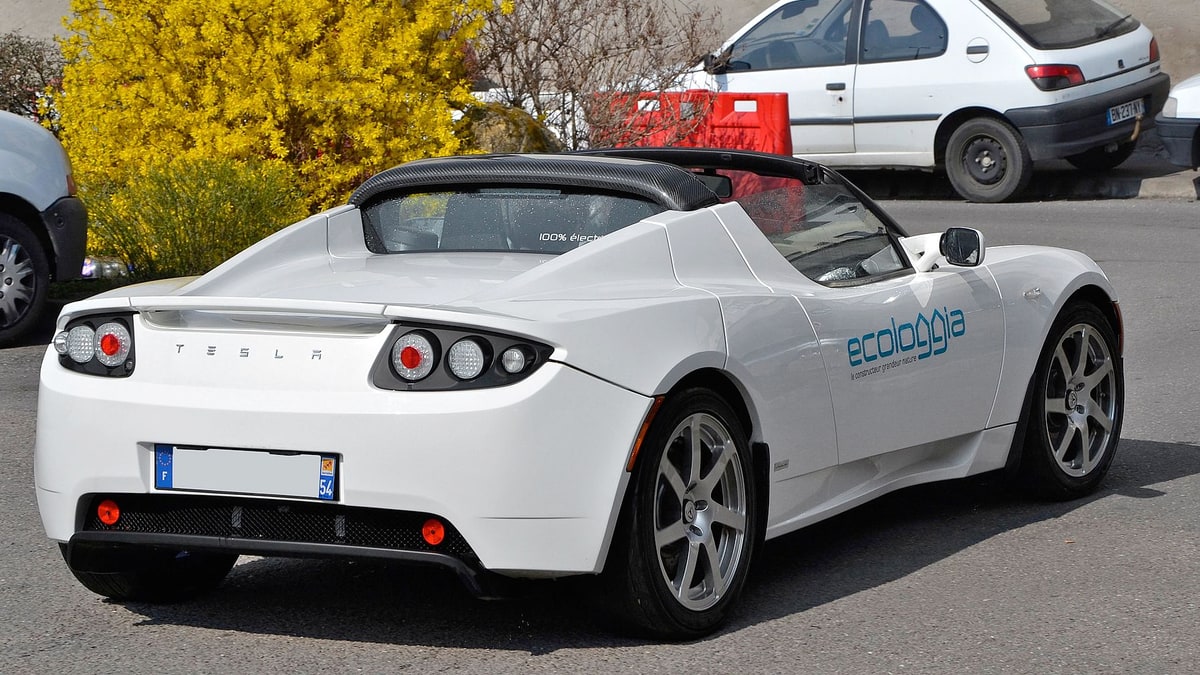
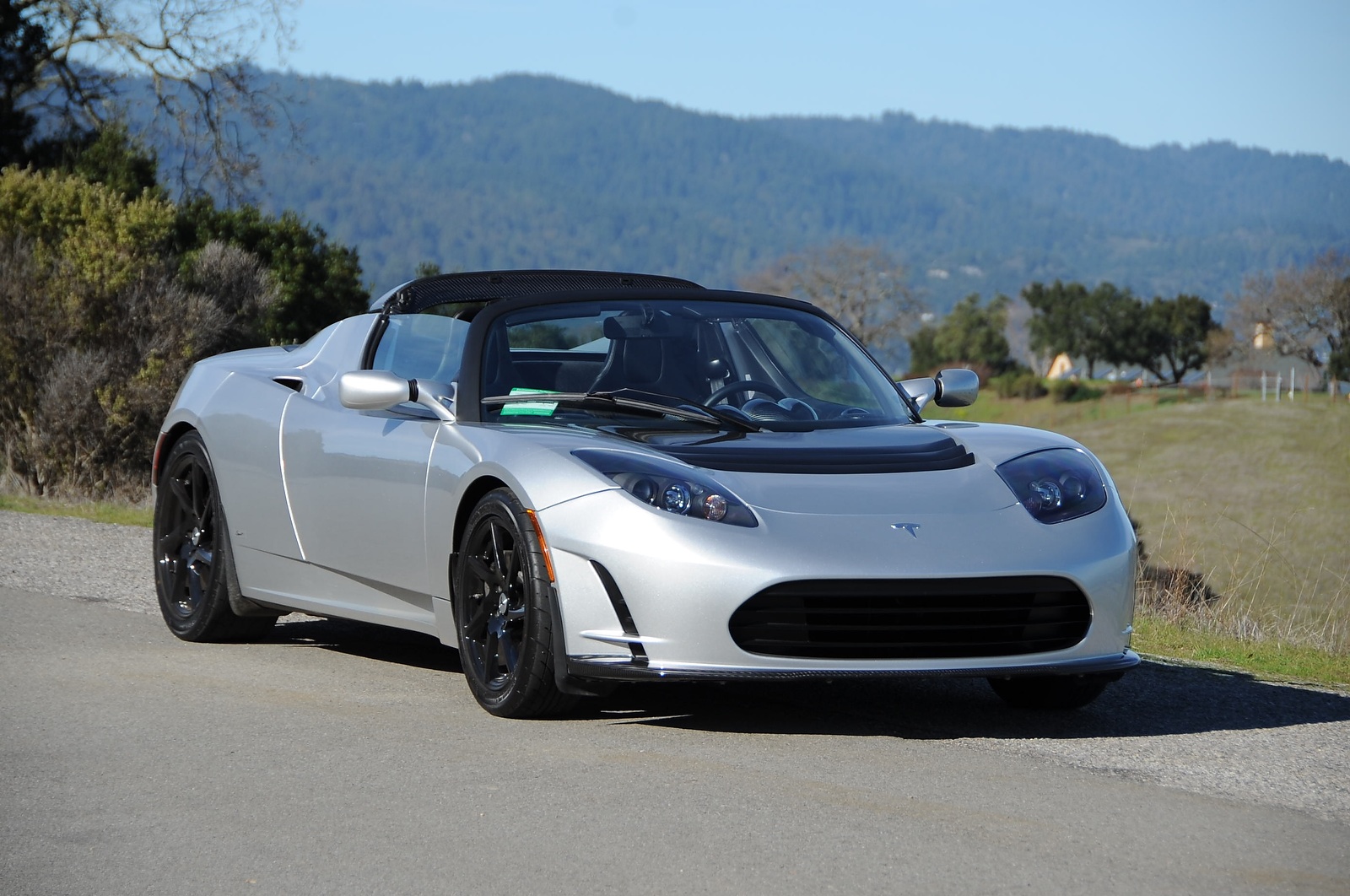
The definitive year Tesla “came out” to the automotive world was 2008. This was the year the first Tesla Roadster was delivered to customers. Unlike the golf carts or neighborhood electric vehicles of the era, the Roadster was a tech powerhouse. It utilized a battery pack consisting of 6,831 lithium-ion cells, a radical departure from the large-format cells competitors were testing.
The 2008 Roadster was more than a car; it was a proof of concept for three core technologies:
- Energy Density: Proving that small-cell architecture could provide over 200 miles of range.
- Thermal Management: Developing the liquid-cooling systems necessary to keep high-performance batteries stable.
- Power Electronics: Creating inverters capable of managing massive instantaneous torque.
The Software-Defined Vehicle Era: 2012–2015
If 2008 was about proving that electric cars could be fast, 2012 was the year Tesla proved they could be “smart.” When the Model S debuted in 2012, it introduced the concept of the “Software-Defined Vehicle” (SDV). This was the year Tesla truly came out as a technology company rather than just an automaker.
Model S and the Over-the-Air (OTA) Revolution
In 2012, the Model S arrived with a 17-inch vertical touchscreen that controlled nearly every vehicle function. While the hardware was impressive, the real tech breakthrough was the introduction of Over-the-Air (OTA) updates. Before Tesla, a car’s features were static from the day it left the factory. Tesla flipped this paradigm. Through Wi-Fi and cellular connections, the company could fix bugs, increase battery efficiency, and even improve 0-60 mph times while the owner slept. This established a new tech standard that the rest of the industry is still struggling to replicate.
The Dual Motor and Autopilot Hardware 1.0 (2014)
By 2014, Tesla pushed the boundaries of vehicle intelligence with the announcement of “Autopilot.” This marked the transition from basic cruise control to advanced driver-assistance systems (ADAS). By integrating a suite of sensors—including a forward-looking camera, radar, and ultrasonic sensors—Tesla moved the needle on machine vision in consumer tech. This was also the year they introduced the “D” variant (Dual Motor), which utilized digital torque vectoring to manage front and rear motors independently, achieving millisecond-level precision in traction control.
Scaling Innovation: The Model 3 and Mass Adoption
While the Roadster and Model S were high-end tech showcases, the year 2017 marked Tesla’s entry into the mass market with the Model 3. This era was characterized by a shift from “boutique” engineering to “manufacturing-as-a-product.”
Battery Architecture and the 2170 Cell
With the 2017 launch of the Model 3, Tesla introduced the 2170 battery cell, co-developed with Panasonic at the Gigafactory in Nevada. This cell was larger and more energy-dense than the 18650 cells used in earlier models. The technology allowed for better cooling and higher charge rates, enabling the “Supercharging” speeds that made long-distance EV travel viable for the average consumer. The Model 3 also simplified the vehicle’s interior to a single central screen, emphasizing a minimalist, tech-first user interface that prioritized future autonomous driving.
Full Self-Driving (FSD) and the Transition to Vision-Only
As the Model 3 and Model Y (released in 2020) scaled, Tesla’s software focus shifted toward Artificial Intelligence. The “Full Self-Driving” (FSD) computer, or Hardware 3, was an in-house silicon design optimized for neural networks. In a controversial move in 2021, Tesla “came out” with its “Tesla Vision” approach, removing radar sensors entirely in favor of an all-camera system. This represented a massive bet on AI and computer vision, asserting that a car could navigate the world exactly like a human: using eyes (cameras) and a brain (the FSD computer).
Future Tech Horizons: Cybertruck, AI, and Beyond
As we look past the initial years of Tesla’s emergence, the company’s definition of “coming out” has shifted from passenger cars to broader robotics and energy ecosystems. The current era is defined by extreme engineering and the push toward general AI.
The 4680 Cell and Structural Battery Packs
Tesla’s “Battery Day” in 2020 introduced the 4680 cell, a much larger form factor designed to be integrated into the vehicle’s structure itself. This technology, which began appearing in production vehicles in 2022 and 2023 (notably the Texas-made Model Y and the Cybertruck), treats the battery as a stressed member of the chassis. This reduces weight, improves rigidity, and lowers manufacturing costs. It is the pinnacle of current EV hardware integration, significantly reducing the number of parts required to build a car.
The Cybertruck: 800V Architecture and Steer-by-Wire
The 2023 release of the Cybertruck marked another technological leap. It introduced an 800-volt electrical architecture, allowing for faster charging and lighter wiring harnesses. More importantly, it debuted a “Steer-by-Wire” system. By removing the physical steering column and replacing it with electrical actuators and redundant motors, Tesla transitioned the mechanical connection of driving into a purely digital experience. This is a foundational technology for future autonomous vehicles where a steering wheel may not even be necessary.
From Cars to Robotics: Tesla Bot and Dojo
Today, Tesla is “coming out” as more than an EV company; it is an AI and robotics powerhouse. The development of the “Optimus” humanoid robot utilizes the same computer vision tech found in their cars. Simultaneously, the “Dojo” supercomputer—a custom-built AI training cluster—is being deployed to process the massive amounts of video data collected from millions of Tesla vehicles on the road. This data loop creates a technological moat that allows Tesla to refine its autonomous algorithms at a scale no other manufacturer can match.
Conclusion: A Legacy of Continuous Arrival
So, what year did Tesla come out?
- 2003 was the year the idea was born.
- 2008 was the year the EV became a high-performance reality.
- 2012 was the year the car became a software platform.
- 2017 was the year high-tech EVs became accessible to the masses.
- 2023 was the year Tesla pushed into the frontiers of 800V architecture and humanoid robotics.
Tesla’s history is not a single point in time, but a series of technological “releases.” Each milestone has pushed the boundaries of what is possible with batteries, software, and AI. By consistently prioritizing engineering innovation over traditional automotive cycles, Tesla has ensured that it is always “coming out” with the next generation of transformative technology. Whether it is through the lens of battery chemistry or autonomous software, Tesla’s impact on the tech world remains one of the most significant shifts of the 21st century.
aViewFromTheCave is a participant in the Amazon Services LLC Associates Program, an affiliate advertising program designed to provide a means for sites to earn advertising fees by advertising and linking to Amazon.com. Amazon, the Amazon logo, AmazonSupply, and the AmazonSupply logo are trademarks of Amazon.com, Inc. or its affiliates. As an Amazon Associate we earn affiliate commissions from qualifying purchases.