
The decision to transition from a traditional internal combustion engine (ICE) vehicle to an electric vehicle (EV) is no longer just an environmental statement; it is a significant financial strategy. Tesla, the vanguard of the EV revolution, has fundamentally altered how consumers perceive the value of an automobile. However, determining “how much a Tesla costs” is a complex calculation that extends far beyond the initial MSRP. To truly understand the financial commitment, one must analyze the purchase price, federal and state incentives, operating expenses, and the projected residual value.
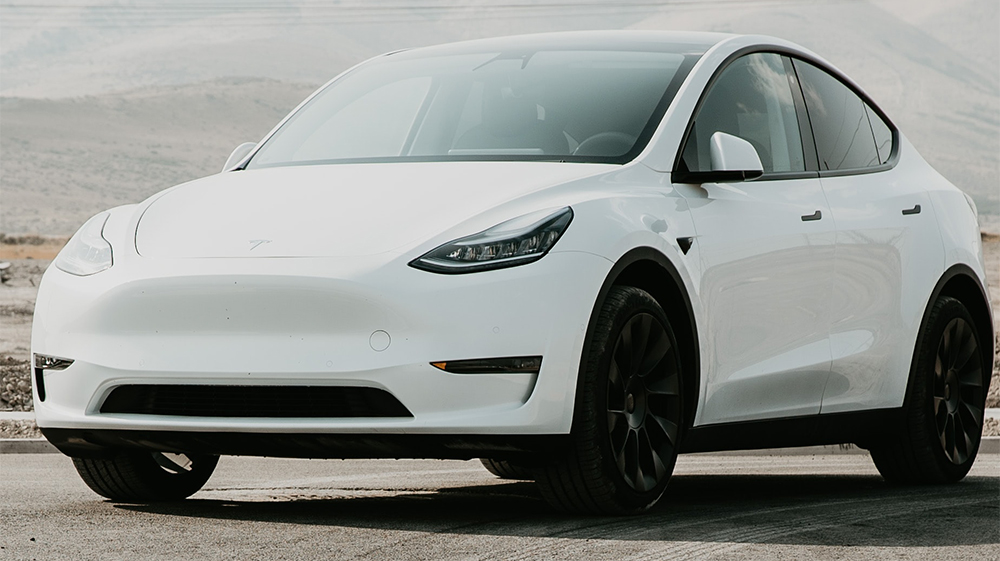
In this guide, we will dissect the financial architecture of Tesla ownership, providing a detailed breakdown for prospective buyers and investors looking to understand the capital requirements of the world’s most popular electric cars.
The Current Price Landscape: Breaking Down the Lineup
Tesla’s pricing strategy is notoriously fluid. Unlike traditional dealerships that negotiate on an individual basis, Tesla utilizes a direct-to-consumer model with transparent, albeit frequently changing, prices. These price fluctuations are often driven by battery material costs, manufacturing efficiencies, and market competition.
Entry-Level Accessibility: The Model 3 and Model Y
The Model 3 and Model Y represent the high-volume “mass market” segment of Tesla’s business. As of the current market cycle, the Model 3 remains the most affordable entry point. The Rear-Wheel Drive (RWD) base variant typically starts in the high $30,000 range. For those requiring more range and all-wheel-drive capability, the Long Range and Performance tiers can push the price into the $45,000 to $55,000 bracket.
The Model Y, a compact SUV, is currently the best-selling vehicle globally. Because of its popularity and utility, it commands a premium over the Model 3, generally starting in the low-to-mid $40,000s for the Long Range variant. For the budget-conscious consumer, these two models represent the most logical balance between upfront capital expenditure and long-term utility.
Luxury and Performance: The Model S and Model X
Moving up the financial ladder, the Model S (sedan) and Model X (SUV) are positioned as luxury flagship products. These vehicles are tailored for the high-net-worth individual who prioritizes performance and status. The Model S generally starts around $75,000, while the Model X, with its complex Falcon Wing doors and increased towing capacity, starts closer to $80,000.
For the “Plaid” versions—Tesla’s high-performance trim—buyers should expect to add a $15,000 to $20,000 premium. These models represent a significant jump in insurance premiums and registration fees, reflecting their higher market valuation.
The Cybertruck and Future Pricing Trajectories
The Cybertruck has introduced a new tier of pricing complexity. With its stainless-steel exoskeleton and unconventional design, the initial “Foundation Series” models have been priced at a premium, often exceeding $100,000. While Tesla aims to bring more affordable variants to market in the future, the Cybertruck currently occupies the top end of the brand’s price spectrum, appealing to early adopters with significant liquid capital.
Beyond the Sticker Price: Understanding Total Cost of Ownership (TCO)
In the world of personal finance, the “sticker price” is only the beginning. The Total Cost of Ownership (TCO) is the metric that truly defines whether a Tesla is a sound financial move. This includes the “fueling” costs, maintenance, and the secondary expenses that ICE owners often overlook.
Fuel Savings vs. Charging Infrastructure Costs
The most immediate financial benefit of Tesla ownership is the reduction in energy costs. On average, charging an EV at home costs significantly less than fueling a gasoline vehicle. Depending on local utility rates, a Tesla owner might spend $10 to $15 to “fill up” their battery, compared to $50 to $90 for a tank of premium gasoline. Over a five-year ownership period, this can result in $5,000 to $10,000 in direct savings.
However, new owners must account for the initial investment in charging infrastructure. A Tesla Wall Connector costs approximately $450, and professional installation by a certified electrician can range from $500 to $2,000 depending on the complexity of the home’s electrical panel. This is a one-time capital expenditure that should be factored into the Year 1 budget.
Maintenance and Long-Term Reliability Expenses
From a financial perspective, Teslas are simpler machines. They lack oil filters, spark plugs, timing belts, and complex transmissions. This leads to a marked reduction in routine maintenance costs. Tesla’s official maintenance schedule is sparse, focusing primarily on tire rotations, cabin air filter replacements every two years, and brake fluid tests.
One hidden cost, however, is tire wear. Due to the heavy weight of the battery packs and the instant torque provided by electric motors, Teslas tend to wear through tires faster than equivalent gasoline cars. Owners should budget for a new set of high-performance tires every 25,000 to 35,000 miles, which can cost between $1,000 and $1,600.

Insurance Premiums for High-Tech Electric Vehicles
Insurance is often the “sticker shock” for new Tesla owners. Because Teslas are high-tech machines with specialized sensors and aluminum-intensive frames, they are more expensive to repair following an accident. Furthermore, their high performance (acceleration) puts them in a higher risk bracket for some insurers. On average, insuring a Tesla can cost 20% to 50% more than a standard Toyota or Honda. It is vital for buyers to get an insurance quote before finalizing the purchase to ensure the monthly premium fits within their cash flow.
Strategic Financing and Maximizing Incentives
Navigating the financial incentives available for Teslas is perhaps the most critical step in reducing the effective cost of the vehicle. Through federal legislation and regional programs, the net price can be significantly lower than the MSRP.
Federal Tax Credits and Regional Rebates
In the United States, the Inflation Reduction Act has provided a “Point of Sale” federal tax credit of up to $7,500 for eligible Model 3 and Model Y variants. This is a powerful financial lever, as it acts as an immediate discount rather than a credit claimed the following year. However, eligibility depends on strict criteria, including the vehicle’s MSRP (under $55,000 for sedans and $80,000 for SUVs) and the buyer’s modified adjusted gross income (MAGI).
Additionally, many states, such as California, New York, and Colorado, offer supplementary rebates or tax credits ranging from $500 to $5,000. Combining these can effectively reduce the cost of a Model Y to the mid-$30,000 range, making it price-competitive with entry-level gasoline crossovers.
Leasing vs. Buying: Which Makes More Financial Sense?
The choice between leasing and buying a Tesla depends on the owner’s long-term financial goals.
- Leasing: This is often the best path for those who want lower monthly payments and plan to upgrade every three years to take advantage of newer battery technology. However, Tesla’s leases often have “no-buyback” clauses for certain models, meaning you cannot purchase the car at the end of the term to capture any equity.
- Financing/Buying: For those looking to build equity in an asset, buying is superior. With Tesla’s high mileage durability, a paid-off Tesla can provide years of “free” driving once the loan is cleared.
The Depreciation Factor and Resale Value Trends
A vehicle is typically a depreciating asset. For the financial-minded owner, understanding how a Tesla holds its value over time is paramount.
How Teslas Hold Value Compared to Traditional Luxury Cars
Historically, Teslas have boasted some of the best resale values in the automotive industry. This was driven by high demand and limited supply. However, as Tesla increased production capacity and implemented aggressive price cuts in 2023 and 2024, the used market saw a significant correction.
While Teslas still generally depreciate slower than high-end German luxury cars (which can lose 50% of their value in three years), they are no longer the “appreciating assets” that some enthusiasts once claimed. Prospective buyers should expect a standard depreciation curve, mitigated slightly by the vehicle’s long-range utility and brand desirability.
The Impact of Software Updates on Long-Term Asset Value
One unique financial aspect of Tesla is the Over-the-Air (OTA) software update system. Unlike a traditional car that remains frozen in time the day it leaves the lot, a Tesla improves. New features, improved battery efficiency, and safety enhancements are delivered via software. This “future-proofing” helps maintain the car’s relevance in the used market, potentially buoying its resale value compared to competitors whose tech becomes obsolete quickly.

Conclusion: Is a Tesla a Sound Financial Investment?
When answering “how much do Teslas cost,” one must look at the holistic financial picture. While the upfront cost is higher than many economy ICE vehicles, the combination of federal tax incentives, drastically lower fueling costs, and reduced maintenance makes the “Net Present Value” of a Tesla highly attractive.
For a consumer with a stable income and the ability to charge at home, a Tesla often represents a superior financial choice over a five-to-ten-year horizon. It is a transition from an “operating expense” heavy lifestyle (gas and oil) to a “capital expenditure” focused model (higher upfront cost but lower recurring fees). By strategically timing the purchase to coincide with tax incentives and choosing the model that best fits their utility needs, owners can enjoy a premium tech experience that aligns with a disciplined personal finance strategy.
aViewFromTheCave is a participant in the Amazon Services LLC Associates Program, an affiliate advertising program designed to provide a means for sites to earn advertising fees by advertising and linking to Amazon.com. Amazon, the Amazon logo, AmazonSupply, and the AmazonSupply logo are trademarks of Amazon.com, Inc. or its affiliates. As an Amazon Associate we earn affiliate commissions from qualifying purchases.