
In the world of high-stakes investing, few companies evoke as much passion, volatility, and scrutiny as Tesla, Inc. For years, Tesla was the poster child for the “infinite growth” narrative, propelled by a charismatic CEO and a first-mover advantage in the electric vehicle (EV) space. However, the financial narrative has shifted significantly over the last twenty-four months. Investors who once viewed Tesla as a bulletproof tech-adjacent stock are now asking a sobering question: How much has Tesla actually lost?
To answer this, one must look beyond simple stock price fluctuations and examine the erosion of market capitalization, the compression of industry-leading profit margins, and the opportunity costs associated with its ambitious but delayed product roadmap.
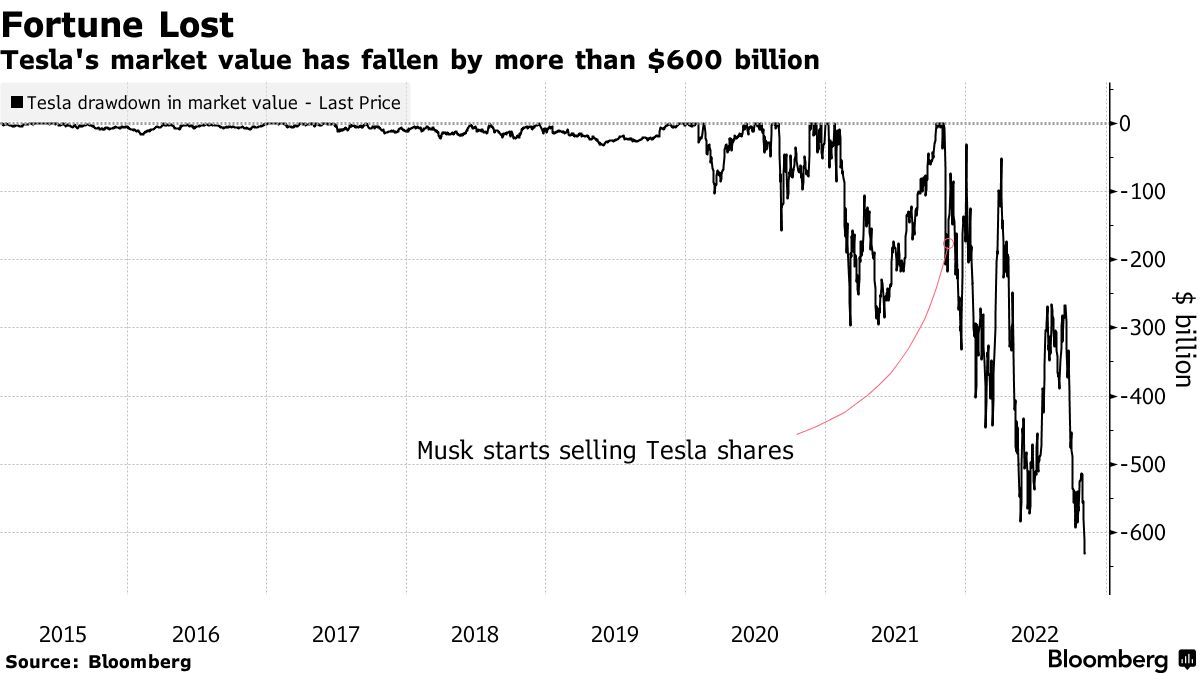
The Trillion-Dollar Retraction: Measuring Market Capitalization Loss
The most visible metric of Tesla’s “loss” is its market capitalization. At its zenith in November 2021, Tesla’s valuation soared past $1.2 trillion, making it one of the most valuable companies in human history. At that point, Tesla was worth more than the next nine largest automakers combined. However, the descent from those heights has been both rapid and periodically staggering.
Peak Valuation vs. Current Reality
Since its all-time high, Tesla has seen hundreds of billions of dollars in paper wealth evaporate. During various market corrections in 2022 and 2024, the company’s market cap dipped below the $500 billion mark—a loss of over $700 billion from its peak. While the stock often rallies on news of AI breakthroughs or autonomous driving promises, the fundamental “floor” of the company’s valuation has been tested repeatedly. This loss represents more than just a number; it reflects a recalibration of investor expectations from viewing Tesla as a high-growth software company to viewing it as a capital-intensive manufacturing firm.
The P/E Ratio Compression
A significant portion of Tesla’s financial “loss” isn’t just in raw dollars, but in its valuation multiple. Historically, Tesla traded at a Price-to-Earnings (P/E) ratio that defied gravity, often exceeding 100x or even 200x forward earnings. As the market matured and interest rates rose, that multiple compressed significantly. For investors, this “multiple contraction” means that even when Tesla earns a profit, the market is no longer willing to pay a massive premium for those earnings. This shift alone accounts for a massive loss in perceived shareholder value, as the “Musk Premium” begins to wane in the face of traditional fundamental analysis.
The Margin War: How Price Cuts Impacted the Bottom Line
For years, Tesla’s “moat” was its incredible efficiency and high margins. While traditional automakers struggled with 5% to 8% operating margins on internal combustion vehicles, Tesla was boasting margins north of 25%. However, the landscape changed as global competition intensified, particularly from Chinese manufacturers like BYD and legacy players like Hyundai and Volkswagen.
The Transition from Luxury to Commodity Pricing
To maintain its volume growth targets, Tesla embarked on an aggressive series of price cuts beginning in late 2022. While these cuts successfully moved inventory, they came at a steep financial cost. Tesla’s automotive gross margins (excluding regulatory credits) plummeted from the high 20s to the mid-teens. In the world of business finance, this is a profound loss of “earning power.” Every dollar lost in margin is a dollar that cannot be reinvested into R&D or returned to shareholders. The company essentially traded its “prestige” pricing for “utility” pricing, a move that has fundamentally altered its income statement.
Inventory Challenges and Capital Efficiency
Tesla’s “loss” can also be measured in its rising inventory levels. For much of its history, Tesla sold every car it made before it even left the factory. Recently, however, the gap between production and deliveries has widened. Holding thousands of unsold vehicles represents “trapped capital”—money that is sitting on lots rather than generating interest or being used for operations. This inefficiency forces the company to spend more on storage and logistics, further chipping away at the net income that investors have come to rely on.

The Opportunity Cost of Delayed Innovation and R&D Spend
In finance, loss is not always measured by money that left the bank; it is often measured by the money that never came in due to missed opportunities. Tesla’s financial trajectory has been hampered by significant delays in its most anticipated products, leading to what economists call “opportunity cost.”
The Cybertruck and the Capital Sinkhole
The Cybertruck is perhaps the most prominent example of a “financial drain” in Tesla’s recent history. While it represents a technological marvel to some, from a business finance perspective, it has been a difficult endeavor. The years of delays meant that billions in R&D and tooling were spent without any corresponding revenue. Furthermore, the complexity of the stainless-steel exoskeleton has made the “ramp-to-profitability” much longer than it was for the Model 3 or Model Y. The money lost during this “valley of death” production phase has weighed heavily on Tesla’s free cash flow.
Full Self-Driving (FSD) and Deferred Revenue
Tesla has a unique financial quirk: it sells “Full Self-Driving” software but cannot recognize all of that revenue immediately because the product is not yet fully “delivered” in a regulatory or technical sense. Billions of dollars in deferred revenue sit on Tesla’s balance sheet. The “loss” here is the delay in recognizing this high-margin software revenue. If FSD fails to reach Level 4 or Level 5 autonomy in the near future, Tesla faces the risk of not only losing that future revenue but potentially facing refund demands or legal settlements, which would be a catastrophic hit to its cash reserves.
Macroeconomic Headwinds and the Cost of Capital
No company exists in a vacuum, and Tesla’s financial losses are inextricably linked to the broader economic environment. The transition from a low-interest-rate environment to a high-interest-rate environment has been particularly punishing for Tesla’s business model.
The Interest Rate Impact on Consumer Purchasing Power
Because most cars are bought on credit, rising interest rates act as a de facto price increase for consumers. Tesla has had to “lose” money on its own margins just to offset the increased borrowing costs for its customers. If a monthly payment for a Model Y rises by $150 due to interest rates, Tesla often feels pressured to drop the vehicle price by several thousand dollars to keep the payment affordable. This dynamic has transferred the “loss” of consumer purchasing power directly onto Tesla’s balance sheet.
Competition and the Erosion of Market Share
The final area of loss is market share. In the United States, Tesla’s share of the EV market once hovered around 70-80%. Today, that number has slipped toward 50% and continues to trend downward as more options enter the market. While the overall “pie” of the EV market is growing, Tesla’s shrinking slice means it must spend more on marketing and incentives—costs it previously avoided entirely. The loss of a near-monopoly status means Tesla must now operate like a “normal” car company, which involves higher customer acquisition costs and lower per-unit profitability.

Conclusion: A Strategic Pivot or a Permanent Decline?
When we quantify “how much Tesla has lost,” the answer is multifaceted. It has lost over $600 billion in peak market valuation, nearly 10 percentage points in gross margin, and its uncontested dominance in the global EV market. However, in the realm of business finance, these losses are often viewed as the “cost of doing business” during a transition from a niche growth story to a global industrial titan.
Tesla remains a highly profitable company with a fortress balance sheet, boasting tens of billions in cash and minimal debt. Its “losses” are largely relative to the astronomical expectations set during the pandemic-era tech bubble. For the savvy investor, the question isn’t just how much Tesla has lost, but whether the current, leaner valuation represents a more sustainable foundation for the next decade of fiscal growth. As the company pivots toward AI, robotics, and energy storage, the financial community will be watching closely to see if Tesla can reclaim its lost trillions, or if the era of “Tesla exceptionalism” has officially come to an end.
aViewFromTheCave is a participant in the Amazon Services LLC Associates Program, an affiliate advertising program designed to provide a means for sites to earn advertising fees by advertising and linking to Amazon.com. Amazon, the Amazon logo, AmazonSupply, and the AmazonSupply logo are trademarks of Amazon.com, Inc. or its affiliates. As an Amazon Associate we earn affiliate commissions from qualifying purchases.