
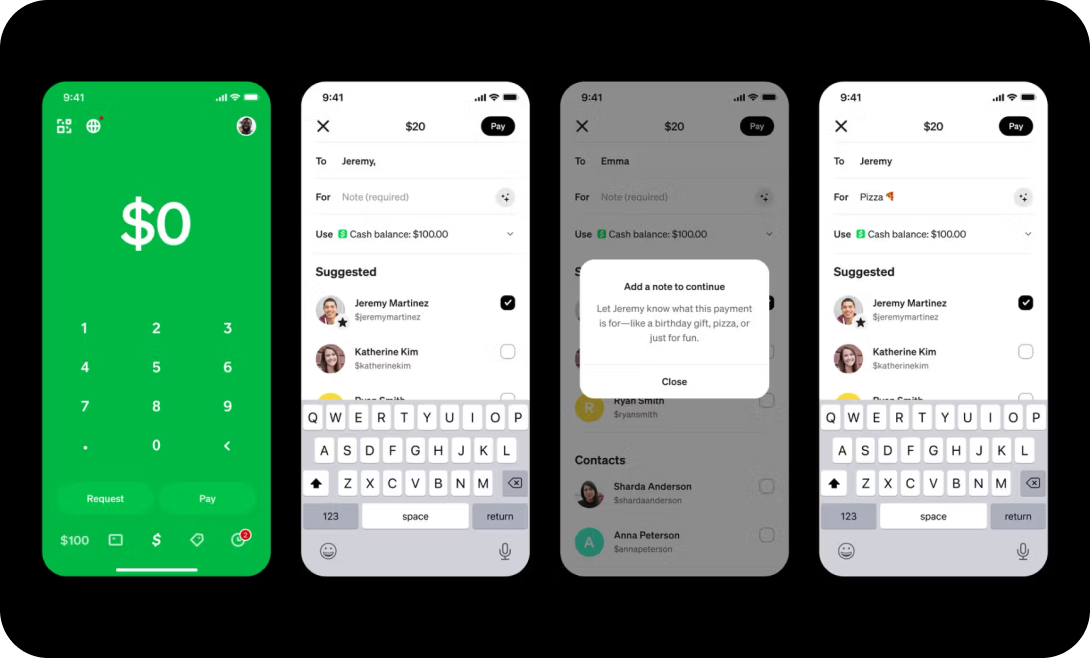
In the rapidly evolving landscape of digital finance, peer-to-peer (P2P) payment platforms have transitioned from niche conveniences to essential financial tools. Among these, Cash App has emerged as a dominant force, offering a seamless interface for sending money, investing in stocks, and managing cryptocurrency. However, for many users—ranging from casual diners splitting a bill to entrepreneurs managing small business expenses—the primary question remains: how much can you actually send on Cash App? Understanding these limits is not just about knowing a number; it is about understanding the regulatory environment, the importance of identity verification, and how to optimize your digital wallet for your personal financial goals.
Understanding the Tiered Structure of Cash App Limits
Cash App operates on a tiered system designed to balance user accessibility with financial security and regulatory compliance. When you first download the app and link a debit card or bank account, you are categorized as an unverified user. This status comes with specific constraints designed to mitigate risk while allowing you to test the platform’s utility.
The Unverified User Experience
For a new or unverified account, Cash App imposes strict ceilings on transaction volumes. Currently, unverified users are limited to sending up to $250 within any 7-day period. Additionally, there is a limit on the amount of money an unverified account can receive, which is typically capped at $1,000 within any 30-day period.
These limits are intentionally conservative. From a financial management perspective, $250 a week is often sufficient for minor social transactions, such as reimbursing a friend for coffee or a movie ticket. However, if you intend to use Cash App for more significant financial obligations—such as paying rent, settling large debts, or conducting business transactions—these initial limits will quickly become a bottleneck. The 7-day and 30-day windows are rolling, meaning they do not reset on the first of the month but rather based on the timing of your previous transactions.
Navigating the Verification Process
To transition from a casual user to a power user, you must undergo the verification process. This is a standard procedure in the FinTech industry, aligned with “Know Your Customer” (KYC) regulations intended to prevent fraud and money laundering. Verification requires you to provide your full legal name, date of birth, and the last four digits of your Social Security Number (SSN). In some instances, the platform may request additional documentation, such as a photo of a government-issued ID or a live “selfie” to confirm your identity.
Once verified, your sending limit undergoes a massive expansion. While specific limits can vary based on account history and regional regulations, most verified users see their sending limit increase to $7,500 per week. Perhaps more importantly, the limit on receiving funds is removed entirely, allowing for “unlimited” incoming transfers. This shift is transformative for personal finance management, as it allows the app to function more like a traditional bank account for high-value movements.
Beyond Peer-to-Peer: Cash Card, Bitcoin, and Investment Limits
While the $7,500 weekly sending limit is the most cited figure, Cash App’s financial ecosystem extends far beyond simple person-to-person transfers. As the platform has integrated more complex financial services, it has introduced specific limits for its debit card, cryptocurrency exchange, and stock trading features.
Everyday Spending with the Cash Card
The Cash Card—a Visa debit card linked directly to your Cash App balance—offers a different set of constraints. For users who rely on the Cash Card for daily expenses, it is important to note that the spending limit is typically $7,000 per transaction, with a daily limit of $7,000 and a monthly limit of $15,000.
ATM withdrawals are also restricted. Verified users can generally withdraw up to $310 per transaction, $1,000 per 7-day period, and $1,000 per 30-day period. For those using Cash App as a primary vehicle for liquidity, these ATM limits require careful planning. If you anticipate needing a large amount of physical cash for a purchase, you may need to withdraw funds over several weeks or utilize a “Cash Out” to a traditional bank account where withdrawal limits are higher.
Managing Cryptocurrency and Equity Investments
Cash App has become a popular entry point for retail investors interested in Bitcoin and fractional shares. However, investing through the app comes with its own regulatory boundaries. For Bitcoin, there is a limit on how much you can purchase, but perhaps more relevant are the withdrawal limits. Users can typically withdraw up to $2,000 worth of Bitcoin every 24 hours and up to $5,000 within any 7-day period. These limits ensure that while the platform provides high liquidity, it also maintains a safety net against rapid, unauthorized movements of volatile assets.
Stock trading limits are generally less restrictive regarding the “amount” you can buy (provided you have the balance), but they are subject to market hours and settlement periods common in the financial industry. Understanding these nuances is critical for anyone looking to build a diversified portfolio within a single mobile application.
The Regulatory Landscape: Why Limits Matter in FinTech

To many users, transaction limits feel like an unnecessary hurdle. However, from a broader financial perspective, these boundaries are essential for the stability of the digital economy. Cash App, owned by Block, Inc., must adhere to federal and state financial laws that govern how money moves across borders and between individuals.
Anti-Money Laundering (AML) and KYC Compliance
The primary reason for the $250 unverified limit is to prevent the platform from being used for illicit activities. Financial institutions are required by law to monitor transactions for patterns that suggest money laundering or the financing of illegal enterprises. By requiring identity verification for higher limits, Cash App ensures that there is a clear “paper trail” for large financial movements. This transparency is a cornerstone of modern personal finance, protecting both the individual user and the integrity of the national financial system.
Balancing User Convenience with Financial Security
Limits also serve as a vital security feature for the user. If your account were to be compromised, a $250 limit on an unverified account acts as an immediate “kill switch” for potential losses. Even for verified accounts, the $7,500 weekly limit provides a window of time for users to notice unauthorized activity and contact support before their entire financial reserve is depleted. In the world of digital banking, where transactions are often instantaneous and irreversible, these built-in speed bumps are a necessary trade-off for the convenience of 24/7 money movement.
Strategic Comparisons: Cash App in the P2P Ecosystem
When deciding whether Cash App is the right tool for your financial needs, it is helpful to compare its limits and functionality with other major players in the market, such as Venmo and Zelle.
Cash App vs. Venmo: A Limit Comparison
Venmo, owned by PayPal, is perhaps Cash App’s closest competitor. Venmo also uses a verification system. Unverified Venmo users have a weekly spending limit of roughly $299.99. Once verified, the limit increases to a combined weekly limit of $60,000 (though person-to-person transfers are capped at $4,999.99).
While Venmo’s total weekly limit is higher on paper, Cash App’s $7,500 weekly limit for P2P transfers is often more generous for direct person-to-person movement. Furthermore, Cash App’s integration of Bitcoin and stocks gives it a “wealth management” edge that Venmo’s social-first platform sometimes lacks.
The Zelle Advantage for Bank-Direct Transfers
Zelle operates differently because it is integrated directly into the apps of major traditional banks. Because Zelle moves money directly between bank accounts, its limits are determined by the specific bank you use. For example, Chase or Bank of America might allow daily limits of $2,000 to $5,000. For users who need to move very large sums of money instantly—such as a $3,000 rent payment—Zelle often provides a higher “out-of-the-gate” limit than an unverified Cash App account. However, Zelle lacks the “wallet” features of Cash App, such as the ability to hold a balance, use a dedicated debit card, or invest in assets.
Optimizing Your Cash App Account for Long-Term Financial Health
To make the most of Cash App, users should view it as a component of their broader financial strategy rather than just a way to pay back a friend for lunch. Managing your limits effectively requires proactive steps.
Tips for Secure High-Volume Transactions
If you are planning a large transaction that nears your $7,500 limit, communication is key. Ensure that both you and the recipient are verified. Attempting to send a large sum to an unverified recipient can sometimes trigger security flags, resulting in the payment being “Pending” or “Declined for your protection.”
Additionally, always utilize two-factor authentication (2FA). When dealing with the higher limits associated with verified accounts, your Cash App becomes a significant financial asset. Protecting it with a PIN, fingerprint, or face ID is not just recommended; it is a fundamental practice of digital financial literacy.

Future-Proofing Your Digital Wallet
The landscape of P2P limits is not static. As inflation impacts the economy and digital adoption grows, platforms frequently adjust their limits to meet user demand. By maintaining a verified account and a clean transaction history, you position yourself to benefit from future limit increases or new features, such as increased credit offerings or advanced savings tools.
In conclusion, while the question “how much can you send on Cash App” has a simple answer—$250 for unverified and usually $7,500 for verified users—the implications run deep. These limits represent a sophisticated intersection of user experience, legal compliance, and personal security. By understanding and respecting these boundaries, you can harness the full power of FinTech to manage your money with confidence and precision.
aViewFromTheCave is a participant in the Amazon Services LLC Associates Program, an affiliate advertising program designed to provide a means for sites to earn advertising fees by advertising and linking to Amazon.com. Amazon, the Amazon logo, AmazonSupply, and the AmazonSupply logo are trademarks of Amazon.com, Inc. or its affiliates. As an Amazon Associate we earn affiliate commissions from qualifying purchases.