
The transformation of the smartphone from a communication device into a comprehensive digital command center is perhaps the most significant technological shift of the 21st century. Among its many capabilities, the ability to facilitate financial transactions—moving from physical plastic to digital tokens—has revolutionized how we interact with the physical world. Paying with your phone is no longer a futuristic gimmick; it is a sophisticated orchestration of hardware, software, and high-level encryption that provides a more secure and efficient experience than the traditional wallet.
This guide explores the technical architecture behind mobile payments, the ecosystems that power them, and the security protocols that ensure your digital identity remains protected in an increasingly connected world.
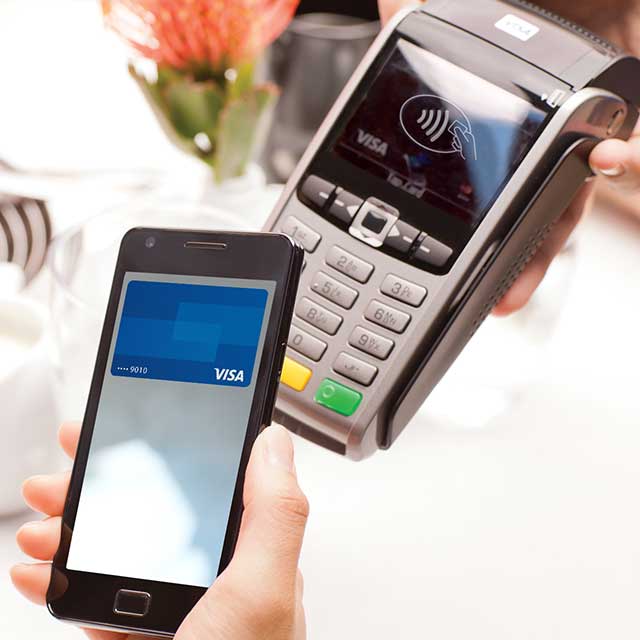
The Underlying Hardware: How Your Phone Communicates with Terminals
To understand how to pay with your phone, one must first understand the radio frequency technologies that allow two devices to “talk” to each other without physical contact. This is the foundation of the contactless revolution.
Near Field Communication (NFC)
The industry standard for mobile payments is Near Field Communication (NFC). This is a short-range, high-frequency wireless communication technology that operates at 13.56 MHz. Unlike Bluetooth, which has a wide range, NFC is designed for proximity, requiring the phone to be within four centimeters of the payment terminal. This physical proximity is a built-in security feature, preventing accidental or long-range “skimming” of your data. When you hold your phone near a reader, the two devices create a temporary electromagnetic field, allowing for the rapid exchange of encrypted data packets.
Secure Element (SE) and TEE
Within your smartphone lies a dedicated hardware component known as the Secure Element (SE). This is a tamper-resistant chip—separate from the main processor—designed to store sensitive payment data securely. In some modern architectures, this is replaced or supplemented by a Trusted Execution Environment (TEE), a secure area of the main processor. These hardware-level silos ensure that even if your phone is infected with malware, the malicious software cannot access the cryptographic keys required to authorize a payment.
QR Code Integration
While NFC dominates the Western market, QR (Quick Response) code technology is the backbone of mobile payments in many other regions. This method utilizes the phone’s camera to scan a 2D barcode or displays a code on the screen for the merchant to scan. From a technical perspective, this is a software-heavy approach that doesn’t require specialized NFC hardware, making it a highly accessible bridge for older smartphones and budget devices.
The Major Ecosystems: Apple Pay, Google Wallet, and Beyond
The software layer of mobile payments is managed by “digital wallets.” These applications act as the interface between your bank’s data and the phone’s hardware.
Apple Pay and the iOS Architecture
Apple Pay is a closed-loop system integrated deeply into iOS and watchOS. Its primary technical advantage is its “Privacy by Design” philosophy. Apple does not store your original credit or debit card numbers on its servers or on the device itself. Instead, it assigns a unique Device Account Number that is encrypted and stored in the Secure Element. Every transaction is authorized by a one-time unique dynamic security code, ensuring that the merchant never sees your actual financial details.
Google Wallet and the Android Open Ecosystem
Google Wallet (formerly Google Pay) operates on the Android platform, which presents unique challenges due to the diversity of hardware manufacturers. Google utilizes Host Card Emulation (HCE), a software architecture that allows a phone to represent a smart card on a wireless terminal without relying solely on a physical Secure Element. This allows mobile payments to function across a wider variety of devices, utilizing Google’s secure cloud servers to manage the heavy lifting of transaction processing.
Samsung Pay and Legacy Compatibility
Samsung Pay historically distinguished itself through a technology called Magnetic Secure Transmission (MST). This allowed the phone to emit a magnetic signal that mimicked the “swipe” of a traditional magnetic stripe card. While Samsung has transitioned more toward NFC in recent years, their technical contribution showed how software and hardware could bridge the gap between old-school analog terminals and modern digital ecosystems.
Setting Up and Authenticating Mobile Transactions

Moving from a physical card to a mobile setup requires a series of technical handshakes between the user, the device, and the financial institution.
The Provisioning Process
When you “add a card” to your phone, you aren’t just taking a picture of the plastic. The app initiates a process called provisioning. The phone sends the card details to the network (Visa, Mastercard, etc.), which then contacts your bank. The bank replaces your card number with a “token”—a string of random numbers. This token is then pushed to your phone’s Secure Element. This ensures that the sensitive data never actually lives on your device in its raw form.
Biometric Authentication Layers
One of the greatest technical upgrades mobile payments offer over plastic cards is mandatory multi-factor authentication. A lost credit card can be tapped by anyone; a lost phone requires biometric verification. Modern phones utilize:
- Capacitive or Ultrasonic Fingerprint Sensors: Mapping the ridges of a finger to unlock the payment app.
- 3D Facial Mapping (FaceID): Projecting thousands of infrared dots to create a depth map of the user’s face.
These systems ensure that the “Intent to Pay” is verified by the legitimate owner of the device, adding a layer of security that traditional cards simply cannot match.
Software Updates and Patch Management
For mobile payments to remain secure, the device’s operating system must be kept up to date. Security patches often include updates to the NFC controller firmware and the encryption libraries used by the digital wallet. This technical maintenance is critical for protecting against “zero-day” exploits that could potentially intercept data during the millisecond-long handshake between the phone and the terminal.
The Security Protocol: Tokenization and Encryption
The most common question regarding paying with a phone is: “Is it safe?” From a technical standpoint, it is significantly safer than using a physical card.
The Power of Tokenization
The core of mobile payment security is tokenization. In a traditional transaction, the 16-digit card number (PAN) is transmitted to the merchant. If the merchant’s database is hacked, your card is compromised. In a mobile transaction, the merchant only receives a “token.” This token is useless outside of that specific transaction context. Even if a hacker intercepts the data, they cannot use it to make another purchase because the token is mathematically tied to a specific device and a specific one-time cryptogram.
End-to-End Encryption (E2EE)
From the moment the NFC signal leaves your phone to the moment it reaches the payment processor, the data is wrapped in multiple layers of encryption. This ensures that the information is unreadable to any “man-in-the-middle” attacks. The use of Advanced Encryption Standard (AES) 256-bit encryption—the same standard used by governments to protect classified information—is common practice in the mobile payment pipeline.
Remote Kill Switches and Data Protection
In the event of hardware loss, the “Find My” (Apple) or “Find My Device” (Google) ecosystems allow for an immediate remote wipe of payment credentials. Because the data stored on the phone consists of tokens rather than actual card numbers, the user can “suspend” the device’s ability to pay through a web interface without needing to cancel their physical plastic cards. This decoupling of the digital token from the physical account is a major technological advantage.
The Future of Frictionless Tech: Wearables and Beyond
As we look toward the next decade, the act of “paying with your phone” is evolving into “paying with your presence.”
Wearable Integration
Smartwatches and fitness trackers are now equipped with miniaturized NFC chips. The technical challenge here is maintaining battery efficiency while powering a secure radio frequency. The integration of payment tech into ultra-low-power devices represents a peak in hardware optimization, allowing users to leave their phones behind entirely during a run or a commute.
Biometric Terminals and Ambient Commerce
We are seeing the rise of “Just Walk Out” technology, where computer vision and AI sensors track what a user picks up in a store. Here, the phone acts as the digital anchor, identifying the user via Bluetooth Low Energy (BLE) or Ultra-Wideband (UWB) as they enter the premises. The transaction happens in the background, orchestrated by cloud servers, removing the need to even pull the phone out of a pocket.

Central Bank Digital Currencies (CBDCs)
Technologically, the next frontier is the integration of digital currencies directly into the phone’s OS. This would move mobile payments away from being a “wrapper” for traditional bank accounts and toward being a native digital ledger. This will require new standards in blockchain integration and decentralized identity protocols, ensuring that the phone remains the most secure vault in the user’s possession.
In conclusion, paying with your phone is a masterclass in modern engineering. It synthesizes hardware security, wireless communication, and advanced cryptography to create a system that is faster and more secure than any payment method that preceded it. As these technologies continue to converge, the physical wallet will likely become a relic of the past, replaced by the sophisticated, encrypted silicon in our pockets.
aViewFromTheCave is a participant in the Amazon Services LLC Associates Program, an affiliate advertising program designed to provide a means for sites to earn advertising fees by advertising and linking to Amazon.com. Amazon, the Amazon logo, AmazonSupply, and the AmazonSupply logo are trademarks of Amazon.com, Inc. or its affiliates. As an Amazon Associate we earn affiliate commissions from qualifying purchases.