
Navigating the American tax system can feel like a daunting task, particularly for those who have transitioned away from the traditional W-2 employment model. While full-time employees often have their taxes automatically deducted from every paycheck, entrepreneurs, freelancers, and investors face a different set of rules. The Internal Revenue Service (IRS) operates on a “pay-as-you-go” philosophy, meaning that if your income isn’t subject to withholding, you are responsible for making payments throughout the year.
Failure to understand the “how” and “when” of estimated taxes can lead to unexpected financial strain and costly penalties. This guide provides an in-depth look at the mechanics of estimated taxes, helping you manage your cash flow, remain compliant with federal law, and optimize your financial health.
Understanding the Fundamentals: Who Needs to Pay Estimated Taxes?
The first step in mastering your finances is determining whether the estimated tax requirements apply to you. In the eyes of the IRS, taxes must be paid as income is earned or received during the year. For most people, this happens through employer withholding. However, if you are self-employed or receive significant non-wage income, the responsibility of “withholding” falls entirely on your shoulders.
The “Pay-As-You-Go” System Explained
The United States tax system is not an annual lump-sum system, though it often feels that way during the April filing season. Instead, it is designed to collect revenue incrementally. When you work a standard job, your employer calculates your liability and sends a portion of your check to the government every pay period. When you are the employer—or when your income comes from sources like dividends or rent—you must replicate this process manually through quarterly payments.
The $1,000 Rule for Individuals and Businesses
Generally, you are required to make estimated tax payments if you expect to owe at least $1,000 in tax for the current year after subtracting your withholding and refundable credits. This rule applies to individuals, sole proprietors, partners, and S corporation shareholders. For corporations, the threshold is typically lower; they generally must make estimated payments if they expect to owe $500 or more. If you find yourself in the middle of a profitable year and haven’t had any tax withheld, you likely fall into this category.
Identifying Your Income Sources
It isn’t just “business profit” that triggers the need for estimated payments. You must account for all taxable income that does not have withholding. This includes:
- Self-Employment Income: Revenue from freelancing, consulting, or side hustles.
- Interest and Dividends: Earnings from savings accounts or stock portfolios.
- Capital Gains: Profits from the sale of assets like real estate or securities.
- Rental Income: Payments received from tenants.
- Prizes and Awards: Significant gambling winnings or professional prizes.
Calculating Your Liability: How Much Do You Owe?
Once you determine that you are required to pay, the next challenge is calculation. Unlike a W-2 form that does the math for you, estimated taxes require a proactive approach to accounting. Because you are paying for the current year based on projections, precision is key to avoiding underpayment or overpayment.
Using Form 1040-ES and Previous Year Records
The IRS provides Form 1040-ES, “Estimated Tax for Individuals,” which contains a worksheet to help you estimate your tax liability. To use this effectively, you should have your tax return from the previous year at hand. You will need to estimate your expected adjusted gross income (AGI), taxable income, taxes, deductions, and credits for the year. While it is impossible to be 100% accurate if your income fluctuates, using your prior year’s data as a baseline is the industry-standard starting point.
The Safe Harbor Rule: Avoiding Underpayment Penalties
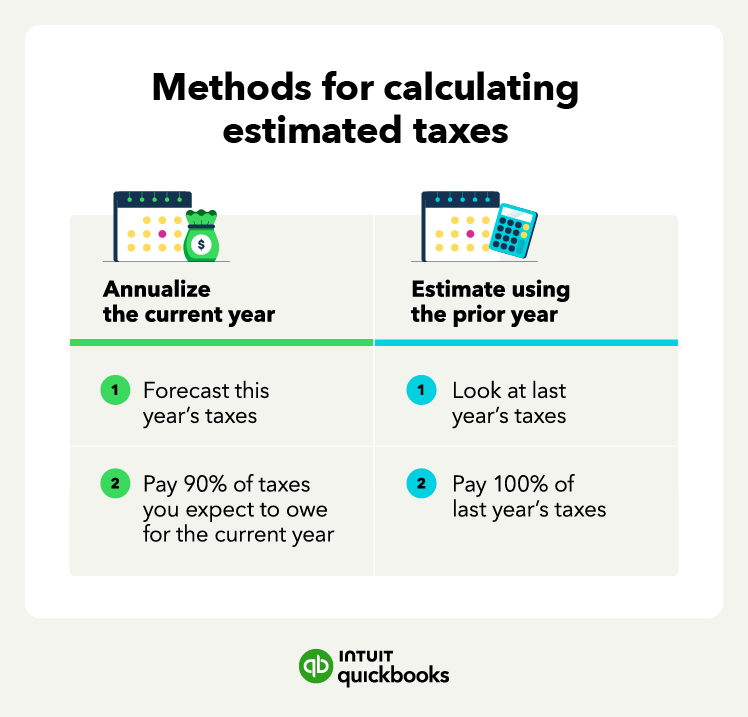
The IRS understands that income can be unpredictable. To protect taxpayers from penalties, they offer “Safe Harbor” provisions. Generally, you will not face an underpayment penalty if you pay at least:
- 90% of the tax shown on your return for the current year, or
- 100% of the tax shown on your return for the prior year, whichever is smaller.
For high-income earners (those with an AGI over $150,000), the prior-year requirement increases to 110%. Following these rules ensures that even if you have a “blockbuster” year of earnings, you won’t be penalized as long as you paid at least what you owed the previous year.
Accounting for Self-Employment Tax
A common mistake for new entrepreneurs is calculating only income tax and forgetting self-employment tax. When you work for an employer, they pay half of your Social Security and Medicare taxes. When you are self-employed, you pay both the employer and employee portions, totaling 15.3%. When calculating your quarterly payments, ensure this 15.3% is factored into your total liability to avoid a massive surprise come April.

The Logistics of Payment: Methods and Deadlines
Once you have calculated your figures, you must navigate the administrative side of the IRS. Paying estimated taxes is not an annual event; it is a rhythmic quarterly obligation. Missing these deadlines, even by a few days, can result in interest charges.
The Quarterly Calendar: Key Dates to Remember
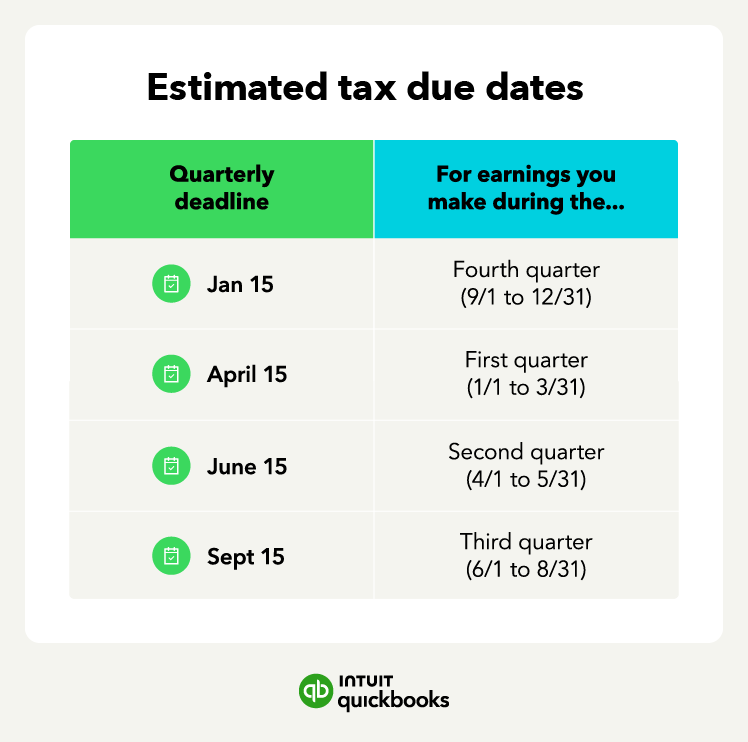
The IRS divides the year into four payment periods. It is a common misconception that these are exactly three months apart; in reality, the schedule is as follows:
- Period 1 (Jan 1 – March 31): Payment due April 15.
- Period 2 (April 1 – May 31): Payment due June 15.
- Period 3 (June 1 – Aug 31): Payment due September 15.
- Period 4 (Sept 1 – Dec 31): Payment due January 15 of the following year.
If these dates fall on a weekend or legal holiday, the deadline is pushed to the next business day.
IRS Direct Pay vs. EFTPS
There are several ways to send your money to the Treasury.
- IRS Direct Pay: This is the most popular method for individuals. It allows you to pay directly from your checking or savings account without any fees or prior registration. You receive an immediate confirmation number for your records.
- EFTPS (Electronic Federal Tax Payment System): This is a more robust system often used by businesses or those who want to schedule payments in advance. It requires an initial enrollment process where you receive a PIN by mail, making it highly secure but slower to set up.
Paying via Debit, Credit, or Digital Wallets
The IRS also allows payments via credit cards or digital wallets through third-party processors. While this can be convenient or help you earn credit card rewards, be aware that these processors charge a convenience fee (usually between 1.8% and 2.5%). Unless the rewards from your card outweigh the fee, Direct Pay remains the most cost-effective financial move.
Strategic Financial Planning for Tax Season
Paying estimated taxes is not just a regulatory hurdle; it is a cash flow management exercise. For many, the greatest challenge isn’t the paperwork, but having the liquidity available when the deadline arrives.
Setting Up a Dedicated Tax Savings Account
One of the most effective personal finance strategies for the self-employed is the “Tax Bucket” method. Every time you receive a payment from a client or a dividend check, immediately transfer 25% to 30% of that gross amount into a separate high-yield savings account. By cordoning off this money, you ensure that you never “accidentally” spend the government’s portion of your income. This also allows you to earn a small amount of interest on that capital before you send it to the IRS.
Leveraging Software and Professional Consultation
As your income grows and your financial life becomes more complex (involving SEP IRAs, health savings accounts, or business expenses), the math becomes harder to manage on a simple spreadsheet. Utilizing professional accounting software can help track your profit and loss in real-time, often providing an automated estimate of what you owe each quarter. Furthermore, consulting with a Certified Public Accountant (CPA) at least once a year can reveal strategies to lower your liability, such as maximizing deductible business expenses or timing your capital gains.
Adjusting Payments for Fluctuating Income
If your business is seasonal—for example, a retail shop that makes 60% of its income in Q4—you aren’t required to pay equal amounts every quarter. You can use the “Annualized Income Installment Method.” This allows you to pay smaller amounts during slow periods and larger amounts during your peak season. While this requires more complex record-keeping (specifically Form 2210), it is a vital tool for maintaining business liquidity during leaner months.
Conclusion: The Path to Financial Peace of Mind
Managing estimated taxes is a hallmark of financial maturity. While it may initially feel like a burden, paying throughout the year prevents the “tax cliff” in April, where many taxpayers find themselves owing tens of thousands of dollars they no longer have. By understanding the rules of the pay-as-you-go system, calculating your liability using the Safe Harbor rules, and utilizing modern electronic payment systems, you can transform a source of stress into a routine administrative task.
The goal of every taxpayer should be to pay exactly what they owe—no more, and no less—while avoiding penalties. With a disciplined approach to savings and a clear understanding of the IRS calendar, you can keep your focus where it belongs: on growing your wealth and managing your business.
aViewFromTheCave is a participant in the Amazon Services LLC Associates Program, an affiliate advertising program designed to provide a means for sites to earn advertising fees by advertising and linking to Amazon.com. Amazon, the Amazon logo, AmazonSupply, and the AmazonSupply logo are trademarks of Amazon.com, Inc. or its affiliates. As an Amazon Associate we earn affiliate commissions from qualifying purchases.