
In the contemporary financial landscape, the days of mailing a paper check and crossing your digits in hopes that the United States Postal Service delivers it on time are rapidly fading. For the modern taxpayer—whether you are a salaried employee, a freelancer navigating the gig economy, or a small business owner—the ability to manage liabilities digitally is a cornerstone of sound personal and business finance. Paying your federal taxes online is not merely a matter of convenience; it is a strategic move that enhances your financial security, provides an immediate audit trail, and allows for more precise cash flow management.

As the Internal Revenue Service (IRS) continues to modernize its infrastructure, the options available to taxpayers have become increasingly sophisticated. Understanding these tools is essential for anyone looking to optimize their financial life and maintain a seamless relationship with federal authorities. This guide explores the diverse digital avenues available for settling your tax obligations, the strategic advantages of each method, and how to integrate these payments into your broader financial planning.
The Evolution of Tax Payments: Why Online is the Gold Standard
The shift toward a digital-first tax system represents a significant leap forward in financial transparency and efficiency. When we look at the broader scope of personal finance, the goal is always to minimize friction and maximize control. Online tax payments fulfill both of these objectives by providing a level of certainty that traditional methods simply cannot match.
Convenience and Speed
The most immediate benefit of paying federal taxes online is the elimination of physical logistics. You can settle your debt from your home office, a coffee shop, or even while traveling, provided you have a secure internet connection. For individuals managing side hustles or multiple income streams, the ability to make quick, ad-hoc payments ensures that tax liabilities do not snowball into unmanageable burdens. Furthermore, digital payments are processed much faster than paper checks, which is critical as the filing deadline approaches.
Enhanced Security and Tracking
Financial security is a paramount concern in the digital age. When you mail a check, you are sending sensitive information—including your bank account number, routing number, and Social Security number—through a physical system. Online portals like the IRS Direct Pay system use high-level encryption to protect your data. Moreover, digital payments provide an immediate confirmation number. This “digital receipt” is a vital piece of documentation for your financial records, serving as irrefutable proof of payment should any discrepancies arise during an audit or account reconciliation.
Accuracy and Immediate Confirmation
One of the most common issues with traditional tax payments is the “lost in the mail” scenario or the misapplication of funds due to illegible handwriting on a check. Online systems require you to select the specific tax year and the type of form you are paying for (e.g., Form 1040 for individual income tax). This structured data entry significantly reduces the margin for error. Once the transaction is authorized, you receive a timestamped confirmation, allowing you to update your personal balance sheets and financial software with 100% accuracy.
IRS Direct Pay and the Electronic Federal Tax Payment System (EFTPS)
When choosing a digital payment method, the “Money” niche professional looks for tools that offer the highest level of integration and the lowest cost. The IRS provides two primary “in-house” tools that cater to different financial profiles: Direct Pay and EFTPS.
IRS Direct Pay: The Simplest Solution for Individuals
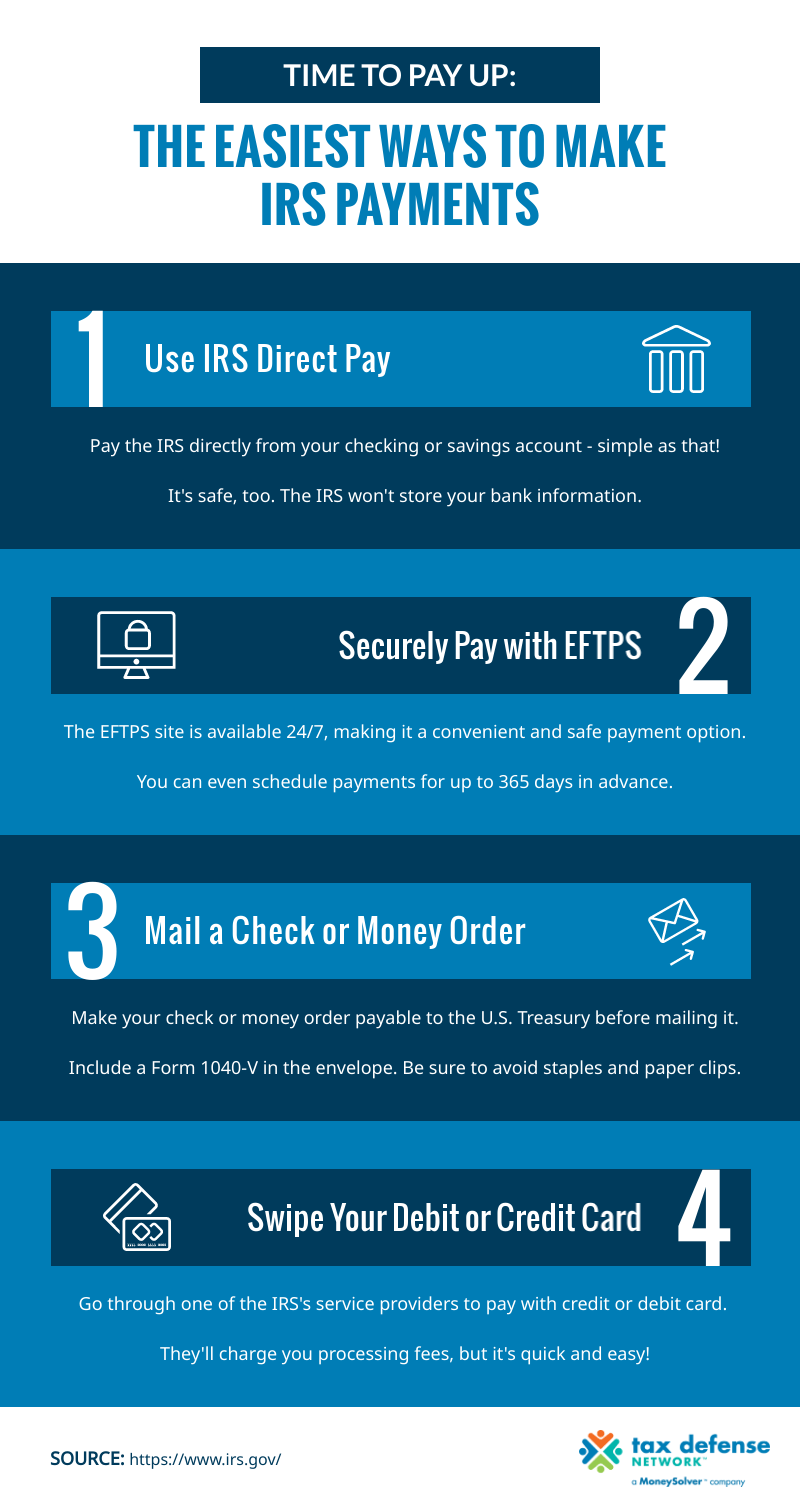
For the majority of individual taxpayers, IRS Direct Pay is the most efficient tool available. This service allows you to pay your tax bill directly from your checking or savings account without any associated convenience fees. It is designed for individual income tax payments, including estimated taxes, which are crucial for those with online income or side hustles.
The process is straightforward: you verify your identity using information from a previous year’s tax return, enter your payment amount, and schedule the date. From a personal finance perspective, the ability to schedule payments in advance is a powerful budgeting tool. It allows you to ensure the funds are moved exactly when they are available, preventing the accidental spending of “tax money” that should be reserved for the government.
EFTPS: The Powerhouse for Businesses and Frequent Filers
While Direct Pay is excellent for one-off or quarterly individual payments, the Electronic Federal Tax Payment System (EFTPS) is the gold standard for business finance and high-frequency filers. EFTPS is a free service provided by the U.S. Department of the Treasury that allows for much more granular control over federal tax deposits.

Business owners use EFTPS to pay payroll taxes, corporate income taxes, and excise taxes. From a strategic management standpoint, EFTPS is superior because it maintains a comprehensive history of all payments made over the last 16 months. This historical data is invaluable for accountants and business owners when performing year-end reviews or preparing for future fiscal cycles.
Understanding the Enrollment Process for EFTPS
Unlike Direct Pay, which can be used on the fly, EFTPS requires a formal enrollment process. You must apply for an account, after which the IRS sends a Personal Identification Number (PIN) via physical mail to your registered address. This extra layer of security ensures that only authorized individuals can move significant sums of money. For anyone serious about scaling a business or managing a complex portfolio of online income, enrolling in EFTPS is a foundational step in establishing professional financial operations.
Payment Options Using Credit, Debit, and Digital Wallets
In the world of personal finance and investing, every dollar counts. Sometimes, the most strategic way to pay a tax bill isn’t through a direct bank transfer, but through a third-party processor that accepts credit or debit cards. While the IRS itself does not collect fees for tax payments, the third-party processors that handle card transactions do.
Authorized Third-Party Service Providers
The IRS works with several authorized payment processors, such as PayUSAtex, Pay1040, and ACI Payments, Inc. These platforms allow you to use Visa, Mastercard, Discover, American Express, and even digital wallets like PayPal or Click to Pay. While these options provide incredible flexibility, they come with a cost—usually a flat fee for debit cards and a percentage-based fee (around 1.8% to 2%) for credit cards.
Analyzing the Convenience Fees
From a strictly financial perspective, paying a fee to pay your taxes may seem counterintuitive. However, there are scenarios where this is a sound business or personal finance decision. For example, if you are experiencing a temporary cash flow gap in your business, paying your taxes via credit card can act as a short-term bridge loan, allowing you to avoid IRS late-payment penalties, which are often much higher than the credit card processing fee.
Strategic Use of Credit Card Rewards for Tax Payments
A sophisticated “Money” strategy involves using tax payments to meet “minimum spend” requirements on new credit cards to trigger lucrative sign-up bonuses. If a new card offers $500 in rewards after spending $3,000, and you owe $3,000 in federal taxes, paying the ~2% fee ($60) to earn a $500 bonus results in a net gain of $440. In this context, the online payment becomes a vehicle for generating a positive return on a mandatory expense. However, this strategy should only be employed if the taxpayer has the means to pay off the credit card balance immediately, as high-interest debt will quickly negate any rewards earned.
Managing Your Tax Account and Future Obligations
Modern financial management is proactive, not reactive. Paying your taxes online is just one part of a larger ecosystem of digital financial health. By utilizing the IRS’s digital infrastructure, you can gain a clearer picture of your standing with the government and plan for future liabilities.
Setting Up an IRS Online Account
Beyond just making payments, every taxpayer should establish an IRS Online Account. This portal acts as a central hub for your federal financial identity. Here, you can view the total amount you owe, access your payment history, view key data from your most recent tax return, and even view or apply for payment plans. Having this information at your fingertips allows for better integration with financial planning software and more accurate discussions with your financial advisor or CPA.
Planning for Estimated Tax Payments
For those involved in online income, freelancing, or side hustles, taxes are not something that happens once a year in April. Instead, they are a quarterly obligation. Using online tools to make estimated tax payments ensures that you stay compliant and avoid the “underpayment penalty.” A disciplined financial approach involves setting aside a percentage of every paycheck into a high-yield savings account and then using IRS Direct Pay every quarter to transfer those funds to the IRS. This “pay-as-you-go” model is the hallmark of a stable and sustainable financial life.
Staying Compliant and Avoiding Late Penalties
The ultimate goal of using online payment tools is to ensure compliance. The IRS is increasingly using automated systems to flag late payments and underpayments. By utilizing the scheduling features of EFTPS or Direct Pay, you can “set it and forget it,” ensuring that your payments reach the Treasury before the deadline. In the realm of business finance, avoiding penalties is one of the easiest ways to protect your profit margins.
In conclusion, paying your federal taxes online is a vital skill for anyone looking to master their personal or business finances. By leveraging tools like Direct Pay for simplicity, EFTPS for business-level control, and third-party processors for strategic rewards, you can transform a bureaucratic chore into a streamlined component of your financial strategy. As technology continues to reshape how we interact with money, staying informed about these digital options ensures that you remain in control of your financial destiny.
aViewFromTheCave is a participant in the Amazon Services LLC Associates Program, an affiliate advertising program designed to provide a means for sites to earn advertising fees by advertising and linking to Amazon.com. Amazon, the Amazon logo, AmazonSupply, and the AmazonSupply logo are trademarks of Amazon.com, Inc. or its affiliates. As an Amazon Associate we earn affiliate commissions from qualifying purchases.