
The question “What’s the prime rate today?” is more than a simple inquiry about a percentage point; it is a gateway to understanding the health of the global economy and your personal financial standing. Whether you are a first-time homebuyer, a small business owner, or someone managing credit card debt, the prime rate is the invisible hand that dictates the cost of your borrowing and the yield on your savings.
In the current economic climate, characterized by the Federal Reserve’s aggressive stance against inflation and a volatile post-pandemic recovery, the prime rate has become a central figure in daily financial discourse. This article explores the mechanics of the prime rate, its direct impact on consumer products, and the strategies you can employ to navigate the fluctuating interest rate environment.
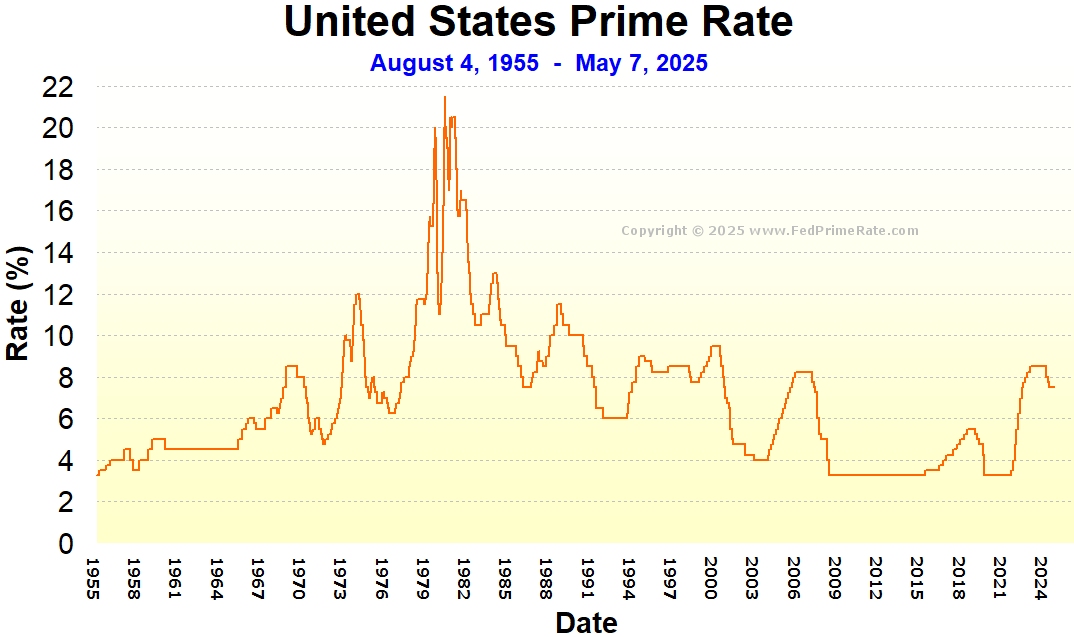
1. The Mechanics of the Prime Rate: How the Numbers are Set
The prime rate is technically defined as the interest rate that commercial banks charge their most creditworthy corporate customers. However, its influence extends far beyond the boardroom. It serves as the base benchmark for a vast array of consumer and commercial loan products across the United States.
How the Fed Funds Rate Dictates the Prime Rate
While individual banks theoretically have the power to set their own prime rates, the industry follows a standardized formula tied directly to the Federal Open Market Committee’s (FOMC) actions. Specifically, the prime rate is almost always 3 percentage points (300 basis points) above the federal funds target rate.
When the Federal Reserve meets and decides to raise or lower the federal funds rate—the rate at which banks lend to each other overnight—the prime rate moves in lockstep. If the Fed raises the target range by 0.25%, the prime rate typically rises by 0.25% within days, if not hours. This direct correlation makes the prime rate the primary mechanism through which the Federal Reserve’s monetary policy is transmitted to the general public.
The “Wall Street Journal” Prime Rate Standard
While many banks exist, the financial world looks to the “Wall Street Journal (WSJ) Prime Rate” as the definitive benchmark. The WSJ surveys the 30 largest banks in the United States and publishes the rate when at least 23 of them (75%) have changed their individual prime rates. This consensus creates a stable, unified figure that lenders use to calculate variable interest rates for millions of contracts. Understanding this standard is crucial because most loan agreements specifically cite the “WSJ Prime Rate” as the index for their variable APRs.
2. Why the Prime Rate Matters to Your Wallet
The prime rate acts as a “base” to which lenders add a “margin” based on your creditworthiness. For example, if the prime rate is 8.5% and your credit card agreement specifies “Prime + 10%,” your annual percentage rate (APR) will be 18.5%. Because the base fluctuates, so does your cost of living.
Impact on Credit Cards and Variable Interest Debt
Credit cards are perhaps the most sensitive products to prime rate changes. Most modern credit cards feature variable APRs. Unlike a fixed-rate mortgage, where your payment remains the same for decades, a credit card’s interest rate can change monthly based on the prime rate.
When the prime rate increases, the cost of carrying a balance on your credit card rises almost immediately. For consumers with significant revolving debt, a few percentage point increases in the prime rate can add hundreds or even thousands of dollars in interest charges over the course of a year. This makes the “today’s rate” inquiry vital for debt management and repayment scheduling.
Home Equity Lines of Credit (HELOCs) and Personal Loans
For homeowners, the prime rate is the primary driver of the cost of a Home Equity Line of Credit (HELOC). Unlike standard 30-year fixed mortgages, HELOCs are almost always variable-rate products tied to the prime rate.
When the economy is in a rising-rate cycle, homeowners with active HELOC balances see their monthly interest-only payments climb. This can squeeze household budgets and force a shift in spending habits. Similarly, many personal lines of credit and certain types of private student loans utilize the prime rate as their index, making them more expensive during periods of hawkish monetary policy.
Small Business Financing and Commercial Loans
Small businesses are often the most impacted by shifts in the prime rate. Many small business loans, including SBA 7(a) loans, are pegged to the prime rate. For an entrepreneur using a line of credit to manage cash flow or purchase inventory, an increase in the prime rate represents a direct increase in operating expenses. This can lead to decreased profit margins or the need to raise prices for consumers, contributing to the broader inflationary cycle.

3. The Broader Economic Implications of the Prime Rate
The prime rate does not exist in a vacuum; it is a tool used by the Federal Reserve to manage the “overheating” of the economy. By understanding why the rate is what it is today, you can gain insight into the government’s view on inflation and growth.
Inflation Control and the Federal Reserve’s Balancing Act
The primary reason the prime rate rises is to combat inflation. When prices for goods and services rise too quickly, the Federal Reserve increases the federal funds rate, which in turn pushes the prime rate higher. The goal is to make borrowing more expensive.
When borrowing is expensive, consumers spend less on big-ticket items like cars and homes, and businesses pull back on expansion. This cooling effect reduces demand, which eventually helps stabilize prices. Conversely, when the economy is sluggish or in a recession, the Fed lowers rates to make borrowing “cheap,” encouraging spending and investment to jumpstart growth.
Consumer Spending vs. Savings Incentives
There is a silver lining to a high prime rate: the impact on savings. While the prime rate specifically refers to lending, it is highly correlated with the rates offered on High-Yield Savings Accounts (HYSAs) and Certificates of Deposit (CDs).
When the prime rate is high, banks must compete more aggressively for consumer deposits to fund their lending activities. This leads to higher yields for savers. For those who are debt-free or have significant cash reserves, a high-rate environment offers a rare opportunity to earn a meaningful return on “safe” money without the volatility of the stock market.
4. Strategies for Navigating a High or Changing Prime Rate Environment
Knowing “what the prime rate is today” is only half the battle; the other half is knowing how to react. Depending on whether the trend is upward or downward, your financial strategy should shift accordingly.
Debt Consolidation and Refinancing
In a rising-rate environment, the most effective strategy is to “lock in” rates whenever possible. If you have significant variable-rate debt, such as a HELOC or credit card balances, you might consider a debt consolidation loan with a fixed interest rate. By doing this, you insulate yourself from future hikes in the prime rate. Even if the fixed rate is slightly higher than today’s prime rate, the security of a predictable payment can be a hedge against an aggressive Federal Reserve.
Maximizing Yields on High-Yield Savings and CD Ladders
If you are looking to benefit from a high prime rate, “CD Laddering” is a premier strategy. This involves opening multiple Certificates of Deposit with different maturity dates (e.g., 6 months, 12 months, 18 months). As each CD matures, you can reinvest the funds at the current (potentially higher) rate or use the cash if needed. This provides liquidity while ensuring you are capturing the high-interest environment dictated by the current prime rate.
Long-term Financial Planning in a Volatile Rate Cycle
Financial planning should always account for “rate risk.” When the prime rate is at historical lows, it is an ideal time to take on long-term, fixed-rate debt for appreciating assets like real estate. When the prime rate is at historical highs, it is a time for austerity, paying down principal, and avoiding new variable-rate obligations.
Furthermore, investors should monitor the “dot plot” released by the Federal Reserve, which provides a projection of where officials expect interest rates to be in the future. Aligning your large purchases—such as a new car or a home renovation—with these projections can save you thousands of dollars in interest over the life of a loan.

Conclusion: The Importance of Staying Informed
The prime rate is more than just a number on a financial news ticker; it is the heartbeat of your financial life. It dictates the friction in your path to wealth—either acting as a headwind that makes debt more expensive or a tailwind that helps your savings grow.
By checking the prime rate today and understanding the economic machinery behind it, you move from being a passive participant in the economy to an active strategist. Whether you are tightening your belt to pay off a high-interest credit card or moving funds into a high-yield account to capture better returns, your awareness of this benchmark is the first step toward long-term financial stability. In a world of economic uncertainty, the prime rate remains one of the most reliable indicators of where the financial winds are blowing.
aViewFromTheCave is a participant in the Amazon Services LLC Associates Program, an affiliate advertising program designed to provide a means for sites to earn advertising fees by advertising and linking to Amazon.com. Amazon, the Amazon logo, AmazonSupply, and the AmazonSupply logo are trademarks of Amazon.com, Inc. or its affiliates. As an Amazon Associate we earn affiliate commissions from qualifying purchases.