
Category: Money
The housing interest rate is perhaps the most significant number in the life of a modern consumer. For most individuals, a home is the largest purchase they will ever make, and the interest rate attached to that purchase determines not just their monthly budget, but their long-term net worth. At its simplest, a housing interest rate is the cost of borrowing money from a lender to purchase real estate. However, beneath this simple definition lies a complex web of macroeconomic shifts, personal financial health, and institutional policy.

Understanding the housing interest rate is essential for anyone looking to navigate the world of personal finance. Whether you are a first-time homebuyer, a seasoned real estate investor, or someone looking to refinance, the interest rate is the pivot point upon which your financial strategy turns.
1. Defining the Housing Interest Rate: The Mechanics of Borrowing
Before diving into market fluctuations, one must understand what the rate actually represents. When a bank lends you hundreds of thousands of dollars to buy a property, they are taking a risk. The interest rate is the “rent” you pay on that money, compensating the lender for the risk of default and the opportunity cost of not investing that money elsewhere.
The Difference Between Interest Rate and APR
A common point of confusion in personal finance is the distinction between the “nominal interest rate” and the “Annual Percentage Rate” (APR). The interest rate is the specific percentage used to calculate your monthly interest payment. The APR, however, is a more holistic figure. It includes the interest rate plus other costs such as loan origination fees, mortgage insurance, and closing costs. For a borrower, the APR is the most accurate tool for comparing the true cost of loans between different lenders.
Fixed-Rate vs. Adjustable-Rate Mortgages (ARMs)
Housing interest rates generally fall into two structural categories. A Fixed-Rate Mortgage locks in a single interest rate for the entire life of the loan (usually 15 or 30 years). This provides stability and protection against rising market rates. Conversely, an Adjustable-Rate Mortgage (ARM) offers a lower initial rate for a set period (e.g., 5 or 7 years), after which the rate adjusts periodically based on market indices. While ARMs can be cheaper in the short term, they carry the risk of significantly higher payments if market rates climb.
The Concept of Amortization
The housing interest rate interacts with the principal through a process called amortization. In the early years of a mortgage, the vast majority of your monthly payment goes toward interest rather than the principal balance. As the loan matures, the ratio shifts. Understanding this is crucial for wealth building, as it illustrates why early extra payments toward the principal can save a homeowner tens of thousands of dollars in interest over time.
2. Personal Financial Factors: How Your Profile Dictates Your Rate
While “market rates” are reported in the news daily, the rate you are actually offered is highly individualized. Lenders use your financial history to determine how much of a risk you represent. The lower the perceived risk, the lower the interest rate they will offer.
The Vital Role of the Credit Score
In the realm of personal finance, your credit score is your reputation. For a mortgage, a difference of 100 points on a FICO score can mean the difference between a 6% interest rate and a 7.5% interest rate. Over a 30-year loan on a $400,000 house, that 1.5% difference can equate to over $150,000 in additional interest. Maintaining a high credit score by paying debts on time and keeping credit utilization low is the most effective way to “earn” a lower housing interest rate.
Loan-to-Value (LTV) and Down Payments
The “Loan-to-Value” ratio is the amount of the loan compared to the value of the home. If you put 20% down, your LTV is 80%. Lenders generally offer better rates to borrowers with lower LTVs because the borrower has more “skin in the game.” If a borrower has a high LTV (for example, putting only 3% down), the lender often views the loan as riskier and may increase the interest rate or require Private Mortgage Insurance (PMI), which increases the effective cost of the loan.
Debt-to-Income (DTI) Ratios
Your DTI ratio is the percentage of your gross monthly income that goes toward paying debts. Lenders look at this to ensure you aren’t over-leveraged. If your DTI is too high, even with a great credit score, a lender might hike the interest rate to offset the risk that a sudden job loss or medical emergency could lead to a default on the mortgage.
3. Macro-Economic Drivers: Why Rates Rise and Fall
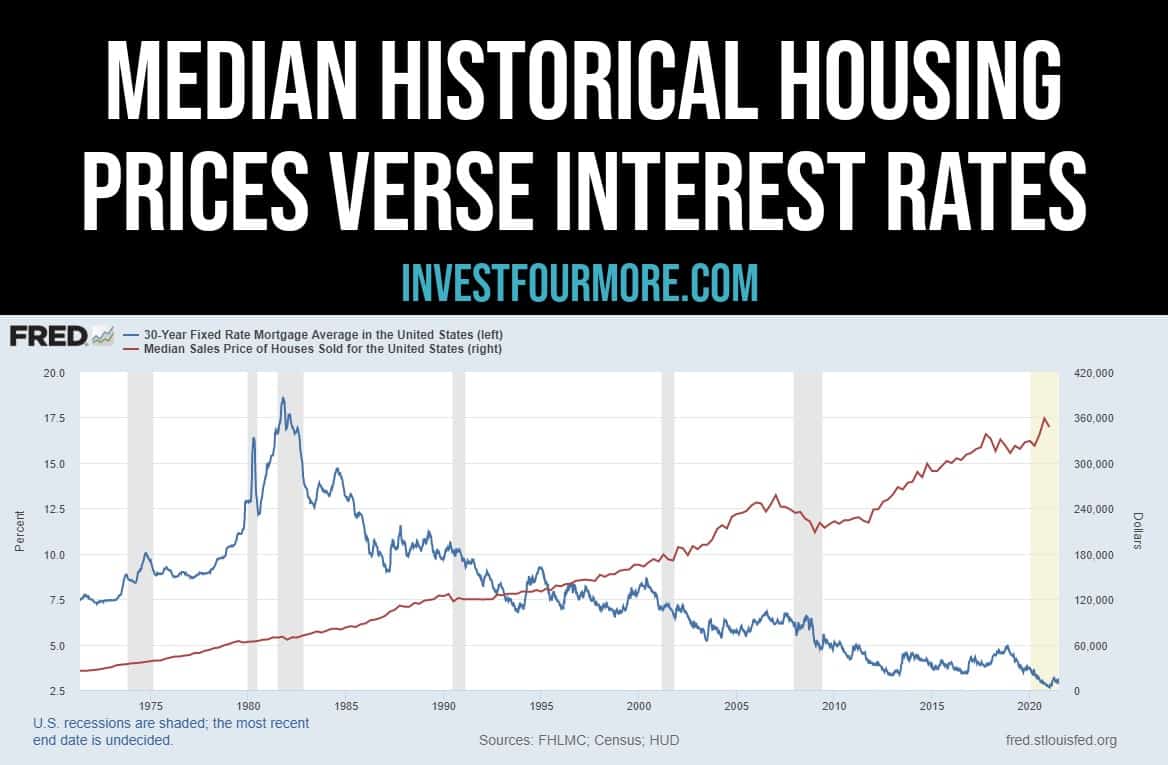
No lender sets their rates in a vacuum. Housing interest rates are tethered to the broader economy and are influenced by several high-level factors that are often outside the control of the individual consumer.
The Federal Reserve and Monetary Policy
In the United States, the Federal Reserve (the Fed) plays a pivotal role. While the Fed does not directly set mortgage rates, it sets the “Federal Funds Rate”—the rate at which banks lend to each other overnight. When the Fed raises rates to combat inflation, the cost of borrowing increases for banks, which they then pass on to consumers in the form of higher housing interest rates. Conversely, when the economy is sluggish, the Fed may lower rates to encourage borrowing and spending.
Inflation and Purchasing Power
Inflation is the enemy of fixed-income investors, including those who buy mortgage-backed securities. If inflation is high, the “real” value of the interest payments a lender receives in the future is lower. To compensate for this loss of purchasing power, lenders raise interest rates. Therefore, when you see reports of rising inflation, you can almost guarantee that housing interest rates will follow suit.
The 10-Year Treasury Yield
While many look to the Fed, professional investors often watch the 10-Year Treasury Yield as the primary benchmark for 30-year fixed mortgage rates. Mortgages are often bundled into “Mortgage-Backed Securities” (MBS) and sold on the secondary market. Because investors view Treasury bonds and MBS as similar types of “safe” investments, the yields on these two products tend to move in tandem. When the yield on the 10-Year Treasury goes up, mortgage rates typically rise alongside it.
4. The Long-Term Financial Impact: Calculating the Cost of Debt
To truly understand the housing interest rate, one must look at the total cost of the loan over its entire duration. The difference of a few percentage points may seem negligible on a monthly basis, but the cumulative effect is staggering.
The Psychology of Monthly Payments vs. Total Cost
Many buyers focus exclusively on whether they can afford the monthly payment. From a personal finance perspective, this is a narrow view. A $500,000 loan at a 3% interest rate results in a total repayment of roughly $758,000 over 30 years. That same loan at 7% results in a total repayment of approximately $1,197,000. In the second scenario, the borrower is paying more in interest than the original cost of the home itself.
Discount Points: Buying Down the Rate
Borrowers often have the option to pay “points” at closing to lower their interest rate. One point typically costs 1% of the loan amount and lowers the interest rate by 0.25%. This is essentially a math problem: you must calculate the “break-even point.” If paying $4,000 in points saves you $100 a month, it will take 40 months to break even. If you plan to stay in the home for 10 or 20 years, buying points is a savvy financial move. If you plan to move in three years, it is a waste of capital.
The Tax Implications of Interest
In many jurisdictions, mortgage interest is tax-deductible up to certain limits. This can effectively lower the “real” interest rate you are paying. For example, if you are in a 24% tax bracket, a portion of your interest expense is subsidized by your tax savings. However, with the rise of standard deductions, fewer homeowners are itemizing their taxes, making the raw interest rate more important than ever.
5. Strategic Decision Making in Fluctuating Markets
Navigating the housing market requires a blend of timing, preparation, and perspective. When rates are high, the strategies for buyers change significantly compared to when rates are at historic lows.
The “Date the Rate, Marry the House” Philosophy
A popular saying in real estate is “Date the rate, marry the house.” This suggests that if you find the perfect property in a high-interest-rate environment, you should buy it anyway, with the intention of refinancing later when rates drop. While this can be a valid strategy, it is risky. It assumes that rates will drop and that your home value won’t decrease (which could prevent a refinance). Financial experts suggest only buying if you can afford the current rate indefinitely.
Refinancing as a Wealth Tool
When housing interest rates drop significantly below your current rate, refinancing becomes a powerful tool for increasing cash flow or shortening the loan term. By dropping a rate from 6% to 4%, a homeowner can save hundreds of dollars a month, which can then be diverted into higher-yield investments like the stock market or retirement accounts.
When to Wait and When to Act
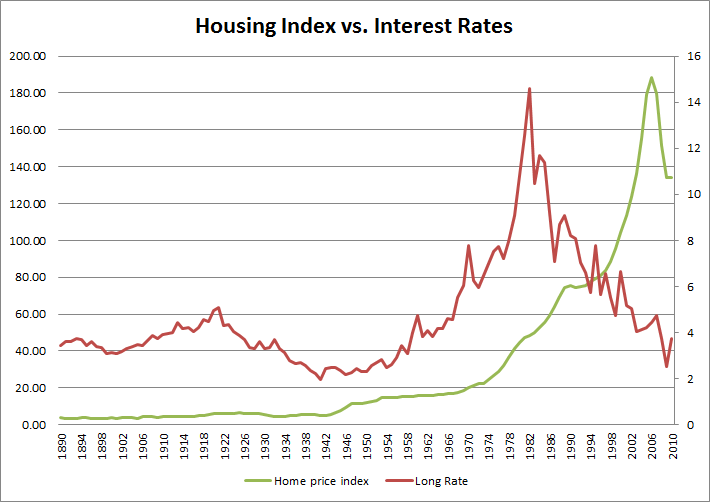
The housing interest rate is a tool, not just a hurdle. In a low-rate environment, debt is “cheap,” allowing you to leverage your money to buy a more valuable asset. In a high-rate environment, cash becomes king, and buyers with large down payments have more leverage to negotiate lower sale prices. Ultimately, the best time to engage with the housing market is when your personal finances—your emergency fund, your credit score, and your career stability—are at their peak, regardless of the national interest rate.
By mastering the nuances of the housing interest rate, you transform from a passive borrower into a strategic investor. Understanding that this rate is a reflection of both your personal habits and the global economy allows you to make informed decisions that protect your wealth for decades to come.
aViewFromTheCave is a participant in the Amazon Services LLC Associates Program, an affiliate advertising program designed to provide a means for sites to earn advertising fees by advertising and linking to Amazon.com. Amazon, the Amazon logo, AmazonSupply, and the AmazonSupply logo are trademarks of Amazon.com, Inc. or its affiliates. As an Amazon Associate we earn affiliate commissions from qualifying purchases.