
The 30-year fixed-rate mortgage is the bedrock of the American dream. For decades, it has served as the primary vehicle for generational wealth building, offering a level of predictability that few other financial products can match. However, in the current economic climate, the question “What is the current 30-year fixed mortgage rate?” has become more complex than a single percentage point. It is a reflection of global inflation, central bank policy, and the shifting dynamics of the bond market.
As we navigate a period of significant volatility, understanding the mechanics behind these rates is essential for any prospective homeowner or real estate investor. While daily fluctuations are common, the broader trends dictate the affordability of housing and the health of the national economy.
The Mechanics of the 30-Year Fixed-Rate Mortgage
To understand why the 30-year fixed rate sits where it does today, one must first understand what it represents. Unlike an adjustable-rate mortgage (ARM), the fixed-rate option guarantees that the interest rate—and therefore the principal and interest payment—remains identical from the first month to the 360th month.
How Fixed Rates Differ from ARMs
The primary appeal of the 30-year fixed mortgage is its immunity to market volatility once the loan is closed. In contrast, Adjustable-Rate Mortgages are tied to indices like the SOFR (Secured Overnight Financing Rate). While ARMs often offer lower initial “teaser” rates, they carry the risk of significant payment increases in the future. In a rising rate environment, the 30-year fixed rate acts as a hedge against inflation, allowing homeowners to pay back their debt with “cheaper” future dollars while their housing costs remain static.
The Critical Link to the 10-Year Treasury Yield
A common misconception is that mortgage rates are set directly by the Federal Reserve. In reality, mortgage rates are most closely correlated with the yield on the 10-year U.S. Treasury note. Mortgage-backed securities (MBS) compete for the same investors as Treasury bonds. When the yield on the 10-year Treasury rises, mortgage rates must rise as well to remain attractive to investors. Typically, there is a “spread” of about 1.5 to 3 percentage points between the 10-year Treasury yield and the 30-year mortgage rate. When market uncertainty is high, this spread widens, leading to higher rates for consumers even if Treasury yields remain relatively stable.
Macroeconomic Factors Influencing Today’s Rates
The trajectory of mortgage rates is rarely a straight line. It is influenced by a delicate balance of domestic and international economic indicators. In the current landscape, two primary forces are driving the numbers seen on lender quote sheets.
Inflation and the Federal Reserve’s Stance
Inflation is the natural enemy of fixed-income investments. Because a 30-year mortgage pays a fixed amount of interest over three decades, the purchasing power of that interest erodes if inflation is high. To combat inflation, the Federal Reserve adjusts the federal funds rate. While this is an overnight lending rate between banks, it sets the floor for all other borrowing costs. When the Fed signals a “hawkish” stance (maintaining high rates to cool the economy), mortgage rates tend to climb or stay elevated. Conversely, when inflation data shows signs of cooling, the market anticipates future rate cuts, often leading to a preemptive drop in mortgage rates.
Global Economic Stability and Investor Sentiment
Mortgage rates are also influenced by “flight to quality” events. During times of global geopolitical instability or stock market volatility, investors often sell off riskier assets and move their capital into the safety of U.S. government bonds and mortgage-backed securities. This increased demand for bonds drives prices up and yields (rates) down. Therefore, international events—ranging from energy crises in Europe to shifts in Asian manufacturing—can have a surprising and direct impact on the rate quoted by a local bank in the United States.
How to Secure a Competitive Rate in a High-Interest Environment
While the national average mortgage rate provides a benchmark, the “personal” rate a borrower receives is highly dependent on their individual financial profile. In a market where rates have moved away from historical lows, optimization is the key to affordability.
The Vital Role of the Credit Score
In the eyes of a lender, the interest rate is a price attached to risk. The higher your credit score, the lower the perceived risk of default. Currently, the “sweet spot” for securing the lowest possible 30-year fixed rate is a FICO score of 740 or higher. Borrowers in this bracket can see rates significantly lower than those with scores in the 620 to 660 range. For those planning a purchase, taking six months to pay down revolving debt and clear up credit report errors can result in savings of tens of thousands of dollars over the life of the loan.
Debt-to-Income (DTI) Ratios and Down Payments
Lenders also look closely at a borrower’s Debt-to-Income ratio—the percentage of gross monthly income that goes toward paying debts. A DTI below 36% is generally considered ideal. Furthermore, the size of the down payment influences the Loan-to-Value (LTV) ratio. A 20% down payment not only eliminates the need for Private Mortgage Insurance (PMI) but often unlocks “pricing tiers” that allow lenders to offer a more aggressive interest rate.
The Importance of Shopping Multiple Lenders
Mortgage rates are not monolithic. Different financial institutions have different “appetites” for loans. A large national bank might have different liquidity requirements than a local credit union or a specialized online mortgage lender. Research has consistently shown that borrowers who obtain quotes from at least three different lenders save an average of $1,500 to $3,000 in upfront costs and significantly more in long-term interest.
The Real Cost of Borrowing: Beyond the Headline Rate
When evaluating the current 30-year fixed mortgage rate, it is crucial to look past the “sticker price.” The true cost of a loan is expressed through the Annual Percentage Rate (APR), which includes interest, points, and other fees.
Understanding Discount Points and Origination Fees
In a higher-rate environment, many lenders advertise a lower “base” rate that requires the borrower to pay “discount points.” One point typically costs 1% of the total loan amount and reduces the interest rate by approximately 0.25%. For a borrower planning to stay in their home for the full 30 years, paying points can be a mathematically sound investment. However, for those who plan to sell or refinance within five to seven years, the upfront cost of points may never be recouped through monthly savings.
The Impact of the Amortization Schedule
A 30-year fixed mortgage is “front-loaded” with interest. In the early years of the loan, the vast majority of the monthly payment goes toward interest rather than the principal balance. Understanding this schedule is vital for personal finance planning. For instance, making just one extra principal payment per year can shave years off the loan term and save a homeowner a staggering amount of interest, effectively lowering their “realized” interest rate.
Future Outlook: Navigating the “New Normal”
Predicting the exact movement of mortgage rates is notoriously difficult, yet historical context provides a roadmap for what borrowers might expect in the coming years.
Short-Term Volatility vs. Long-Term Normalization
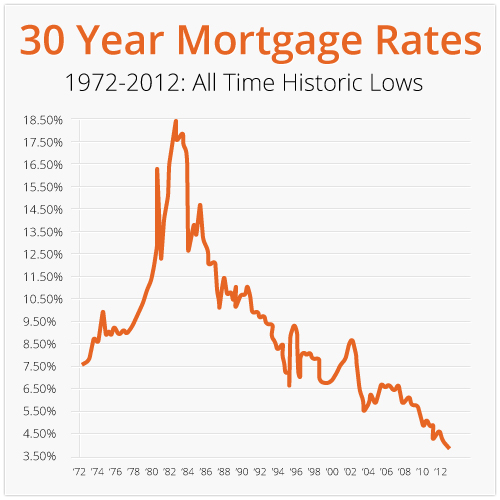
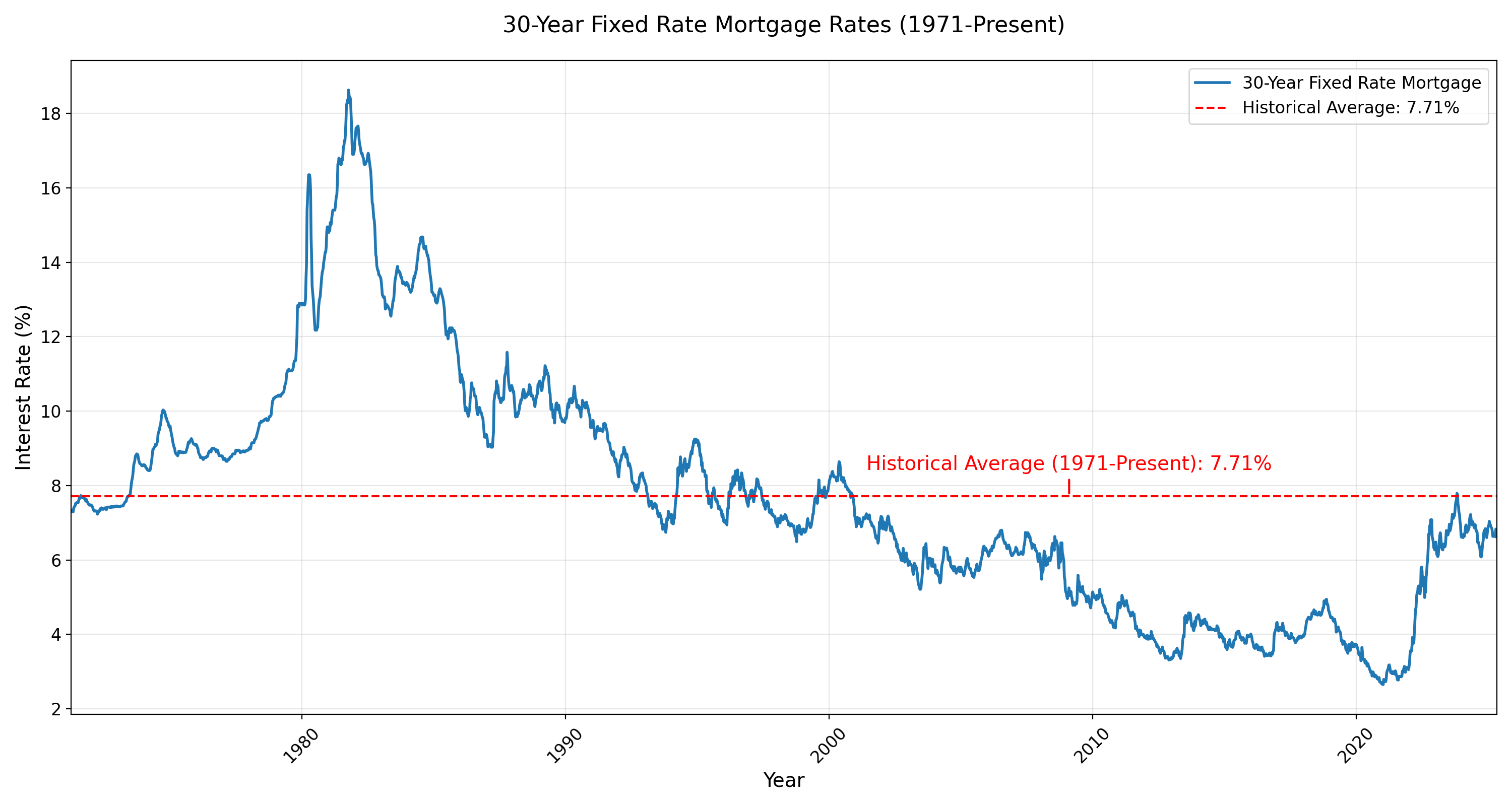
The ultra-low rates of 2020 and 2021 (often below 3%) were an anomaly caused by unprecedented central bank intervention. Experts generally agree that the “new normal” for the 30-year fixed rate will likely settle in the 5.5% to 7% range, depending on the success of inflation-taming measures. While we may see temporary dips, the era of “free money” has likely concluded for the foreseeable future.

Is Now the Right Time to Buy or Refinance?
The decision to enter the mortgage market should be based more on “lifestyle math” than “market timing.” For buyers, the phrase “marry the house, date the rate” has become a common mantra. This suggests that if you find the right property, it may be worth securing it at today’s rates with the intention of refinancing if rates drop in the future. For existing homeowners, the current rates offer little incentive to refinance unless they are looking to tap into home equity for major renovations or debt consolidation.
In conclusion, the current 30-year fixed mortgage rate is more than just a number; it is a vital indicator of the broader economic landscape. By understanding the relationship between inflation, Treasury yields, and personal credit health, consumers can make informed decisions that safeguard their financial future. While rates may no longer be at historic lows, the 30-year fixed mortgage remains the most powerful tool for achieving long-term financial stability in an ever-changing world.
aViewFromTheCave is a participant in the Amazon Services LLC Associates Program, an affiliate advertising program designed to provide a means for sites to earn advertising fees by advertising and linking to Amazon.com. Amazon, the Amazon logo, AmazonSupply, and the AmazonSupply logo are trademarks of Amazon.com, Inc. or its affiliates. As an Amazon Associate we earn affiliate commissions from qualifying purchases.