
In the landscape of modern media, few entities command as unique a position as Sirius XM Holdings Inc. Operating at the intersection of satellite technology and digital streaming, the company has survived the transition from the “shock jock” era of the early 2000s to the algorithmic dominance of the 2020s. However, for investors and business analysts, the most pertinent question isn’t just what the company broadcasts, but who holds the keys to the kingdom.
The ownership of Sirius XM is a masterclass in corporate engineering, primarily dominated by a single media conglomerate and its legendary architect. To understand who owns Sirius XM is to understand the strategic maneuvers of Liberty Media and the shifting tides of the global media economy.
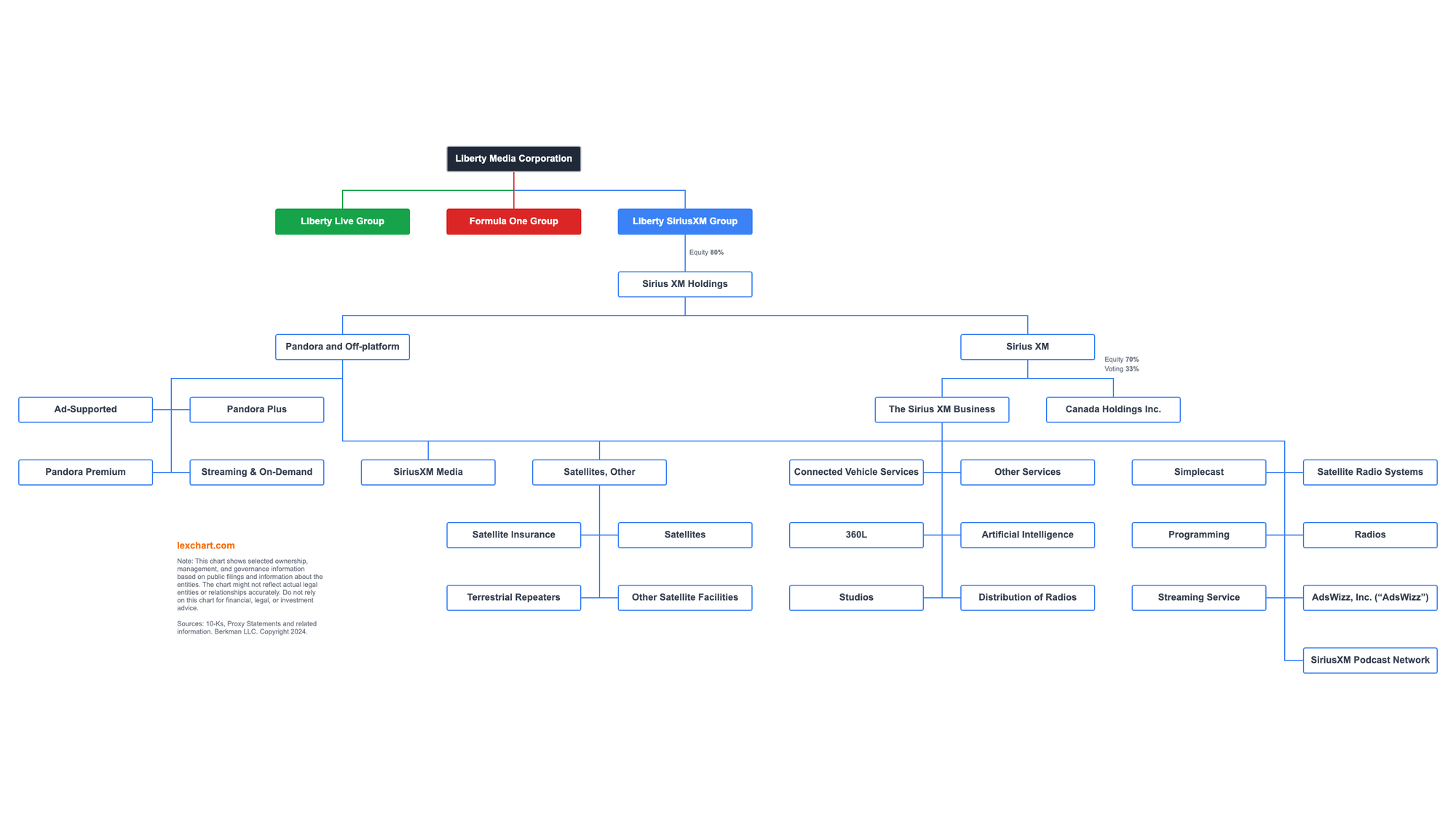
The Power Behind the Throne: Liberty Media’s Dominant Stake
For over a decade, the answer to “who owns Sirius XM” has been inextricably linked to Liberty Media Corporation. While Sirius XM is a publicly traded entity on the Nasdaq (SIRI), it has long functioned as a controlled subsidiary under the umbrella of billionaire John Malone’s sprawling media empire.
The Liberty Media Ecosystem
Liberty Media is not a traditional operating company but a powerhouse that holds interests in a broad range of media, communications, and entertainment businesses. Under the leadership of Chairman John Malone and CEO Greg Maffei, Liberty Media has used a “tracking stock” structure to segment its interests in the Atlanta Braves, Formula One, and Sirius XM. For years, Liberty Media owned a majority stake (exceeding 80%) in Sirius XM, effectively exercising total control over its board of directors and strategic direction.
John Malone: The Architect of Modern Media Consolidation
Often referred to as the “Cable Cowboy,” John Malone is known for his tax-efficient corporate structures and aggressive use of leverage to build empires. His involvement with Sirius XM began in 2009 during the height of the Great Recession. At the time, Sirius XM was on the brink of bankruptcy. Malone’s Liberty Media provided a $530 million loan that saved the company in exchange for a 40% equity stake. Over the following years, Liberty incrementally increased its position, eventually becoming the majority owner.
The 2024 Reorganization and Simplification
In a landmark move that concluded in September 2024, the ownership structure underwent a significant simplification. Liberty Media and Sirius XM completed a transaction to merge the Liberty SiriusXM tracking stock group (LSXMA, LSXMB, and LSXMK) with Sirius XM itself. The result of this “split-off” created a new, consolidated public company under the name Sirius XM Holdings Inc. This move was designed to eliminate the “tracking stock discount,” simplify the capital structure, and provide more liquidity for shareholders, though Liberty’s influence remains the defining force in the company’s governance.
Financial Performance and Revenue Streams
From a business finance perspective, Sirius XM is often viewed as a “cash cow.” Unlike many streaming competitors that struggle to achieve profitability, Sirius XM has maintained a robust bottom line through a diversified and resilient revenue model.
The Subscription-Based Model
The bedrock of Sirius XM’s financial health is its subscription revenue. Unlike terrestrial radio, which relies almost entirely on advertising, Sirius XM derives the vast majority of its income from monthly fees paid by its 30+ million subscribers. This provides a predictable, recurring cash flow that is highly attractive to institutional investors. The company’s ability to maintain high Average Revenue Per User (ARPU) while keeping churn rates relatively low—even in an era of free podcasts and Spotify—is a testament to the “stickiness” of its content.
Advertising and the Pandora Acquisition
In 2019, Sirius XM completed the acquisition of Pandora Media in an all-stock deal valued at approximately $3.5 billion. This was a strategic financial move to diversify its revenue. While Sirius XM dominates the dashboard with a subscription model, Pandora provides a massive ad-supported platform. This acquisition allowed the company to create the largest audio entertainment company in North America, offering a “full-funnel” approach to advertisers who want to reach both premium subscribers and mass-market listeners.
Churn Rates and Market Penetration
For financial analysts, “churn”—the rate at which customers cancel their subscriptions—is the most scrutinized metric. Sirius XM faces a unique challenge: its growth is heavily tied to the automotive industry. As new cars are sold with satellite-ready head units, Sirius XM gains “trials” that eventually convert to paid subscriptions. However, as the used car market fluctuates and digital competition increases, maintaining a low churn rate requires constant reinvestment in exclusive content and platform technology.
The Sirius XM Stock (SIRI) and Market Position

Investing in Sirius XM is often a play on the stability of the American commuter and the endurance of premium content. However, the stock has historically been subject to significant volatility and complex trading dynamics due to its previous tracking stock structure.
Historical Performance and Volatility
SIRI has long been a favorite of retail investors due to its relatively low share price and high brand recognition. Following its near-death experience in 2009, the stock saw a meteoric rise throughout the 2010s. However, in recent years, the stock has faced headwinds as investors weigh the company’s massive cash flows against the existential threat posed by the “connected car”—where Apple CarPlay and Android Auto allow drivers to bypass satellite radio in favor of mobile apps.
Understanding the Simplified Capital Structure
The 2024 merger was a pivotal moment for SIRI’s market valuation. Previously, institutional investors often preferred to buy Liberty’s tracking stock because it traded at a discount to the underlying value of Sirius XM. By collapsing these entities into a single, independent public company, management aimed to attract a broader base of institutional investors and mutual funds that were previously deterred by the complex corporate layers.
Competitive Landscape: The Battle for the Dashboard
In the realm of business finance, the “moat” is everything. Sirius XM’s moat has traditionally been its pre-installed presence in nearly every new vehicle sold in the U.S. This real estate is incredibly valuable. However, as 5G connectivity becomes standard in vehicles, Sirius XM is no longer the only game in town. The company is now in a high-stakes capital expenditure race to improve its digital app and streaming capabilities to compete with tech giants like Apple, Google, and Amazon.
Strategic Acquisitions and Future Growth
To maintain its dominance and justify its valuation to shareholders, Sirius XM has aggressively pursued a strategy of vertical integration and talent acquisition.
Integrating Pandora and Stitcher
Beyond the Pandora deal, Sirius XM acquired Stitcher, a leader in the podcasting space, for $325 million in 2020. This was a clear signal that the company viewed “on-demand” audio as the next frontier for growth. By owning the distribution platforms (Satellite and App) and the content production (Stitcher, Earwolf), Sirius XM can maximize its margins and cross-promote content across different listener demographics.
The Howard Stern Effect and Talent Retention
From a balance sheet perspective, Sirius XM’s most valuable intangible asset is its roster of exclusive talent. The multi-decade partnership with Howard Stern remains a cornerstone of the company’s value proposition. While Stern’s contracts are rumored to be worth hundreds of millions of dollars, the “Stern effect” on subscriber retention remains a primary driver of the company’s financial stability. The company has also signed lucrative deals with figures like Conan O’Brien and SmartLess Media, proving that it is willing to spend heavily to secure content that cannot be found on Spotify or YouTube.
Digital Expansion Beyond the Dashboard
The future of Sirius XM’s growth lies in its “360L” platform—a hybrid of satellite and IP-delivered content. By moving beyond the physical limitations of satellite orbits, the company can offer more personalized experiences and interactive features. For investors, the success of this digital pivot is crucial; it transitions the company from a “hardware-dependent” business to a “platform-agnostic” media service.
Investment Outlook: Is Sirius XM a Value Play?
As of late 2024, the financial community views Sirius XM as a mature value play. It is no longer the high-growth tech darling it once was, but rather a stable generator of free cash flow.
Debt Management and Capital Allocation
A significant portion of Sirius XM’s financial strategy involves managing its debt load, which was used to fund massive share buybacks and acquisitions. For the fiscal-minded investor, the company’s ability to service this debt while continuing to return capital to shareholders through dividends is the key indicator of health. The company has a history of aggressive share repurchases, which reduces the share count and increases earnings per share (EPS).

Dividend Policy and Share Buybacks
Sirius XM offers a dividend, which is relatively rare in the growth-obsessed media and streaming sector. This dividend, combined with Liberty Media’s historical oversight, suggests a corporate philosophy focused on shareholder yield. As the company navigates the post-merger landscape, the focus remains on “operational efficiency”—cutting costs where possible while doubling down on the exclusive content that prevents subscribers from migrating to lower-cost digital alternatives.
In conclusion, while millions of listeners tune in daily, the “owner” of Sirius XM is a sophisticated network of shareholders led by the strategic vision of Liberty Media. By evolving from a struggling satellite pioneer into a diversified audio powerhouse, Sirius XM has proven that in the world of media finance, content may be king, but corporate structure and cash flow are the crown jewels.
aViewFromTheCave is a participant in the Amazon Services LLC Associates Program, an affiliate advertising program designed to provide a means for sites to earn advertising fees by advertising and linking to Amazon.com. Amazon, the Amazon logo, AmazonSupply, and the AmazonSupply logo are trademarks of Amazon.com, Inc. or its affiliates. As an Amazon Associate we earn affiliate commissions from qualifying purchases.