
For the modern consumer and small business owner, Amazon has evolved from a simple online bookstore into a global logistics powerhouse. However, as the platform’s complexity grows, so does the confusion surrounding its delivery pricing models. Understanding “how much is Amazon shipping” is no longer just about looking at a flat rate; it is a calculation of membership ROI, order thresholds, and category-specific surcharges. From a personal finance perspective, mastering these costs is essential for optimizing your annual household or business budget.
This guide provides a deep dive into the financial structures of Amazon’s shipping rates, evaluating the true cost of convenience and how to navigate the platform’s pricing tiers to ensure you are getting the most value for every dollar spent.
Understanding Amazon’s Base Shipping Rates and Thresholds
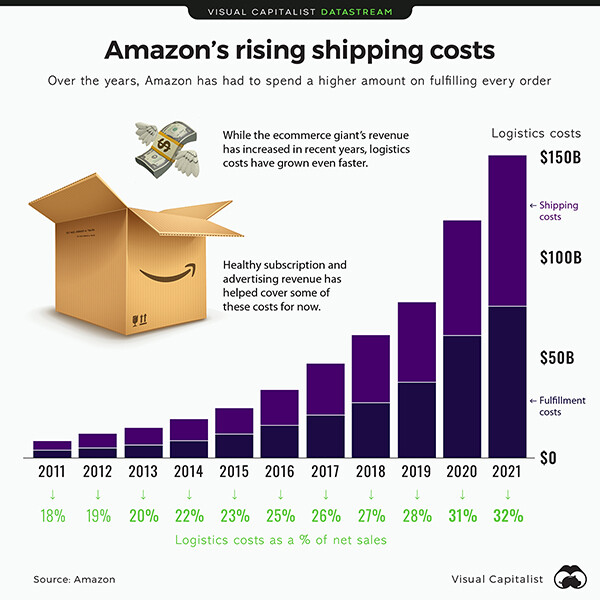
For those who do not subscribe to Amazon Prime, shipping costs are calculated based on several factors: the weight of the item, the size of the package, the delivery speed selected, and the total value of the order. Amazon uses these variables to manage its massive overhead while incentivizing larger basket sizes.
Standard Shipping Costs for Non-Prime Members
For a typical consumer without a Prime membership, standard shipping rates usually begin around $3.99 to $9.99 per shipment, depending on the item category. Media items, such as books or vinyl records, often carry a different base rate compared to electronics or household goods. It is important to note that Amazon frequently updates these rates to reflect changes in fuel surcharges and carrier fees (such as those from UPS or USPS), making it vital to check the final “Order Total” at the checkout screen.
The Free Shipping Threshold: Maximizing Your Order Value
One of the most effective ways to manage personal finance on Amazon is by leveraging the “Free Shipping by Amazon” threshold. Traditionally, Amazon offers free standard shipping on orders that include at least $25 to $35 of “eligible” items. To qualify, the products must be fulfilled by Amazon (FBA).
From a budgeting standpoint, it is often more financially sound to hold items in your cart until you reach this threshold rather than paying $6 or $7 in shipping fees for a single $15 item. This “consolidation strategy” prevents the erosion of your purchasing power by eliminating unnecessary service fees.
Expedited and Priority Shipping: Calculating the Premium
When urgency is a factor, Amazon offers Expedited (two-day) and Priority (one-day) shipping for non-members. These costs can escalate quickly, often ranging from $12.99 to $25.00 per item. For a one-time emergency purchase, this may be justifiable, but as a recurring expense, it represents a significant drain on liquid capital. Financial experts suggest that if you find yourself paying for expedited shipping more than five times a year, the math already shifts in favor of a membership model.
The Financial ROI of Amazon Prime Membership
The question of “how much is Amazon shipping” is inextricably linked to Amazon Prime. As of 2024, the cost of Prime has become a significant line item in many household budgets. To determine if the membership is a sound investment, one must look at the “break-even” analysis.
Comparing Annual vs. Monthly Subscription Costs
Amazon Prime currently costs approximately $139 per year or $14.99 per month. From a wealth-management perspective, the annual payment is the superior choice, saving the consumer roughly $40 over twelve months. However, the monthly option serves as a flexible tool for those who only anticipate high shipping volumes during specific periods, such as the holiday shopping season.
The “Break-Even” Point: When Does Prime Pay for Itself?
To calculate the ROI, divide the annual cost ($139) by the average cost of standard shipping ($7). You would need to place approximately 20 orders per year to break even on shipping costs alone.
However, the value proposition changes when you factor in the speed of delivery. Since Prime offers “free” one-day or two-day shipping, you aren’t just saving on the base shipping fee; you are saving on the premium expedited fee. If you value two-day shipping at $15 per instance, the membership pays for itself in fewer than ten orders.
Hidden Financial Benefits Beyond Shipping
A professional financial analysis of Amazon shipping must include the peripheral benefits that offset the membership cost. Prime includes access to Prime Video, Amazon Music, and Prime Reading. For a consumer who would otherwise pay for Netflix ($15.49/mo) or Spotify ($10.99/mo), the consolidation of these services into the Prime ecosystem can save a household over $200 annually, effectively making the “shipping” component of the membership better than free.
Specialized Shipping Costs: From Heavy Goods to International Delivery
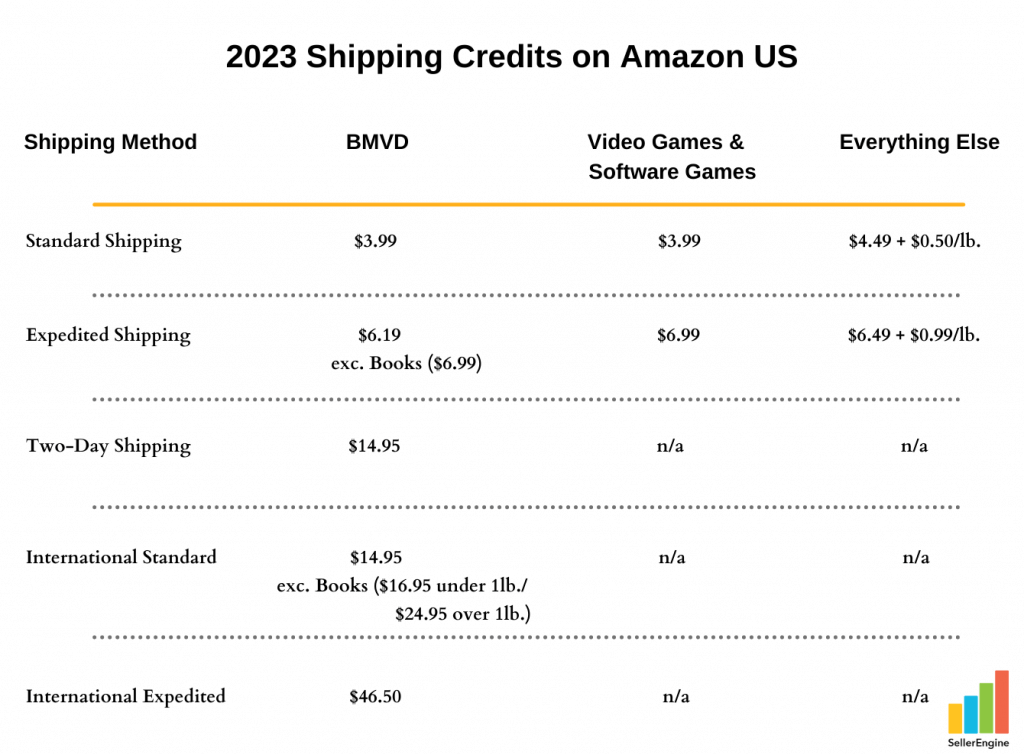
Not every item on Amazon fits into a standard cardboard box. Large-scale purchases and global logistics introduce a different set of financial variables that can catch an unwary shopper off guard.
Oversized and Heavy Item Surcharges
Items such as furniture, large appliances, or gym equipment often fall under “Special Handling” or “Scheduled Delivery.” Even for Prime members, these items may carry a heavy-bulky shipping fee. This fee is not a delivery charge in the traditional sense, but rather a reflection of the specialized labor and equipment required to move a 150-pound treadmill or a sectional sofa. These fees are usually disclosed on the product detail page and can range from $50 to over $100.
Navigating International Shipping and Customs Fees
When ordering from an Amazon store in another country (e.g., a US customer ordering from Amazon UK), shipping costs are determined by the “Amazon Global” program. These costs include:
- Shipping Rates: Calculated by weight and volume.
- Import Fees Deposit: An estimation of customs duties and taxes.
If the actual customs fees are lower than the deposit, Amazon refunds the difference—a small but notable win for the consumer’s bottom line.
Amazon Global Store: Understanding the Landed Cost
For international buyers, the “landed cost” is the only metric that matters. This is the total price of a product once it has arrived at the buyer’s doorstep. Because shipping across borders is expensive, it is often financially prudent to compare the landed cost on Amazon with local domestic retailers to ensure that a lower sticker price isn’t being negated by high transit fees.
Strategic Ways to Reduce Amazon Shipping Expenses
Efficiency is the cornerstone of sound financial management. There are several underutilized strategies to drive the cost of Amazon shipping down to zero or even turn it into a source of micro-income.
Utilizing Amazon Locker and Hub Locations
In some regions, choosing delivery to an Amazon Locker or a Hub Counter can lead to lower shipping costs for non-Prime members or provide a more secure delivery environment. While it doesn’t always reduce the fee directly, it eliminates the “theft tax”—the financial loss associated with packages stolen from a porch, which is a significant unallocated expense for many urban dwellers.
The “No-Rush” Credit Strategy for Future Savings
Prime members are often given the option of “No-Rush Shipping” in exchange for immediate rewards. Usually, this manifests as a $1 to $3 credit toward digital purchases (e-books, movie rentals, or digital music). For a frequent shopper who is not in a hurry, opting for No-Rush shipping ten times a year can generate $30 in digital currency, effectively subsidizing the cost of entertainment and lowering the net cost of the Prime membership.
Consolidating Orders for Maximum Efficiency
Amazon now offers a “Prime Day” (not to be confused with the sales event) where users can choose a specific day of the week for all their deliveries to arrive. From a financial perspective, this promotes “mindful consumption.” By grouping purchases, you reduce the logistical footprint and, more importantly, reduce the impulse to buy single, low-value items that might otherwise incur shipping fees or lead to wasteful spending habits.
The Economics of Amazon Shipping for Small Business Owners
For entrepreneurs, Amazon shipping isn’t just a cost of living; it’s a cost of goods sold (COGS). How a business interacts with Amazon’s logistics determines its profit margins.
FBA (Fulfillment by Amazon) vs. FBM (Fulfillment by Merchant)
Business owners selling on Amazon must choose between FBA and FBM. Under FBA, the seller pays Amazon to handle shipping. While the fees can be high (taking a percentage of the sale), it grants the product the “Prime” badge. This badge significantly increases conversion rates. Financially, the higher volume often offsets the higher shipping fees paid to Amazon.
Managing Logistics Margins in an E-commerce Environment
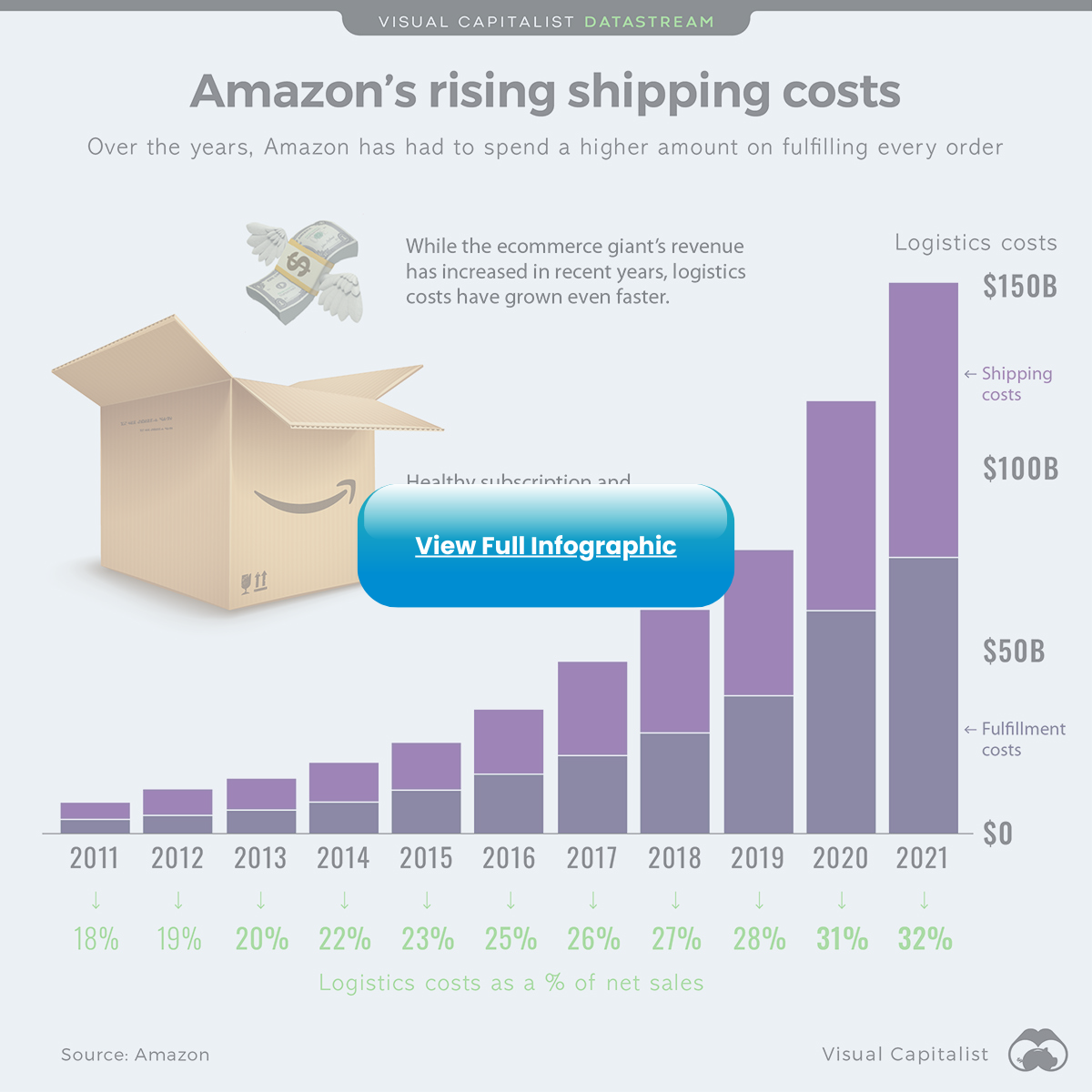
For a business, the cost of shipping is a lever for pricing strategy. If Amazon increases its shipping rates for sellers, the business must decide whether to absorb that cost (lowering margins) or pass it on to the consumer (potentially lowering volume). Successful Amazon sellers use “Shipping Templates” to set granular rates based on geography, ensuring they don’t lose money on long-zone shipments to remote areas.
In conclusion, “how much is Amazon shipping” is a question with a multi-layered answer. For the casual shopper, it is a matter of meeting a $35 threshold. For the power user, it is an ROI calculation of a $139 annual investment. For the business owner, it is a critical component of a profit-and-loss statement. By understanding these structures, you can navigate the Amazon ecosystem with a focus on financial efficiency, ensuring that convenience never comes at the expense of your fiscal health.
aViewFromTheCave is a participant in the Amazon Services LLC Associates Program, an affiliate advertising program designed to provide a means for sites to earn advertising fees by advertising and linking to Amazon.com. Amazon, the Amazon logo, AmazonSupply, and the AmazonSupply logo are trademarks of Amazon.com, Inc. or its affiliates. As an Amazon Associate we earn affiliate commissions from qualifying purchases.