
The modern digital landscape is defined by the “Subscription Economy.” From cloud storage to software-as-a-service (SaaS) and entertainment platforms, the convenience of recurring billing has revolutionized how we consume media. However, as the number of available streaming services proliferates, users often find themselves overwhelmed by “subscription fatigue.” Amazon Prime Video, one of the titans of the industry, offers a complex array of content, but its deep integration into the broader Amazon ecosystem can make the cancellation process feel technically daunting.
Understanding how to navigate the technical layers of your Amazon account to terminate a video subscription is more than just a chore—it is a necessary skill for managing your digital footprint and software expenses. This guide provides a comprehensive technical walkthrough for canceling Amazon Video, whether you are using the standalone service, the Prime bundle, or specific “Channels” integrated into the platform.
Understanding the Amazon Video Ecosystem Architecture
Before diving into the “how-to,” it is essential to understand the technical architecture of Amazon’s media offerings. Amazon Video is not a monolithic entity; it is structured as a multi-tiered software ecosystem.
Standalone Prime Video vs. Amazon Prime
Technically, there are two ways to access Amazon’s streaming library. The first is through a full Amazon Prime membership, which includes shipping benefits, music, and storage. The second is a standalone Prime Video subscription. From a technical standpoint, the UI (User Interface) looks nearly identical for both, but the backend subscription management is handled through different database triggers. If you cancel the full Prime membership, you lose the video access automatically; however, if you only want to downgrade to a non-video tier or cancel a standalone video plan, you must navigate to the specific “Memberships and Subscriptions” API module within the Amazon dashboard.
The Role of Prime Video Channels
One of Amazon’s most successful technical innovations is the “Channels” feature. This allows third-party providers (like Paramount+, Max, or Starz) to integrate their content directly into the Prime Video interface. These are billed through Amazon’s central payment gateway but exist as separate sub-directories in your account. A common technical hurdle for users is realizing that canceling a main Prime membership does not always automatically terminate these individual channel add-ons, potentially leading to “ghost charges” on your credit card statement.
Device Synchronization and Backend Updates
When you initiate a cancellation, a command is sent to Amazon’s central servers, which then propagates across every device synced to your account—smart TVs, mobile apps, and gaming consoles. Because of caching and session persistence, you might find that you still have access for a few hours after cancellation. However, once the “Entitlement Service” (the backend protocol that checks if you have rights to content) updates your status, the access token is revoked.
Step-by-Step Technical Execution: Canceling via Web Interface
While Amazon allows management via mobile apps, the web-based desktop interface remains the most robust environment for subscription management. It offers the most direct access to the “Account & Settings” metadata.
Navigating the Account Dashboard
To begin, you must authenticate your session by logging into the Amazon retail site. From the “Accounts & Lists” dropdown menu, you should navigate to “Memberships & Subscriptions.” This section serves as the centralized hub for all recurring billing cycles. Unlike the simplified mobile UI, the desktop site provides detailed metadata, including the date of the next billing cycle and the history of previous transactions.
Terminating the Standalone Prime Video Membership
If you have a standalone Prime Video account, look for the “Prime Video” entry. Click on “Subscription Settings.” This will redirect you to a specific Prime Video management portal. Here, you will find a section labeled “Your Subscription.” Clicking “End Subscription” triggers a multi-step retention sequence. Technically known as “friction in UX,” these steps are designed to prevent accidental cancellations, but from a user perspective, they require clicking through at least three confirmation screens to ensure the server registers the “Cancel” command.
Managing and Removing Add-on Channels
For those looking to keep their main Prime membership but remove specific add-on channels, the process is slightly different. You must go to the “Prime Video” interface specifically, then select “Settings” followed by “Channels.” This dashboard displays all third-party API integrations currently active on your account. Each channel will have an “Unlock” or “Cancel Channel” option. It is vital to ensure that “Auto-Renew” is toggled to “Off.” Once this is done, the status should immediately change to “Expires on [Date],” indicating that the recurring billing script has been disabled.

Navigating UI Obstacles: Avoiding “Dark Patterns”
In the world of software design, “Dark Patterns” refer to user interfaces crafted to trick or manipulate users into making choices they didn’t intend to, such as staying subscribed to a service. Amazon’s cancellation flow is often cited in UI/UX studies as having high friction.
The Multi-Page Confirmation Loop
When you attempt to cancel, the system will often present a page showing you “what you will lose.” This is a dynamic data-pull from your viewing history, intended to trigger an emotional response. Technically, this is an automated query of your “User Interest Profile.” To successfully cancel, you must ignore these prompts and continue to the final confirmation button, which is often less highlighted than the “Keep My Membership” button.
Third-Party Billing Complications
A significant technical challenge arises when a user subscribes to Amazon Video through a third-party gateway, such as the Apple App Store, Google Play Store, or a mobile carrier bundle. In these instances, Amazon’s web interface acts as a “Read-Only” environment. You can see the subscription, but the “Cancel” button will be replaced with a redirect link to the third-party’s billing API. To terminate these, you must access the specific subscription management settings on your iOS or Android device or log into your ISP/Mobile provider’s portal.
Confirmation via Email Logs
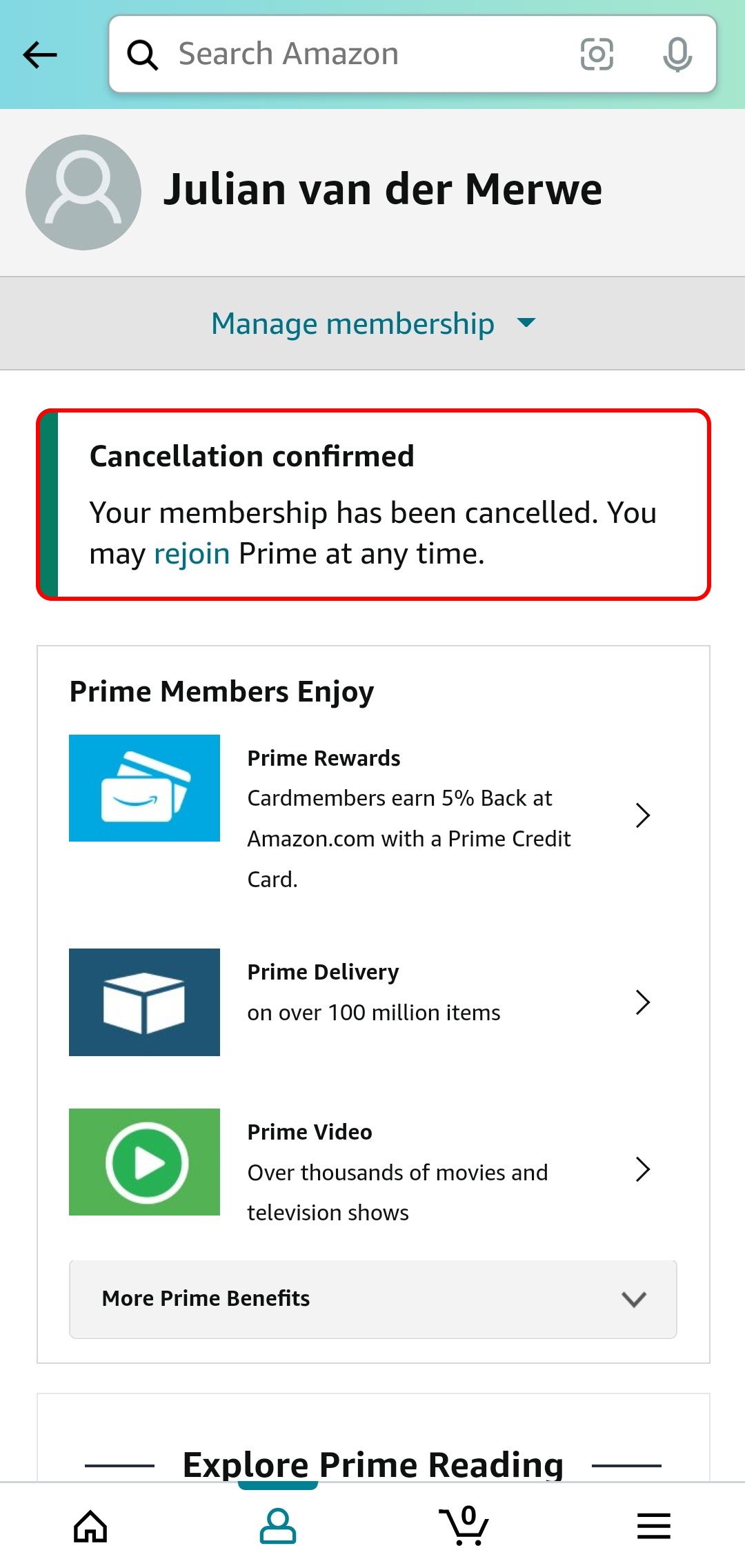
A successful cancellation is only confirmed once the backend sends a “Subscription Terminated” email. This is an automated SMTP (Simple Mail Transfer Protocol) trigger. Always check your inbox for this digital receipt. If you do not receive it within ten minutes, the transaction may not have been committed to the database, and you should re-verify your account status to avoid future charges.
Digital Rights Management (DRM) and Post-Cancellation Access
A common question regarding the technicality of Amazon Video cancellation involves what happens to the content you have “Purchased” versus content you “Rented” or streamed for free.
Purchased vs. Streamed Content
Amazon Video operates on a hybrid model of SVOD (Subscription Video on Demand) and TVOD (Transactional Video on Demand). When you cancel your Prime Video subscription, you lose access to the SVOD library—the thousands of titles available for “free” with your membership. However, any movies or shows you have purchased (TVOD) remain linked to your Amazon account identity. The DRM (Digital Rights Management) keys for these purchases are tied to your account’s GUID (Globally Unique Identifier), not your subscription status. Therefore, you can still access these titles via the “My Stuff” or “Purchases” tab using the Prime Video app on any compatible hardware, even without an active subscription.
Data Retention and Recommendations
Even after cancellation, Amazon retains your viewing history and “Watchlist” metadata. This is part of their data retention policy, allowing for a seamless user experience if you decide to reactivate the service in the future. From a technical standpoint, your user profile is merely flagged as “Inactive,” but the relational database containing your preferences remains intact. If you wish to have this data scrubbed for privacy reasons, you must go through a separate “Data Deletion Request” process under the GDPR or CCPA frameworks provided in the Amazon Privacy Central portal.
The Future of Subscription Management and AI Tools
As we move toward a more complex digital environment, managing subscriptions like Amazon Video is becoming increasingly automated. We are seeing the rise of “FinTech” and “AdTech” tools designed to audit software expenditures.
AI-Driven Subscription Auditing
New AI tools can now scan your transaction logs (with permission) to identify recurring API calls from services like Amazon. These tools can highlight underutilized subscriptions by cross-referencing your login frequency with your billing cycle. In the future, we may see “smart cancellation” protocols where a user can set a rule: “If I haven’t opened the Amazon Video app in 60 days, initiate the cancellation sequence.”

Conclusion: Maintaining Digital Hygiene
Canceling Amazon Video is a straightforward technical process once you understand the distinction between the various tiers of the Amazon ecosystem and the UI hurdles designed to keep you subscribed. By mastering these settings, you take control of your digital environment, ensuring that you only pay for the software and content you actually utilize. In an age of infinite digital choices, the ability to efficiently opt-out is just as important as the ability to opt-in. Regularly auditing your “Memberships and Subscriptions” page is a best practice for anyone looking to maintain a streamlined, cost-effective, and secure digital life.
aViewFromTheCave is a participant in the Amazon Services LLC Associates Program, an affiliate advertising program designed to provide a means for sites to earn advertising fees by advertising and linking to Amazon.com. Amazon, the Amazon logo, AmazonSupply, and the AmazonSupply logo are trademarks of Amazon.com, Inc. or its affiliates. As an Amazon Associate we earn affiliate commissions from qualifying purchases.