
In an era saturated with subscription services, Amazon Prime stands as one of the most ubiquitous and comprehensive offerings globally. From lightning-fast delivery to an expansive library of digital content, it promises a world of convenience. But for the financially savvy consumer, the central question always boils down to “how much?” Understanding the direct cost, its underlying value, and its place within your personal finance strategy is crucial for making an informed decision. This article delves into the financial intricacies of Amazon Prime membership, equipping you with the insights needed to assess its true worth from a purely monetary perspective.
Understanding the Current Cost of Amazon Prime
The fundamental step in evaluating any subscription service is to pinpoint its exact price tag. Amazon Prime’s cost can vary based on your payment frequency, location, and eligibility for specific discounts. Keeping abreast of these figures is essential for accurate budgeting and financial planning.
Annual vs. Monthly Membership Fees
Amazon typically offers two primary payment structures for its Prime membership: annual and monthly. Opting for the annual plan almost always presents a more cost-effective solution over the long term, designed to incentivize commitment.
Currently, in the United States, the standard pricing is:
- Annual Membership: Approximately $139 per year.
- Monthly Membership: Approximately $14.99 per month.
A quick calculation reveals the financial advantage of the annual plan: $14.99/month x 12 months = $179.88 per year. This means subscribers save roughly $40.88 annually by choosing the yearly billing cycle, a significant sum that can be reallocated elsewhere in your budget. This structure is a classic example of how businesses use tiered pricing to encourage customer loyalty and reduce churn, a common tactic in the subscription economy.
Regional Price Variations and Special Discounts
It’s important to note that Amazon Prime membership costs are not uniform across all countries. Prices are localized to reflect regional economic conditions, market strategies, and the scope of services available in a particular territory. For instance, Prime membership in countries like Canada, the UK, Germany, or India will have different pricing structures, often denominated in local currency and subject to different tax rates. Always check Amazon’s local website for the most accurate pricing in your region.
Beyond geographical differences, Amazon also offers targeted discounts designed to make Prime more accessible to specific demographics, demonstrating a shrewd understanding of market segmentation:
- Student Prime: Eligible college students often qualify for a significantly reduced monthly or annual rate, often including an extended free trial period. This is a strategic play to cultivate future loyal customers.
- EBT/Medicaid Recipients: In some regions, individuals receiving government assistance (such as EBT or Medicaid in the U.S.) can access Prime at a reduced monthly rate. This initiative highlights Amazon’s effort to expand its market reach and provide essential services to a broader population, while also serving as a responsible corporate citizen.
- Prime Video Only: For those primarily interested in the streaming content and not the shipping benefits, Amazon may offer a standalone “Prime Video” subscription at a lower monthly cost. This unbundling allows consumers to tailor their spending to their specific needs, though it forfeits the comprehensive benefits of a full Prime membership.
Understanding these variations is crucial for ensuring you’re not overpaying and are utilizing any available discounts you qualify for.
Historical Price Evolution
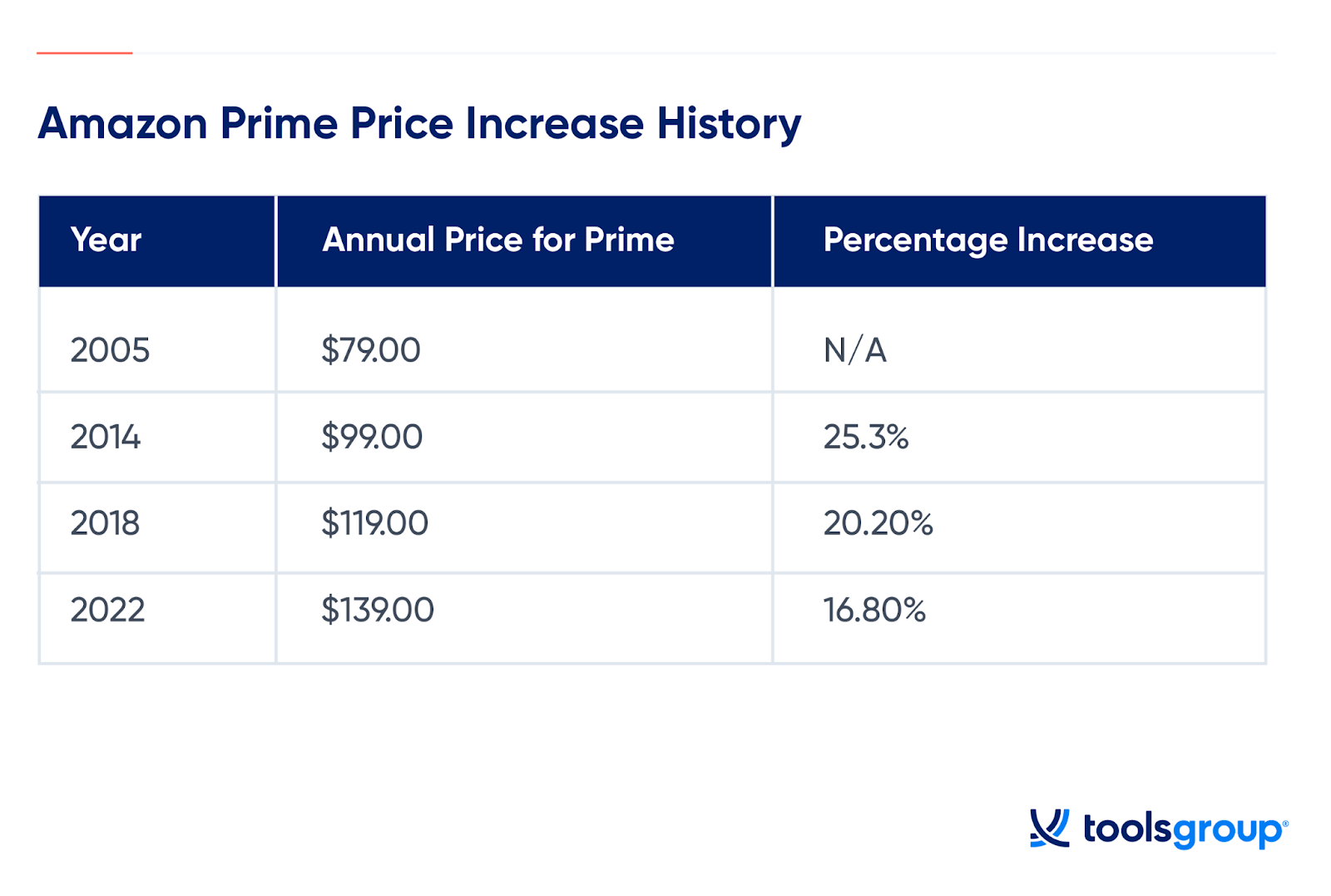
Like many long-standing subscription services, the price of Amazon Prime has not remained static since its inception in 2005 at $79 per year. The company has periodically adjusted its pricing to reflect increasing operational costs, the expansion of its service offerings, and market conditions.
Notable price hikes include:
- 2014: From $79 to $99 per year.
- 2018: From $99 to $119 per year.
- 2022: From $119 to $139 per year.
Each price increase has typically coincided with the addition of new benefits (e.g., expanded Prime Video content, more music, faster shipping options in new areas) or significant investments in logistics infrastructure. From a financial perspective, these increases necessitate a regular re-evaluation of the membership’s value. While the services provided have undoubtedly grown, the consumer must weigh whether the perceived additional value truly offsets the increased financial outlay.
Evaluating the Financial Value Proposition
Knowing the cost is only half the equation; the other, more complex half, is determining its financial value. Does the “how much” translate into actual savings or benefits that justify the expenditure within your personal financial framework? This requires a clear-eyed assessment of the services you actually use and their equivalent market value.
Quantifying Savings on Shipping and Exclusive Deals
For many, the primary allure of Prime is its expedited shipping. The cost of individual shipping fees can quickly accumulate, particularly for frequent online shoppers.
- Free Two-Day Shipping: This core benefit eliminates individual shipping charges, which can range from $5 to $15 per order. If you place, for example, 15 orders a year that would otherwise incur a $8 shipping fee, Prime saves you $120. This alone can cover a significant portion, if not all, of the annual membership fee.
- Free Same-Day/One-Day Delivery: In eligible areas, these even faster options offer tremendous convenience and further negate potential express shipping charges.
- Prime Exclusive Deals: Prime members gain access to exclusive discounts, lightning deals, and early access to sales events like Prime Day. While harder to quantify precisely, savvy shoppers can realize substantial savings on purchases, especially during major sales events. It’s crucial, however, to differentiate between genuine savings and being enticed to buy items you wouldn’t otherwise need.
From a financial standpoint, the direct shipping savings are the easiest to calculate and often form the backbone of Prime’s financial justification.
The Hidden Value of Prime Video, Music, and Reading
Beyond shipping, Amazon Prime bundles a suite of digital entertainment and content services that, if purchased separately, would incur significant costs.
- Prime Video: An extensive library of movies, TV shows, and original content. A standalone premium streaming service typically costs between $7 and $15 per month.
- Amazon Music Prime: Access to millions of songs and ad-free listening (though not the full catalog of Amazon Music Unlimited). A basic music streaming subscription usually costs around $10 per month.
- Prime Reading/First Reads: Access to a rotating selection of free e-books and magazines, plus a free pre-release book each month.
- Amazon Photos: Unlimited full-resolution photo storage. Cloud storage services often cost $5-$10 per month for similar features.
If you were to subscribe to comparable standalone services (e.g., Netflix, Spotify, iCloud), the combined monthly cost would easily surpass the Prime membership fee. For individuals who would genuinely use these bundled services, Prime offers a compelling financial advantage by consolidating multiple subscriptions into one. However, the key here is genuine usage. If you already subscribe to other streaming services or rarely read e-books, the perceived value of these bundled perks diminishes significantly.

Considering Your Usage Habits and Financial Priorities
The financial prudence of a Prime membership is intensely personal. It hinges on your shopping frequency, your consumption of digital media, and your overall financial goals.
- Shopping Frequency: If you order from Amazon multiple times a month, the shipping savings alone likely make Prime a sound investment. If you shop only a few times a year, the membership cost might outweigh the shipping fees.
- Digital Content Consumption: Are Prime Video, Music, or Reading your primary sources for entertainment? If so, you’re extracting significant value. If they are secondary to other subscriptions or rarely used, their financial benefit is negligible.
- Budgeting for Convenience: Prime offers unparalleled convenience. For some, the time saved and the sheer ease of ordering justify the cost, even if direct monetary savings aren’t overwhelming. This “value of convenience” is subjective but can be a legitimate factor in personal finance decisions, especially for busy individuals or families.
- Financial Priorities: Is $139 a year (or $14.99 a month) a significant portion of your discretionary income? Could that money be better allocated to debt repayment, savings, or other investments? For those on tight budgets, every subscription needs to be rigorously justified.
Ultimately, the true financial value of Prime is not merely its listed price but how much money it saves you or how much equivalent value it provides compared to what you would pay for similar services elsewhere.
Strategizing Your Prime Membership: A Personal Finance Perspective
Once you understand the costs and potential value, the next step is to integrate Amazon Prime into your broader personal finance strategy. This involves budgeting, maximizing benefits, and considering alternatives to ensure it aligns with your financial goals.
Budgeting for Subscription Services
Subscription services, while seemingly small individually, can silently erode a budget if not managed properly. Prime is often one of several recurring charges (streaming, gym, software, etc.).
- Audit Your Subscriptions: Regularly review all your recurring payments. Many financial apps or bank statements can categorize these for you.
- Allocate a “Subscription Budget”: Decide on a monthly or annual limit for all your subscriptions. This forces you to make conscious choices about which services are truly essential or provide the most value.
- Utilize Annual Payments: For services you know you’ll use consistently, like Prime, opting for the annual payment can save you money (as demonstrated earlier) and simplifies budgeting by reducing the number of monthly micro-transactions.
- Track Usage: Beyond just cost, track how often you use each service. If Prime Video sits unused while you binge Netflix, the financial value of that Prime component is zero for you.
Integrating Prime into a disciplined subscription budget ensures it’s a deliberate financial choice, not just another auto-deduction.
Maximizing Benefits to Offset Costs
To make the “how much” truly worth it, active engagement with Prime’s multifaceted offerings is key.
- Consolidate Your Shopping: If you frequently buy items from various online retailers, consider if Amazon offers comparable products. Consolidating purchases on Amazon can maximize your shipping savings.
- Leverage Prime Day & Exclusive Deals: Plan larger purchases around Prime Day or other members-only sales events to take advantage of significant discounts. Just be wary of impulse buying.
- Explore All Digital Perks: Don’t just stop at shipping. Dive into Prime Video, Amazon Music Prime, Prime Reading, and Amazon Photos. Even if they aren’t your primary platforms, they can serve as valuable supplements, reducing the need for additional standalone subscriptions.
- Share Benefits (Where Permitted): Amazon Household allows two adults to share Prime benefits, including shipping, Prime Video, and certain digital content. This effectively halves the per-person cost, making it a much more financially attractive option for couples or housemates.
Treating your Prime membership as an investment rather than just an expense encourages you to actively seek out and utilize all its components, thereby boosting its return on investment (ROI).
Exploring Alternatives and Shared Memberships
Not every household needs or benefits from a full Prime membership. For some, alternatives or partial solutions might be more financially sensible.
- Amazon Prime Video Only: If streaming is your sole interest, a standalone Prime Video subscription is a cheaper option.
- Walmart+: A direct competitor to Prime, Walmart+ offers free shipping (no minimum), fuel discounts, and mobile scan-and-go in stores. Its cost is typically lower than Prime, making it an attractive alternative for frequent Walmart shoppers.
- Target’s RedCard: Offers 5% off most purchases and free shipping on eligible items, with no annual fee.
- Local Pickup Options: Many retailers now offer free in-store pickup, negating shipping costs entirely if you’re willing to make the trip.
- Free Trials: Amazon frequently offers free trials for Prime. Use these judiciously to assess your actual usage before committing financially.
- Temporary Memberships: For seasonal heavy shoppers (e.g., during holidays), consider a monthly Prime membership for just a few months rather than the full year, cancelling afterward.
By exploring these alternatives, you can make a financially optimized choice that aligns with your specific shopping habits and consumption preferences, ensuring you only pay for what you truly need and use.
Is Amazon Prime a Financially Prudent Investment for You?
The ultimate question of “how much is the Amazon Prime membership” is not just about the dollar figure, but whether that investment yields a positive financial return for you. This requires a holistic view of your spending, savings, and opportunity costs.
Calculating Your Return on Investment (ROI)
To determine Prime’s financial prudence, calculate your personal ROI:
- Total Monetary Value Received: Sum up your estimated annual shipping savings + estimated annual value of Prime Video/Music/Photos (if you’d pay for similar services) + any verifiable savings from exclusive deals.
- Subtract Membership Cost: Compare this total value against your annual Prime membership fee.
If the “Total Monetary Value Received” significantly outweighs the “Membership Cost,” Prime is likely a good financial investment for you. If it’s roughly equal or less, then you might be overpaying or not fully utilizing the service. This calculation needs to be updated periodically, especially after price increases or changes in your usage patterns.
When to Re-evaluate or Cancel Your Membership
Financial habits are not static, and neither are subscription costs or benefits.
- Lifestyle Changes: A job change, moving, or a shift in shopping habits (e.g., embracing local shopping) could diminish Prime’s value.
- Price Hikes: Each price increase warrants a fresh ROI calculation. Is the new price still justified by your usage?
- Alternative Availability: New competing services or better deals might emerge, prompting a re-evaluation of your current subscriptions.
- Underutilization: If you find yourself rarely using the shipping benefits or the digital content, it’s a clear signal to reassess.
- Budgetary Constraints: If you’re tightening your budget, subscription services are often among the first expenses to scrutinize.
Don’t let inertia dictate your spending. Proactively review your Prime membership (and all subscriptions) at least once a year. Cancelling is straightforward, and you can often rejoin later if your circumstances change.

The Opportunity Cost of Subscription Spending
Every dollar spent on a subscription service like Amazon Prime carries an opportunity cost – what else could that money have been used for?
- Debt Reduction: Could that $139 annual fee (or $14.99/month) have gone towards paying down high-interest credit card debt, saving you even more in interest?
- Emergency Fund: Could it have contributed to building your emergency savings, providing greater financial security?
- Investments: Over several years, that money, if invested, could compound and grow into a substantial sum.
While convenience and entertainment have their place, it’s important to weigh them against your larger financial goals. For many, Prime offers undeniable value and convenience. For others, the “how much” may represent an unnecessary drain on resources that could be better directed towards achieving financial independence. By meticulously analyzing its costs against its benefits and considering your personal financial landscape, you can make a truly informed decision about whether Amazon Prime membership is a financially sound choice for you.
aViewFromTheCave is a participant in the Amazon Services LLC Associates Program, an affiliate advertising program designed to provide a means for sites to earn advertising fees by advertising and linking to Amazon.com. Amazon, the Amazon logo, AmazonSupply, and the AmazonSupply logo are trademarks of Amazon.com, Inc. or its affiliates. As an Amazon Associate we earn affiliate commissions from qualifying purchases.