
To understand when Amazon was started is to revisit the foundational years of the modern internet. While the public often views Amazon as a retail giant, its origins are rooted deeply in the disruptive potential of software and the scalability of the World Wide Web. Founded on July 5, 1994, by Jeff Bezos in Bellevue, Washington, Amazon began not as a store, but as a technological experiment designed to test the limits of digital commerce.
In the early 1990s, the internet was a fragmented landscape of academic networks and nascent commercial interest. Bezos, then a Vice President at the hedge fund D.E. Shaw & Co., recognized a staggering statistic: the web was growing at a rate of 2,300% per year. This realization led to the conceptualization of “The Everything Store,” a vision that required a sophisticated technical framework long before the hardware to support it was readily available.

The 1994 Architecture: From Garage Coding to the World Wide Web
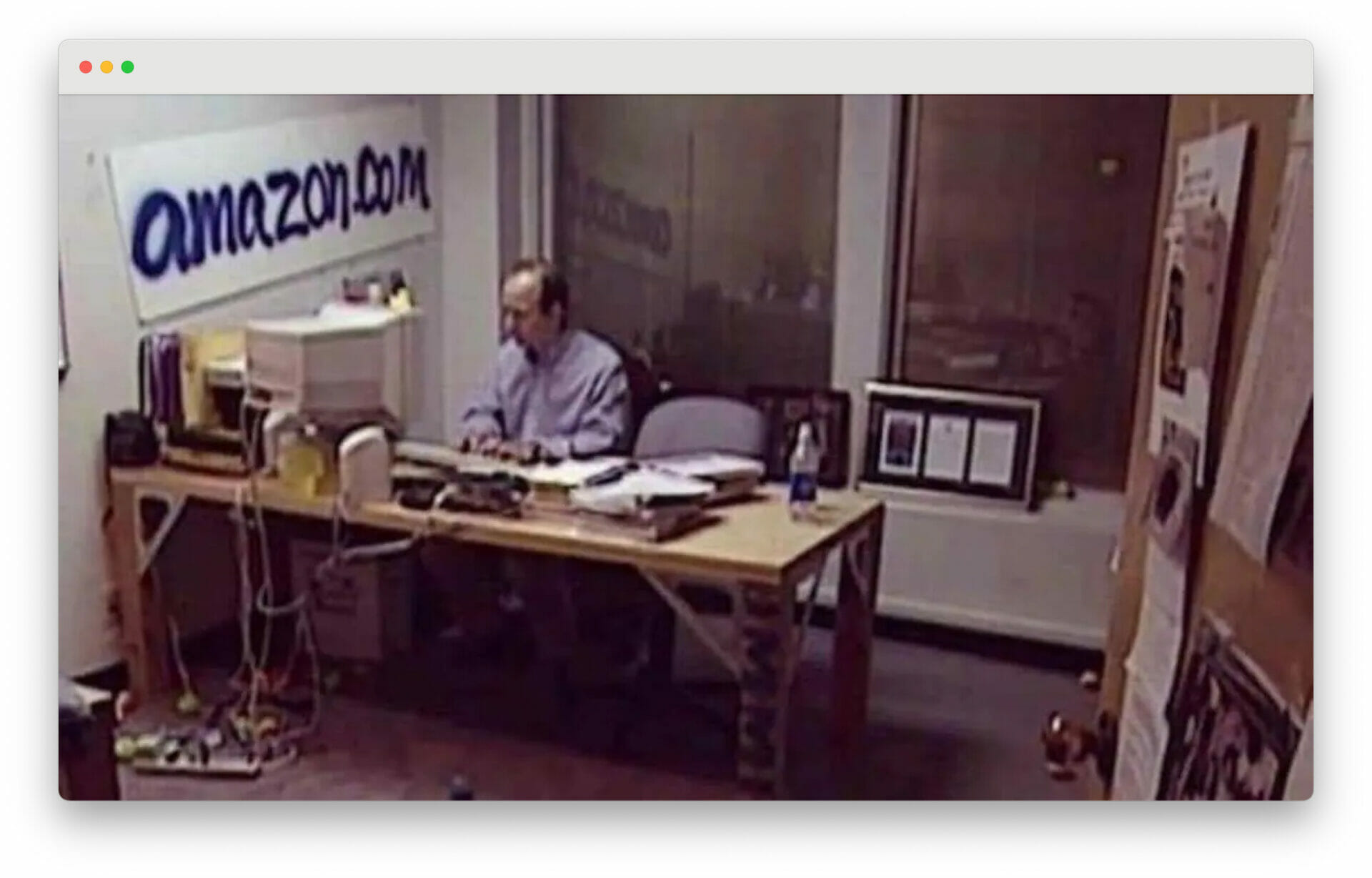
The technical inception of Amazon was a study in lean development. Operating out of a converted garage, the initial team had to solve a problem that had no blueprint: how to create a searchable, transactional database that could handle millions of unique stock-keeping units (SKUs).
The Transition from Cadabra to Amazon.com
In its earliest stages, the company was incorporated as “Cadabra, Inc.” However, the name was quickly scrapped after a lawyer misheard it as “cadaver.” Bezos eventually settled on Amazon, naming it after the world’s largest river. From a tech perspective, this was a strategic choice for Search Engine Optimization (SEO) before the term even existed; in the mid-90s, website directories were often alphabetized, and a name starting with “A” ensured prime placement.
The first version of the site was coded primarily in C++ and utilized a relational database management system. This was a significant departure from the static HTML pages of the era. The goal was to create a dynamic user interface where inventory could be updated in real-time—a massive technical undertaking given the processing power of the era’s servers.
Building the First E-commerce Database
When Amazon went live in July 1995, it billed itself as “Earth’s Biggest Bookstore.” The “Tech” behind this claim was a sophisticated indexing system. Unlike a physical bookstore, which is limited by shelf space, Amazon’s virtual shelves were limited only by the capacity of its servers.
The early engineering team had to build a custom interface that could communicate with book wholesalers’ databases via dial-up connections. They developed a “virtual backbone” that allowed a customer in California to order a book that Amazon didn’t actually have in stock, trigger an automated order to a distributor, and track that shipment—all within a single software ecosystem. This was the birth of automated supply chain management in the retail sector.
Scaling the Infrastructure: Solving the Logistics of Digital Retail
As Amazon transitioned from a niche bookstore to a multi-category retailer in the late 90s, its original monolithic software architecture began to buckle under the weight of millions of users. The period between 1998 and 2005 saw a radical shift in how the company approached software engineering, moving toward a philosophy of “decoupled” systems.
The Evolution of Personalization Algorithms
One of Amazon’s most significant technological contributions to the web was the development of collaborative filtering. In the late 90s, Amazon’s tech team realized that the data they collected on user behavior was as valuable as the products themselves.
Engineers developed “Item-to-Item Collaborative Filtering,” an algorithm that could generate recommendations in real-time by comparing a user’s purchase history with millions of other data points. This wasn’t just a marketing tool; it was a complex computational feat. By pre-computing the similarity between items rather than users, Amazon was able to scale its recommendation engine to handle a massive surge in traffic without crashing the servers.
Supply Chain Automation and the Tech of Distribution
By the early 2000s, Amazon’s “Tech” expanded from the digital screen to the physical warehouse. The company began investing heavily in Warehouse Management Systems (WMS). These were not off-the-shelf software packages but proprietary systems designed to optimize the “pick-and-pack” process.
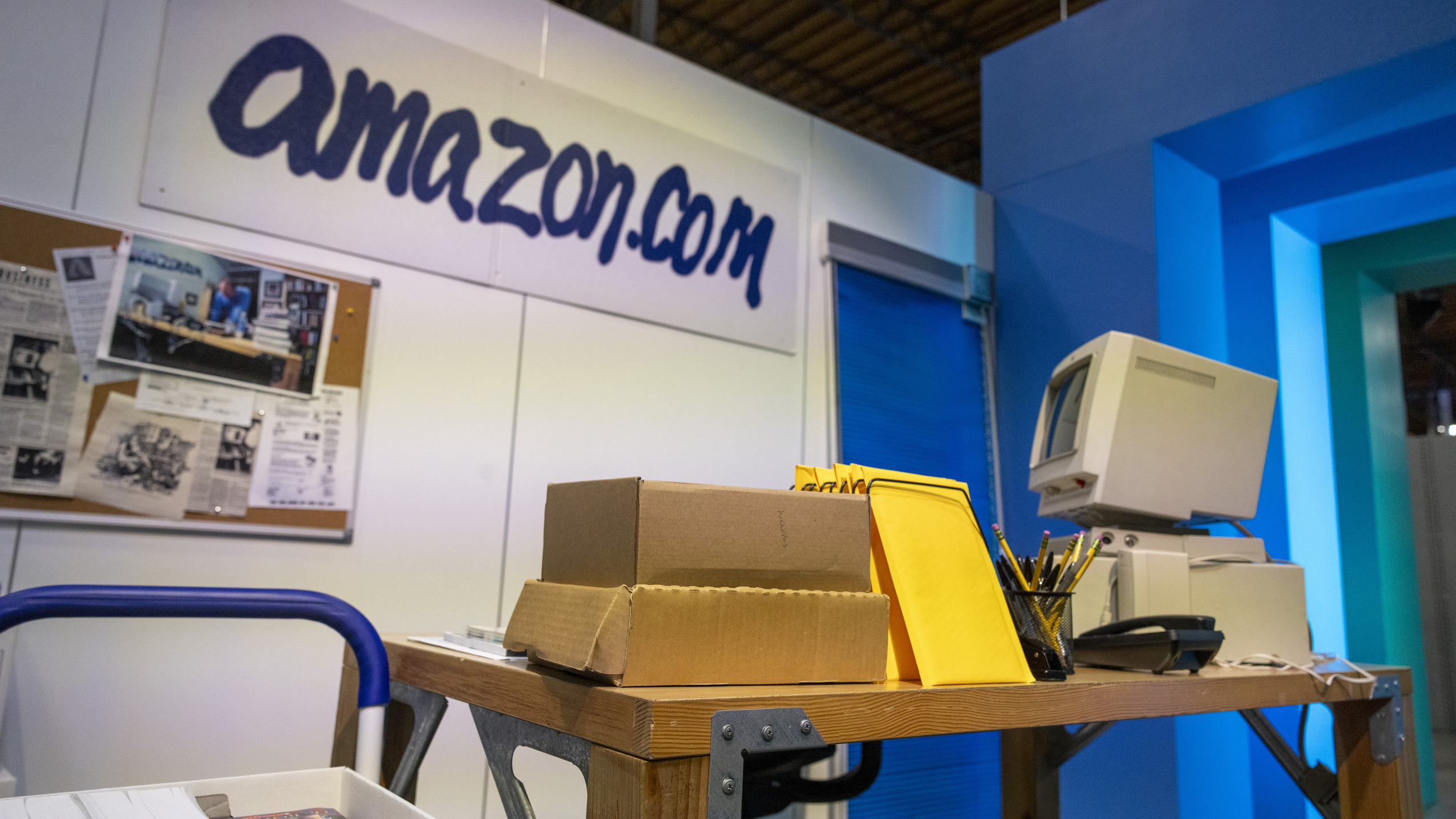
The introduction of the “random stow” algorithm changed the face of logistics. Instead of grouping all similar items together, Amazon’s software directed workers to place items wherever there was open space. The computer tracked every item’s location with surgical precision, calculating the most efficient path for a worker to walk to fulfill an order. This optimization of human and machine movement was a precursor to the fully automated robotics systems the company would later deploy.
The Pivot to Infrastructure: How Internal Needs Created AWS
Perhaps the most pivotal moment in Amazon’s technological history occurred in the early 2000s. The company found that its internal development teams were spending too much time building the “plumbing” for their apps—servers, storage, and databases—rather than the apps themselves. This bottleneck led to a mandate that would change the trajectory of the entire tech industry.
Solving the “Scaling Wall” in the Early 2000s
Jeff Bezos famously issued an “API Mandate” around 2002. He required every team within Amazon to expose their data and functionality through service interfaces (APIs) and to communicate with each other exclusively through these interfaces. This move effectively turned Amazon’s internal infrastructure into a set of modular services.
This shift was a masterclass in software engineering strategy. By forcing teams to build highly documented, plug-and-play services, Amazon inadvertently created a platform. They realized that the same tools they used to scale their own business—like S3 (Simple Storage Service) and EC2 (Elastic Compute Cloud)—could be sold to other developers.
The Shift to Microservices and Cloud Computing
In 2006, Amazon Web Services (AWS) was officially launched. This wasn’t just a new product line; it was the birth of modern cloud computing. Tech startups no longer needed to buy expensive physical servers; they could simply “rent” computing power from Amazon.
This transition cemented Amazon’s status as a tech company rather than a retailer. AWS introduced the concept of “Infrastructure as Code,” allowing developers to manage and provision data centers through software lines rather than hardware tweaks. Today, AWS powers a significant portion of the global internet, from Netflix to government agencies, proving that the tech Amazon built to sell books was robust enough to run the world’s digital economy.
Modern Amazon: AI, Robotics, and the Future of the Tech Stack
As we look at Amazon today, the technological seeds planted in 1994 have grown into a complex ecosystem defined by Artificial Intelligence (AI) and Machine Learning (ML). The company has moved beyond the screen and the warehouse into the very fabric of the home and the sky.
Machine Learning in the Prime Ecosystem
The “Amazon Prime” experience is fueled by predictive analytics. Using deep learning models, Amazon can now predict which items a customer is likely to buy before they even click “order.” In some cases, this allows for “anticipatory shipping,” where items are moved to local distribution centers based on regional demand forecasts.
Furthermore, the Amazon search bar has evolved from a simple keyword match to a sophisticated Natural Language Processing (NLP) engine. It understands intent, context, and even misspellings, ensuring that the technology stays invisible while providing a seamless user experience.
The Integration of IoT and Ambient Computing
The launch of Alexa and the Echo hardware marked Amazon’s foray into ambient computing. This required a massive leap in voice recognition tech and edge computing. Alexa doesn’t just process sound; it relies on a massive cloud-based neural network to interpret human speech in various accents and environments.
Coupled with the acquisition of Kiva Systems (now Amazon Robotics), the tech stack now includes autonomous mobile robots that navigate fulfillment centers using computer vision and sensor fusion. These robots communicate with each other through a centralized “brain” that prevents collisions and optimizes traffic flow, representing the pinnacle of industrial IoT (Internet of Things).
In conclusion, when Amazon was started in 1994, it was a bold bet on the scalability of the internet. From those early days of C++ coding in a garage to the vast neural networks of AWS and Alexa, Amazon’s history is a timeline of technological breakthroughs. It has consistently pushed the boundaries of what software can achieve, proving that at its core, Amazon is—and always has been—a technology company that happens to sell everything.
aViewFromTheCave is a participant in the Amazon Services LLC Associates Program, an affiliate advertising program designed to provide a means for sites to earn advertising fees by advertising and linking to Amazon.com. Amazon, the Amazon logo, AmazonSupply, and the AmazonSupply logo are trademarks of Amazon.com, Inc. or its affiliates. As an Amazon Associate we earn affiliate commissions from qualifying purchases.