
In the modern financial landscape, borrowing money is often a necessary step toward achieving significant life milestones, whether that involves purchasing a home, pursuing higher education, or launching a business. However, the true cost of a loan is rarely reflected in the sticker price or the principal amount alone. The most significant factor in the long-term cost of borrowing is interest—the price you pay for the privilege of using someone else’s capital.
Understanding the answer to the question “How much interest will I pay?” is fundamental to maintaining financial health. Without a clear picture of interest accumulation, consumers often find themselves trapped in cycles of debt that stifle their ability to save and invest. This is where an interest calculator becomes an indispensable tool. By demystifying the mathematics of lending, these tools empower individuals to make informed, data-driven decisions that align with their long-term wealth goals.

Understanding the Mechanics of Interest
Before plugging numbers into a calculator, it is essential to understand the underlying principles that govern how interest is calculated. Interest is not a static fee; it is a dynamic variable influenced by time, the principal amount, and the frequency of compounding.
Simple Interest vs. Compound Interest
The most basic form of interest is “simple interest,” calculated solely on the principal amount of the loan. While less common in consumer lending today, it is often found in short-term personal loans or certain types of private investments. The formula is straightforward: Principal × Rate × Time.
In contrast, “compound interest” is the interest calculated on the initial principal, which also includes all the accumulated interest from previous periods. In the world of personal finance, compounding is a double-edged sword. When you are saving or investing, it accelerates wealth creation. When you are borrowing—as is the case with credit cards or many mortgages—it can cause debt to balloon rapidly if not managed correctly. An interest calculator allows you to see exactly how different compounding frequencies (monthly, daily, or annually) impact your total repayment amount.
The Role of the Annual Percentage Rate (APR)
Many consumers confuse the “interest rate” with the “Annual Percentage Rate” (APR). While the interest rate tells you the cost of borrowing the principal, the APR provides a more holistic view of the loan’s cost. It includes the interest rate plus other fees such as loan origination fees, closing costs, and insurance.
When using a “how much interest will I pay” calculator, inputting the APR rather than just the nominal interest rate will yield a much more accurate representation of your actual out-of-pocket expenses over the life of the loan. This distinction is vital when comparing financial products from different lenders.
Why You Need an Interest Calculator in Your Financial Toolkit
The human brain is notoriously poor at calculating exponential growth or complex amortization schedules mentally. A dedicated financial tool removes the guesswork and provides a clear roadmap for your financial future.
Visualizing the True Cost of Borrowing
One of the most profound benefits of using an interest calculator is the “sticker shock” it provides—in a positive way. For example, a $400,000 mortgage at a 7% interest rate over 30 years results in total interest payments of over $550,000. This means you are paying back more than double what you borrowed.
Seeing these figures laid out in black and white changes the psychological approach to debt. It shifts the focus from “Can I afford the monthly payment?” to “Is the total cost of this asset worth the interest I will pay?” This perspective is crucial for avoiding over-leverage and ensuring that your debt-to-income ratio remains within healthy limits.
Comparing Loan Offers Effectively
Lenders often present loan options in ways that highlight low monthly payments while obscuring the total interest cost. For instance, a lender might offer a lower interest rate but a longer term, or a higher rate with fewer upfront fees.
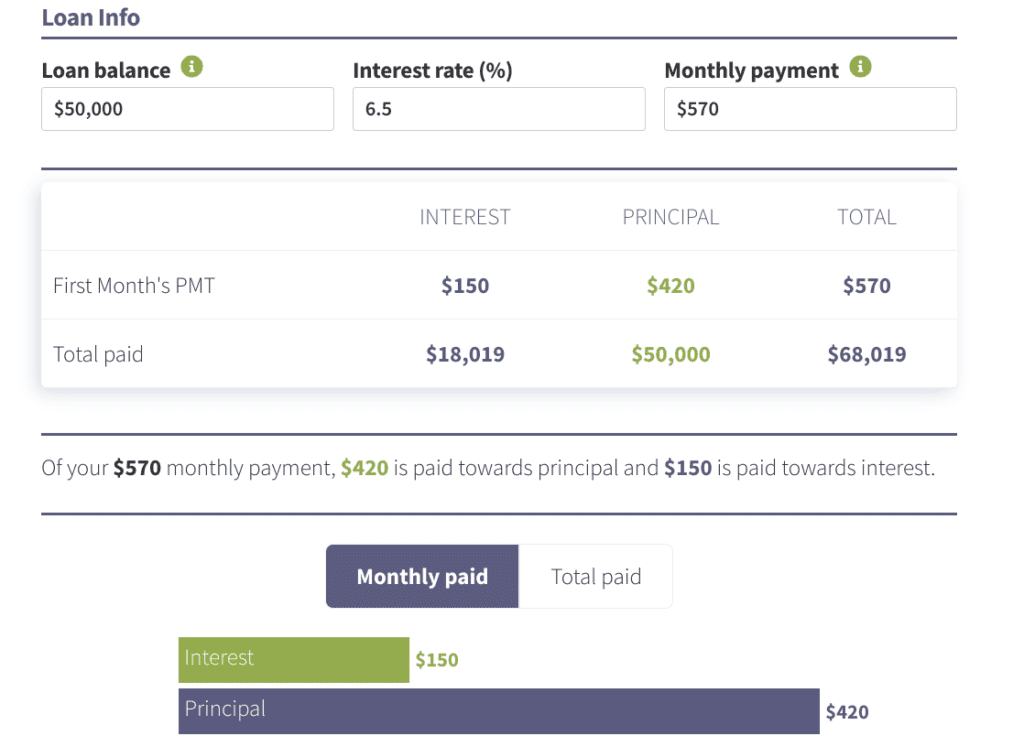
By utilizing an interest calculator, you can run “what-if” scenarios. You can compare a 15-year mortgage against a 30-year mortgage or evaluate whether paying “points” upfront to lower your interest rate is a sound financial investment. This level of analysis ensures that you are choosing the most cost-effective path, saving you thousands or even tens of thousands of dollars over the duration of the loan.
Deep Dive: Calculating Interest for Different Financial Products
Interest behaves differently depending on the type of credit or loan product you are using. To accurately calculate what you will pay, you must tailor your approach to the specific rules of the financial vehicle.
Mortgages and Amortization Schedules
Mortgage interest is typically calculated using an amortization schedule. In the early years of a mortgage, the vast majority of your monthly payment goes toward interest, with very little applied to the principal. As time goes on, this ratio flips.

An interest calculator for mortgages provides a detailed breakdown of this schedule. This is particularly useful for homeowners who are considering selling their property after a few years. If you sell early in the term, you may find that despite making years of payments, you have built very little equity because most of those payments were consumed by interest.
Credit Card Debt and the Minimum Payment Trap
Credit cards are perhaps the most dangerous form of interest-bearing debt due to their high rates and daily compounding methods. If you only pay the minimum amount required, the interest calculator will reveal a sobering reality: it could take decades to pay off a relatively small balance.
Most calculators will show you that by increasing your payment by just $50 or $100 above the minimum, you can shave years off the repayment period and save a fortune in interest. This makes the calculator a powerful motivational tool for debt liquidation.
Auto Loans and Personal Loans
Auto loans are often “simple interest” loans but are spread over shorter terms (typically 3 to 7 years). Because vehicles are depreciating assets, it is critical to ensure that you are not paying so much in interest that you end up “underwater”—owing more on the car than it is worth. Using a calculator before visiting a dealership allows you to walk onto the lot knowing exactly what interest rate you qualify for and what your total cost of ownership will be.
Strategies to Minimize Interest Payments
Once you have used a calculator to determine how much interest you are scheduled to pay, the next logical step is to find ways to reduce that number. The goal of any savvy financial plan is to keep as much of your money as possible rather than handing it over to a lending institution.
The Power of Extra Principal Payments
One of the most effective ways to reduce interest is by making extra payments toward the principal. Even a small additional payment made consistently can have a massive impact. For example, on a standard 30-year mortgage, making one extra payment per year can shorten the loan term by several years and save tens of thousands in interest.
A high-quality interest calculator will have a feature that allows you to input “extra payments” to see the immediate effect on your debt clock. This visual feedback reinforces the habit of disciplined spending and aggressive debt repayment.
Refinancing and Consolidation
If market interest rates have dropped since you took out a loan, or if your credit score has significantly improved, you may be able to refinance your debt at a lower rate. An interest calculator is essential here to determine if the “break-even point”—the moment when the savings from the lower interest rate exceed the costs of refinancing—is reachable within your planned timeframe.
Similarly, for those struggling with multiple high-interest credit card balances, debt consolidation into a lower-interest personal loan can be a life-changing move. The calculator helps you verify that the new loan actually saves you money rather than just extending the time you are in debt.
Leveraging Interest Calculators for Wealth Building
While most people use interest calculators to manage what they owe, the same logic applies to what they earn. Shifting the focus from interest paid to interest earned is the hallmark of a successful transition from a debtor to an investor.
Interest as an Asset: The Power of Compounding Gains
When you are the lender—by putting money into a High-Yield Savings Account (HYSA), Certificates of Deposit (CDs), or bonds—the calculator shows you the “How much interest will I receive?” side of the equation. Understanding the Rule of 72 (a shortcut to estimate how long it takes to double your money) becomes more tangible when you see the compounding curve on a calculator.
By calculating the potential growth of a side hustle’s income or an extra $200 invested monthly, you can see how interest works in your favor to build a robust financial safety net.
Planning Your Retirement Horizon
The final application of interest calculation is in retirement planning. By calculating the expected interest or market returns on your investment portfolio, you can determine if you are on track to meet your goals. It allows you to adjust your “savings rate” or “time to retirement” based on realistic interest projections.
In this context, the interest calculator is not just a tool for managing debt; it is a compass for navigating toward financial independence. It allows you to project future wealth based on various scenarios, ensuring that when you reach retirement age, you are supported by the interest your capital has generated over the decades.
Conclusion
The question “How much interest will I pay?” is one of the most important questions you can ask in your financial life. Whether you are buying a home, managing a credit card, or planning for the future, the answer dictates your ability to build wealth. By utilizing an interest calculator, you move away from emotional financial decisions and toward a strategy rooted in mathematical reality.
Knowledge is power, but in the realm of personal finance, calculated knowledge is profit. Use these tools to audit your current debts, evaluate new opportunities, and ultimately, to flip the script so that interest begins working for you rather than against you. Professional financial management starts with a single calculation; make sure yours is accurate.
aViewFromTheCave is a participant in the Amazon Services LLC Associates Program, an affiliate advertising program designed to provide a means for sites to earn advertising fees by advertising and linking to Amazon.com. Amazon, the Amazon logo, AmazonSupply, and the AmazonSupply logo are trademarks of Amazon.com, Inc. or its affiliates. As an Amazon Associate we earn affiliate commissions from qualifying purchases.