
Navigating the world of automotive finance can feel like walking through a labyrinth of jargon and hidden costs. For most consumers, the excitement of choosing a new vehicle is often dampened by the complexities of the financing agreement. One of the most critical figures in any car loan contract is the Annual Percentage Rate (APR). While many buyers focus solely on the monthly payment or the base interest rate, the APR provides the most accurate picture of what a loan truly costs over time.
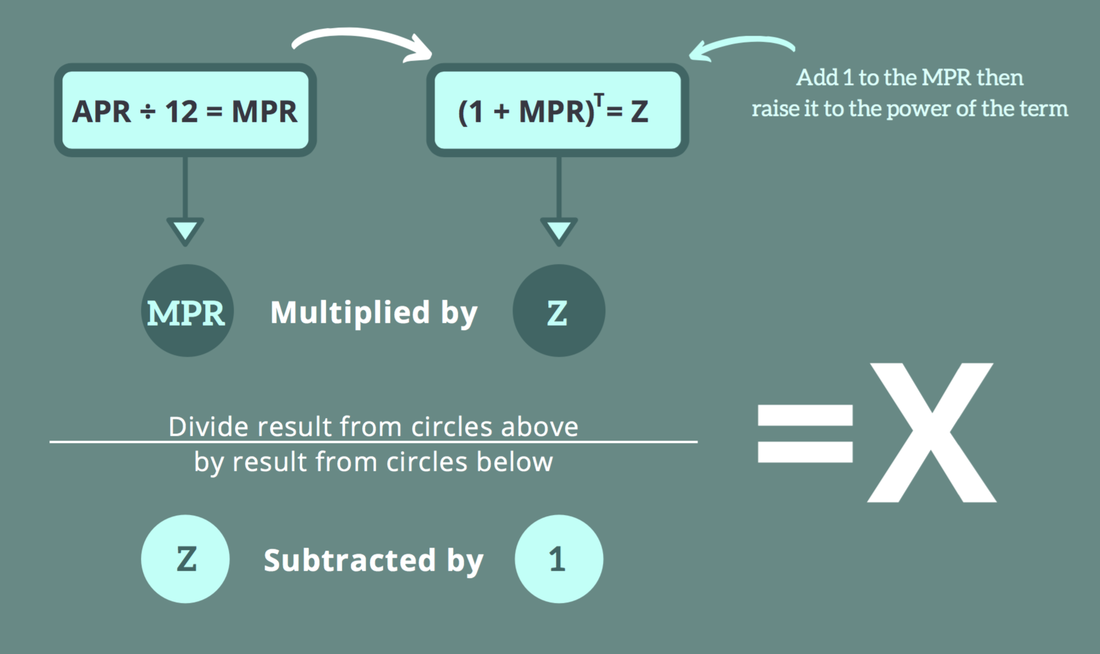
Understanding how to calculate the APR on a car loan is not just a mathematical exercise; it is a fundamental skill in personal finance that can save you thousands of dollars. By peeling back the layers of interest rates, lender fees, and loan terms, you can approach the dealership with the confidence of a seasoned financial analyst.
Understanding the Basics: Interest Rate vs. APR
Before diving into the calculations, it is essential to distinguish between the nominal interest rate and the APR. While they are related, they represent different aspects of your financial commitment.
The Components of a Nominal Interest Rate
The interest rate is the percentage of the principal amount that the lender charges you for borrowing money. It is the “sticker price” of the loan’s cost. This rate is primarily influenced by the Federal Reserve’s benchmarks, inflation expectations, and the lender’s internal cost of capital. However, the interest rate alone does not account for the auxiliary costs associated with securing the loan.
What Fees are Included in the APR?
The APR is a broader measure. It includes the interest rate plus other charges such as loan origination fees, documentation fees, and potentially credit insurance or prepaid interest. Because the APR aggregates these costs into a single percentage, it represents the total yearly cost of the loan. If you are comparing two loans where the interest rates are identical but one has higher closing fees, the APR will reveal the more expensive option immediately.
Why the APR is More Accurate than the Base Rate
In the context of the Truth in Lending Act (TILA), lenders are legally required to disclose the APR. This transparency is designed to prevent lenders from “hiding” the cost of a loan in a low interest rate while padding the contract with excessive fees. For a car buyer, the APR is the ultimate “apples-to-apples” comparison tool. A loan with a 5% interest rate and $1,000 in fees might actually be more expensive than a loan with a 5.5% interest rate and zero fees.
The Step-by-Step Mathematical Approach to Calculation
Calculating the APR manually requires a bit of algebra, but it is the best way to understand the mechanics of your debt. To perform this calculation, you first need to determine the total finance charge and the total amount financed.
Gathering the Necessary Data
To begin, you will need three specific numbers:
- The Loan Principal: The actual amount of money you are borrowing to cover the car’s price.
- The Total Fees: Any administrative or processing fees charged by the lender to initiate the loan.
- The Total Interest Paid: The sum of all interest payments over the life of the loan.
You can find the total interest by using an amortization formula or by looking at the “Total of Payments” section in a standard loan disclosure and subtracting the principal.
The Formula for Manual Calculation
The simplified formula to find the APR is as follows:
APR = [((Fees + Total Interest) / Principal) / Number of days in loan term] x 365 x 100
For example, imagine you take out a $20,000 loan for five years (1,825 days). If the total interest over those five years is $3,000 and the lender charges a $500 origination fee, your total finance charge is $3,500.
- Divide $3,500 by the $20,000 principal = 0.175.
- Divide 0.175 by 1,825 days = 0.00009589.
- Multiply by 365 = 0.035.
- Multiply by 100 = 3.5%.
Note: This is a simplified “periodic rate” calculation. For amortizing car loans, the math is slightly more complex because the principal balance decreases every month, but this formula provides a close approximation that helps you verify a lender’s claims.

Using Amortization Schedules for Precision
For a truly precise APR, financial professionals use the internal rate of return (IRR) method. This considers the time value of money, recognizing that interest is charged on the declining balance. An amortization schedule breaks down every single monthly payment into principal and interest components. By using an amortization tool, you can see how adding $500 in fees at the start of the loan effectively raises the interest you pay on every dollar remaining in the balance.
Factors That Influence Your Car Loan APR
Your APR isn’t a random number generated by a computer; it is a reflection of the risk the lender perceives in lending you money. Several variables dictate where your rate will land.
Credit Scores and Their Impact
Your credit score is the single most influential factor in determining your APR. Lenders use scores from bureaus like Equifax, Experian, and TransUnion to gauge your “creditworthiness.” Borrowers with “super-prime” scores (typically 740 and above) are offered the lowest APRs because they have a proven track record of timely payments. Conversely, “subprime” borrowers may face APRs that are three or four times higher to compensate the lender for the increased risk of default.
Loan Term Length and Risk Assessment
The duration of the loan also plays a significant role. Generally, shorter loan terms (36 to 48 months) carry lower APRs than longer terms (72 to 84 months). While a longer term makes the monthly payment more affordable, it keeps the lender’s money at risk for a longer period. Furthermore, cars are depreciating assets; on an 84-month loan, there is a high probability that the borrower will eventually owe more than the car is worth (“being underwater”), which increases the lender’s risk and, consequently, the APR.
New vs. Used Vehicle Considerations
Typically, new cars qualify for lower APRs than used cars. This is because new cars have a higher resale value and are easier for a bank to value as collateral. Additionally, manufacturers often provide “subsidized financing” (such as 0% or 1.9% APR offers) to move new inventory. Used cars, while cheaper in price, often come with higher APRs because their mechanical reliability is less certain, making them a slightly riskier bet for the financial institution.
Practical Tools and Online Calculators
While manual calculations are educational, modern technology provides tools that can perform these tasks instantly and with 100% accuracy.
Leveraging Financial Spreadsheets
For those who want a customized view of their finances, Microsoft Excel or Google Sheets are invaluable. You can use the =RATE function to find your APR. The syntax is:
=RATE(nper, pmt, pv) * 12
- nper: Total number of monthly payments.
- pmt: The monthly payment amount (as a negative number).
- pv: The total loan amount (principal plus fees).
Multiplying by 12 annualizes the monthly rate, giving you the true APR. This allows you to run “what-if” scenarios, such as seeing how an extra $2,000 down payment would change your total interest cost.
Mobile Apps and Online Comparisons
There are dozens of reputable financial websites that offer car loan calculators. When using these, ensure you are inputting the “Total Loan Amount” including any dealer add-ons or GAP insurance you plan to finance. These tools are excellent for the “shopping phase,” allowing you to compare a bank’s offer against a credit union’s offer in seconds.
Strategies to Lower Your APR Before Signing
Once you know how to calculate and interpret the APR, the final step is to use that knowledge to secure the best possible deal. You do not have to accept the first offer presented to you.
Shopping Around and Pre-Approvals
The most common mistake car buyers make is financing directly through the dealership without checking other options. Dealerships often act as intermediaries, marking up the interest rate provided by the bank to earn a “reserve” commission. By obtaining a pre-approval from a local credit union or an online bank before visiting the lot, you establish a ceiling for your APR. If the dealer wants your financing business, they will have to beat your pre-approved rate.
The Role of a Down Payment
A substantial down payment reduces the “Loan-to-Value” (LTV) ratio. When you put 20% down, the lender feels more secure because the loan is well-covered by the value of the vehicle. Lowering the LTV often results in a lower APR tier. Additionally, because you are borrowing less principal, the total interest calculated over the life of the loan drops significantly, even if the rate remains the same.

Negotiating With Dealers and Lenders
In many cases, the APR is negotiable. If you have a strong credit history and a competing offer, tell the finance manager. Mention that you understand the components of the APR and that you are looking for a reduction in the loan origination fees or a more competitive base rate. Being informed—knowing exactly how the APR is calculated and what the market averages are—gives you the leverage needed to negotiate from a position of strength.
By mastering the calculation of the Annual Percentage Rate, you transform from a passive consumer into an active participant in your financial life. A car loan is often the second-largest purchase a person makes; treating the financing with the same scrutiny as the vehicle’s engine ensures that your “dream car” doesn’t become a financial nightmare. Professionalism in personal finance starts with the details, and in the world of car loans, the detail that matters most is the APR.
aViewFromTheCave is a participant in the Amazon Services LLC Associates Program, an affiliate advertising program designed to provide a means for sites to earn advertising fees by advertising and linking to Amazon.com. Amazon, the Amazon logo, AmazonSupply, and the AmazonSupply logo are trademarks of Amazon.com, Inc. or its affiliates. As an Amazon Associate we earn affiliate commissions from qualifying purchases.