
Purchasing a vehicle is often the second-largest financial commitment a consumer makes, trailing only the purchase of a home. For many, the focus resides heavily on the make, model, and color of the vehicle. However, from a professional financial perspective, the most critical aspect of car ownership is not the aesthetic of the car, but the structure of the financing behind it. Understanding how to calculate a monthly car payment is more than a simple math exercise; it is an essential component of responsible budget management and long-term wealth preservation.
When you enter a dealership or browse an online marketplace, you are presented with a variety of numbers: MSRP, APR, trade-in values, and rebates. Without a clear understanding of how these variables interact to create your monthly obligation, you risk overextending your debt-to-income ratio and compromising your financial future. This guide breaks down the mechanics of auto financing to empower you to make an informed, data-driven decision.
The Core Variables: Understanding the Anatomy of an Auto Loan
Before you can calculate a payment, you must understand the individual levers that move the needle. A monthly car payment is not a static number; it is the result of several fluctuating factors that reflect both the market and your personal financial standing.
Principal Amount and Net Purchase Price
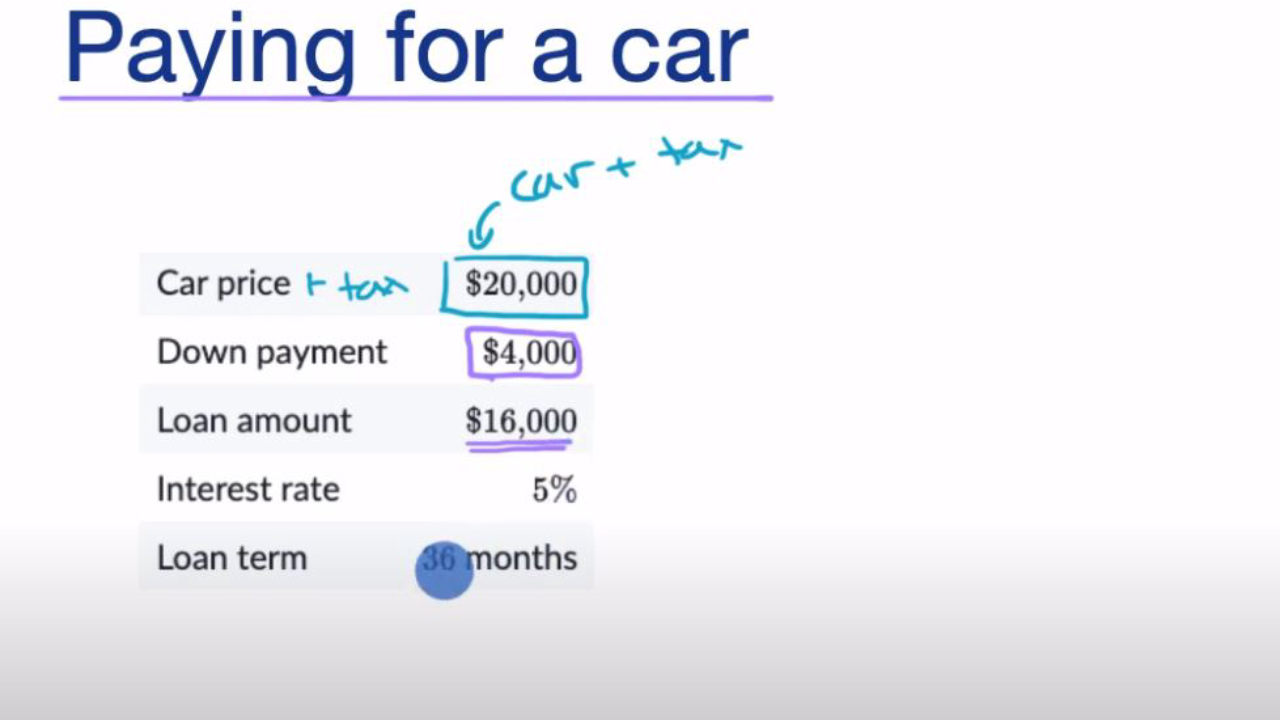
The principal is the total amount of money you are borrowing from a lender. This is rarely the same as the sticker price (MSRP) of the car. To find the true principal, you must start with the negotiated price of the vehicle and subtract your down payment and the value of any trade-in. Conversely, you must add sales tax, registration fees, and any extended warranties or gap insurance you choose to finance.
In the “Money” niche, we emphasize the importance of the “out-the-door” price. If you only calculate based on the MSRP, you may find yourself surprised by an extra $2,000 to $4,000 in fees that significantly inflate your monthly liability.
Annual Percentage Rate (APR) and Interest
The interest rate is the cost of borrowing money, expressed as a percentage. While “interest rate” and “APR” are often used interchangeably, the APR is a more accurate financial metric because it includes the interest rate plus any loan fees. Your APR is primarily determined by your credit score.
From a financial planning standpoint, even a 1% or 2% difference in APR can result in thousands of dollars in extra costs over the life of the loan. Understanding where you sit on the credit spectrum—from subprime to super-prime—is the first step in predicting your interest costs.
The Loan Term
The term is the length of time you have to pay back the loan, typically expressed in months (e.g., 36, 48, 60, 72, or 84 months). While longer terms result in lower monthly payments, they also result in significantly higher total interest costs. Furthermore, longer terms increase the risk of “negative equity,” or being “upside down” on your loan, where you owe more than the car is worth due to depreciation.
The Calculation Process: From Formulas to Financial Tools
Once you have identified the variables, you can move toward the actual calculation. While most consumers rely on digital calculators, understanding the underlying math provides a deeper insight into how your money is being allocated between principal and interest.
The Standard Amortization Formula
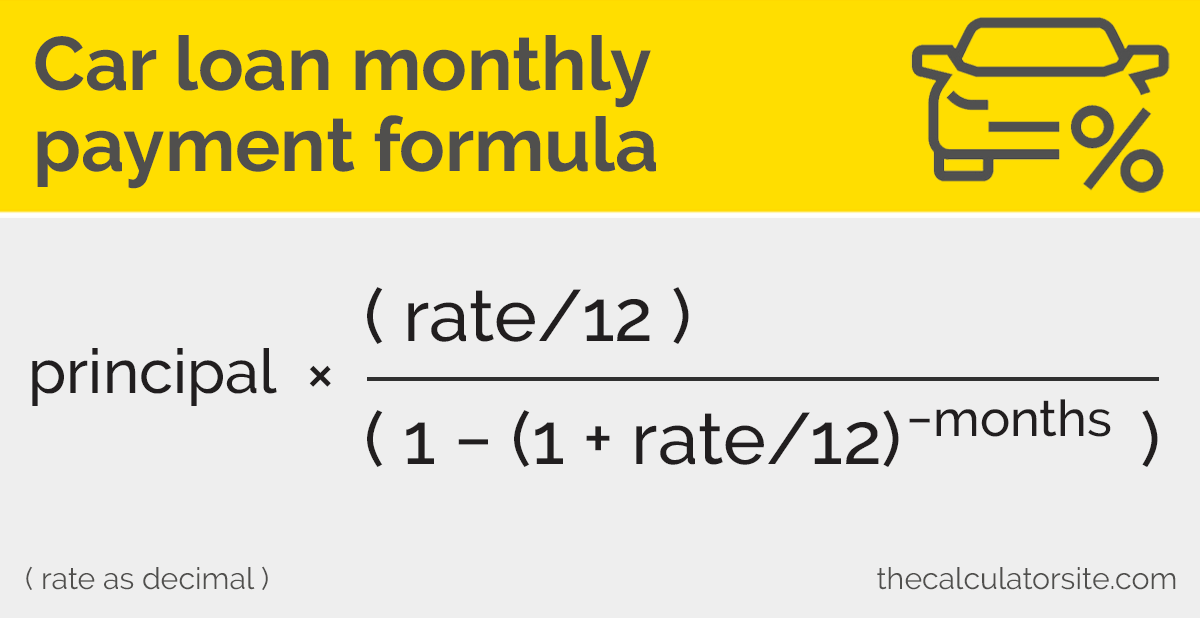
Monthly car payments are calculated using an amortization formula. This formula ensures that the lender receives a consistent payment every month while the ratio of interest to principal shifts over time. The formula is:
M = P [ i(1 + i)^n ] / [ (1 + i)^n – 1 ]
- M = Total monthly payment
- P = Principal loan amount
- i = Monthly interest rate (APR divided by 12)
- n = Number of months (loan term)
For example, if you borrow $30,000 at a 5% APR for 60 months, your monthly interest rate is 0.00416. Plugging these numbers into the formula reveals a monthly payment of approximately $566.14. Over five years, you will have paid $3,968 in interest alone.

Utilizing Online Financial Tools
In the modern financial landscape, manual calculation is rarely necessary. Numerous professional-grade financial tools and apps allow you to plug in your variables to see instant results. When using these tools, it is vital to use “What-If” scenarios.
A smart investor uses a car payment calculator not just to see what they can pay, but to see how much they can save. For instance, by adjusting the down payment or shortening the term by 12 months, you can visualize the reduction in total interest paid. These tools are indispensable for comparing offers from different lenders, such as a credit union versus a dealership’s captive finance company.
The Role of Amortization Schedules
An amortization schedule is a table that shows every payment over the life of the loan. At the beginning of the loan, a larger portion of your monthly payment goes toward interest. As the principal balance decreases, the interest portion shrinks, and more of your money goes toward the principal. Reviewing this schedule helps you understand how quickly you are building equity in the vehicle.
Hidden Costs: The Total Cost of Ownership (TCO)
A common mistake in personal finance is equating the “car payment” with the “cost of the car.” To maintain a healthy financial profile, you must calculate the Total Cost of Ownership (TCO). If your monthly loan payment is $500, but your total monthly outflow for the vehicle is $900, your budget may be at risk.
Insurance Premiums and Credit Health
Insurance is a mandatory monthly expense that varies wildly based on the vehicle type, your driving record, and your location. Lenders require “full coverage” (comprehensive and collision) as long as there is a lien on the title. Before signing a loan agreement, obtain an insurance quote for the specific VIN. High-performance vehicles or luxury SUVs often carry premiums that can add an additional 30% to 40% to your monthly automotive budget.
Fuel, Maintenance, and Depreciation
While fuel and maintenance aren’t part of the loan payment, they are part of the monthly “Money” equation. Modern financial planning suggests using the “20/4/10” rule: put 20% down, limit the loan to 4 years, and ensure that total transportation costs (including insurance and fuel) do not exceed 10% of your gross monthly income.
Depreciation is the “silent” cost. A car is a depreciating asset, often losing 15% to 20% of its value in the first year. If your monthly payment is too low because the term is too long, you may find yourself in a position where you cannot sell the car without paying the lender thousands of dollars out of pocket to clear the title.
Strategic Financial Maneuvers to Lower Your Payment
If the calculated monthly payment exceeds your comfort zone, there are several strategic moves you can make within the realm of personal finance to optimize the numbers.
The Power of the Down Payment
The most effective way to lower a monthly payment and reduce interest is to increase the down payment. In financial terms, this reduces your Loan-to-Value (LTV) ratio. A lower LTV makes you a lower-risk borrower in the eyes of the lender, which can sometimes unlock a better interest rate tier. Aiming for a 20% down payment is the gold standard for avoiding immediate negative equity.
Leveraging Trade-in Equity
If you currently own a vehicle, its equity is a powerful financial tool. However, you must distinguish between the “allowance” a dealer offers and the actual market value. Researching your trade-in value via independent financial valuation sites allows you to negotiate the net purchase price more effectively. Ensure that the trade-in value is applied to the principal before taxes are calculated, as many states offer a tax credit on the trade-in amount, further lowering your total cost.
Credit Optimization and Refinancing
Before applying for an auto loan, take six months to optimize your credit score. Paying down revolving credit card debt can boost your score, potentially moving you from a 6% APR bracket to a 4% bracket. If you already have a high-interest loan, consider refinancing. If interest rates have dropped or your credit score has improved since you purchased the vehicle, refinancing through a credit union can lower your monthly obligation without necessarily extending the life of the loan.
Conclusion: Making a Data-Driven Purchase
Calculating a monthly car payment is the final step in a broader financial strategy. By understanding the interplay between principal, interest, and loan terms, you move away from being a passive consumer and become an active manager of your personal wealth.
Professional financial health requires looking beyond the monthly “sticker shock” and analyzing the long-term impact of debt. When you master these calculations, you ensure that your vehicle remains a tool for mobility and convenience rather than a burden on your financial independence. Always remember: the best car payment is the one that fits seamlessly into a well-diversified financial plan, allowing you to continue saving, investing, and building a secure future.
aViewFromTheCave is a participant in the Amazon Services LLC Associates Program, an affiliate advertising program designed to provide a means for sites to earn advertising fees by advertising and linking to Amazon.com. Amazon, the Amazon logo, AmazonSupply, and the AmazonSupply logo are trademarks of Amazon.com, Inc. or its affiliates. As an Amazon Associate we earn affiliate commissions from qualifying purchases.