
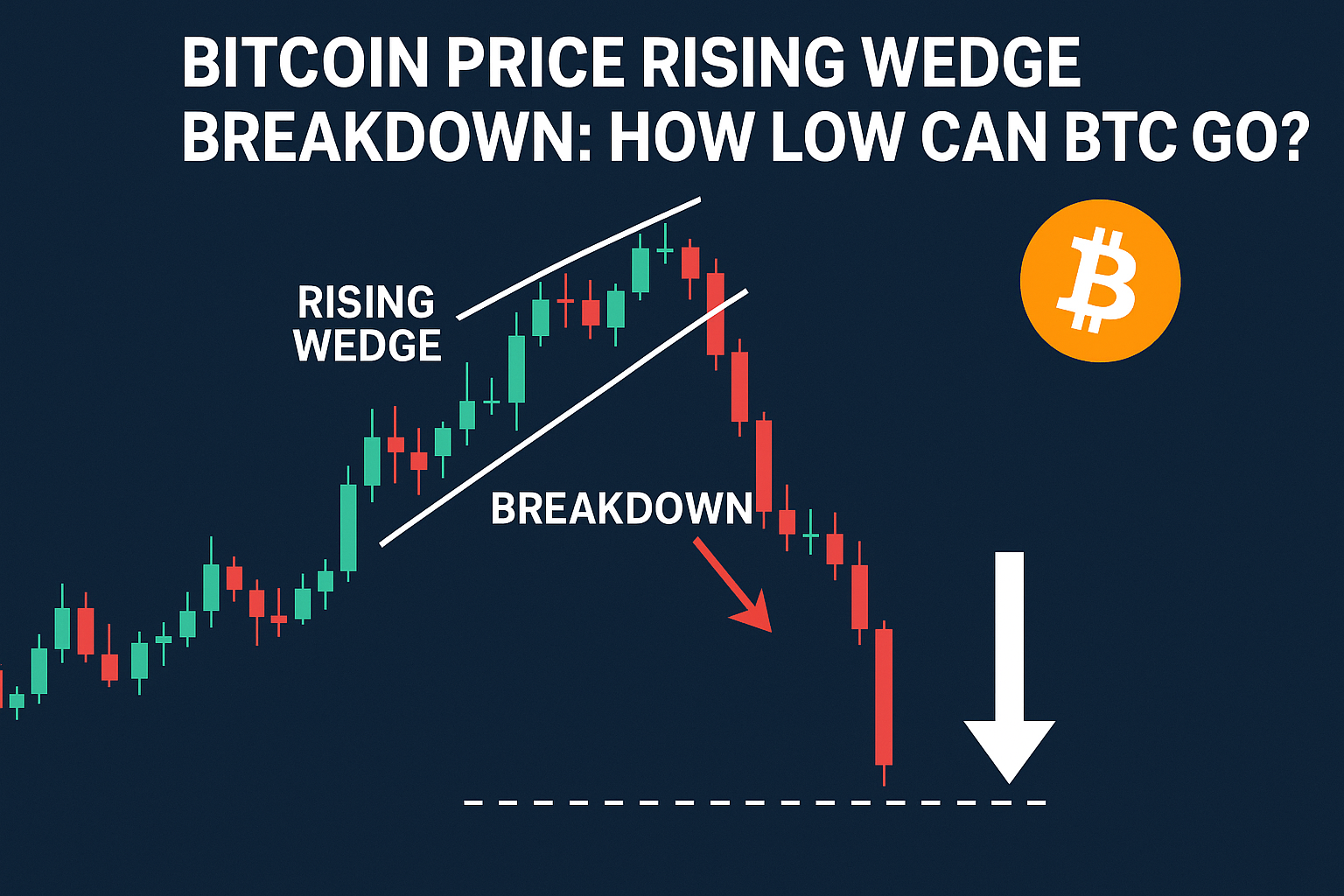
The cryptocurrency market is renowned for its meteoric rises, but it is equally defined by its breathtaking corrections. For seasoned investors and newcomers alike, the sight of red candles on a price chart inevitably leads to a singular, pressing question: How low will Bitcoin go? Understanding the floor of a Bitcoin correction requires a multi-faceted approach that blends macroeconomic trends, technical analysis, and the unique psychological cycles of the digital asset space.
In the realm of personal finance and investing, Bitcoin has transitioned from a fringe experiment to a legitimate asset class. However, its “risk-on” nature means it is often the first to be sold off during periods of global economic uncertainty. To determine where the bottom might lie, we must dissect the forces currently driving the market and look at historical precedents that have defined Bitcoin’s decade-long journey.

Macroeconomic Headwinds and the Liquidity Crunch
Bitcoin does not exist in a vacuum. While early proponents touted it as an “uncorrelated asset,” recent years have shown a high degree of correlation between Bitcoin and traditional risk assets, particularly technology stocks. The primary driver of Bitcoin’s downward pressure is often found in the broader macroeconomic environment.
The Impact of Central Bank Policy and Interest Rates
The most significant factor influencing Bitcoin’s price floor is the movement of global interest rates, particularly those set by the Federal Reserve. When central banks hike interest rates to combat inflation, liquidity is pulled out of the financial system. For an investor, “cheap money” disappears, and the appeal of high-yield, high-risk assets like Bitcoin diminishes in favor of “safer” returns in Treasury bonds. As long as interest rates remain elevated or the narrative of “higher for longer” persists, Bitcoin faces a persistent gravitational pull downward.
Global Geopolitics and Risk Aversion
Geopolitical instability often triggers a flight to safety. While Bitcoin is frequently called “Digital Gold,” in the initial stages of a global crisis, investors often flee to the U.S. Dollar. This “liquidity event” can cause Bitcoin to pierce through established support levels. To find the bottom, one must monitor the DXY (U.S. Dollar Index). Historically, a strengthening dollar inversely correlates with Bitcoin’s performance. A peak in dollar strength often signals the proximity of a Bitcoin price floor.
Regulatory Pressure and Market Clarity
The threat of stringent regulation acts as a ceiling for growth and a catalyst for price drops. Whether it is a crackdown on offshore exchanges or tightening rules regarding self-custody, regulatory news can trigger panic selling. However, once regulations are clarified—even if they are strict—the market tends to find a bottom as the “unknown” becomes a “known” risk, allowing institutional capital to re-enter the space with a clear framework.
Technical Analysis: Identifying the Historical Floor
While macroeconomics sets the stage, technical analysis provides the map. Traders and analysts use historical price data to identify “support zones”—price levels where buying interest has historically been strong enough to overcome selling pressure.
The 200-Week Moving Average and Realized Price
Historically, the 200-week moving average (WMA) has acted as the ultimate safety net for Bitcoin. In almost every major bear market, Bitcoin has touched or briefly dipped below this line before staging a significant recovery. Additionally, the “Realized Price”—the average price at which all Bitcoins were last moved on-chain—serves as a fundamental floor. When the market price drops below the realized price, it indicates that the average investor is in a loss, a state that historically precedes a market bottom and a period of accumulation.
Previous Cycle Highs as Support
In technical analysis, “resistance becomes support.” A common rule of thumb in Bitcoin’s market cycles is that the price rarely falls below the peak of the previous major bull cycle. For example, during the 2018 crash, Bitcoin stayed above the 2013 peak. While this “rule” was briefly challenged in the 2022-2023 downturn, it remains a critical psychological and technical benchmark for identifying how low the asset can realistically go before long-term holders begin to buy aggressively.

The Role of Miner Capitulation
Bitcoin miners are the backbone of the network, but they are also businesses with overhead costs. When the price of Bitcoin falls below the cost of production (electricity, hardware, and maintenance), miners are forced to sell their holdings to stay afloat or shut down their rigs entirely. This “miner capitulation” often marks the final stage of a bear market. When the hash rate stabilizes after a drop, it often indicates that the “weak” miners have exited, and the market has reached a sustainable price floor.
The Psychology of Market Cycles and Investor Sentiment
Investing is as much about human psychology as it is about mathematics. Bitcoin cycles are driven by extreme swings between euphoria and despair. To answer “how low,” one must gauge the level of “maximum pain” in the market.
Moving from Euphoria to Capitulation
Every Bitcoin crash follows a similar psychological trajectory. It begins with “complacency,” where investors believe the dip is temporary. This is followed by “anxiety” and “panic.” The absolute bottom usually occurs during “capitulation”—a moment of total despair where the last remaining “weak hands” sell their positions, convinced that Bitcoin is going to zero. Financial tools like the Fear & Greed Index are invaluable here; a sustained period of “Extreme Fear” (typically a score below 15) is often a contrarian signal that the bottom is near.
The Four-Year Halving Cycle
The Bitcoin “Halving”—an event where the reward for mining new blocks is cut in half—occurs every four years. This programmatic scarcity creates a predictable supply shock. Historically, Bitcoin enters a bear market roughly 18 months after a peak and finds its bottom several months before the next halving. By mapping where we are in the four-year cycle, investors can estimate the duration of a downtrend. If the halving is still years away, the “low” might be further off; if the halving is approaching, the floor is likely being established.
Institutional vs. Retail Sentiment
In previous cycles, Bitcoin was driven largely by retail speculation. Today, the landscape is dominated by institutional players, including spot ETF issuers and corporate treasuries. Institutional sentiment is less prone to “panic selling” but is highly sensitive to quarterly earnings and risk-management mandates. A “low” is often confirmed when institutional accumulation resumes on-chain, visible through large-scale outflows from exchanges into cold storage wallets.
Risk Management: How to Invest When the Floor is Uncertain
For the individual investor, the question “how low will it go?” should be followed by “how do I manage my risk?” Trying to catch the exact bottom is a notoriously difficult strategy that often leads to missing the recovery entirely.
The Power of Dollar-Cost Averaging (DCA)
Instead of attempting to time the absolute floor, many successful investors utilize Dollar-Cost Averaging. By investing a fixed amount of money at regular intervals, you buy more Bitcoin when prices are low and less when prices are high. This strategy mitigates the risk of entering a large position right before a further leg down, effectively smoothing out your entry price over the duration of the market’s bottoming process.
Assessing Your Horizon and Liquidity Needs
The “low” only matters if you are forced to sell. For those with a five-to-ten-year investment horizon, a 20% or 30% drop from current levels is a volatility blip in a larger upward trend. However, for those using “rent money” or leveraged positions, a move to the technical floor can be catastrophic. Sound financial planning dictates that Bitcoin should only represent a portion of a diversified portfolio, ensuring that you have the “staying power” to wait for the eventual market reversal.
Distinguishing Between Volatility and Value
It is crucial to distinguish between a price drop caused by market mechanics and a drop caused by a fundamental flaw in the asset. To date, Bitcoin’s core protocol has remained secure and decentralized. As long as the network continues to produce blocks and the adoption of decentralized finance grows, price volatility remains an opportunity for value acquisition. The “low” is simply the point at which the market’s valuation of the network temporarily disconnects from its long-term utility.
In conclusion, while no one can predict the exact dollar amount of Bitcoin’s next floor, the convergence of macroeconomic stabilization, historical technical support levels (like the 200-week WMA), and the inevitable cycle of miner capitulation provide a clear framework for observation. By shifting the focus from “timing the bottom” to “managing the cycle,” investors can navigate Bitcoin’s volatility with professional discipline rather than emotional impulse.
aViewFromTheCave is a participant in the Amazon Services LLC Associates Program, an affiliate advertising program designed to provide a means for sites to earn advertising fees by advertising and linking to Amazon.com. Amazon, the Amazon logo, AmazonSupply, and the AmazonSupply logo are trademarks of Amazon.com, Inc. or its affiliates. As an Amazon Associate we earn affiliate commissions from qualifying purchases.