
In the world of traditional finance, central banks possess the authority to print money at will. This “quantitative easing” or expansion of the money supply is a tool used to manage economic crises, but it often leads to the erosion of purchasing power through inflation. In stark contrast, Bitcoin was engineered with a radical premise: a strictly limited supply that no government or institution can alter.
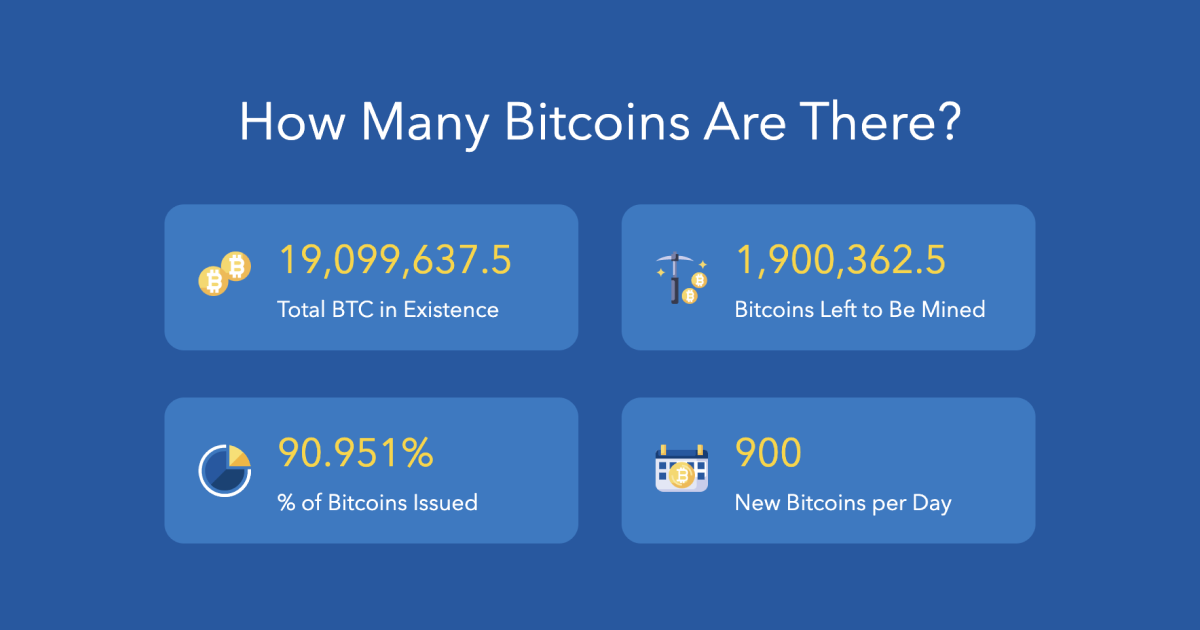
For the modern investor, understanding how many Bitcoins are in circulation is more than a trivial data point; it is a fundamental pillar of the asset’s valuation. As of late 2023 and early 2024, approximately 19.6 million Bitcoins have been mined out of a maximum possible 21 million. However, the “circulating supply” reported on exchanges often masks a more complex reality of lost keys, dormant wallets, and institutional “HODLing.” To truly grasp the financial implications of Bitcoin’s supply, one must look beneath the surface of the blockchain.
The Mathematical Foundation of Bitcoin’s Supply
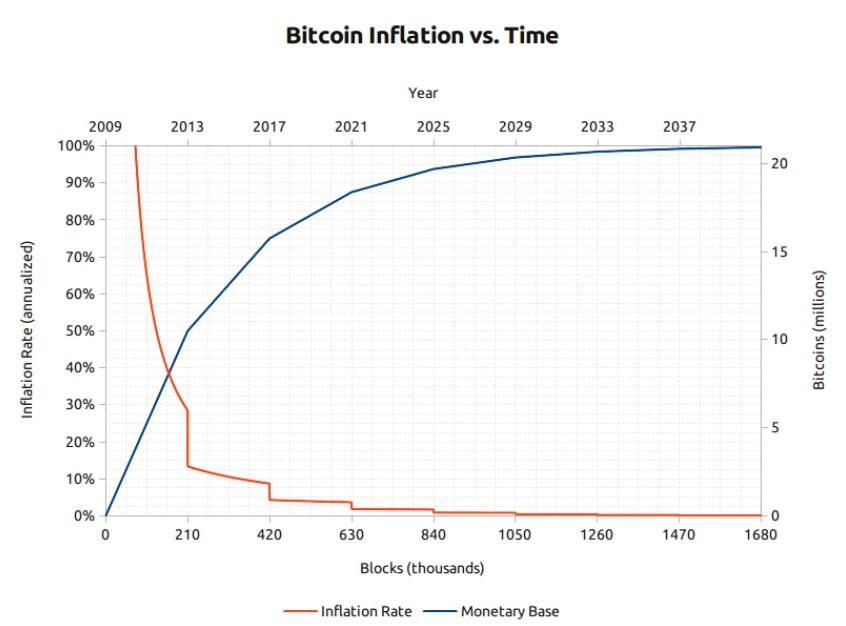
Bitcoin’s supply is governed by a transparent, immutable code rather than the shifting policies of a central board. This programmatic monetary policy ensures that every market participant knows exactly how many coins will exist at any given moment in time.
The 21 Million Hard Cap
Satoshi Nakamoto, the pseudonymous creator of Bitcoin, established a hard cap of 21 million coins. This number is not arbitrary; it was designed to create a deflationary or disinflationary environment. By limiting the total number of units, Bitcoin functions similarly to precious metals like gold. This scarcity is the primary reason Bitcoin is often referred to as “Digital Gold.” For investors, this cap provides a level of certainty that is impossible to find in fiat currencies like the Dollar or Euro, where the total supply is theoretically infinite.
The Block Reward and Issuance Schedule
New Bitcoins enter circulation through a process called mining. Miners use specialized hardware to solve complex mathematical puzzles, securing the network in exchange for newly minted coins. Initially, in 2009, the “block reward” was 50 BTC every ten minutes. This is the only way new supply is introduced into the ecosystem. Because this issuance is steady and predictable, the market can price in future supply with high precision, a luxury rarely found in traditional equity or commodity markets.
The Significance of the “Halving”
To ensure that the 21 million cap isn’t reached too quickly, the Bitcoin protocol includes a mechanism known as “the halving.” Roughly every four years (or every 210,000 blocks), the reward given to miners is cut in half. We have already seen the reward drop from 50 to 25, then to 12.5, and currently to 6.25 BTC. The next halving, expected in April 2024, will reduce this to 3.125 BTC. This periodic reduction in new supply creates a “supply shock” that has historically preceded significant bull markets, as the rate of new coins entering circulation fails to keep pace with growing demand.
The Reality of “Lost” Bitcoins: Why Circulation is Lower Than You Think
While the blockchain indicates that nearly 19.6 million coins have been “minted,” the number of Bitcoins actually available for trade—the effective circulating supply—is significantly lower. This distinction is crucial for understanding the asset’s true scarcity and potential for price appreciation.
The Mystery of Satoshi’s Million
In the early days of Bitcoin, Satoshi Nakamoto mined an estimated 1.1 million BTC. These coins have not moved in over a decade. Most analysts consider this “Satoshi stash” to be effectively out of circulation. If these coins are indeed lost or intended to remain untouched, the total supply of Bitcoin is immediately reduced by over 5%, making the remaining coins even more scarce.
Lost Private Keys and “Zombie” Coins
In the first few years of Bitcoin’s existence, the asset had almost no monetary value. Consequently, many early adopters were careless with their private keys. Hard drives were thrown away, and passwords were forgotten. Blockchain analysis firms like Chainalysis estimate that between 3 million and 4 million Bitcoins may be lost forever. Unlike a bank account, where a forgotten password can be reset, a lost Bitcoin key is unrecoverable. From a financial perspective, these lost coins act as a “donation” to all other Bitcoin holders, as they permanently reduce the available supply without reducing the total market utility.
Illiquid Supply and Institutional HODLing
Beyond lost coins, we must consider “illiquid supply.” This refers to Bitcoins held by entities that rarely sell. With the rise of Bitcoin ETFs and corporate treasuries (such as MicroStrategy), a massive portion of the circulating supply is being moved into “cold storage” for long-term investment. When large quantities of Bitcoin are removed from exchanges and placed in vaults, the “liquid supply” shrinks. For an investor, a shrinking liquid supply coupled with rising demand is a classic recipe for significant price increases.
Economic Implications: Scarcity, Valuation, and the Halving Cycle
The relationship between Bitcoin’s circulating supply and its price is a study in basic microeconomics. Because the supply curve is perfectly inelastic (meaning it does not increase regardless of how high the price goes), the price is entirely driven by fluctuations in demand.
Bitcoin as a Hedge Against Inflation
In an era of high global inflation, the fixed supply of Bitcoin makes it an attractive “Store of Value” (SoV). When the supply of fiat currency increases, each unit of that currency buys less. Because the number of Bitcoins in circulation cannot be increased by any government, many investors view it as a hedge against the devaluation of traditional money. This has led to Bitcoin being integrated into diversified portfolios as a form of “financial insurance.”
The Stock-to-Flow Model
One popular method for valuing Bitcoin is the Stock-to-Flow (S2F) model. This model compares the existing “stock” (the total Bitcoins currently in circulation) against the “flow” (the number of new Bitcoins produced annually). As the halving events reduce the “flow,” the Stock-to-Flow ratio increases, indicating higher scarcity. While no model is perfect, the S2F model highlights why the diminishing rate of new circulation is so vital to Bitcoin’s long-term price trajectory.
Market Capitalization vs. Realized Cap
When looking at the money involved in Bitcoin, “Market Cap” is calculated by multiplying the current price by the total number of coins minted (roughly 19.6 million). However, many professional investors prefer the “Realized Cap.” This metric values each Bitcoin based on the price it was at when it last moved on the blockchain. This filters out the “lost” coins and provides a more accurate picture of the actual capital invested in the network. Understanding the gap between these two figures helps investors identify whether the market is currently overextended or undervalued.
The Roadmap to 2140: What Happens When New Issuance Stops?
The journey of Bitcoin circulation will continue for over a century. According to the code, the last Bitcoin will not be mined until approximately the year 2140. This slow “bleed” of new supply has long-term implications for the security and economy of the network.
The Transition to a Transaction Fee Economy
A common question in financial circles is: “What happens to the miners when there are no more new Bitcoins to give them?” Currently, miners are incentivized by both the block reward and transaction fees paid by users. As the number of new Bitcoins entering circulation approaches zero, the incentive for miners will shift entirely to transaction fees. For the network to remain secure, Bitcoin must see continued adoption and high-value usage that generates enough fees to compensate for the lack of new supply.
The Psychological Impact of “The Last Bitcoin”
As we approach the 21 million limit, the “Fear of Missing Out” (FOMO) is likely to intensify. In the world of collectibles and fine art, the knowledge that “they aren’t making any more” drives prices to astronomical levels. Bitcoin is the first digital asset to achieve “absolute scarcity.” As the circulating supply nears its limit, the psychological shift from “accumulating an asset” to “owning a piece of a finite network” will likely redefine how society views digital ownership.
Conclusion: The Strategic Importance of Supply Awareness
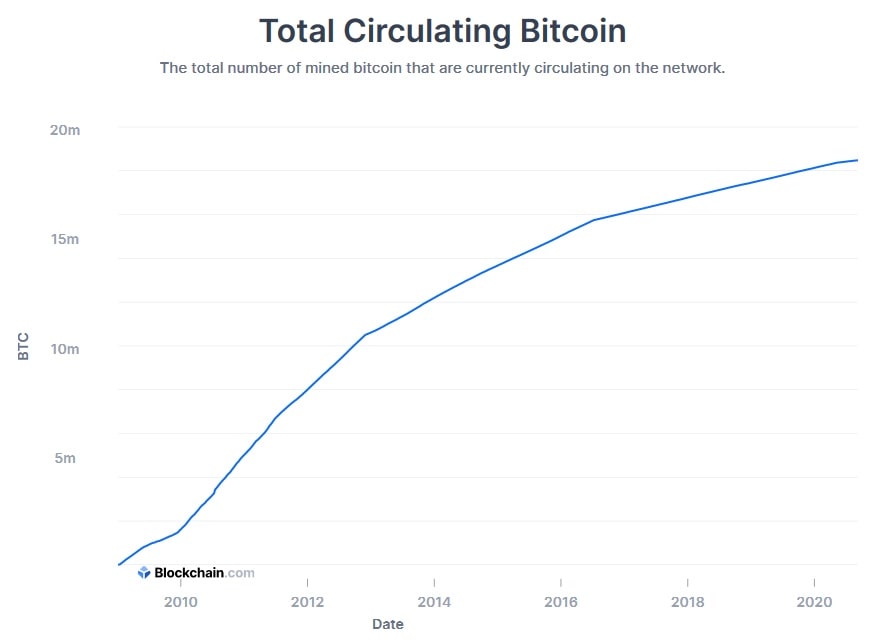
Understanding how many Bitcoins are in circulation is the cornerstone of any informed investment strategy in the crypto space. It is a story of transition—from a high-inflation experimental currency to a low-inflation institutional asset, and eventually to a zero-inflation global standard.
For the personal investor, the takeaway is clear: the circulating supply is smaller than the headlines suggest, the new issuance is cutting in half every four years, and the demand from institutional players is only beginning to wake up. In a world of infinite digital copies and endless fiat printing, the 21 million Bitcoins represent the first time in human history that we have a ledger that cannot be manipulated. Whether you view it as a side hustle, a retirement plan, or a business tool, the math of Bitcoin’s circulation is the most compelling argument for its long-term financial relevance.
aViewFromTheCave is a participant in the Amazon Services LLC Associates Program, an affiliate advertising program designed to provide a means for sites to earn advertising fees by advertising and linking to Amazon.com. Amazon, the Amazon logo, AmazonSupply, and the AmazonSupply logo are trademarks of Amazon.com, Inc. or its affiliates. As an Amazon Associate we earn affiliate commissions from qualifying purchases.