
The question “how much money is a bitcoin?” appears simple on the surface, but the answer is a moving target that reflects one of the most significant shifts in the history of modern finance. Unlike a dollar bill or a gold coin, the value of a Bitcoin is not fixed by a central government or backed by a physical commodity. Instead, it is determined by a global, 24/7 marketplace of buyers and sellers. To understand how much a Bitcoin is worth, one must look beyond the current ticker price and examine the economic principles, market cycles, and psychological factors that drive its valuation.
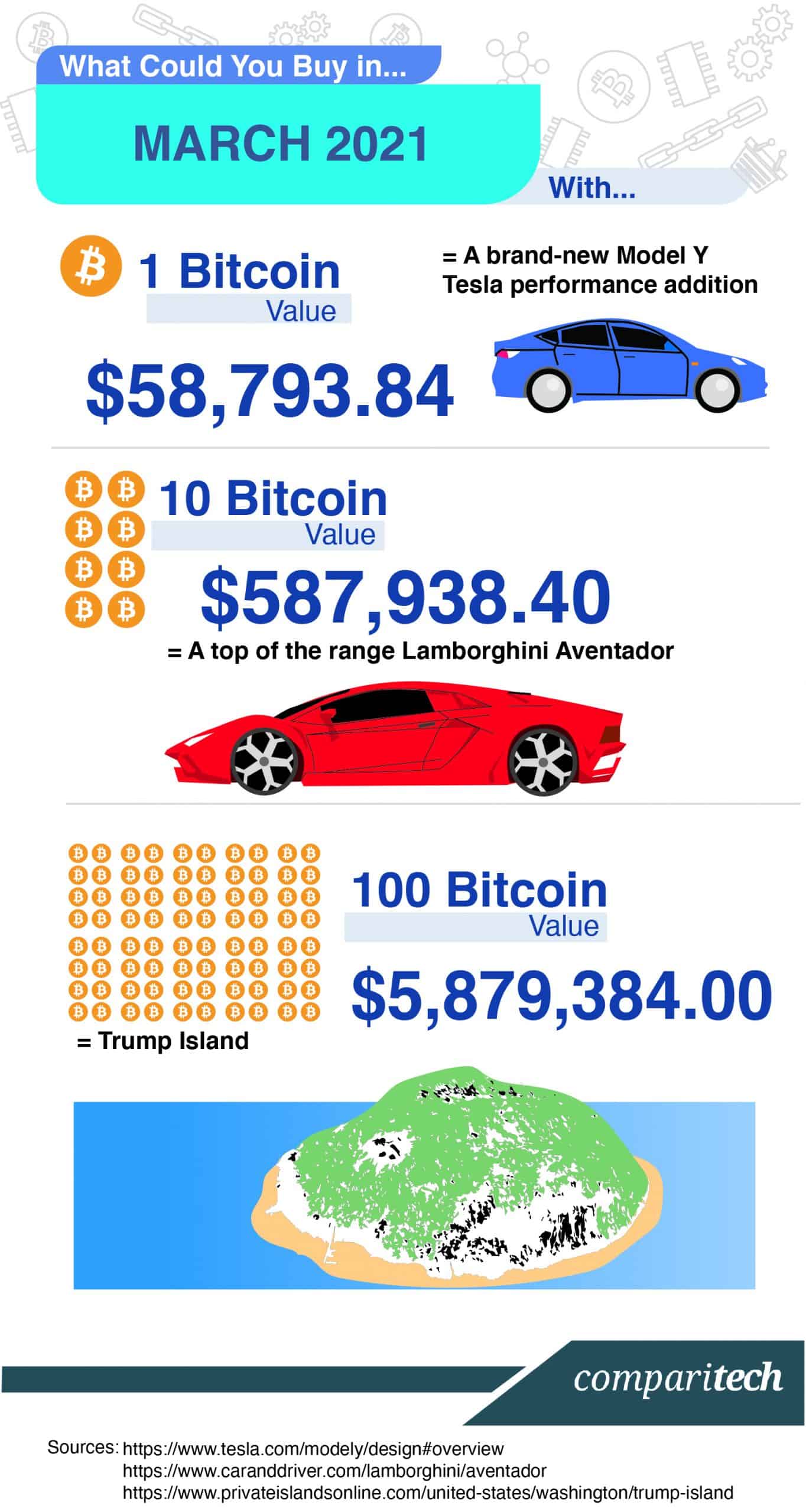
Determining the Current Value: Why Bitcoin’s Price Changes Every Second
At any given moment, the “price” of a Bitcoin is the last price at which a transaction occurred on a major global exchange. Because Bitcoin is traded globally across hundreds of platforms, there is no single “official” price. Instead, the price we see on financial news sites is an aggregate of these various markets.
Market Supply and Demand Dynamics
The fundamental driver of Bitcoin’s price is the law of supply and demand. Bitcoin’s supply is strictly limited by its underlying code to 21 million units. As of today, over 19 million of those have already been “mined.” When more people want to buy Bitcoin (demand) than there are people willing to sell it at the current price, the price goes up. Conversely, when selling pressure outweighs buying interest, the price drops. Because the supply of new Bitcoin entering the market is fixed and predictable, price movements are almost entirely driven by fluctuations in demand.
The Role of Crypto Exchanges and Global Liquidity
Liquidity refers to how easily an asset can be converted into cash without affecting its price. In the early days of Bitcoin, liquidity was low, meaning a single large trade could cause the price to swing wildly. Today, with billions of dollars in daily trading volume across platforms like Coinbase, Binance, and Kraken, Bitcoin has become a highly liquid financial asset. However, because it is a global asset, geopolitical events in Asia, regulatory news in Europe, or economic data in the United States can all trigger immediate price reactions, contributing to its signature volatility.
The Impact of “Whales” and Institutional Order Flow
In the world of finance, “whales” are individuals or entities that hold massive amounts of a specific asset. In the Bitcoin market, large movements by these holders can significantly influence the price. Furthermore, the entry of institutional investors—such as hedge funds, pension funds, and publicly traded companies—has introduced “Institutional Order Flow.” When a company like MicroStrategy or an ETF provider like BlackRock purchases thousands of Bitcoins, it creates a massive demand shock that can move the price significantly higher.
Historical Price Action: From Pennies to Thousands
To understand “how much” a Bitcoin is, it is helpful to look at where it started. Bitcoin’s journey from a worthless digital experiment to a trillion-dollar asset class is unprecedented in financial history.
The Genesis Period and Early Valuations
In 2009, Bitcoin had no market value. The first recorded real-world transaction occurred in 2010 when a programmer famously paid 10,000 BTC for two pizzas. At that time, a single Bitcoin was worth less than a penny. By 2011, Bitcoin reached “parity” with the U.S. Dollar, hitting the $1 mark. This milestone was psychological proof that a digital, decentralized currency could hold value comparable to traditional fiat currency.
Major Bull Cycles and the Impact of Halving Events
Bitcoin’s price history is defined by “bull runs” (periods of rapid price increases) followed by “crypto winters” (prolonged price corrections). These cycles are often linked to an event called the “Halving,” which occurs every four years. During a Halving, the reward given to Bitcoin miners is cut in half, effectively reducing the rate at which new Bitcoin is created. Historically, the reduction in new supply, combined with steady or increasing demand, has led to massive price surges in 2013, 2017, and 2021, pushing the price from hundreds of dollars to tens of thousands.
Resilience Through Market Corrections
Despite multiple “crashes” where Bitcoin lost 80% or more of its value, the long-term trend has remained upward. Each cycle has established a “higher low,” meaning that even at its worst points, Bitcoin remains significantly more valuable than it was in the previous cycle. This resilience has consolidated its reputation among investors as a “hard” financial asset that can withstand economic turbulence.
How to Value Bitcoin Beyond the Price Tag
Financial analysts often distinguish between “price” (what you pay) and “value” (what you get). Determining the intrinsic value of Bitcoin is a subject of intense debate in the halls of traditional finance.
Scarcity and the “Digital Gold” Thesis
The most popular framework for valuing Bitcoin is comparing it to gold. Like gold, Bitcoin is scarce, durable, and difficult to produce. However, Bitcoin is also portable, divisible, and easily verifiable. Many investors view Bitcoin as “Digital Gold”—a store of value that can protect wealth against the devaluation of paper currencies. If Bitcoin were to capture the same market capitalization as the total global supply of gold, the price of a single Bitcoin would theoretically reach several hundred thousand dollars.
The Network Effect and Metcalfe’s Law
In economics, Metcalfe’s Law states that the value of a network is proportional to the square of the number of its users. As more people, merchants, and institutions use the Bitcoin network, the utility of the network increases, which in turn increases the value of the underlying currency. This “network effect” creates a feedback loop: as the price goes up, it attracts more attention; as more people join the network, the fundamental value of the asset grows.
Bitcoin as a Hedge Against Inflation
In the context of personal finance, many see Bitcoin’s value in its relationship to inflation. When central banks print more money, the purchasing power of traditional currency tends to decline. Because Bitcoin has a fixed supply that no government can increase, it is often used as a hedge against the “debasement” of the U.S. Dollar or the Euro. In this sense, “how much” a Bitcoin is worth is often measured by its ability to maintain purchasing power over long periods.
Practical Considerations for Modern Investors
If you are looking at the price of Bitcoin today and wondering if you missed the boat, it is important to understand the mechanics of how Bitcoin is bought and held in a modern financial portfolio.
Calculating Fractional Ownership: The Satoshi
One common misconception is that you must buy a “whole” Bitcoin. Because the price of a single coin is now so high, it is more practical to think in terms of “Satoshis” (or “Sats”). One Bitcoin is divisible into 100 million Satoshis. This means you can invest as little as $10 or $100 and receive a fraction of a Bitcoin. This divisibility makes Bitcoin accessible to everyone, regardless of the current market price of a full coin.
Managing Volatility in a Personal Finance Portfolio
Because Bitcoin’s price can fluctuate by 5% to 10% in a single day, it is considered a high-risk, high-reward asset. Financial advisors often recommend “Dollar Cost Averaging” (DCA) as a strategy. This involves investing a fixed amount of money at regular intervals, regardless of the price. This approach mitigates the risk of buying at a temporary peak and allows the investor to accumulate more “Sats” when the price is low.
The Advent of Bitcoin ETFs
The introduction of Spot Bitcoin Exchange-Traded Funds (ETFs) in 2024 has fundamentally changed how the “money” in Bitcoin is managed. Investors no longer need to worry about digital wallets or private keys; they can buy Bitcoin exposure through their traditional brokerage accounts. This “financialization” has brought trillions of dollars of potential capital into the market, providing a new floor for the price and reducing some of the extreme volatility seen in earlier years.
The Future Outlook: What Influences Long-Term Price Predictions?
When asking “how much money is a bitcoin,” we must also look toward the future. Price predictions for the next decade range from “zero” to “one million dollars per coin.” These projections depend on several key variables.
Regulatory Environments and Global Policy
The biggest “X-factor” for Bitcoin’s value is regulation. If major economies create clear, supportive frameworks for digital assets, it could lead to another wave of mass adoption. Conversely, overly restrictive laws or outright bans in major markets could stifle demand and suppress the price. Most analysts believe that as Bitcoin becomes more integrated into the global financial system, “regulatory clarity” will act as a catalyst for price stability and growth.
Technological Advancements and Network Utility
While Bitcoin is primarily seen as a store of value, ongoing technological developments are increasing its utility. The “Lightning Network,” for example, allows for nearly instant and free transactions, making Bitcoin more viable as a medium of exchange (money you actually spend). As the Bitcoin network becomes faster and more efficient, its value as a financial tool increases, which likely translates into a higher market price.

Macroeconomic Trends and the Digital Shift
We are currently witnessing a generational shift in how wealth is stored and transferred. As younger, “digital-native” generations inherit wealth, they are increasingly looking toward digital assets rather than traditional bonds or gold. This demographic shift, combined with the increasing digitization of the global economy, suggests that the demand for Bitcoin is likely to continue its upward trajectory.
In conclusion, the answer to “how much money is a bitcoin” is far more complex than a single number on a screen. It is a reflection of a global consensus on value, a hedge against traditional financial systems, and a bet on the future of technology. While the price will undoubtedly continue to fluctuate, the underlying economic principles of scarcity, decentralization, and network growth suggest that Bitcoin has moved from a speculative experiment to a permanent fixture in the world of modern finance.
aViewFromTheCave is a participant in the Amazon Services LLC Associates Program, an affiliate advertising program designed to provide a means for sites to earn advertising fees by advertising and linking to Amazon.com. Amazon, the Amazon logo, AmazonSupply, and the AmazonSupply logo are trademarks of Amazon.com, Inc. or its affiliates. As an Amazon Associate we earn affiliate commissions from qualifying purchases.