
In the landscape of modern technology, numbers are rarely just mathematical abstractions. They serve as benchmarks, specifications, and milestones that define the capabilities of our hardware and the reliability of our software. When we ask, “What is 1.4?” in a technical context, we are often referring to a critical threshold in data transmission, optical physics, or software development cycles.
From the aperture of a high-end camera lens to the versioning of essential connectivity protocols, “1.4” represents a “sweet spot” of performance and stability. This article explores the multifaceted role of the 1.4 standard across the tech industry, examining how this specific value dictates the quality of our digital experiences.
The Evolution of Connectivity: Unpacking HDMI 1.4
One of the most pervasive uses of the 1.4 designation is found in the history of the High-Definition Multimedia Interface (HDMI). While we have since moved toward HDMI 2.1, the release of HDMI 1.4 was perhaps the most significant leap in the history of home entertainment and display technology.
The Dawn of 4K and 3D Support
HDMI 1.4, introduced in 2009, was the first standard to bring 4K resolution (Ultra HD) into the consumer consciousness. Although it was limited to 30 frames per second at 4K, it laid the groundwork for the high-resolution displays we use today. Beyond resolution, HDMI 1.4 was the primary driver of the 3D home cinema craze, providing the bandwidth necessary to handle dual 1080p streams simultaneously.
The HDMI Ethernet Channel (HEC)
A lesser-known but revolutionary feature of the 1.4 specification was the integration of a dedicated data channel for networking. This allowed internet-enabled devices to share their connection with other HDMI-linked hardware at speeds up to 100 Mbps. This eliminated the need for multiple Ethernet cables cluttering a media center, embodying the tech industry’s push toward streamlined, multifunctional hardware.
Audio Return Channel (ARC)
Perhaps the most enduring legacy of the 1.4 standard is the Audio Return Channel (ARC). Before ARC, sending audio from a TV back to an A/V receiver required a separate optical cable. HDMI 1.4 allowed for “upstream” audio data, simplifying home theater setups and paving the way for the sophisticated soundbar ecosystems we see today.
The Photographer’s Gold Standard: The f/1.4 Aperture
In the world of optics and digital imaging, “1.4” is a number that commands respect—and often a premium price tag. The f/1.4 aperture is a critical benchmark for professional-grade “prime” lenses.
The Physics of Light Gathering
The f-number represents the ratio of the lens’s focal length to the diameter of the entrance pupil. An f/1.4 lens is considered “fast” because its wide opening allows a massive amount of light to hit the sensor. Compared to a standard f/2.8 zoom lens, an f/1.4 lens allows four times as much light to pass through. This makes it indispensable for low-light photography, allowing tech-savvy creators to capture clean images in environments where others would struggle with digital noise.
The Aesthetic of Depth: “Bokeh”
The technical prowess of 1.4 extends to its depth-of-field capabilities. At f/1.4, the plane of focus is razor-thin. This creates the “bokeh” effect—the creamy, blurred background that separates a subject from its surroundings. For portrait photographers and cinematographers, 1.4 is the tool of choice for creating a cinematic, high-end look that smartphone algorithms still struggle to replicate perfectly through software alone.
Engineering Challenges and Glass Quality
Manufacturing a lens that remains sharp at f/1.4 is a massive engineering feat. It requires high-quality refractive glass and precise calibration to correct for “chromatic aberration” (color fringing). When a tech company releases a 1.4 lens, it is often a “halo product” designed to showcase their optical engineering department’s highest capabilities.
Version 1.4 in Software Development: The Bridge to Maturity
In software engineering and the world of Open Source, the version number 1.4 often signals a specific stage in a product’s lifecycle. According to the principles of Semantic Versioning (SemVer), the “4” in 1.4.0 represents a minor release that adds functionality in a backwards-compatible manner.
Moving Beyond the “Early Adopter” Phase
While version 1.0 marks the first stable release, version 1.4 is typically where a piece of software reaches true maturity. By this stage, the “1.0 bugs” have been squashed, the 1.1 and 1.2 feature updates have been refined, and 1.3 has likely addressed security vulnerabilities. For CTOs and IT decision-makers, a software tool reaching version 1.4 often signals that the tool is “enterprise-ready”—stable enough for mission-critical deployments but still evolving.
Feature Creep vs. Refined Functionality
In the jump from 1.0 to 1.4, developers often transition from “building the foundation” to “optimizing the workflow.” Version 1.4 releases frequently include API enhancements and better documentation. It represents a balance between the innovative energy of a new project and the rigid stability required by professional users.
Case Study: The Linux Kernel and Protocol Iterations
Looking back at the history of various protocols—from early wireless standards to specific programming library updates—the 1.4 iteration often acts as the “long-term support” (LTS) precursor. It is the version that stays in the ecosystem the longest because it strikes the perfect balance between modern features and legacy hardware compatibility.
Industrial Standards: The 1/4-Inch Connector and Hardware Scaling
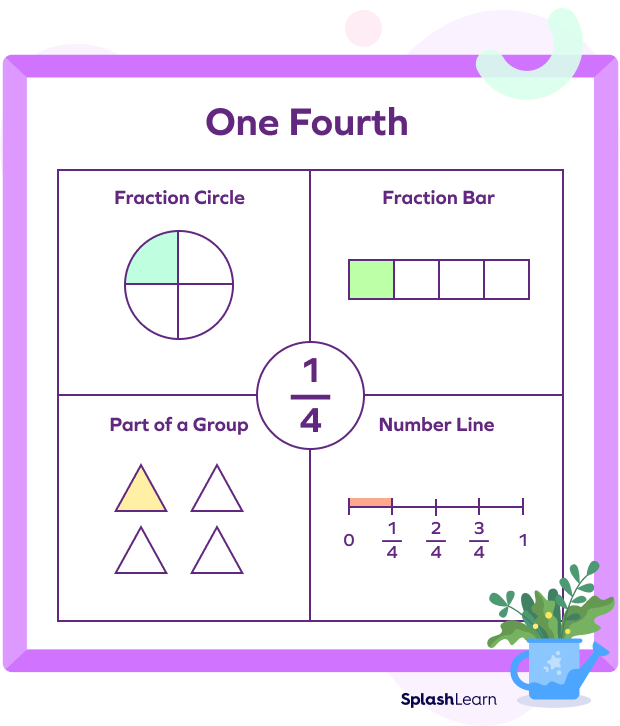
Not all “1.4” references in tech are decimal; the fraction 1/4 (one-fourth) is an foundational measurement in hardware engineering, specifically regarding audio and sensor technology.
The 1/4-Inch TRS Jack: The Pro Audio Backbone
The 6.35mm (1/4 inch) jack is the oldest electrical connector standard still in widespread use. While consumer tech has moved toward 3.5mm and USB-C, the 1/4-inch connector remains the standard for professional audio interfaces, electric guitars, and high-fidelity headphones. Its physical size allows for a robust connection that can withstand the rigors of touring and studio environments, proving that in tech, “bigger” is sometimes better for durability and signal integrity.
Sensor Sizes and the “1/4-Inch” Limitation
In the world of IoT (Internet of Things) cameras and early smartphones, the 1/4-inch sensor was a common standard. Understanding this measurement is key to understanding the limitations of early mobile photography. A 1/4-inch sensor is significantly smaller than the 1-inch sensors found in modern flagship phones. This size constraint dictated the pixel pitch and dynamic range, serving as the technical floor that the industry had to innovate away from to achieve current mobile imaging standards.
The Future of 1.4: From Legacy to Legacy-Building
As we look toward the future, the number 1.4 continues to appear in emerging tech sectors, particularly in AI model versioning and data transfer rates (such as 1.4 Tbps fiber optic benchmarks).
The 1.4 Tbps Threshold
In the realm of telecommunications and data centers, researchers are currently pushing the limits of single-wavelength fiber transmission toward 1.4 Terabits per second. Achieving this speed requires advanced digital signal processing (DSP) and sophisticated modulation techniques. Reaching a stable 1.4 Tbps standard would allow for the seamless streaming of 8K content and the real-time synchronization of global AI neural networks.
Backward Compatibility and the 1.4 Legacy
One of the greatest challenges in tech is maintaining “1.4 compatibility” in a 2.0 world. Whether it is ensuring an HDMI 2.1 port can still read an HDMI 1.4 signal or ensuring that modern software can parse data formatted in an older 1.4 standard, this number remains a vital reference point for engineers. It serves as a reminder that technology is cumulative; every new “major” version is built upon the successes and specifications of the 1.4s that came before it.
Conclusion
The question “What is 1.4?” does not have a single answer because 1.4 is not just a number—it is a symbol of technical refinement. In connectivity, it represents the birth of high-definition integration. In optics, it represents the pinnacle of light-gathering potential. In software, it represents the transition from a “working” product to a “mature” ecosystem.
By understanding these various 1.4 standards, tech enthusiasts and professionals can better appreciate the invisible architecture that supports our digital lives. Whether you are plugging in a 1/4-inch audio cable, shooting a portrait at f/1.4, or connecting a legacy 4K monitor via HDMI 1.4, you are interacting with a history of precision engineering designed to push the boundaries of what is possible.
aViewFromTheCave is a participant in the Amazon Services LLC Associates Program, an affiliate advertising program designed to provide a means for sites to earn advertising fees by advertising and linking to Amazon.com. Amazon, the Amazon logo, AmazonSupply, and the AmazonSupply logo are trademarks of Amazon.com, Inc. or its affiliates. As an Amazon Associate we earn affiliate commissions from qualifying purchases.