
The landscape of sports consumption has undergone a seismic shift, moving away from traditional satellite dishes toward the high-speed, data-driven world of cloud streaming. When Google secured the rights to NFL Sunday Ticket, it didn’t just change where fans watch football; it fundamentally altered how the technology of sports broadcasting functions. For users asking “how much is Sunday Ticket on YouTube TV,” the answer is inextricably linked to the technological ecosystem Google has built. Understanding the pricing tiers requires an understanding of the software integration, device compatibility, and digital infrastructure that makes this modern viewing experience possible.

The Architecture of NFL Sunday Ticket: Integrating Software and Service
The transition of NFL Sunday Ticket from DirecTV to YouTube TV represents one of the most significant migrations of intellectual property in media history. From a technical standpoint, this move shifted the delivery mechanism from a geostationary satellite broadcast to an Internet Protocol (IP) based distribution system.
YouTube TV vs. YouTube Primetime Channels
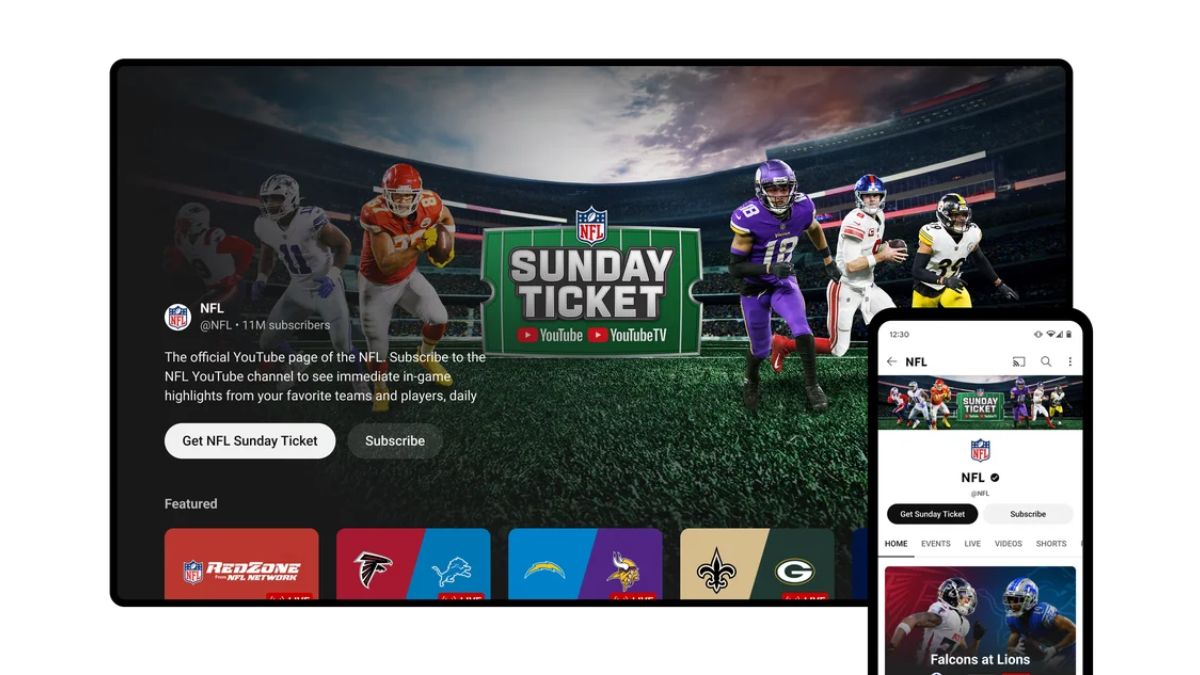
One of the first technical distinctions users must navigate is the platform choice. Google offers Sunday Ticket through two distinct software paths. The first is as an “add-on” to a YouTube TV subscription. This path integrates the NFL content directly into the existing YouTube TV Virtual Multichannel Video Programming Distributor (vMVPD) interface. The second path is through “YouTube Primetime Channels,” a standalone software module within the main YouTube app that does not require a monthly live TV subscription.
Technically, the Primetime Channels version is a more streamlined “over-the-top” (OTT) solution, whereas the YouTube TV version offers a more robust DVR and electronic programming guide (EPG) integration. This bifurcation allows Google to leverage its massive YouTube infrastructure to reach users who have cut the cord entirely and those who still want a traditional channel-flipping experience.
Cloud DVR and Infinite Scaling
Unlike the hardware-limited DVRs of the past, the YouTube TV iteration of Sunday Ticket utilizes cloud-based storage infrastructure. When a user “records” a game, they are essentially bookmarking a stream on Google’s servers. This allows for unlimited simultaneous recordings—a feat that was technologically impossible under the bandwidth constraints of satellite hardware. This “infinite scale” is a hallmark of Google’s data center prowess, ensuring that millions of users can access high-definition archives of games without local storage degradation.
Deciphering the Cost: Pricing Models in the Streaming Ecosystem
The price of Sunday Ticket on YouTube TV is not a static figure; it is a dynamic pricing model based on software bundling and timing. In the tech industry, this is often referred to as “tiered SaaS (Software as a Service) pricing,” where the value is maximized through ecosystem lock-in.
Subscription Tiers and Bundling Logic
For the 2024-2025 season, the pricing structure generally follows a two-track system:
- YouTube TV Subscribers: Users who already pay for the YouTube TV base plan (roughly $72.99/month) typically receive a discounted “add-on” price. This is often positioned between $349 and $389 per season. From a strategic tech perspective, this is an “ecosystem play,” rewarding users who utilize Google’s full suite of streaming services.
- YouTube Primetime Channels (Standalone): For those who do not want the YouTube TV base plan, the standalone Sunday Ticket price is higher, often ranging from $449 to $489 per season. This higher price point accounts for the fact that Google is providing the entire streaming infrastructure without the recurring revenue of a monthly TV sub.
The Impact of the NFL RedZone Integration
A critical technical addition to the pricing model is the inclusion of NFL RedZone. For an additional fee (usually around $40–$50 per season), users can bundle Sunday Ticket with the RedZone channel. In the tech world, this is a “feature-rich upsell.” RedZone is a data-intensive broadcast that switches between live look-ins of every game. The synchronization required to manage these low-latency transitions within the YouTube interface is a testament to the platform’s advanced switching software.
Innovative Technical Features: Redefining the Gameday Experience

The value proposition of Sunday Ticket on YouTube TV isn’t just the content—it’s the proprietary software features that Google has developed to enhance the viewing experience. These tools represent the cutting edge of digital sports consumption.
Multiview: The Ultimate Tech Flex
Perhaps the most discussed technical feature of the YouTube TV era is “Multiview.” This allows users to watch up to four live games simultaneously on a single screen. Unlike previous iterations on other platforms that required powerful local processing (like the Apple TV 4K), YouTube TV handles the “stitching” of these four streams on the server side.
By processing the four-way split in the cloud before it even reaches the user’s device, Google ensures that Multiview works on even low-powered hardware like older Smart TVs or basic streaming sticks. This server-side compositing is a major breakthrough in streaming engineering, solving the problem of synchronizing four different high-bitrate video feeds without crashing the user’s app.
Real-Time Data and Interactive Overlays
Integrated directly into the player UI are interactive features such as “Key Plays” and “Stats.” Using machine learning algorithms, the software identifies pivotal moments in a game and creates an automated highlight reel that users can browse in real-time. If you tune in late, the “Catch Up with Key Plays” feature uses metadata tagging to show you every touchdown and turnover before dropping you into the live stream. This level of data integration turns a passive viewing experience into an interactive dashboard.
Infrastructure and Performance: Latency, Resolution, and Bandwidth
For any sports fan, the “tech” of a broadcast is only as good as its reliability. The transition to streaming brought concerns regarding “spoilers”—getting a text about a touchdown before the play happens on screen due to lag.
Solving the Latency Gap
Broadcasting live sports over the internet traditionally introduces a “latency” of 30 to 60 seconds compared to cable or satellite. YouTube TV has invested heavily in “Low Latency” modes. Within the app’s settings, users can toggle a mode that reduces the buffer size to minimize the delay. While this increases the risk of buffering on unstable connections, it represents a significant push toward “real-time” digital broadcasting.
4K Streaming and Bitrate Management
While not every NFL game is broadcast in native 4K, YouTube TV’s infrastructure is built to handle ultra-high-definition (UHD) streams. The platform utilizes advanced codecs (like VP9 and AV1) to deliver high-quality video while optimizing bandwidth. For a user watching Sunday Ticket, the software constantly monitors the home network’s throughput, dynamically adjusting the bitrate to prevent “spinning wheels” while maintaining the highest possible visual fidelity.
Device Ecosystem and Portability
The final piece of the Sunday Ticket tech puzzle is its ubiquity across devices. Unlike the days of satellite boxes and coaxial cables, Sunday Ticket is now an app-based service.
Cross-Platform Fluidity
The Sunday Ticket software is designed to be “platform agnostic.” Whether you are on an Android smartphone, an iOS tablet, a PlayStation 5, or a web browser on a Linux machine, the user experience remains consistent. This is achieved through a robust API-driven architecture that allows the YouTube backend to communicate seamlessly with various operating systems. For the user, this means they can start a game on their living room TV and continue watching on their phone while away from home—a level of portability that was technically unfeasible a decade ago.
Managing Concurrent Streams
One technical hurdle Google had to solve was “home network” validation. Sunday Ticket allows for unlimited simultaneous streams within a user’s home network and a limited number of streams outside the home. The software uses IP verification and geolocation tech to ensure that accounts aren’t being shared inappropriately while still providing the flexibility that modern, multi-screen households require.
Conclusion: The Premium Cost of Premium Tech
When evaluating “how much is Sunday Ticket on YouTube TV,” it is clear that the price reflects more than just the licensing rights to the NFL. It reflects a premium for a high-tech, feature-rich software platform. From the server-side processing of Multiview to the AI-driven “Key Plays” and the massive cloud infrastructure required to host millions of simultaneous UHD streams, YouTube TV has turned NFL Sunday Ticket into a showcase of modern streaming technology. For the digital-native sports fan, the investment provides a level of control, data integration, and flexibility that traditional broadcasting simply cannot match. As Google continues to iterate on its algorithms and interface, the technical value of the subscription will likely only increase, cementing the internet as the ultimate stadium for the modern era.
aViewFromTheCave is a participant in the Amazon Services LLC Associates Program, an affiliate advertising program designed to provide a means for sites to earn advertising fees by advertising and linking to Amazon.com. Amazon, the Amazon logo, AmazonSupply, and the AmazonSupply logo are trademarks of Amazon.com, Inc. or its affiliates. As an Amazon Associate we earn affiliate commissions from qualifying purchases.