
For the average user, YouTube has long been perceived as a “free” utility—a bottomless well of entertainment and information accessible at the click of a button. However, as the platform has evolved into a global media powerhouse, the financial reality of interacting with YouTube has become significantly more complex. Whether you are a consumer looking to optimize your viewing experience, a creator aiming to launch a digital business, or an advertiser seeking a return on investment, “free” is rarely the final price tag.
To understand the true cost of YouTube, one must examine the platform through three distinct financial lenses: the consumer’s subscription and data expenses, the creator’s capital investment and operational overhead, and the business’s marketing expenditures.

1. The Consumer’s Bill: Subscription Models and Hidden Costs
From a personal finance perspective, YouTube is no longer just a website; it is a suite of services with various price points designed to capture different segments of the market. The cost for a consumer can range from $0 (subsidized by time and attention) to nearly $100 per month for premium cord-cutting services.
YouTube Premium: Trading Capital for Time
For those who wish to eliminate advertisements, the primary cost is YouTube Premium. As of the current fiscal year, the pricing structure is segmented to appeal to different demographic needs. The Individual plan generally sits at approximately $13.99 per month. For households, the Family plan—which allows up to five additional members—costs roughly $22.99 per month, making it a more cost-effective choice for large groups. Students can access a discounted rate, usually around $7.99 per month, provided they can verify their enrollment.
From a financial planning perspective, the cost of Premium is often weighed against the value of time. If an average user watches two hours of content daily and avoids 15 minutes of cumulative advertising, they are “buying back” roughly 7.5 hours of time per month.
YouTube TV: The Modern Cable Replacement
For consumers looking to migrate away from traditional satellite or cable providers, YouTube TV represents a significant monthly line item. Priced at approximately $72.99 per month, it competes directly with other Live TV streaming services. While the “sticker price” is higher than a standard streaming app, it includes unlimited cloud DVR and multiple accounts, which can consolidate a household’s entertainment budget. However, when combined with high-speed internet costs—which are required for a buffer-free experience—the total “YouTube cost” for a household can easily exceed $150 monthly.
The Invisible Costs: Data and Privacy
Even the “free” version of YouTube carries a cost. From a digital economy standpoint, users pay with their data, which is harvested to build advertising profiles. Furthermore, for mobile users without unlimited data plans, high-definition streaming can be an expensive habit. Streaming 1080p video consumes approximately 1.5GB to 3GB of data per hour. In regions where data is metered, a daily YouTube habit can lead to significant overage charges on a cellular bill, making the “free” video quite costly by the end of the month.
2. The Creator’s Investment: The Financial Price of Entry
For those looking to generate an online income, YouTube is a business venture that requires upfront capital. While it is theoretically possible to start with a smartphone, scaling a channel into a profitable enterprise requires strategic financial investment.
Minimum Viable Gear and Startup Capital
To compete in the modern attention economy, creators must invest in a baseline of hardware. A professional-grade setup typically includes:
- Camera Gear: While high-end mirrorless cameras can cost between $1,500 and $3,500, even an entry-level vlogging setup requires an investment of $500–$800.
- Audio Equipment: In the world of digital media, audio quality is often more important than video. A high-quality XLR microphone and interface setup can cost between $300 and $600.
- Lighting: Proper three-point lighting systems range from $150 to $500.
In total, a serious creator is looking at an initial capital expenditure of $1,000 to $5,000 before they ever upload their first “monetized” video.
Software Subscriptions and Digital Infrastructure
The financial burden continues with monthly recurring costs. Professional video editing software, such as Adobe Premiere Pro or Final Cut Pro, involves either a monthly subscription fee (approx. $20–$50) or a significant one-time purchase. Additionally, creators often pay for “growth tools” like VidIQ or TubeBuddy, which cost between $10 and $50 per month, to assist with SEO and keyword research. Cloud storage for 4K video files and stock footage memberships (like Epidemic Sound or Artlist) add another $30–$60 to the monthly overhead.
The Opportunity Cost of Content Creation
Perhaps the most significant “cost” for a creator is the opportunity cost. Producing a high-quality, 10-minute documentary-style video can take 20 to 40 hours of work, including research, filming, and editing. If a professional’s hourly rate is $50, the “cost” of producing a single video is effectively $1,000 to $2,000 in lost labor time. Until a channel reaches a certain scale of viewership and ad revenue, this is a net-loss activity that must be financed by personal savings or a side hustle.
3. Scaling a YouTube Business: Operational Expenses
Once a channel begins to generate revenue, the financial structure shifts from a solo hobby to a business entity. This transition introduces new costs associated with scaling and sustainability.
Outsourcing and Freelance Labor
To increase output, successful creators must hire help. This is where the budget often expands most rapidly. Hiring a freelance video editor can cost anywhere from $200 to $1,000 per video, depending on complexity. Graphic designers for thumbnails, scriptwriters for research, and virtual assistants for community management can drive monthly operational costs into the thousands. For top-tier YouTubers, the “cost” of the platform is essentially the payroll for a small media production company.
Legal, Tax, and Administrative Costs
As soon as a creator begins earning “Online Income,” they enter a new tax bracket and regulatory environment. Incorporating as an LLC (to protect personal assets) carries filing fees and annual franchise taxes. Furthermore, creators must set aside 20% to 30% of their gross earnings for self-employment taxes. Accountants and legal consultants (specifically for contract reviews of brand deals) become necessary expenses to protect the business’s bottom line.
Investing in Growth: Paid Promotion
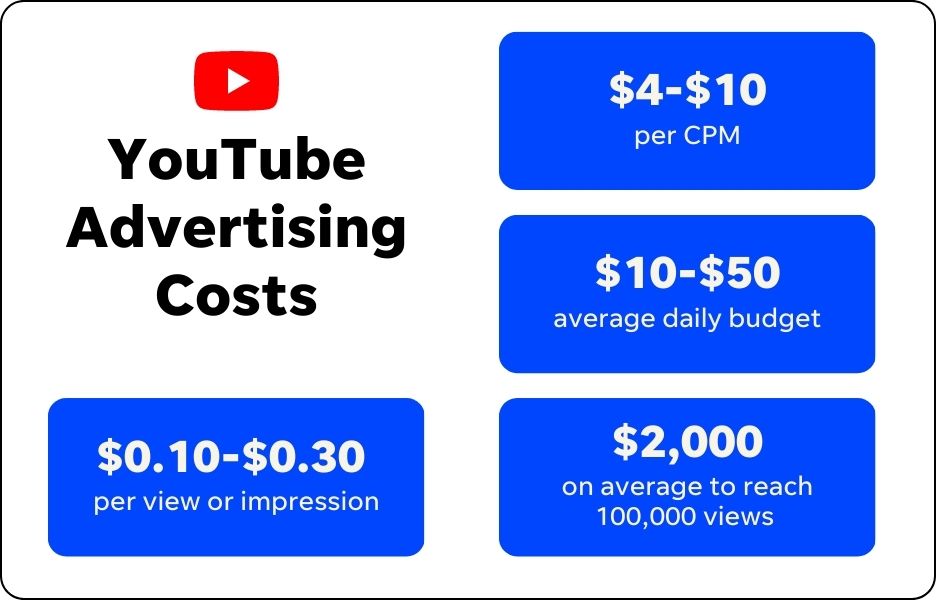
Many businesses use YouTube as a marketing channel rather than a primary revenue source. For these entities, the cost of YouTube is measured in CPM (Cost Per Mille, or cost per 1,000 impressions) and CPV (Cost Per View). Depending on the industry—with finance and tech being the most expensive—advertisers might pay anywhere from $0.10 to $0.30 per view. Scaling a brand via YouTube ads can require a monthly budget ranging from $500 for small local businesses to hundreds of thousands for national corporations.
4. The Financial Verdict: Is the Investment Worth It?
When calculating “how much YouTube costs,” the answer is a moving target that depends entirely on your objective.
For the Consumer
The cost is manageable. By budgeting for a Premium subscription and monitoring data usage, a user can access the world’s largest library of information for less than the cost of a weekly latte. It is a high-value personal finance trade-off for education and entertainment.
For the Entrepreneur
The cost is a calculated risk. The barrier to entry is low, but the cost to compete is high. A creator should expect to invest at least $2,000 in gear and software over their first year, plus hundreds of hours of “unpaid” labor. However, since YouTube operates on a compound interest model—where old videos continue to earn revenue—the long-term ROI can be exponential.
For the Business
The cost is an acquisition expense. YouTube is one of the most cost-effective ways to reach a targeted audience, provided the Brand Strategy aligns with the production budget. The cost isn’t just the “ad spend,” but the creative talent required to make an ad that people don’t want to skip.
In conclusion, YouTube is far from free. It is a sophisticated financial ecosystem where participants pay with currency, time, or data. Understanding these costs is the first step in moving from a passive participant to a strategic user of the platform. Whether you are paying for the convenience of no ads or investing in a 4K camera to launch a career, every dollar spent on YouTube should be viewed as an investment in your digital lifestyle or business future.
aViewFromTheCave is a participant in the Amazon Services LLC Associates Program, an affiliate advertising program designed to provide a means for sites to earn advertising fees by advertising and linking to Amazon.com. Amazon, the Amazon logo, AmazonSupply, and the AmazonSupply logo are trademarks of Amazon.com, Inc. or its affiliates. As an Amazon Associate we earn affiliate commissions from qualifying purchases.